One out of seven people experienced corruption in 2025
Corruption perceptions are most widespread among officials issuing building permits
One out of seven people in Malta has experienced a case of corruption in 2025, according to a Eurobarometer survey about corruption perceptions.
This is the highest incidence of corruption recorded among the 27 member states, tied with Bulgaria.
Almost one in four people also said they personally know someone who regularly takes or has taken bribes. This is the third-highest response across the bloc, putting only Greece and Lithuania ahead of Malta.
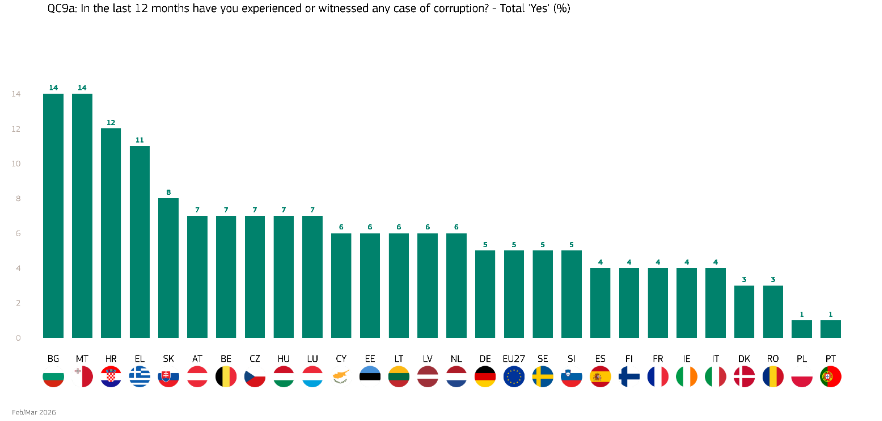 14% of people in Malta experienced or witnessed a case of corruption over the past year
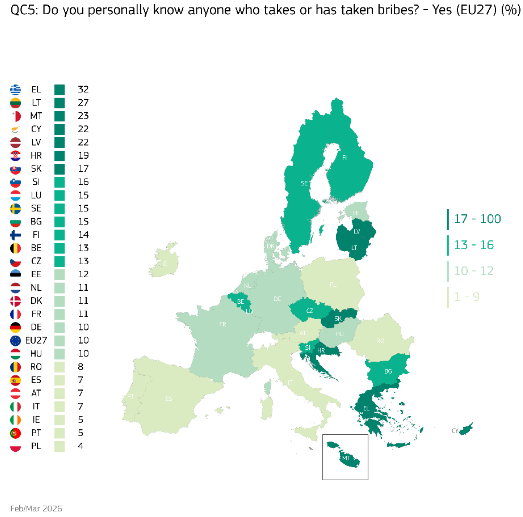 23% of respondents in Malta said they personally know someone who takes or has taken bribes
When asked about the areas where bribes and abuse of power are widespread, residents said this is most common among officials issuing building permits. Malta ranked first in the bloc in this area.
The figure is not an admission of corruption among permit-issuing officials but reflects perception – people said they think bribes and abuse of power for personal gain are most widespread in this area.
People also reported widespread corruption among political parties and politicians.
An overwhelming 88% of people in Malta believe that there are too-close links between business and politics that lead to corruption – the third-highest perception in the bloc.
No motivation to report
While 66% of people believe that corruption has increased over the past three years, 55% of respondents said they would not know where to report corruption. This figure is down five percentage points from last year.
One in four people feels there have been enough successful prosecutions to deter people from corrupt practices, but this has decreased by seven percentage points compared to 2025.
Moreover, 80% of people agreed with the statement that high-level corruption cases are not adequately pursued – up by 10 percentage points.
One of the major deterrents to reporting corruption in Malta is that there is no protection from retaliation for those who report it. People also feel that reporting the case would be pointless because those responsible will not be punished.
There is also an element of herd instinct – 28% of respondents said everybody knows about corruption, but no one reports it, so they choose not to report it either.
The number of people who cite this statement as a reason not to report corruption has gone up by eight percentage points.
People in Malta are also among the least likely among the 20 member states to trust the police to deal with their corruption case. Only 39% of people would trust the police.
However, 25% of people said they would trust a specialised anti-corruption agency, and 23% would trust the national ombudsman.
People are more likely to trust the media with corruption cases than the justice system, while trust in NGOs for corruption complaints has decreased drastically.
518 people were interviewed by MISCO International for the report. Interviews were conducted in February.