One year of climate action
Climate Action Authority’s positive role
During the week marking the anniversary of the Climate Action Authority’s founding, the National Audit Office published a detailed report on Malta’s Climate Action, using the internationally recognised Climate Scanner framework. The report is publicly accessible. As expected, it highlights positives and areas needing improvement. But the verdict was also clear: “Malta has made significant strides in climate action.”
The CAA’s positive role is acknowledged in this report. While the report fills us with courage and enthusiasm, we recognise that much more needs to be done, many more changes are required, and many decisions demand courage. In the past 12 months, as CAA, we have laid the foundation for such decisions and actions, understanding that no authority or government can overcome this challenge alone. The past year has involved ongoing engagement with various segments of society including the public sector, university students, social partners, academics, businesses, citizens fulfilling their part in climate action, primary and secondary students, and the wider public. This approach will continue in the coming months and years, aiming not only to keep awareness high but also to promote concrete collective action.
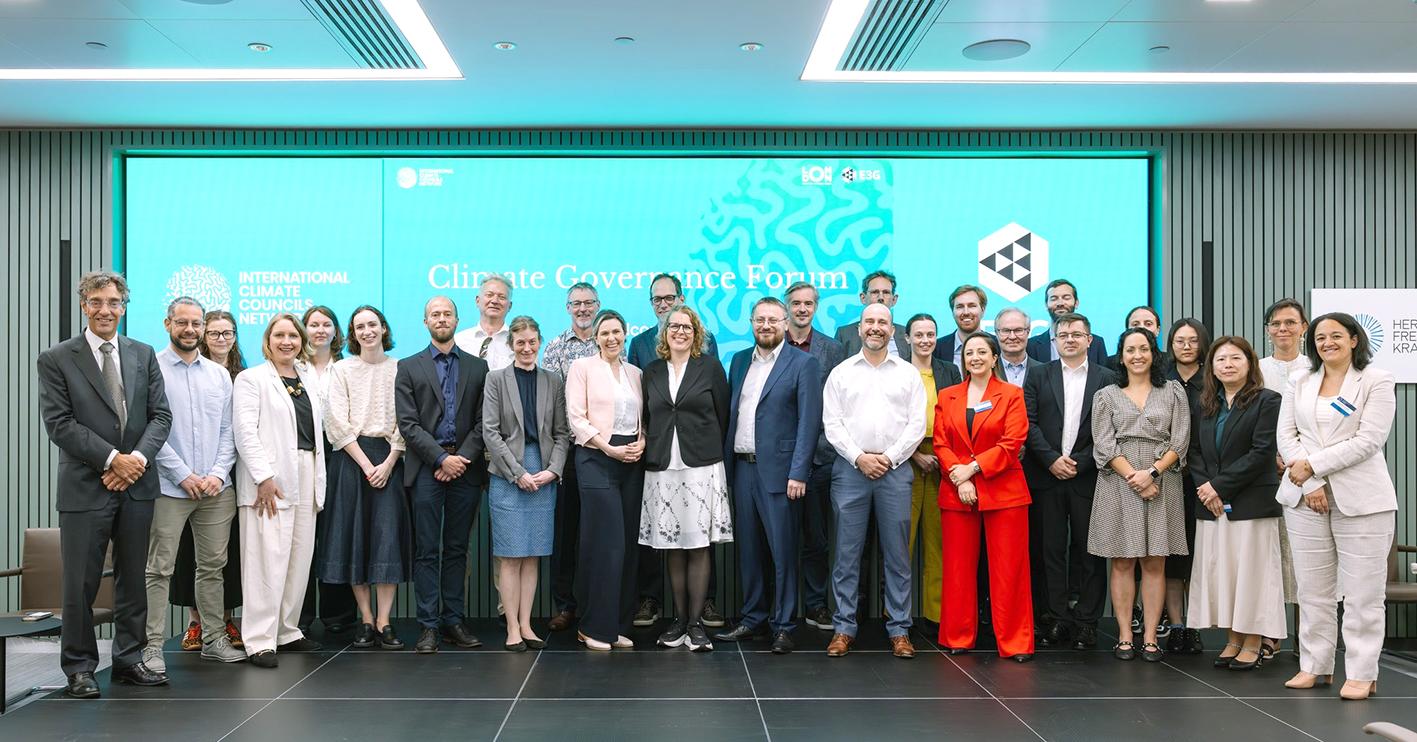
That’s why, when we recently began a pre-market consultation to involve experts in Malta’s National Adaptation Plan, one of our initial meetings was with the Malta Council for Economic and Social Development, where social partners meet to discuss national issues. Our daily efforts also focus on supporting the industry’s transition to a low-carbon future by providing detailed technical assistance to operators adapting to changing EU environmental rules. We help companies understand and meet their compliance needs while establishing strong systems that promote transparency and accountability.

By developing frameworks that create a fair competitive environment for all operators, we foster fair competition and collective progress towards decarbonisation targets. This combined approach of providing direct support to operators and systematically developing infrastructure aims to align the industry with climate objectives and support the wider clean energy transition.
The private sector plays a vital role in moving towards a sustainable future, which is why we will intensify our engagement and initiatives with it in the coming months. Climate action should be seen as an opportunity, not a burden, one that supports a sustainable business model and a better environment for all. In one of our recent educational campaigns, we have seen positive success stories of business people and researchers developing solutions and projects that strengthen both their position and that of the society they belong to. The feedback to their stories was exceptional.
However, for an authority or government to request changes from the private sector, it must not only provide incentives but also lead by example. That is why, this year, we prioritised actions within the public sector. Various initiatives were already underway, with others being intensified. We have seen conventional cars replaced with electric models, buildings fitted with solar panels, batteries and insulation, the first net zero buildings in the public sector, and innovative financial instruments like green bonds introduced, to name a few. However, much remains to be done, which is why Climate Action Coordinators have been appointed in each ministry to enhance coordination, efficiency, and effectiveness.

In the coming months, as CAA, we will lead several initiatives aimed at harnessing the potential of the public sector and fostering collaboration with the private sector. Our goals include the acceleration of the use of photovoltaics on public buildings, such as schools, old people’s homes, and offices, for solar panel installations. In the coming months, we will issue multiple open calls to facilitate this. Additionally, we aim to transform public parking spaces into aesthetically pleasing areas shaded by solar panels, and we are already collaborating with Transport Malta and the University of Malta on this initiative. We are exploring the adoption of alternative fuels, such as biofuels, and intend to promote the installation of charging infrastructure for the acceleration of the needed electrification transition across our islands. This includes introducing innovative concepts that will be implemented for the first time in Malta and Gozo.
These initiatives form part of our broader strategy to align national actions with the EU’s climate and energy objectives while ensuring that the transition is both equitable and effective. Through strong partnerships, evidence-based policy, and continued investment in innovation, the Climate Action Authority will help position Malta at the forefront of sustainable transformation.
Ing. Abigail Cutajar, CEO Climate Action Authority.