‘Opera is still contemporary’
Giuseppe Verdi’s comedy 'Falstaff' (1893) arrives at the Manoel Theatre
British-Italian director Barbara Diana describes Verdi’s opera Falstaff as “an absolute masterpiece in which a fat knight, Sir John Falstaff, attempts to seduce two married women”.
“Verdi is brilliant at bringing out the timeless humanity of situations because his characters are so relatable,” she says.
“Their individual experiences make them universal, which seems a paradox, but their feelings, we all share.”
Diana explains that after 53 years in theatre, during which Verdi had composed tragedy after tragedy, the composer moved away from the conventional format and wrote an opera that’s also a funny piece of theatre. It includes amusing references to Mozart and Aida, almost no arias and lots of dialogue.
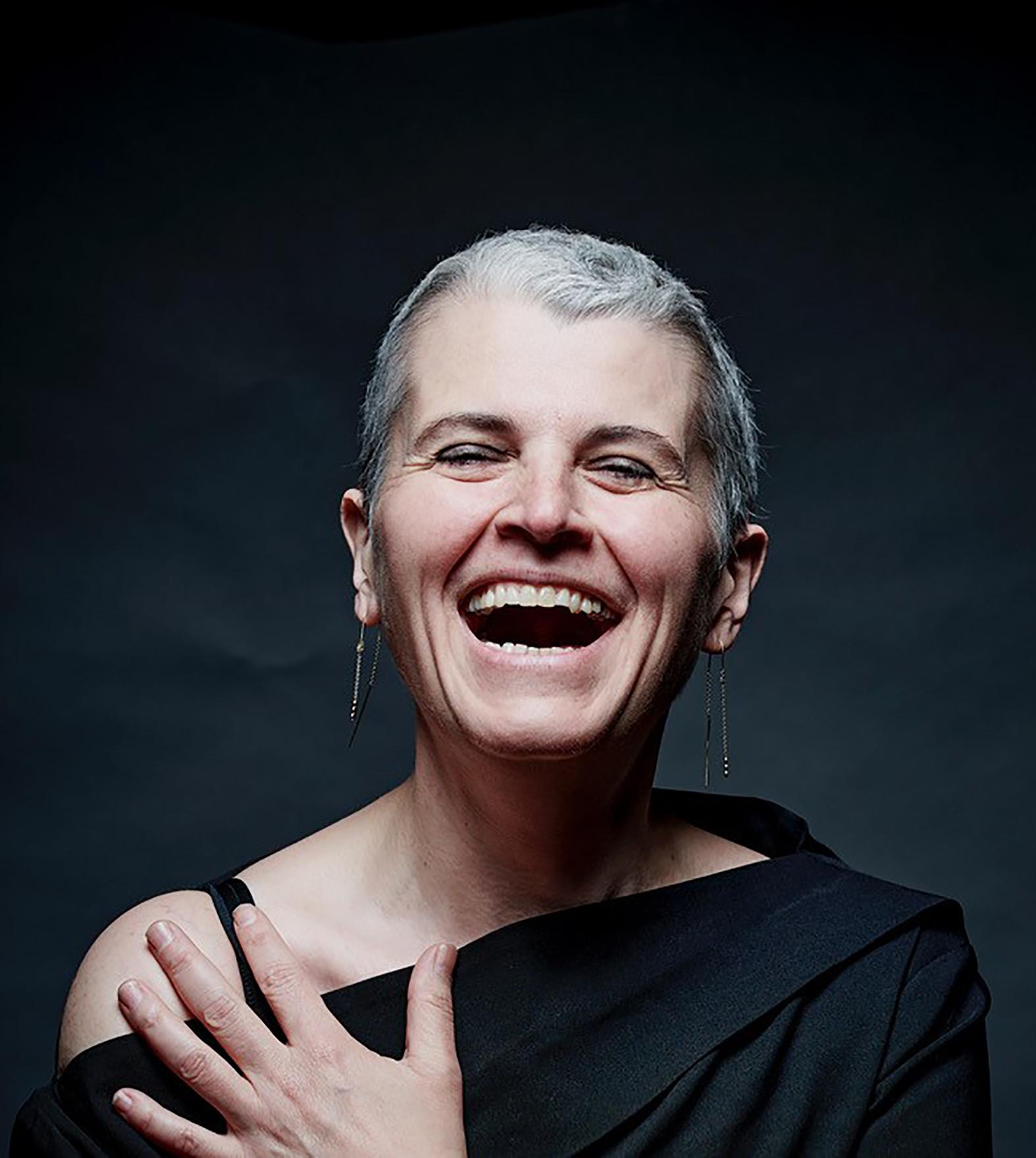 Director Barbara Diana
She notes that Arrigo Boito, who wrote the text, adapted the narrative from Shakespeare’s The Merry Wives of Windsor.
“It’s hard to recognise, and he did an incredible job. He uses beautiful vocabulary and word games in Italian so we’re trying to bring that out as much as we can,” she says.
“With conductor Federico Tibone, I’ve been following Verdi’s instructions closely as I believe that the composer always works with the music and reveals additional elements too, so a director ignores them at their peril.”
However, she says Falstaff could translate to any era.
“This production is contemporary, rather than looking back to the 15th century, and I was keen to create something different. I came up with the idea of presenting it in the busy backstage area of a TV studio, the perfect setting for a farce. The story is all about what’s happening between the characters behind the scenes.”
She says that as a director, her role is that of an interpreter, a translator of a work’s social attitudes and cultural references, so they are expressed in a way that engage today’s audiences.
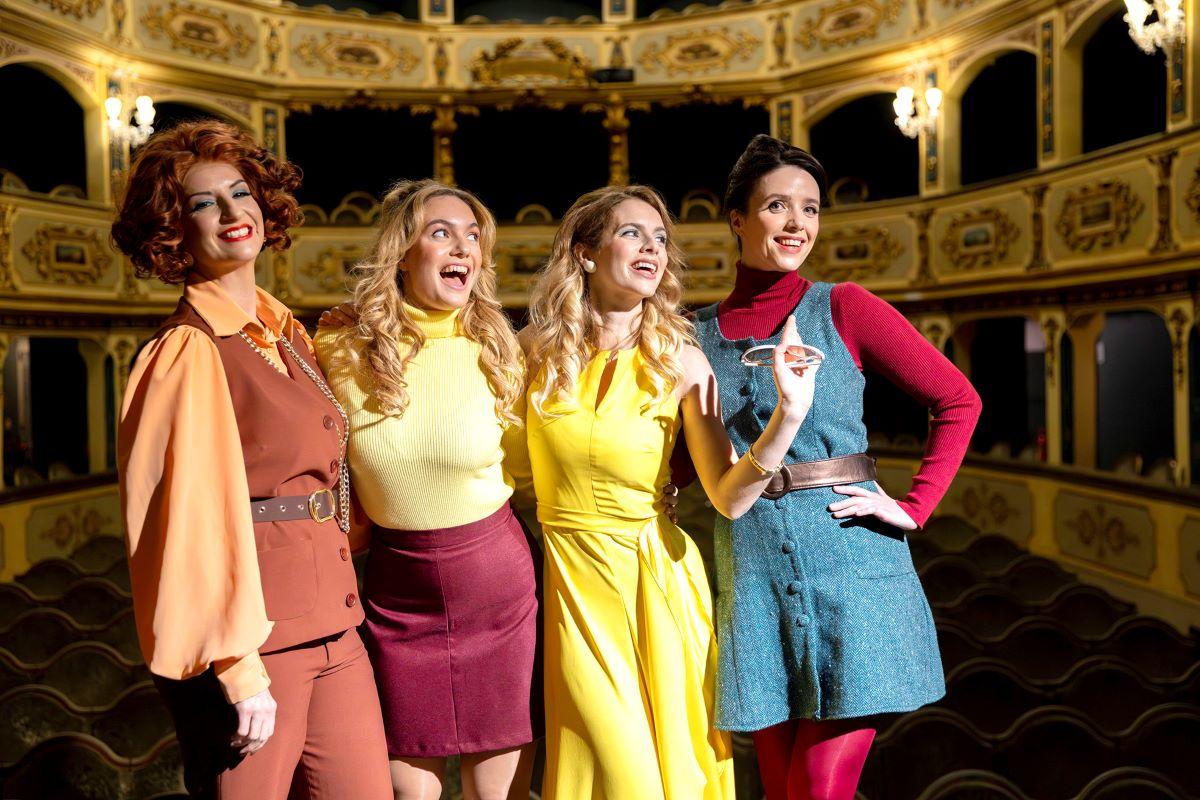 Falstaff opens at the Manoel Theatre today.
“We have physical limitations to what we can do, but none in terms of creativity. The ideas just keep coming.”
Nico Darmanin, director of the Malta National Opera, believes that Falstaff and its motto ‘to never take anything seriously’ is “very relevant today”.
Darmanin wanted a “strong, upbeat feel” for the production. So they engaged designer Stewart Charlesworth, who is very well known for having designed some of the UK’s best musicals.
“A 1960s Casino Royal feel was the perfect pitch for a Falstaff production, so we jumped at the opportunity to create something that is hip, fresh and visually strong, to remind our audience that opera is still contemporary,” Darmanin enthuses.
The characters
In this production, Falstaff is a self-centred, washed-up star, an important actor in his heyday who behaves in an improper way that was accepted in the 1960s but was exposed with the #metoo movement.
I was keen to create something different- Director Barbara Diana
Diana describes how she imagined his backstory ‒ that he took part in World War II and was knighted for his contribution. Pistol, a Shakespearean ensign, was his rather seedy junior officer who is still with him, while Bardolph, a fellow thief in the original story, is his long-suffering manager.
Alice and Meg, the original Merry Wives, are actresses, while Alice’s daughter Nannetta is a make-up artist.
The staging
A core challenge with Falstaff, Diana points out, is that there are many exits and entrances as the characters come and go in different locations. This she has managed by presenting the first two acts from Falstaff’s and Alice’s dressing rooms, a clever set with two trucks [sturdy, wheeled platforms] that move independently. They each have lots of doors providing maximum flexibility and enabling a fluid mixture of stillness and chaos on stage.
And with a brilliant meta-theatrical touch, alongside the 24-strong cast (including the chorus), the studio is populated with real stagehands who are part of the show as they are seen moving the trucks and other props.
“People often don’t understand everything that goes on behind an opera performance and so we’re pleased to hark back to Shakespearian times when it was common for the players to acknowledge that they are actors, and the audience feel part of it. That’s rare in 19th-century opera, where the audience are viewers and there is a pretence of reality on the stage,” Diana notes.
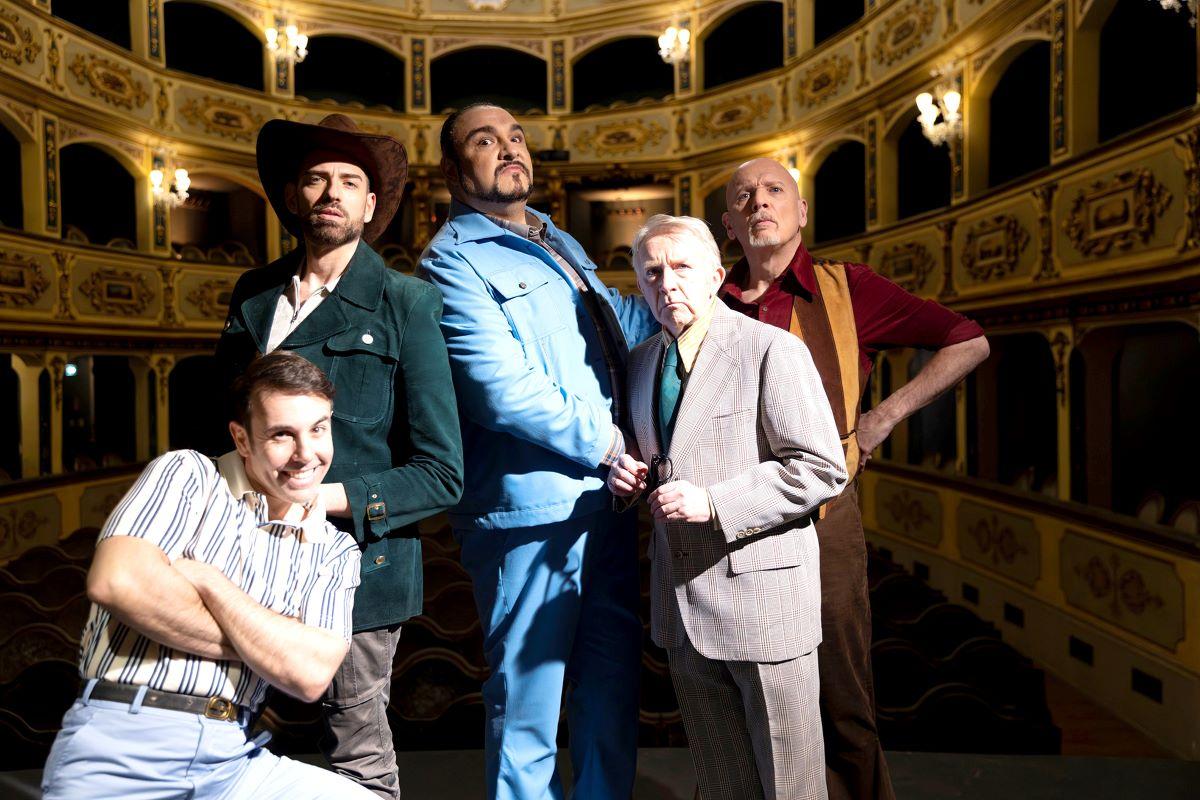 The male cast is led by Bulgarian operatic tenor Kiril Manolov (centre) in the title role.
The third act could have been tricky as it contains a woodland fairy scene and so forth, but as costume and set designer Stewart Charlesworth ‒ whose stylistic vision she describes as ‘Wes Anderson’ ‒ pointed out, the beauty of setting a production in a studio is that it’s a place where all kinds of scenery are recreated.
“For a night scene in parkland, you only need a snapshot of that outdoor space, the little corner a TV production company would use to film,” Diana smiles.
“We also let people use their imagination in certain places, such as when Falstaff ends up in the river after the laundry basket scene.”
In the third act as well, there’s a moment of pathos, as the audience sees Falstaff’s character becoming more self-aware.
“They see the vulnerability of his character beneath his bluster,” Diana says, “after which his relationships with the other characters changes before a meta-theatrical finale that pulls in the whole auditorium.”
“Opera is there to move people emotionally, so I hope the audience will end their evenings feeling happy and elated. I like the idea that theatre is a communal experience that helps us to reconcile with the world.”
Malta National Opera thanks the Manoel Theatre, BOV, Opera NOVA, Farsons, Malta Philharmonic Orchestra and the Italian Embassy and Cultural Institute for their support.