Outstanding discoveries in the Archbishop’s Palace, Valletta
Chapel conservation yields new, major findings
The conservation project of the chapel of St Joseph, within the Archbishop’s Palace, Valletta, has yielded new findings of significance to the history of art and architecture in Malta. The discovery of an early seicento stone-coffered painted ceiling, the recovery of an early 17th-century lunette and the identification of the artist who painted the historic oil-on-stone titular painting, were key moments that occurred during the works that were undertaken to preserve this gem of a chapel.
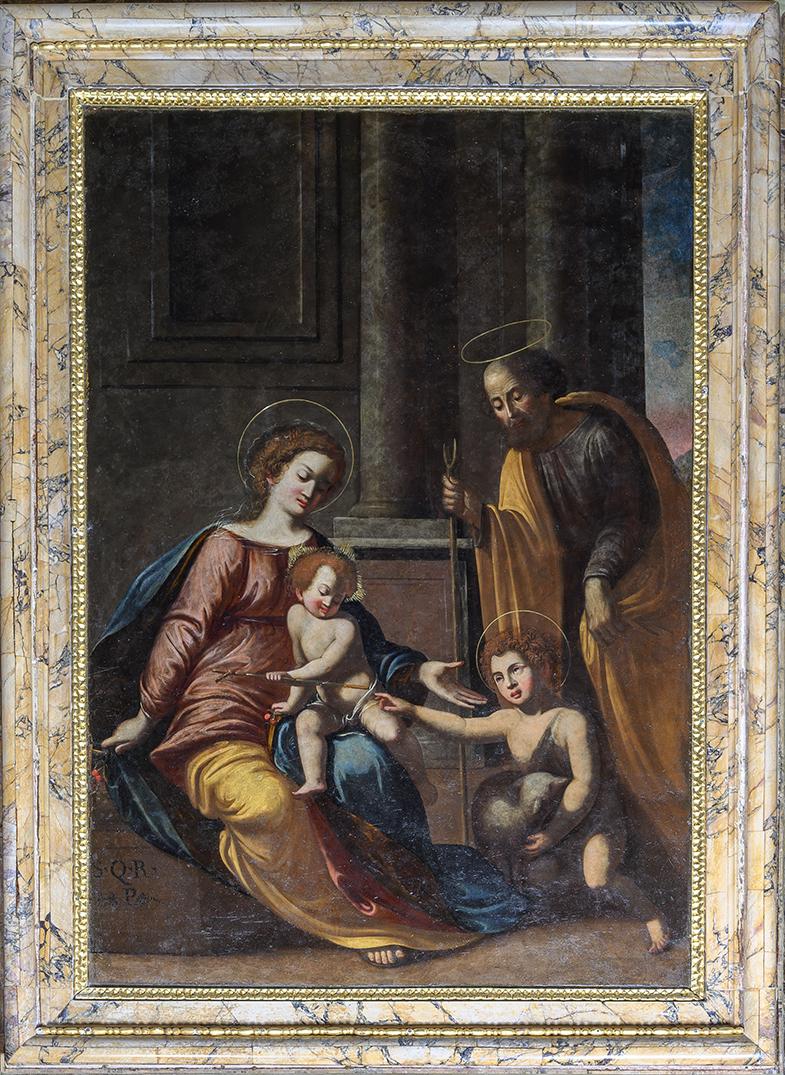 The conserved titular painting of The Holy Family with St John the Baptist. Photo: Ian Noel Pace
The project started after successfully finding a suitable sponsor − Madame Marie-Amélie Gleizes Dewavrin. Fortuitously, the donor, who is no stranger to philanthropic gestures towards Maltese heritage, represented more than financial support: her French roots added a deeper significance to the restoration of the chapel that had been embellished by the French bishop of Malta, Paul Alpheran de Bussan (1728-1757).
The baroque chapel of Bishop Alpheran de Bussan
Until the 1720s, the chapel had retained its late Renaissance appearance, which may have appeared rudimentary to an erudite and artistically-aware bishop like Alpheran de Bussan. This was especially relevant in an age when aesthetic awareness played an essential part in forming one’s public profile.
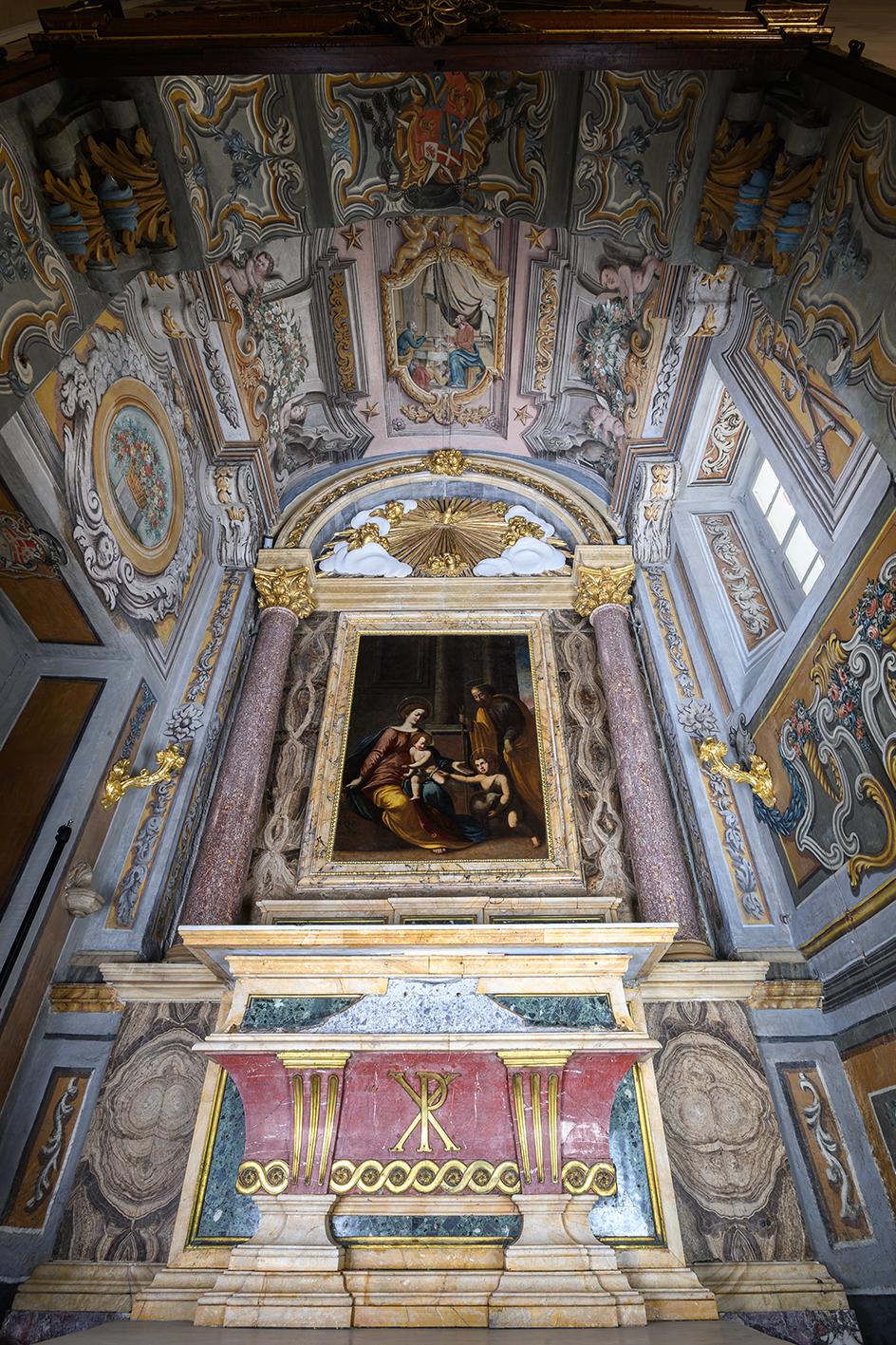 The chapel with its 18th-century ceiling restored. Photo: Ian Noel Pace
In the 1730s, the chapel was redesigned in the high baroque style, only a few years after the architectural illusionistic style of Nicolò Nasoni transformed the Grand Master’s Palace, and the Order’s Chancery, and which was imitated in other prominent halls, such as the sacristy in Casa Manresa, Floriana.
Alpheran de Bussan’s new chapel saw the installation of an oil-on-canvas ceiling with a painting of The Anointing of Jesus’s Feet, within a trompe l’oeil architectural frame − angels flank illusionistic architectural elements embellished with garlands, a theme that is carried over in tempera on the chapel’s walls. On each corner, faux corbels in wood and painted canvas continue the illusionistic architectural theme, while supporting the curved stretcher frame of the canvas ceiling.
Above the titular painting, a gilt wooden Gloria with cherubs and clouds in stucco was installed over a marble backdrop. The original altar was replaced by a polychrome marble altar; its reredos and pillars were also clad in marble, while the flooring is typical of 18th-century polychrome tiling. The bishop also had a window opened onto the new loggia, improving the chapel’s illumination, while the scenographic redesign was completed by means of large doors in walnut and gilt detailing, surmounted by a statue of St Paul, the bishop’s patron saint.
In updating the appearance of his palace’s chapel, as well as that of the palace Chancery, Alpheran de Bussan was following the baroque trends that had merged painting, sculpture and architecture in a holistic manner, creating an all-encompassing impression on the spectator.
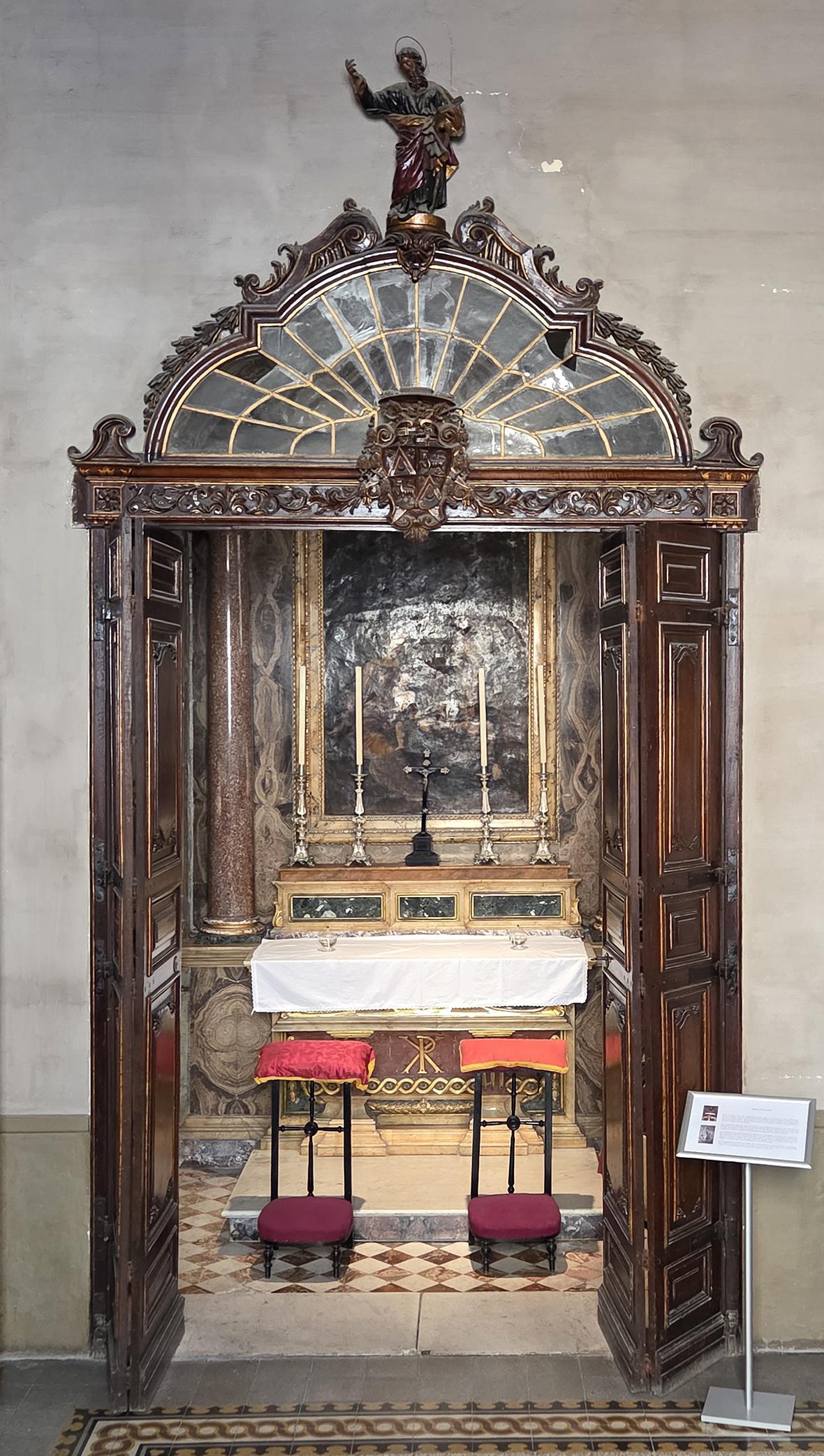 The chapel of St Joseph before restoration. Photo: Curatorial Studio
Yet the 18th-century bishop’s own aesthetic sensibilities also ensured that the changes to the chapel included the preservation of the former coffered ceiling, and of the original titular painting, revealing a respectful awareness of the historic past. This approach has been repeated in the conservation project.
Since the 1730s, for three centuries, the chapel continued to serve the private liturgical duties of the palace’s most prominent residents, the bishops and, later, archbishops of Malta. In more recent times, the chapel has also hosted wedding ceremonies that are within the living memory of several Maltese families.
The curatorial role and the discoveries
As part of the Archbishop’s Palace Regeneration Project, Curatorial Studio has planned and managed the conservation of the chapel from inception to its timely completion this month.
The curatorial ambit comprised identification and analysis of evidence, archival research, giving direction as new discoveries came to light, and proposing solutions that ensured the future conservation of the chapel’s multi-layered heritage asset, while allowing access to both ceilings – the original one and the later one overlying it − in their historic contexts.
The role also included directing the project – the disinfestation of the wooden doors and other immovable elements by Prevarti Ltd, the conservation and restoration services by Atelier del Restauro Ltd, scientific investigation by the Diagnostic Scientific Laboratories (Heritage Malta) and illumination by Light Design Solutions Ltd, supported by the Archdiocese of Malta, including its Digital Media Office documenting the project via video and photography.
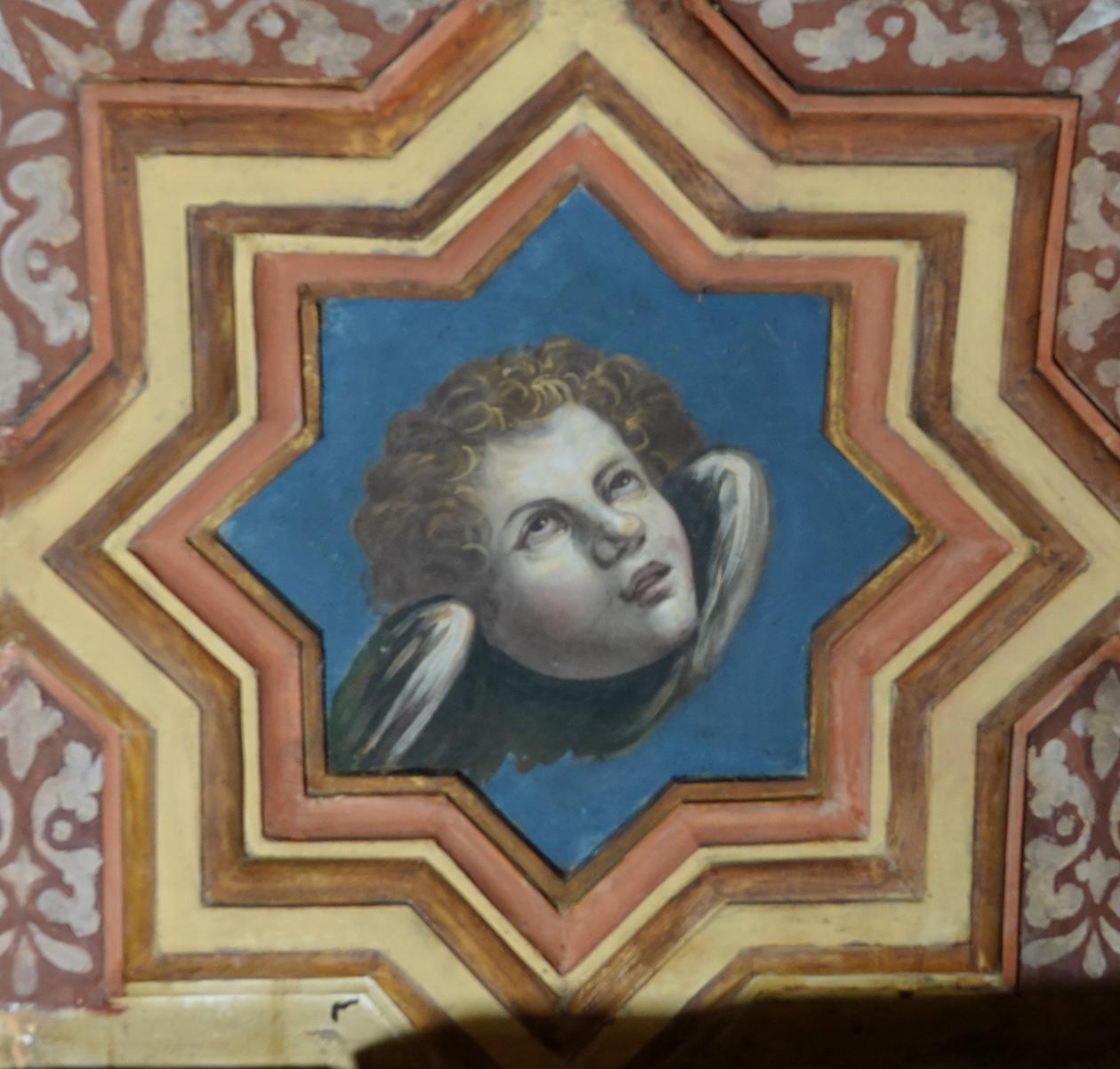 A detail of the uncovered ceiling. Photo: Curatorial Studio
The modest size of the chapel may belie the extraordinary wealth of historic discoveries that resulted from its conservation
The chapel of St Joseph was originally named by Bishop Baldassare Cagliares (1575-1633), who had built the Valletta Palace. This is mentioned in his will of 1631, when he bequeathed the palace to his successors. The name of his chosen artist, Silvestro Querio Il Romano, was discovered following a close study of the titular painting of The Holy Family with the Young St John the Baptist. This discovery was publicised in an article in The Sunday Times of Malta of September 7, 2025. As work initiated, it was soon realised that the chapel hid other pictorial treasures that had not been seen since the high baroque redesign of the chapel in the 1730s.
As scaffolding made it possible to access to the upper half of the chapel, we could see evidence that the thin layer of paint, depicting an architectural motif in the lunette above the doorway, was a later addition. Losses in parts revealed red, amber and blue colour below the grey and black paint. We also noted that traces of an underlying paint layer proceeded well beyond the confines of those imposed by the canvas ceiling frame, at both ends of the wall. This investigation would unveil two extraordinary artistic and architectural discoveries.
After discussing the methodology with Atelier del Restauro Ltd, sample areas of the lunette were uncovered to reveal another magnificent painting by Silvestro Querio: the lunette now portrays a kneeling Christ contemplating the symbols of his imminent passion, apostles sleeping on either side, while in the distance on the lower right, soldiers are trooping in through the garden gates to arrest Christ.
The Christ in the Garden of Gethsemane is thus another oil-on-stone painting that can be securely attributed to Querio.
Scientific analysis on the chapel paintings was also undertaken to study the artist’s use of pigments and his technique as a painter working in an oil-on-stone medium in early 17th-century Malta.
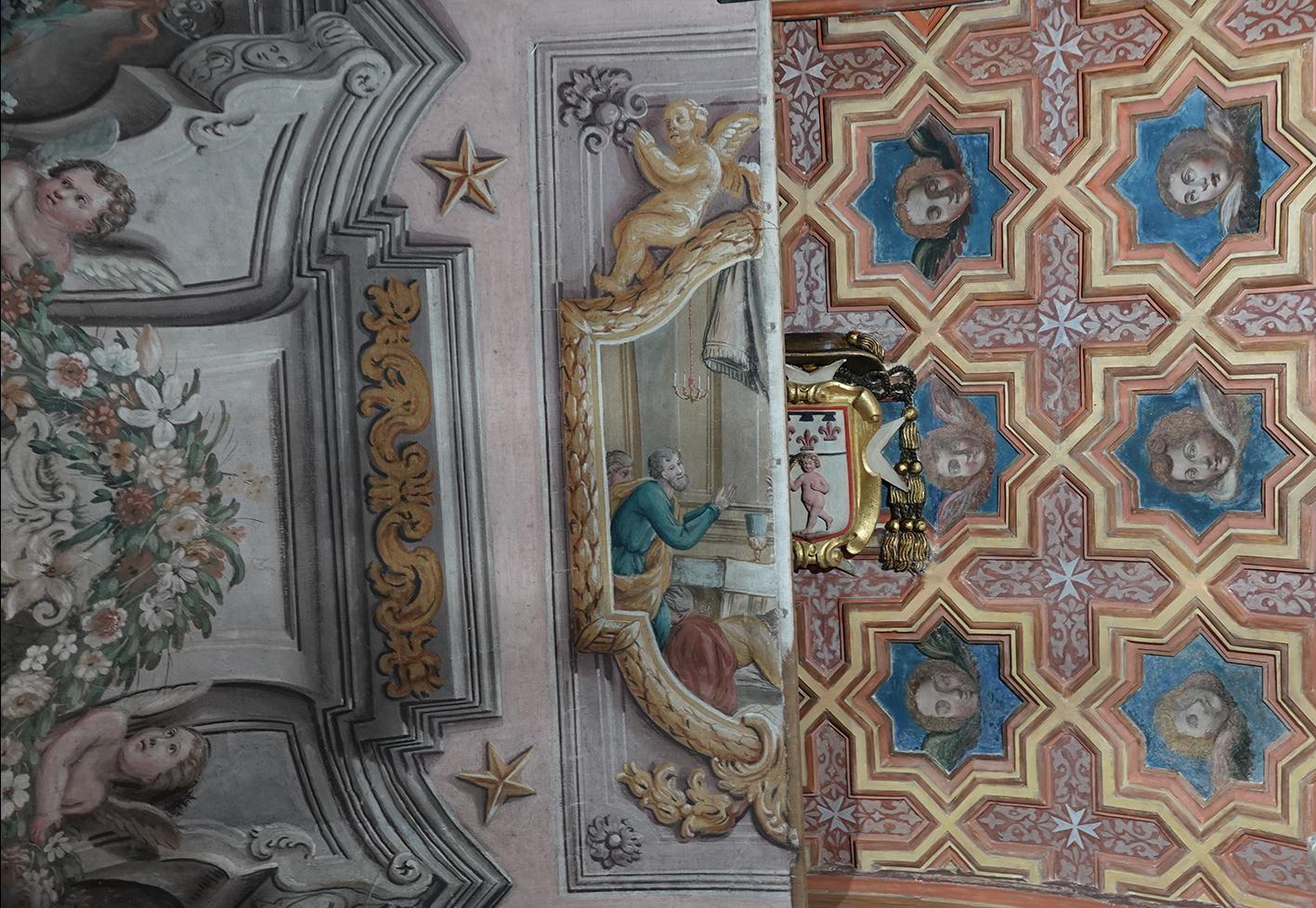 Part of the 17th-century coffered ceiling (right) discovered beneath the 18th-century canvas ceiling. Photo: Curatorial Studio
Research conducted by author Suzannah Depasquale on the palace edifice, together with analysis of material evidence, led one to anticipate a barrel-vaulted ceiling hidden behind the canvas ceiling. Endoscopy, together with the removal of two wooden lateral floral panels spanning the 18th-century faux corbels by the conservation team, revealed the early 17th-century aesthetic of an elaborately coffered stone ceiling.
Uniquely for the palace, the chapel’s eight-pointed coffering was found to be painted with figures and motifs. Winged cherubs’ heads are each portrayed in a singular pose, while the cross of the Order of St John is a recurring motif. This leads one to anticipate that other coffered ceilings in the palace, such as that of the entrance hall, similarly hold pictorial embellishments beneath their 21st-century paint layers.
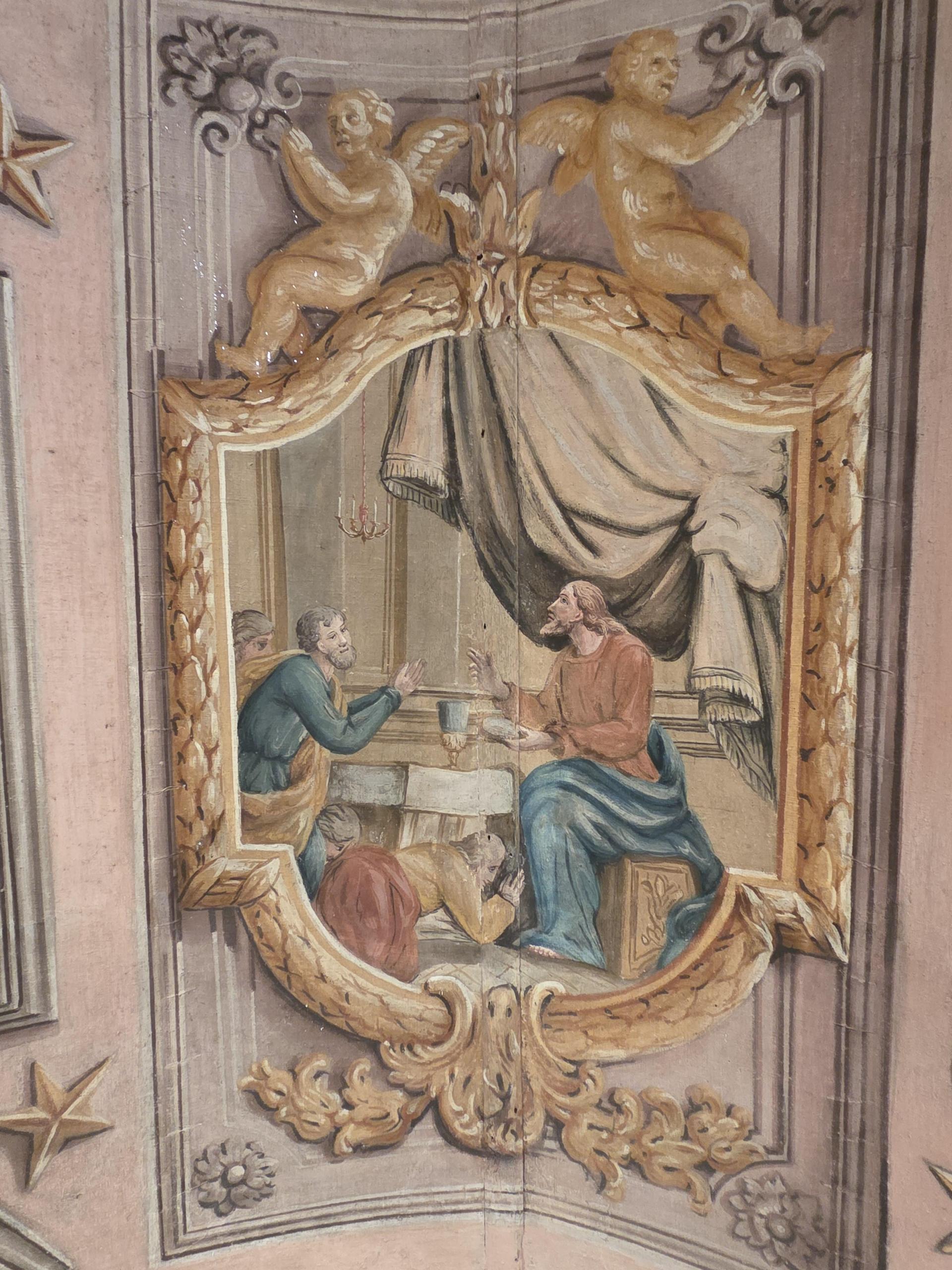 The Anointing of Jesus's Feet, Detail, 18th century ceiling. Photo: Curatorial Studio
Further exploratory photography by Depasquale of the uppermost part of the ceiling, shot in the narrow gap between the stretcher frame and wall, once more revealed a more elaborate sculpture at the centre. Its sculpted features led to the identification of the coat-of-arms of Bishop Cagliares.
Revealing the coffered ceiling
The newly-exposed stone ceiling held evidence of water damage and salt infiltration that had also affected the canvas ceiling below it. The conservation of the earlier decorative scheme necessitated the lowering of the canvas ceiling. This curatorial decision was taken with the endorsement of the archbishop, while Madame Dewavrin kindly extended her donation to cover the additional work of the restoration of the newly discovered stone ceiling paintings.
The lowering of the canvas painting by the conservation team, led by Valentina Lupo, soon followed, exposing the full 180° coffered ceiling and its pictorial decoration. Fortunately, only the right-hand side of the ceiling’s paintings were found to have deteriorated due to water infiltration.
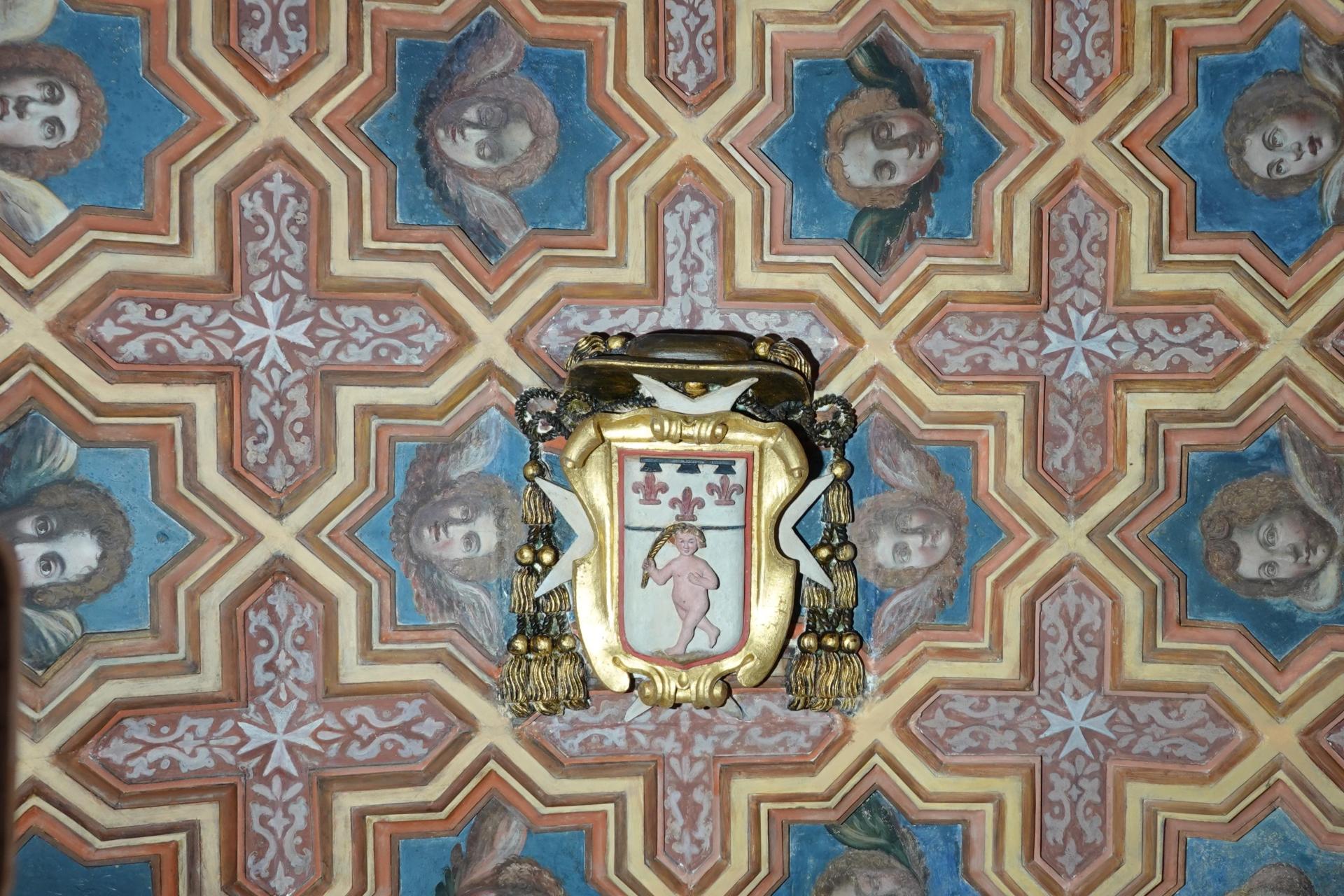 The uncovered coffered ceiling, with the coat of arms of Bishop Cagliares. Photo: Curatorial Studio
The Cagliares heraldic shield was intact, with its original polychromy, and served as the keystone to the chapel ceiling. Its upper division or ‘chief’ held the heraldic symbols of Grand Master Alof de Wignacourt, whose rule ended in 1622, thus giving clear evidence of the year when the chapel was completed.
The conservation of the rest of the chapel continued with the cleaning of the gilt wood gloria above the titular painting, the restoration of the mural paintings, the finto legno doors dating to the Cagliares period, the walnut doors with gilt detailing, including the Alpheran De Bussan escutcheon, the lead and handblown glass pane fanlight, and the cleaning and restoration of the polychrome statue of St Paul located above the chapel’s main door.
The above-mentioned 18th-century marble features were seen to be similar to those that adorn the chapel of the former seminary in Mdina, which had also been built under Bishop Alpheran de Bussan’s patronage.
These elements provided another finding: visual observation through the gaps in the 18th-century marble altar revealed the presence of the original stone altar slab and pedestal. This would be yet another instance of cladding that covered the original element, to be found in the chapel.
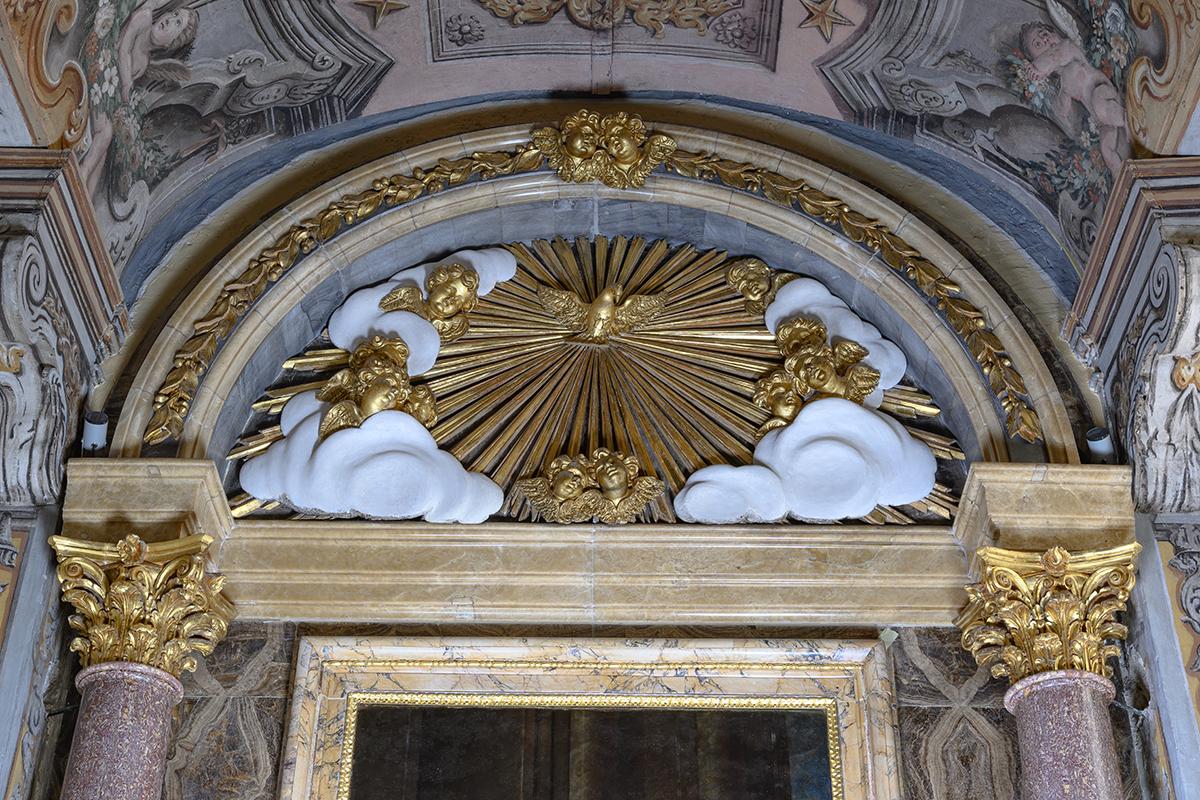 St Joseph Chapel Gloria'. Photo: Ian Noel Pace#
The significance of the conservation project
The modest size of the chapel may belie the extraordinary wealth of historic discoveries that resulted from its conservation. However, the findings briefly outlined herein represent a significant contribution to the history of art and architecture in Malta.
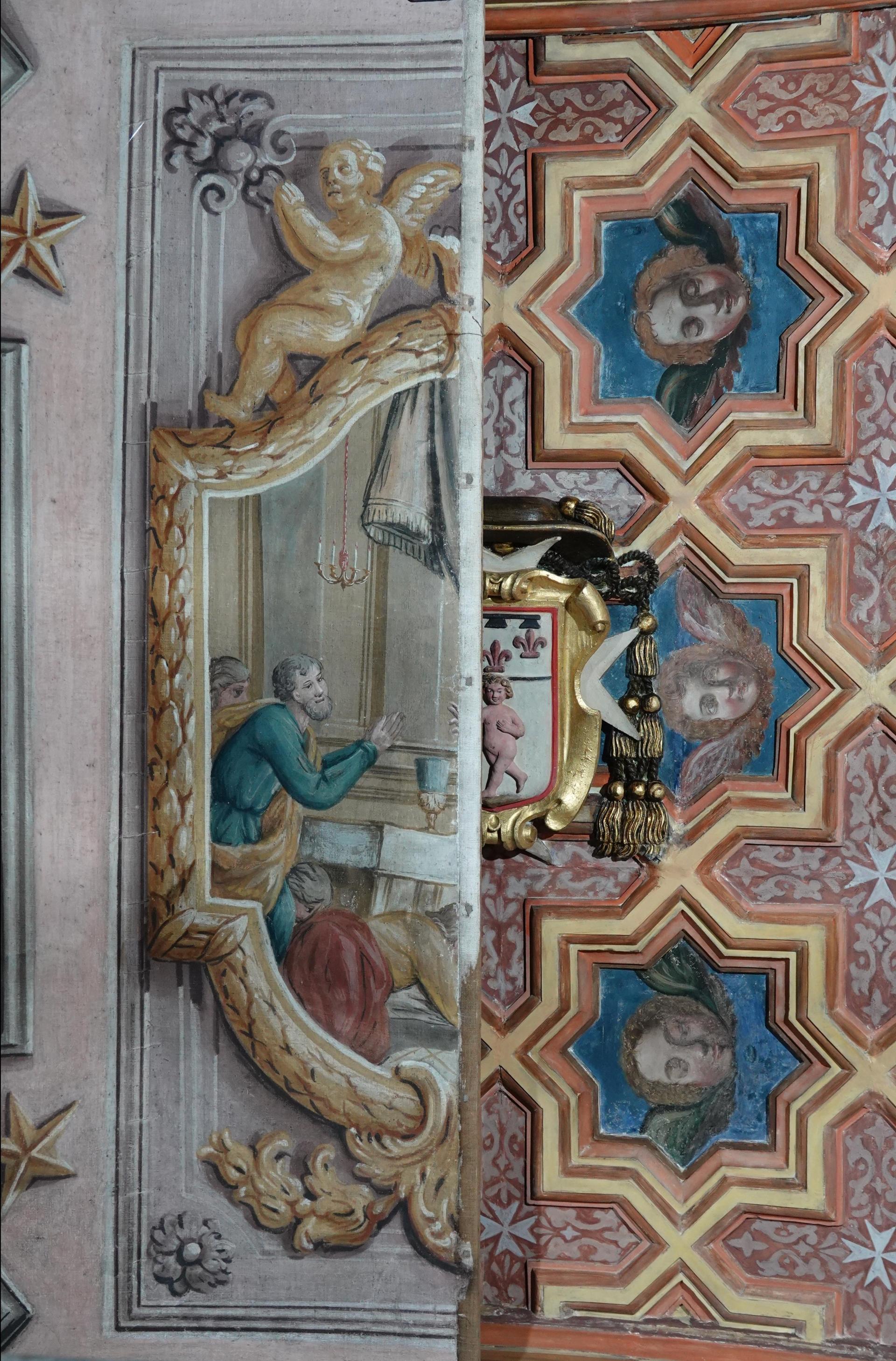 The 17th cent. ceiling behind the 18th cent. canvas ceiling - vertical. Photo: Curatorial Studio
From a late Renaissance chapel with masterpieces that can now be attributed with certainty to Silvestro Querio, and its uniquely decorated stone coffering, to the high baroque aesthetic encompassing its walls, the chapel of St Joseph now continues to be appreciated not only for the religious heritage that it represents, but also for the greater significance imparted to the historic palace with its artistic and architectural discoveries.
This project could only be finalised thanks to the trust shown by Archbishop Charles Scicluna, and by Madame Dewavrin, towards Curatorial Studio and to the whole team involved in the conservation effort. Thanks are especially due to Richard Cachia Caruana, who assisted in securing the necessary funding, together with Jo Anne Fleri Soler, the donor’s representative on the project. Thanks are also due to the Office of the Administrative-Secretary of the Archdiocese of Malta, Michael Pace Ross, as well as Rev. Dr Nicholas Doublet, the Ecclesiastical Tribunals, Atelier del Restauro Ltd, Prevarti Ltd, Light Design Solutions Ltd and the Diagnostic Scientific Laboratories (Heritage Malta).
Acknowledgements
Giovanni Bonello, Nichi Agius Deguara and Ian Noel Pace.
Suzannah Depasquale and Theresa Vella are founding partners of Curatorial Studio.
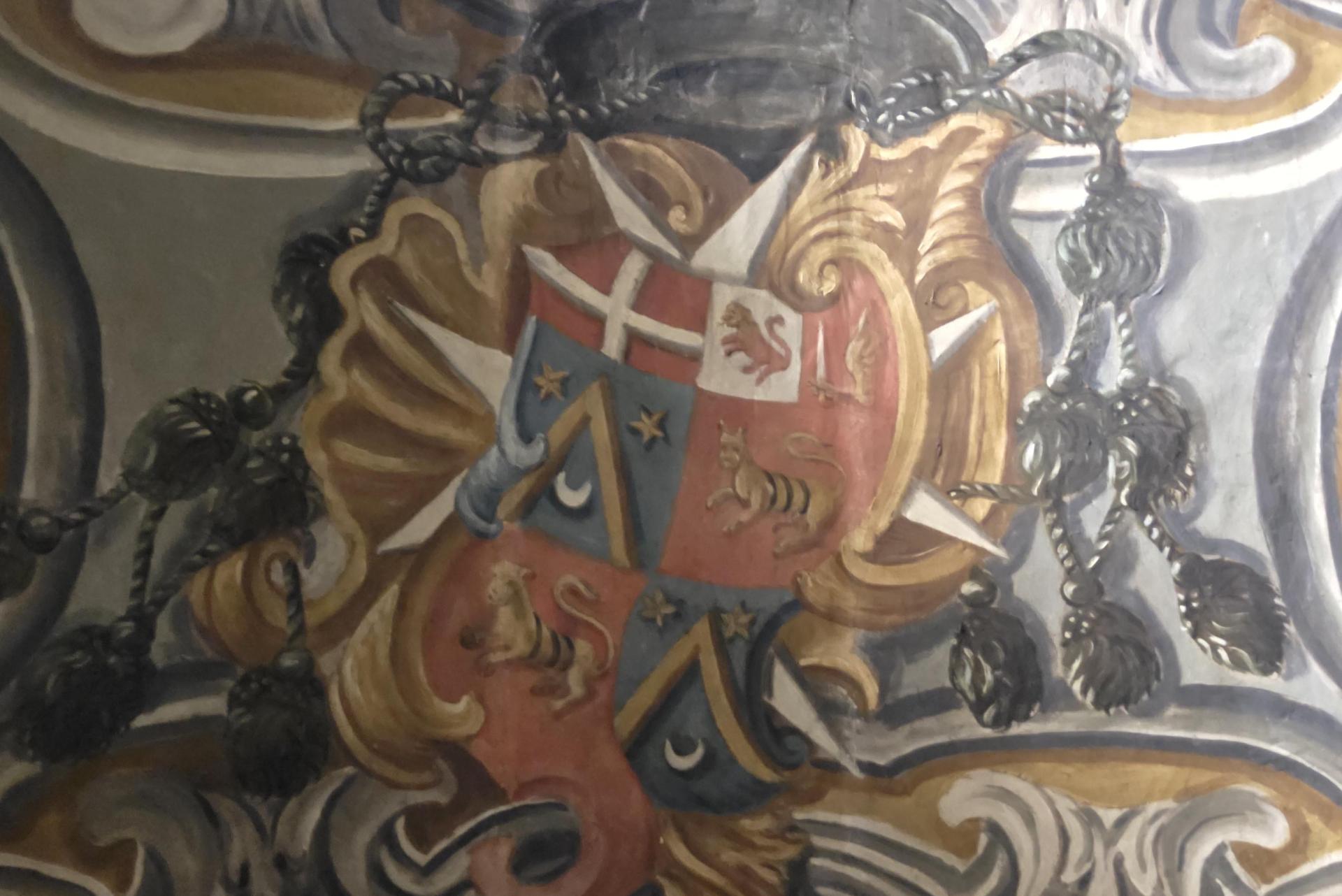 The 18th cent. coat of arms of Bishop Alpheran de Bussan. Photo: Curatorial Studio