Peter III of Portugal (1717-86) portrait at Archbishop’s Curia conserved
The enigmatic portrait, possibly by Favray, may allude to the building the sitter was funding – the ‘Casa della Madonna di Manresa’, today the Archbishop’s Curia
One of the most interesting portraits found at the Archbishop’s Curia in Floriana represents Peter III of Portugal (1717-1786), consort of Queen Dona Maria I of Portugal.
Peter III holds a distinctive place in the history of Portuguese royalty. A member of the House of Braganza, he was the younger son of King John V and Maria Anna of Austria. Though not a warrior, Peter reflected the core virtues of knighthood – loyalty, honour and devotion – most clearly shown in his role as both husband and king consort to Queen Maria I, as well as in his sympathy for the Jesuits, from whom he had received his early education.
The 18th-century oil-on-canvas painting, located in the office of the Curia’s administrative secretary, presents a three-quarter-length portrait of a gentleman, lavishly dressed in a silver breastplate, embossed with the eight-pointed cross of the Order of the Knights of St John.
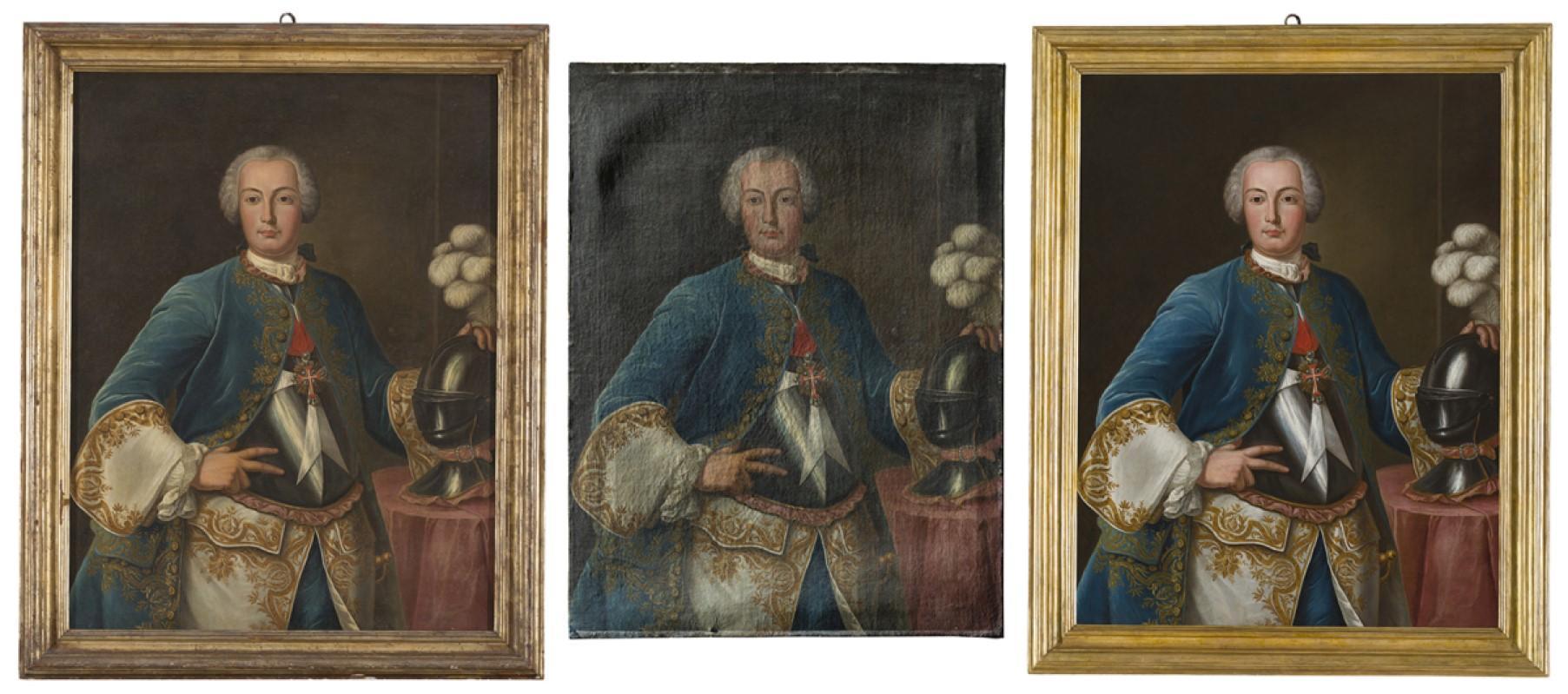 The painting in its frame prior to treatments; (centre) being investigated under raking light before treatments; (right) the framed painting after treatments. Photos: Manuel Ciantar, Suzanne Ciantar Ferrito obo ASC Conservation Centre Ltd
Over the breastplate, he wears an embroidered ivory skirt, over which is an azure velvet jacket, also embroidered with gold, accompanied by matching trousers. His white chemise is visible at the collar, which is edged with a rose-coloured trim, and his sleeves are lined with brocade.
Additionally, he is adorned with the traditional wig prevalent during the period, and a cross, signifying his affiliation with the Military Order of Christ, a prestigious Portuguese honorific order that forms part of the Knights Templar and was formerly known as the Order of the Knights of Our Lord Jesus Christ.
Although to date the enigmatic portrait is not ascribed to any artist, the style and technique bear a significant similarity with the work of the Malta-based French painter Antoine Favray (1706-1798), who was mostly renowned for capturing the likenesses of members of the Order of St John and other notable personalities. Similar to this portrait, Favray’s works are characterised by their rich textures, tactile qualities and detailed compositions, reflecting the rococo style prevalent during his time.
Peter III gazes towards the viewer with a dignified expression, as he stands beside a table with a helmet resting on it, atop a red cloth. He leans on the helmet with his left arm, while placing his right hand on his hip. The helmet is notably opulent, adorned with fine white feathers and a red ribbon running along its neck.
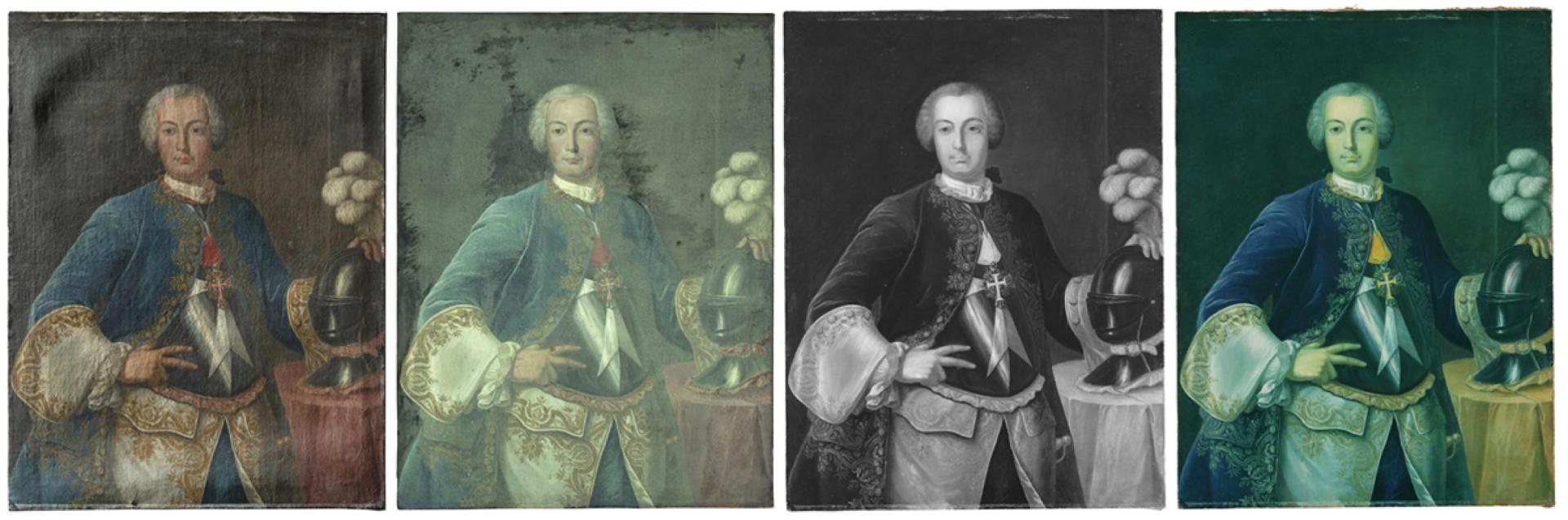 Multispectral imaging of the painting carried out with Manuel Ciantar and Suzanne Ciantar Ferrito during its initial analysis. Photos: Manuel Ciantar and Suzanne Ciantar Ferrito obo ASC Conservation Centre Ltd
This iconography was quite common for noblemen at the time. Although he is dressed in a silver breastplate, this attire is symbolic, in order to show his status, as Peter III did not participate in any battles during his lifetime.
His lavish clothing contrasts sharply with the stark brown background, which may subtly allude to the Jesuit mission he was funding – Casa della Madonna di Manresa in Floriana – a retreat house built by Francesco Rosignoli.
Interestingly, the escutcheon embellishing the entrance of the church of Our Lady of Manresa, which was completed in 1749, states: DEO/In Honorem Dei Paræ et S. Ignatii/Seren: D. Petrus Infans Portugallia/Magnus Prior Cratensis/Anno Domini MDCCXLIX
The church’s oval design is attributed to the Maltese architect Andrea Belli (1703-1772). It was built by funds donated by Peter, the Infante of Portugal, grand prior of Crato. Rosignoli dedicated the chapel to Our Lady of Manresa to commemorate the visions of the Blessed Virgin that St Ignatius of Loyola experienced during his spiritual retreat in 1522-23 in a grotto in Manresa, Spain. The titular painting and the cycle adorning the chapel were commissioned to Favray.
What mostly stands out in this portrait is the efficiency with which the artist captures the tactile qualities of the sitter’s clothing; mostly in the stark contrast that emerges from the blue velvet of his jacket, with the golden embroidery and the finely polished breastplate that he wears.
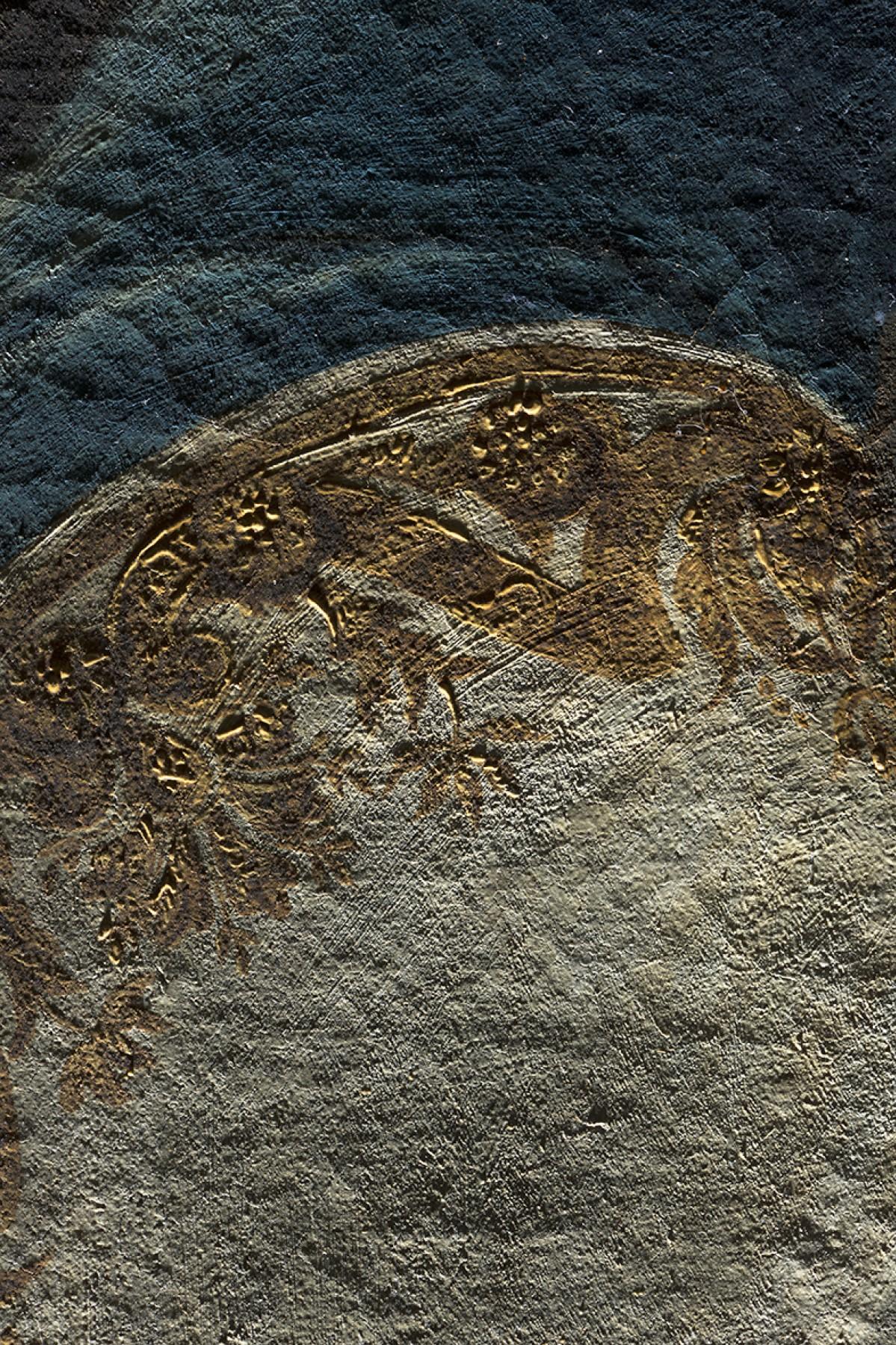
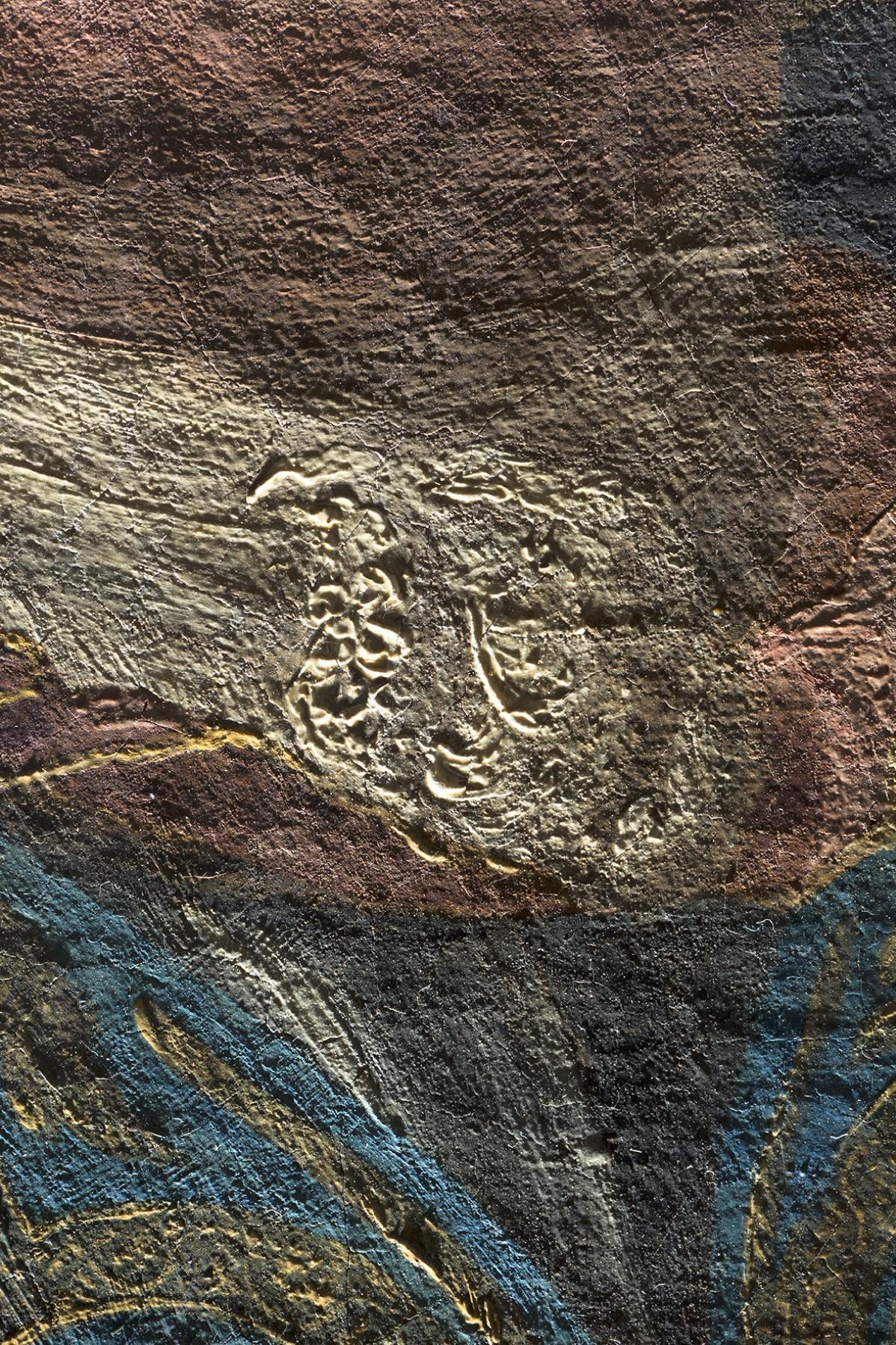
Close-up photos taken under raking light showing the artist’s virtuoso in using the impasto technique to build the painting’s intricate details. Photos: Manuel Ciantar and Suzanne Ciantar Ferrito obo ASC Conservation Centre Ltd
.
.
The painting bears significant similarities with another portrait, seemingly of the same sitter – the oil-on-canvas portrait of King Peter III of Portugal, created by a European or Portuguese workshop of the 18th century. In this portrait, Peter III similarly wears the top of the armour as he regards the viewer. On this occasion, he wears a brown fur coat and holds a gold jewelled sword in his right hand. Instead of the helmet, on a cushion on his right is a gold crown, which represents his royalty.
This particular painting features the coat of arms of Grand Master Manuel Pinto da Fonseca. Interestingly, this portrait of Peter III has also been linked to Favray, primarily due to similarities in the techniques used across his portraits.
Manufacturing technique, state of conservation
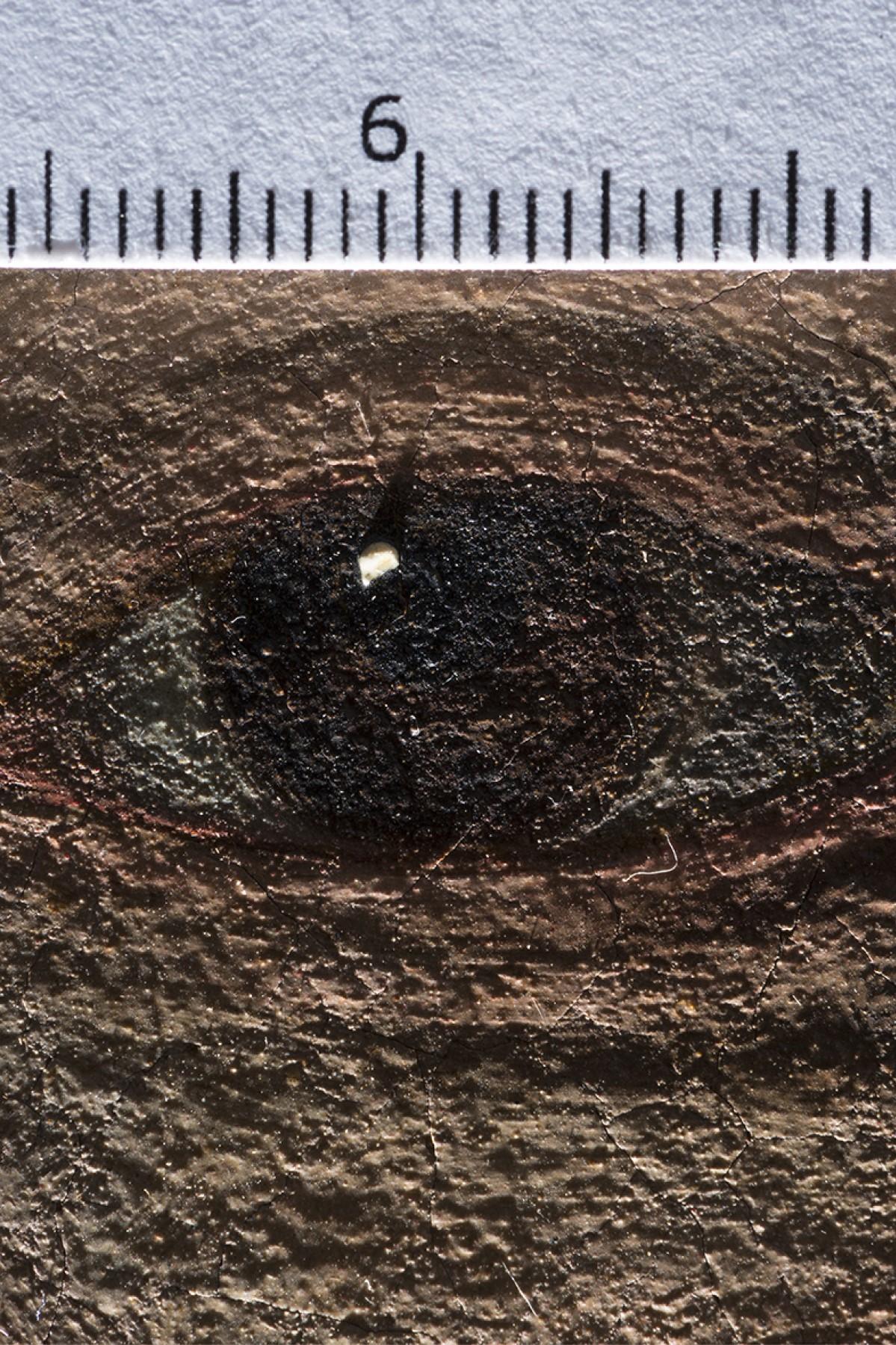
The painting is executed in oils on a reddish ground layer applied to the canvas, making it suitable for receiving the paint layer. The artist’s virtuoso is clearly visible in his use of the impasto technique to build intricate details of the attire, as well as in building anatomical features. For instance, during raking light investigations, it became evident that the glare or reflection seen in the sitter’s eyes is merely a thick drop of paint precisely applied to attain the desired effect.
The glare or reflection seen in the sitter’s eyes is merely a thick drop of paint precisely applied
In a previous restoration intervention, a secondary canvas support, or, rather, sack-cloth, was attached to the verso of the original, thin and tightly woven canvas, in a process known as lining. This was aimed at reinforcing the oxidised, original support. Nonetheless, the intervention had aged in itself, and the thick layer of organic adhesive used by past restorers to attach this secondary textile caused shrinkage and was contributing to stresses and deformations in the painting’s strata. The thick application of adhesive can also be potentially linked to the formation of a network of cracks in the paint layer, possibly resulting from such stresses. Other deformations and markings were being caused by the old, unbevelled strainer frame, which was found to be unstable and inadequate.
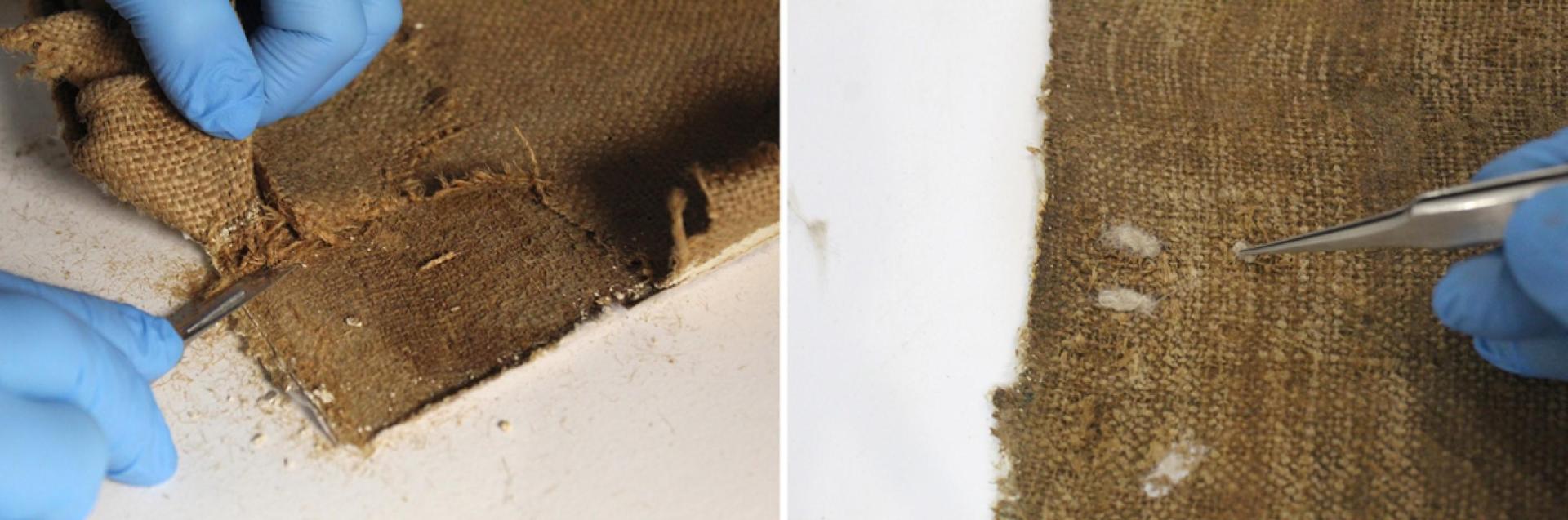 Details taken during treatments of the canvas support. Photos: ASC Conservation Centre Ltd
Multispectral imaging and non-invasive scientific studies carried out in the laboratory of ASC Conservation Centre Ltd threw light on additional past interventions, this time addressing the paint layer. Whereas the figure only had a few old retouchings covering minor losses in the original paint, the background of the sitter was heavily retouched, as well as overpainted, as evidenced during ultraviolet fluorescence investigations.
Retouchings seen on the background were covering substantial paint damage on the left-hand side of the sitter as well as towards the upper periphery of the painting. However, past restorers had extended this onto the original, and the latter was recovered during the latest cleaning interventions.
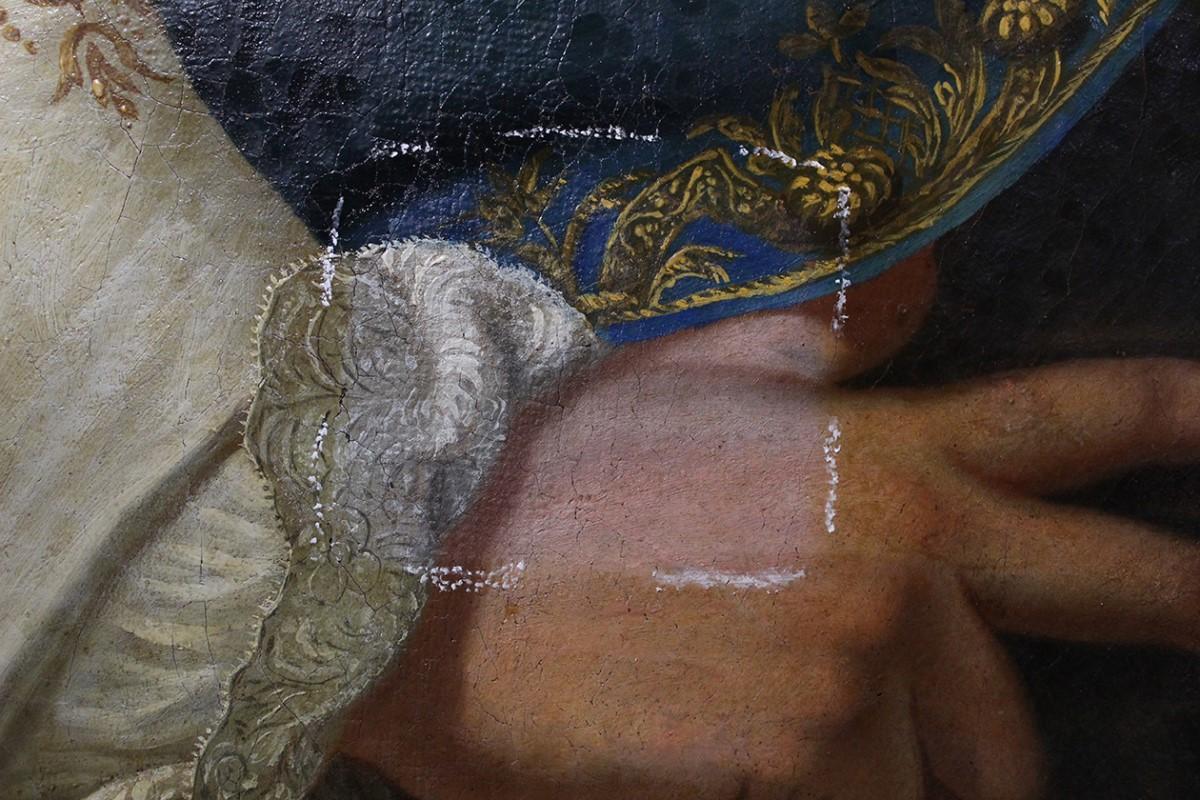 During the thinning down of the aged and yellowed varnish. Photo: ASC Conservation Centre Ltd
Conservation treatments
Conservation treatments were carried out by the present co-author Amy Sciberras and her team. Following initial studies implemented in a specific section of their laboratory together with technical art photographers Manuel Ciantar and Suzanne Ciantar Ferrito, hands-on works were initiated through the consolidation and stabilisation of fragile areas of the paint layer, using syringes.
The surface of the painting was subsequently cleaned from grime, yellowed varnish and overpaint using a combination of solvents, gels and mechanical techniques. Sensitivity tests were first executed on various areas of the painting and the entire cleaning process was regularly monitored using ultraviolet light.
The surface was also cleaned of non-original stucco that was concealing parts of the paint layer. This was done using surgical knives and magnifying equipment.
The conservators continued addressing past interventions and mechanically removed the relining sack-cloth from the original oxidised canvas, including the old lining adhesive. Prior to addressing the deterioration of the canvas, it was also necessary to lower the canvas deformations through the introduction of moisture and pressure applied locally. Afterwards, missing canvas threads resulting from a past infestation were infilled and repaired using threads that were similar to the original fibres.
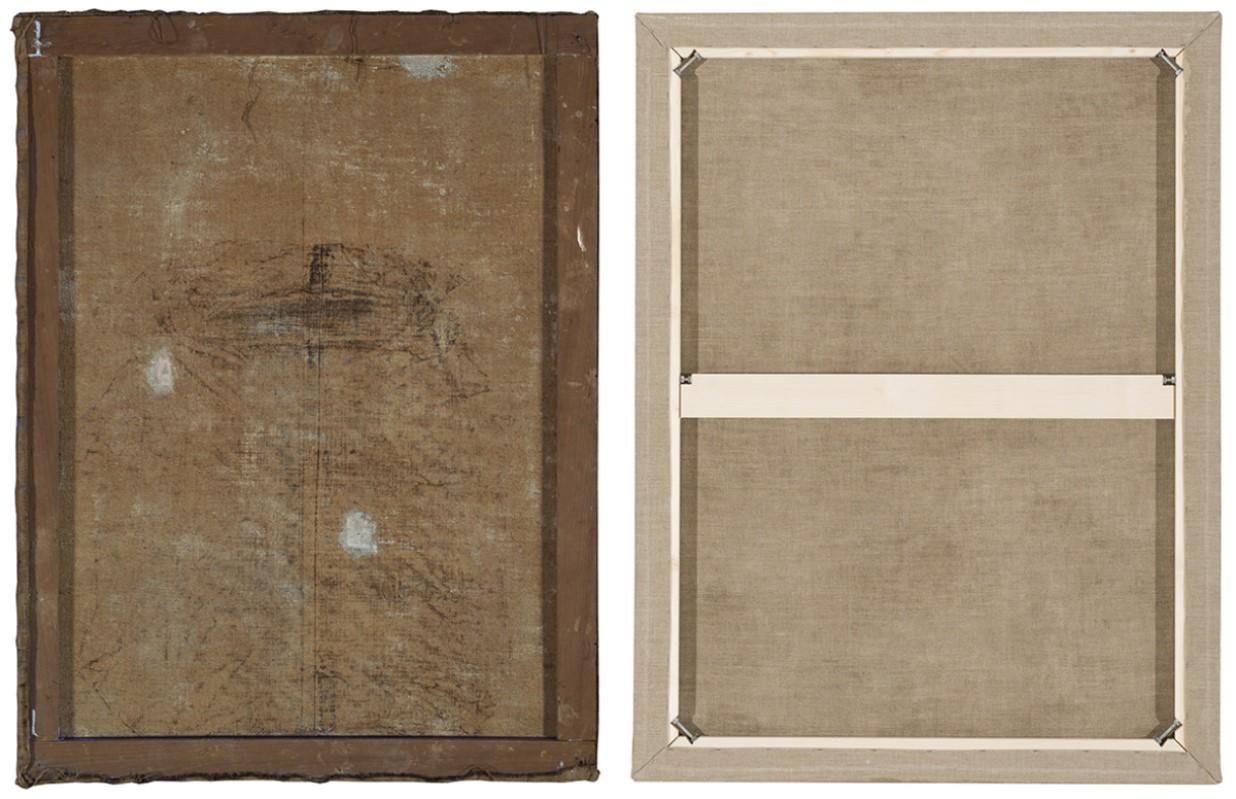 The verso of the painting before (left) and after treatments. Photo: ASC Conservation Centre Ltd
Due to the original canvas being considerably oxidised, a lining treatment using current methods, adhesives and techniques was considered the best option to reinforce this and give it the required flexibility to be properly tensioned once again. The now stabilised and lined painting was re-stretched onto a newly made stretcher frame, having expandable fittings and a cross-bar to better support the painting.
The final phases involved the integration of losses in the ground and paint layers. Lacunae were infilled using a calcium-based mixture, levelled, textured according to the surface texture of the painting and chromatically integrated using reversible varnish colours. A non-yellowing protective coating was also applied to the paint layer, protecting the latter against agents of deterioration.
The conservators at ASC Conservation Centre also treated the gilt decorative frame of this fine artifact. As a preventive measure, this was first disinfested against woodworm. Detachments in the upper strata were stabilised through the application of a specific adhesive and the gilt surface was cleaned from thick layers of grime and overpaint. Losses were integrated following the original manufacturing technique, thus completing the project.
Conclusion
This majestic portrait is a significant work that highlights the merits of the sitter and his historical ties to the Jesuits. Its recent restoration means the portrait is finally receiving the recognition it deserves and will, hopefully, encourage further research and a deeper understanding of both the sitter and the artist.


Acknowledgements
The authors, Michael Pace Ross and Amy Sciberras, thank Archbishop Charles J. Scicluna for supporting the project, as well as historians Katrina Xuereb and Nadette Xuereb, who also consulted with Prof. Keith Sciberras.