Petitions from Birkirkara, 1615-1640
A sample of pleas submitted by residents of this populous town to the grand masters of the Order of St John that open a modest window about their minor personal problems, forgettable events and insignificant complaints
When the Hospitaller Knights ruled Malta, every person enjoyed the right to petition the monarch directly, from the wealthiest aristocrat to the most destitute of paupers.
Up to 1603, the written suppliche do not seem to have been systematically saved. But the manic bureaucrats of the Order could not live with disorderly approximation. Alof de Wignacourt started systematically filing every petition and binding the sheaves in registers.
By the time Napoleon expelled the Order in 1798, 17 huge volumes containing thousands of suppliche crowded the shelves of the archives, where most of them still preserve their secrets.
From 1530 onwards, the head of the hospitaller Order of St John wore two very distinct hats. He headed the Order of St John as grand master, but then he also ruled the island as prince of Malta. The people rightly referred to him as is-Sultan, not as il-Gran Mastru.
To those who believe that history feeds on micro-history to bulk itself up, those neglected volumes represent shimmering gems
The petitions we are dealing with concern the governance of Malta, not the internal matters of the Order. Petitioners addressed the prince of Malta, not the grand master, though they happened to be the same person.
The meticulous and overabundant records of that period have justly attracted the inquisitiveness of historians and scholars, local and foreign. Much less the volumes of petitions.
Maybe because very little history can be distilled from them, these have remained mostly unstudied, no, ignored, so far. But to those who believe that history feeds on micro-history to bulk itself up, those neglected volumes represent shimmering gems.
Reigning rulers of Malta, while retaining the final say, delegated administrative decisions to their ministers, generally Maltese lawyers, the powerful and allegedly corrupt uditori, or other officials who could advise them on the merits of the supplica.
The volumes also include their written reports or advice. Italian prevailed and, given the widespread illiteracy, law practitioners or professional scribes drafted the documents, often hardly legible.
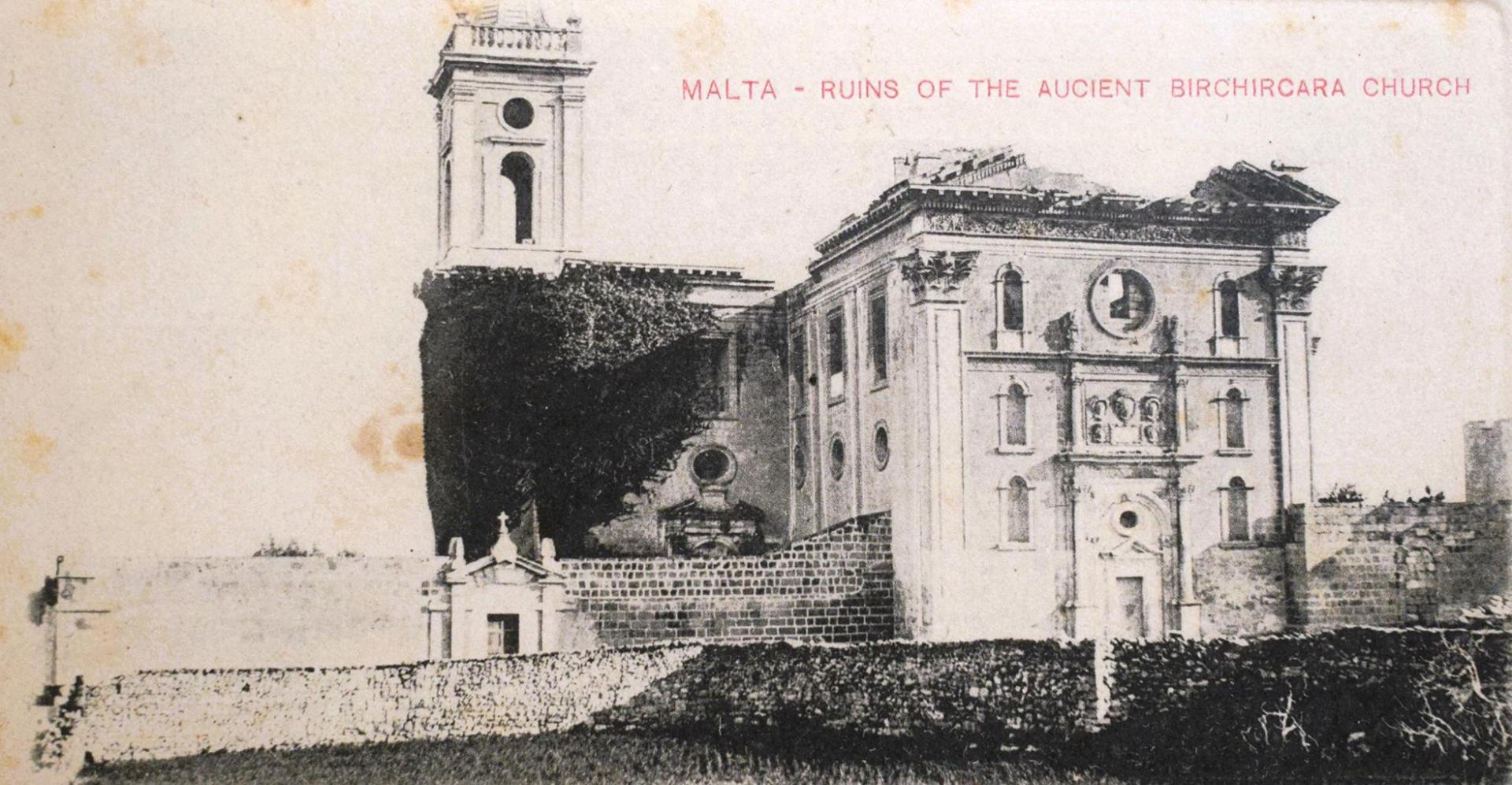 A 1900s image of the old parish church of Birkirkara.
The earlier petitioners generally profiled themselves by their name and their place of residence: AB from Rabat, CD from Bubacra, EF, a Gozitan. This facilitates a search by locality.
Over time, this convenient identifier started waning out of fashion. Later petitioners preferred to describe their calling, trade or profession: AB, carpenter, CD, apothecary, EF, violinist.
Several other petitions from Birkirkara pursued the same aim: to obtain public land for free to build homes on – a pioneer ‘affordable housing’ scheme, an early social service
For this feature I homed on some early suppliche from Birkirkara, then already a populous village. Do not expect discoveries that revolutionise the course of history. Most of them deal with minor personal problems, forgettable events, insignificant complaints – a modest window on… 400 years ago.
In the first petition from Birkirkara I came across, dated January 1615, Gio Paolo Cuschieri starts a recurring pattern – begging the ruler to be given public land to build a house on, close to where Domenico Micallef lives.
In a later petition, Cuschieri explained how for 15 years he served on the galleys of the Order and had to provide for his “old and decrepit mother and two disutili sisters” who had nowhere to live. He pleaded for some land in Birkirkara “near that given to other indigent people, without harming anyone” to build a stantiola to retire with his famigliola.
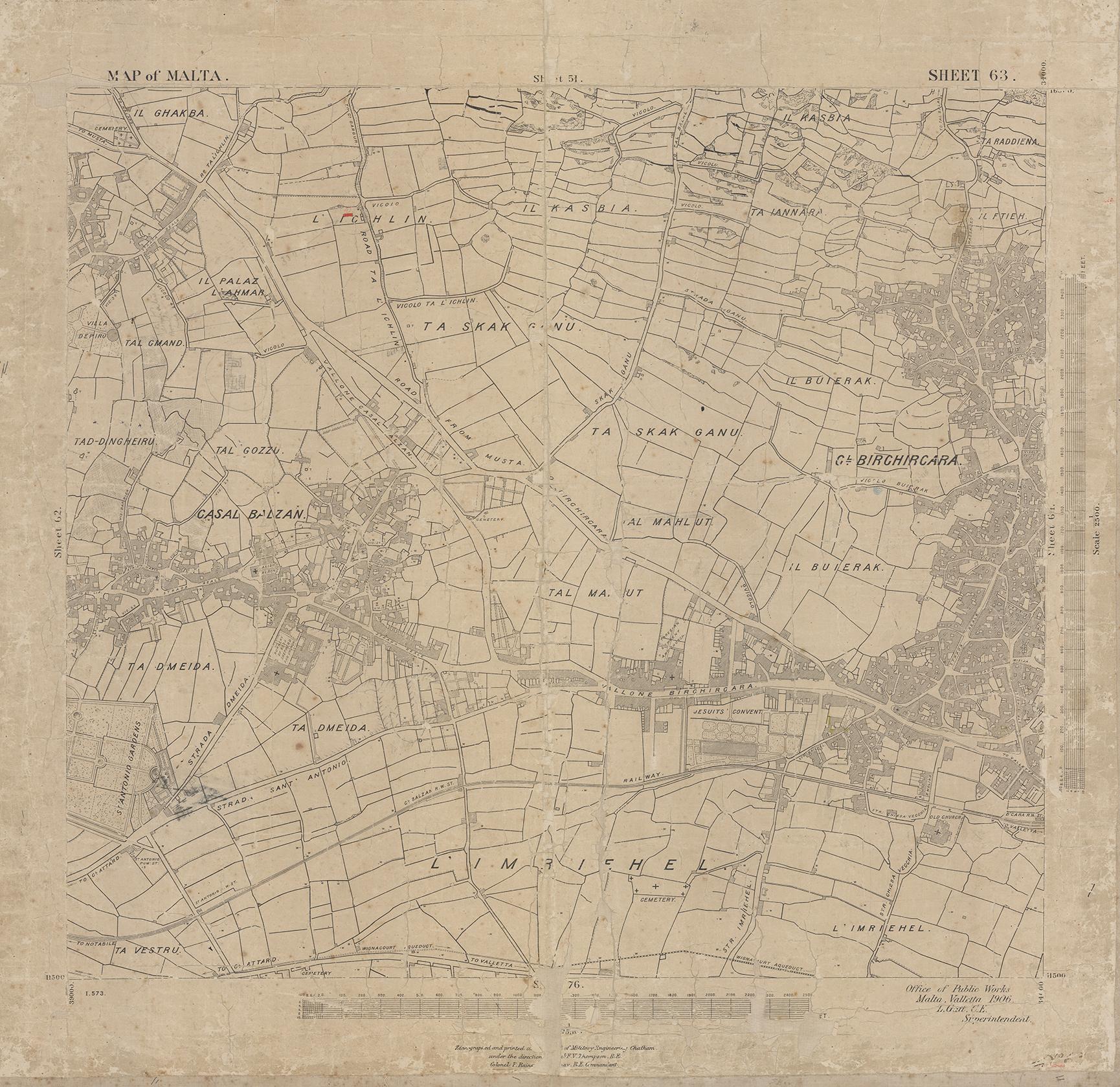 Map of Birkirkara, 1908
The jurats of Mdina, Pietro Monpalao, Michele Agius and Gio Vincenzo Castelletti reported favourably on this request, granted shortly later, as no prejudice to public or private interests resulted.
Cuschieri’s success appears to have been contagious. Several other petitions from Birkirkara pursued the same aim: to obtain public land for free to build homes on – a pioneer “affordable housing” scheme, an early social service.
Giovanni Galea followed Cuschieri that same year. He introduces himself as father of tre figlie femmine schette – unmarried in archaic Sicilian. As a good father he desired them to settle honourably, but being poor, he pleaded, for the love of God, to be assigned public land in Birkirkara where he could build a casetta for his daughters who, together with him, bound themselves “to pray God for a long and prosperous life of the prince. Amen”.
As did Pietro Cassar in 1618, who had, five years earlier, requested public land in Birkirkara, in the vicinity of the Vallone, where he could construct a house 11-and-a-half by seven-and-a-half canne footprint. Cassar pleaded being stranded in Gozo for a long time and had mislaid the decree of authorisation. He asked for the grant to be confirmed.
And Agnese Micallef, in 1620, the first Birkirkara woman to petition. She lived with six daughters. She too asked for public land in the village to build a house on. This would be a “charity most welcome to God”.
Another woman, the widow Venera Calleja, mother of four minor children, all “starving to death”, begged to be allotted land in the wied of Birkirkara to build herself and her wretched family a home.
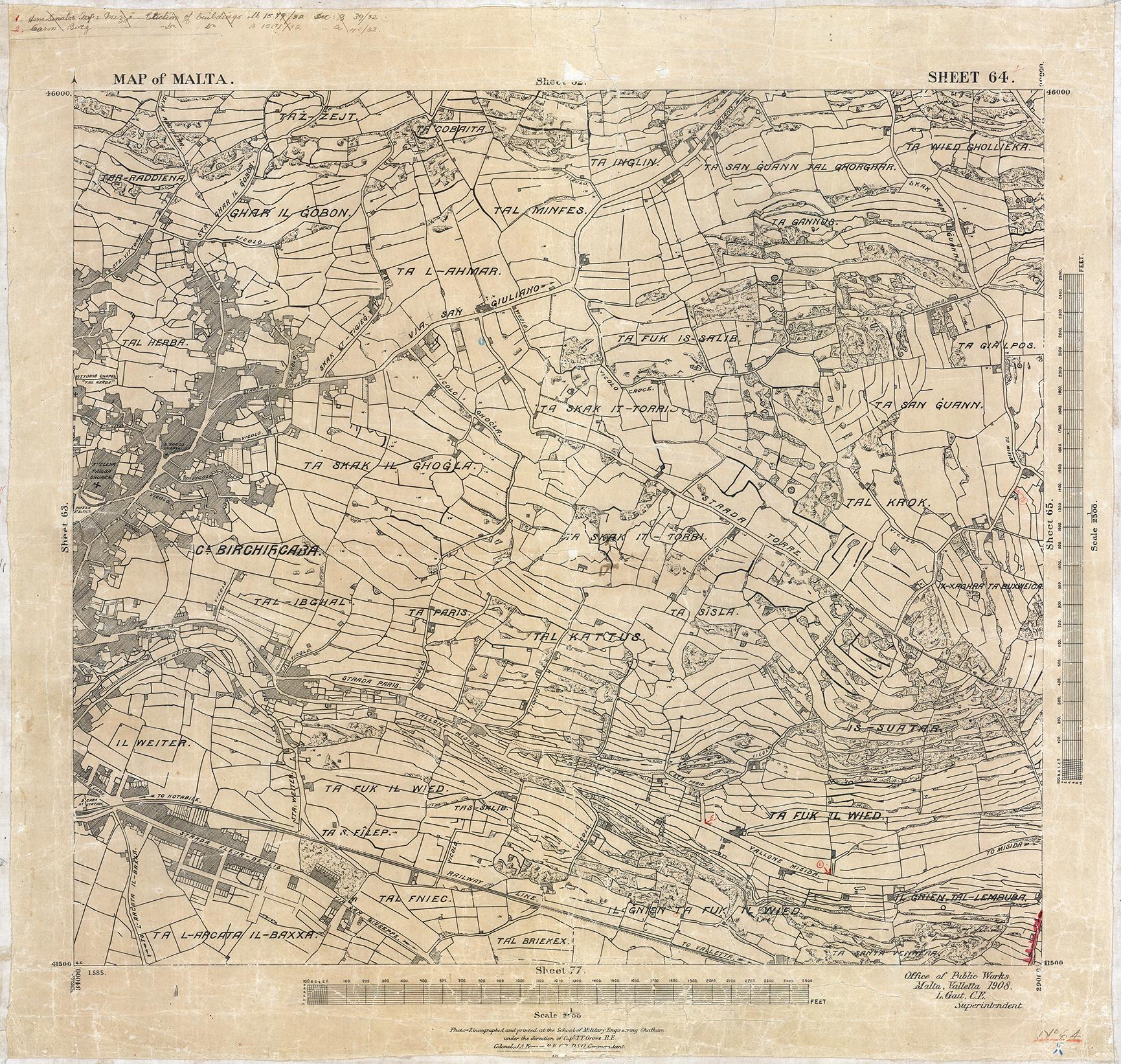 Another map of Birkirkara, 1908
Natale Catania, also from Birkirkara, “burdened” with children, three male and one female, in 1620 had no property except where he lived with his family. He planned to give his house as marriage dowry to his daughter.
He therefore asked for a plot of land in Birkirkara, measuring three mondelli, where he would build a new house himself, stone by stone, skilled as he was in hewing and construction. He asked for this owing to his “great poverty”.
In 1623, Gioannella, widow of Giacobo Debono from Birkirkara, mother of three schette, again poverissima, did not own a house and could not afford to rent one. She pleaded for public land in the vallone of the village where she could build un lochetto di case to live with her orphaned daughters.
For some unknown reason, a Gioannella Debono from Birkirkara filed two other similar petitions shortly later, as the mother of two schette and the wife of an old and destitute husband, who were homeless and lived with others. Same Gioannella? She asked for a plot of land measuring 10 canne in the vallone of the village, near the one granted to Pietro Aquilina and to Belerando (?).
Twelve years pass and Giorgio Vassallo from Birkirkara, the aguzzino (officer in charge of the discipline of the crew) of the galley San Carlo, recounts what happened when his ship stopped somewhere to take on water. A bonavoglia (forced rower, not slave) escaped. For three whole days Vassallo tried to discover his whereabouts. When he found him, the fugitive fled and, chasing him, Vassallo fell and broke his leg.
It took six months for the fracture to heal, and for the past two years he could only walk on crutches and in great pain. Now that he had recovered, having to support a wife and six children, he petitioned to regain his job as aguzzino.
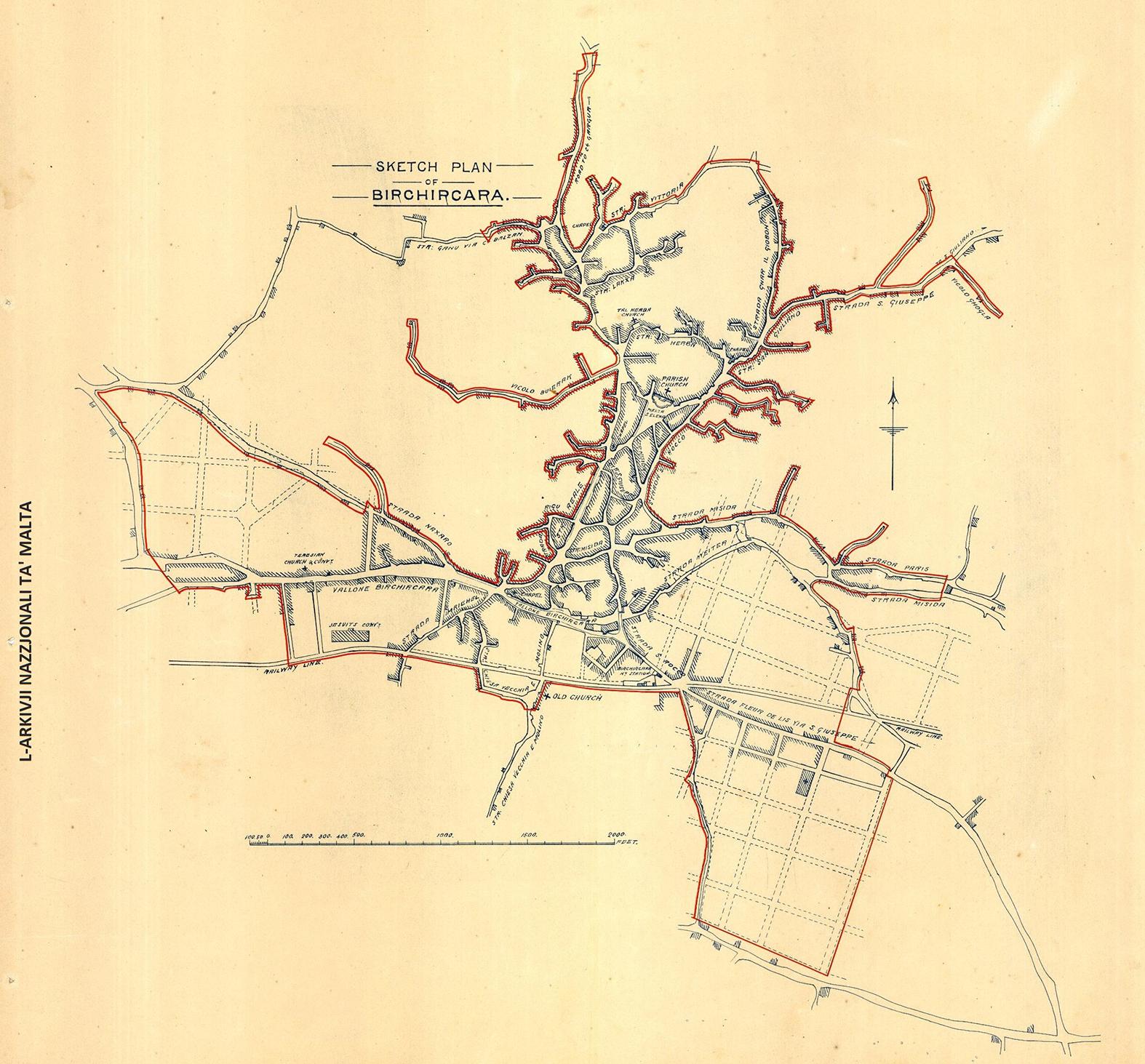 A 1908 survey map of Birkirkara. Photo: The National Archives
Bonanno Gallego (from Galizia?) in 1639 asks for a plot of land in Birkirkara, valley of Msida, claiming to be homeless.
The following year, the contestabili of Birkirkara petition the Treasury, on behalf of the inhabitants of the village.
Ab antiquo – since ancient times – the villagers used to pay the captain of Birkirkara the rent for a tower and its dependencies, as income for his upkeep. This was when the village had few inhabitants and the captain pocketed a low income.
But now the population had increased noticeably and so had the captain’s income. The contestabili submitted that the inhabitants should, in future, be exempted from paying the rent of the tower.

Acknowledgements
Sincere thanks to Leonard Callus, Jeremy Debono and Theresa Vella.