In pictures: Artefacts by Malta prisoners-of-war in WWI
POWs had their own libraries, printing presses and hobbies
Malta distinguished itself in the Great War (1914-1919) on two fronts, providing the Allies with essential services – hospital facilities and prisoner-of-war (POW) camps. The first took the lion’s share of international attention, much more than the second.
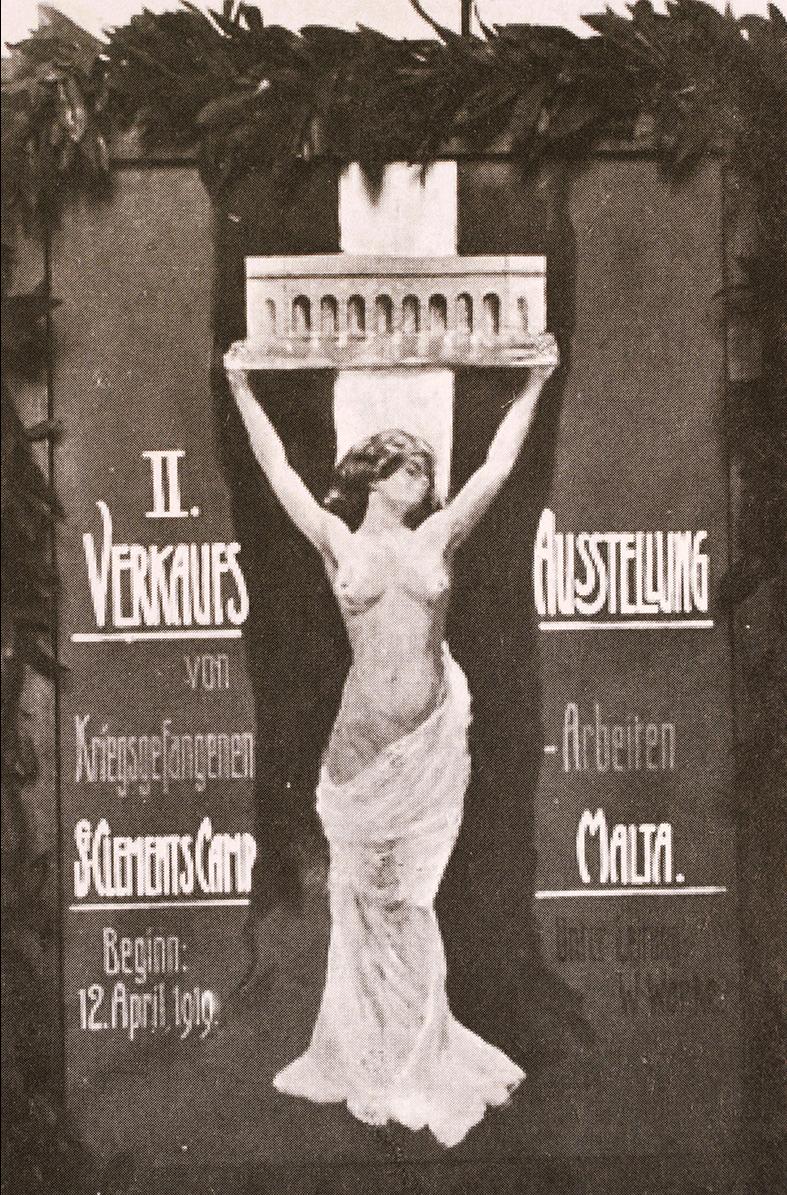 A 1919 postcard promoting an exhibition and sale of artefacts by Malta POWs.
The authorities selected the Cottonera area to receive large contingents of captured personnel and enemy aliens – Verdala, Polverista, San Salvatore and St Clement. Many hundreds of Germans and Austro-Hungarians accounted for the bulk of those detained but Turks and Bulgarians also figure. Two POWs stood out in Malta – Karl Doenitz, later admiral and successor to Hitler at the end of World War II, and Prince Franz Joseph von Hohenzollern, who published fascinating memoirs of his Malta captivity.
Except for restrictions on freedom of movement, the authorities generally encouraged life to unfold as normally as possible inside the POW camps. Inmates enjoyed their own (censored) postal services, organised their own concerts, theatricals, sports, newspapers, cuisines and gymnastics.
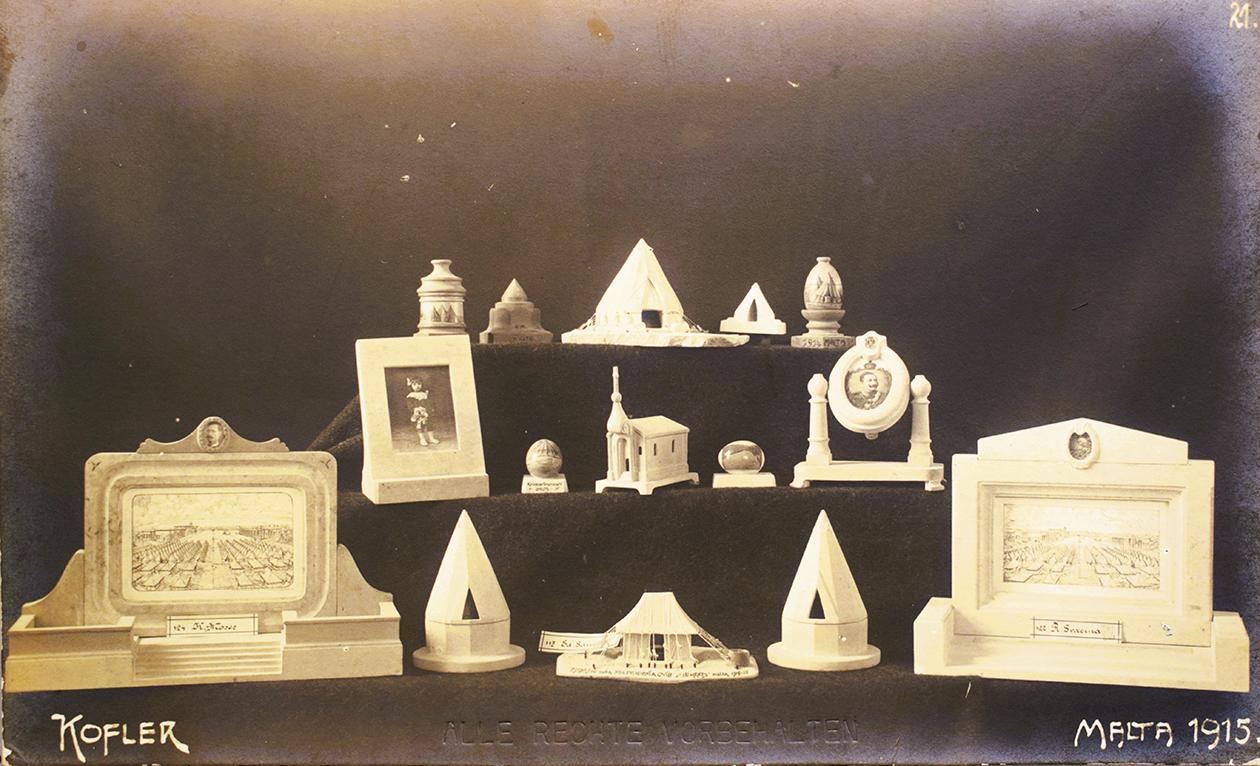 Two Malta POW postcards showing handcrafted objects that were exhibited or on sale in the Cottonera camps.
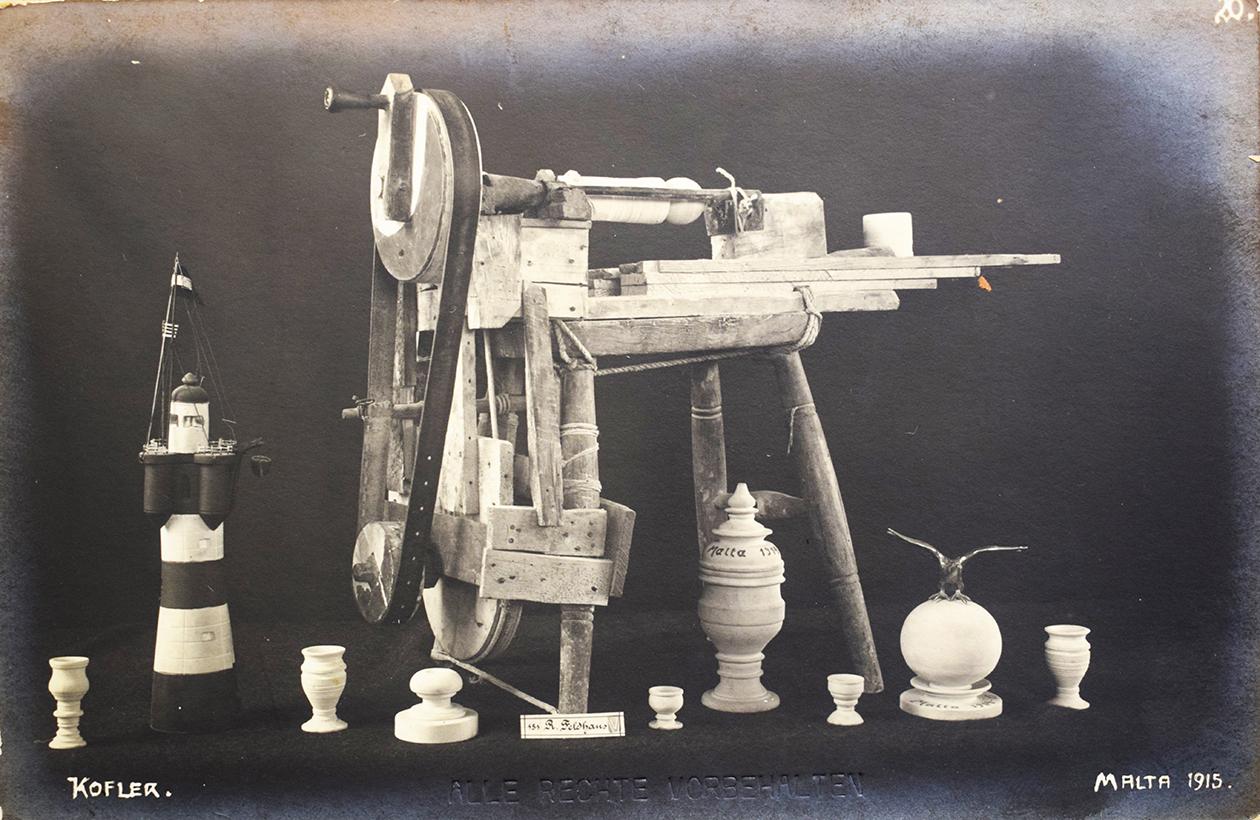 .
.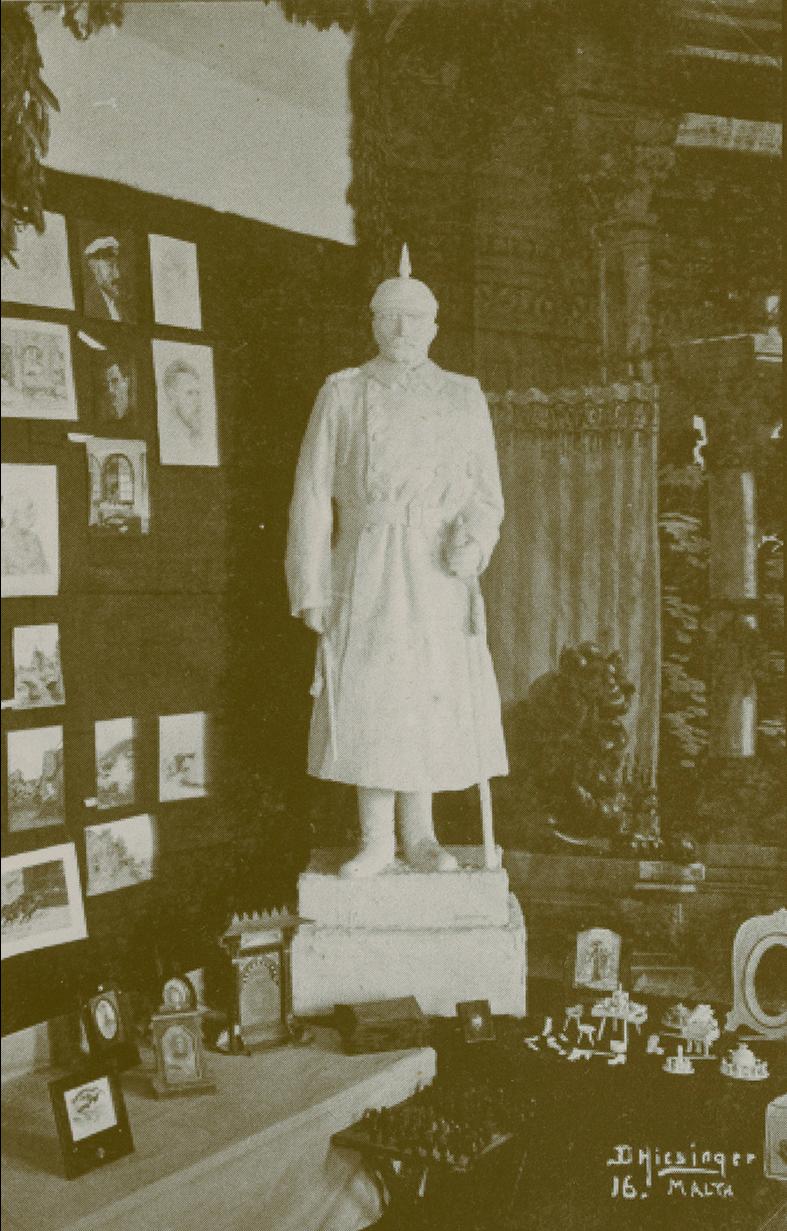 Malta POW postcard showing handcrafted objects exhibited or on sale in the Cottonera camps.
They had their own libraries, pets, printing presses and assorted hobbies. A flourishing internal postcard and photographic activity documented quite lavishly the happenings in the camps.
The POWs also celebrated with extravagant festivities – inside a British colony at war – the birthdays of the arch-enemies of the British empire: Wilhelm of Germany, Franz Joseph of Austria and Ferdinand of Bulgaria. Camp photographers recorded these emotional events in hundreds of postcards, today collectors’ trophies. Many prisoners kept themselves busy producing skilful artefacts that they occasionally put on public sale in grand and cluttered exhibitions to raise funds.
I dedicate this feature to a few of the hundreds of POW postcards that publicise the results of their everyday life, their hobbies and ingenuity – metal work, carpentry, engraving, wood and stone turning, paintings, fretwork and models.
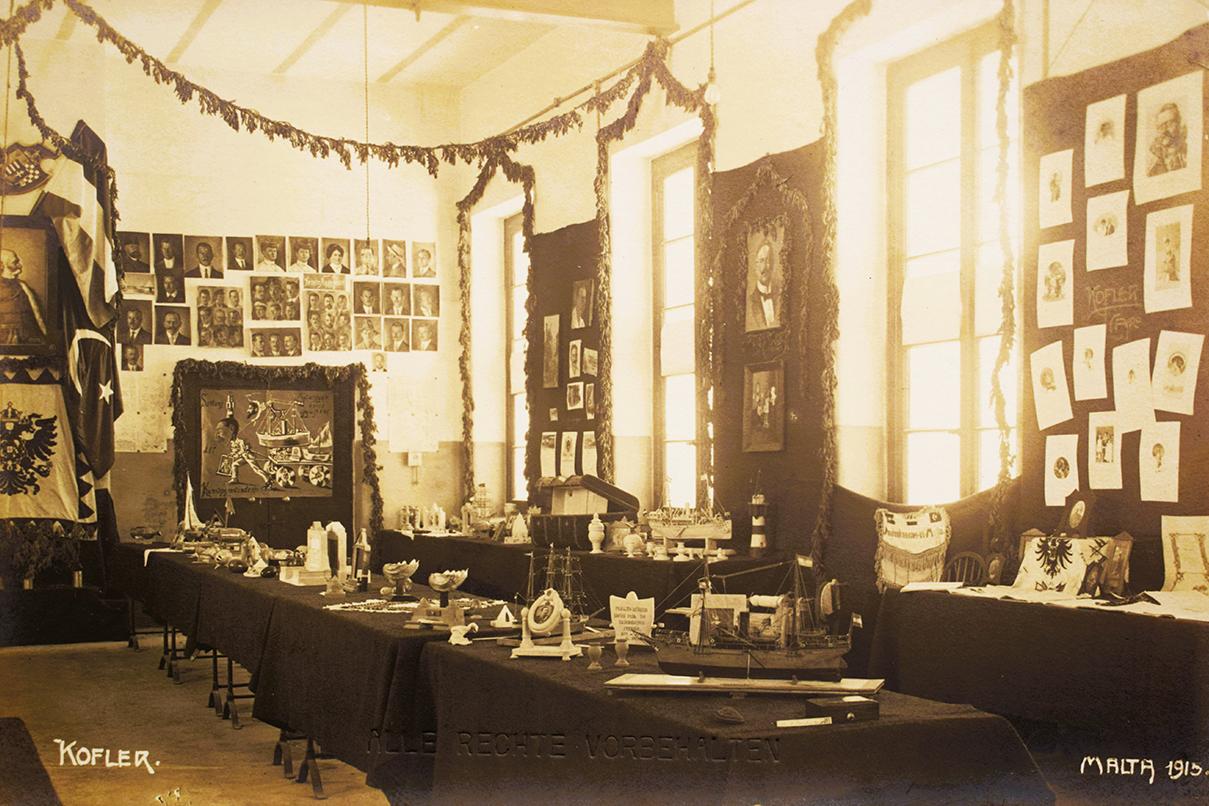
Display and sale of prisoner-of-war handcrafts in World War I.
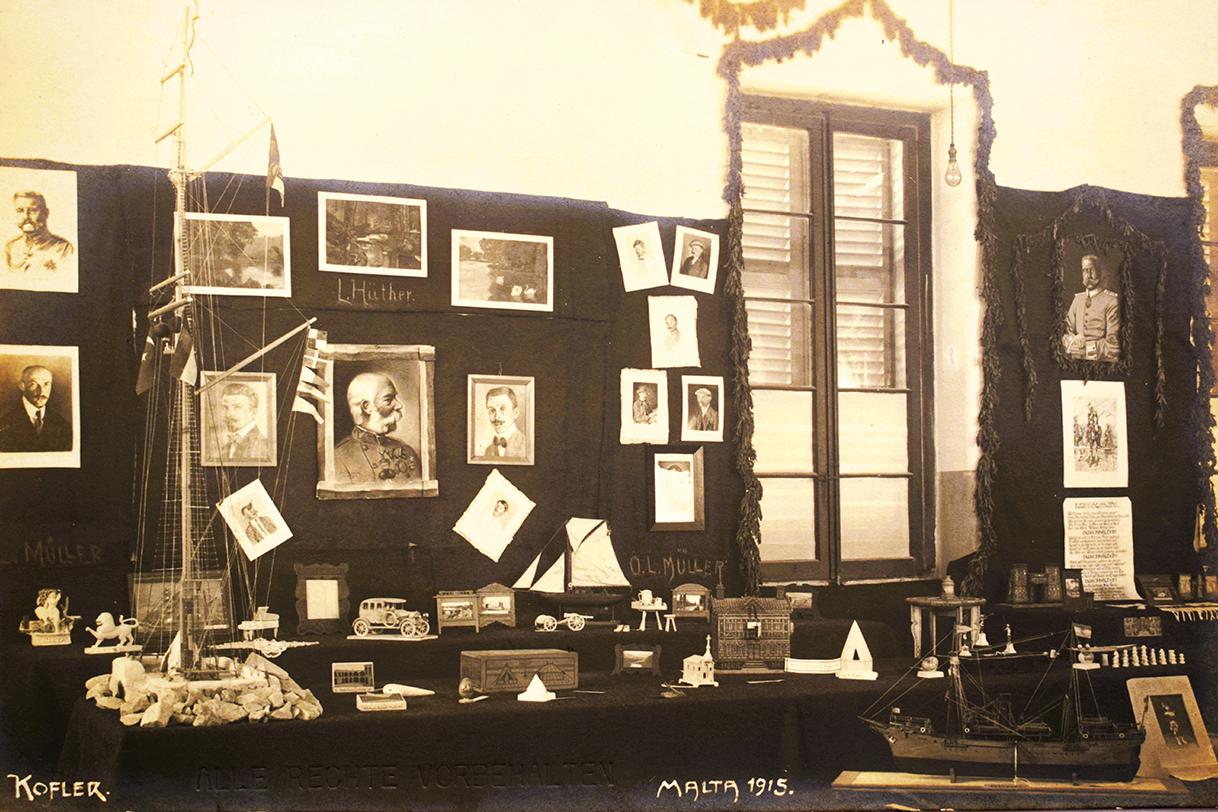
1916 postcard of displays of POW handcrafts in Malta.
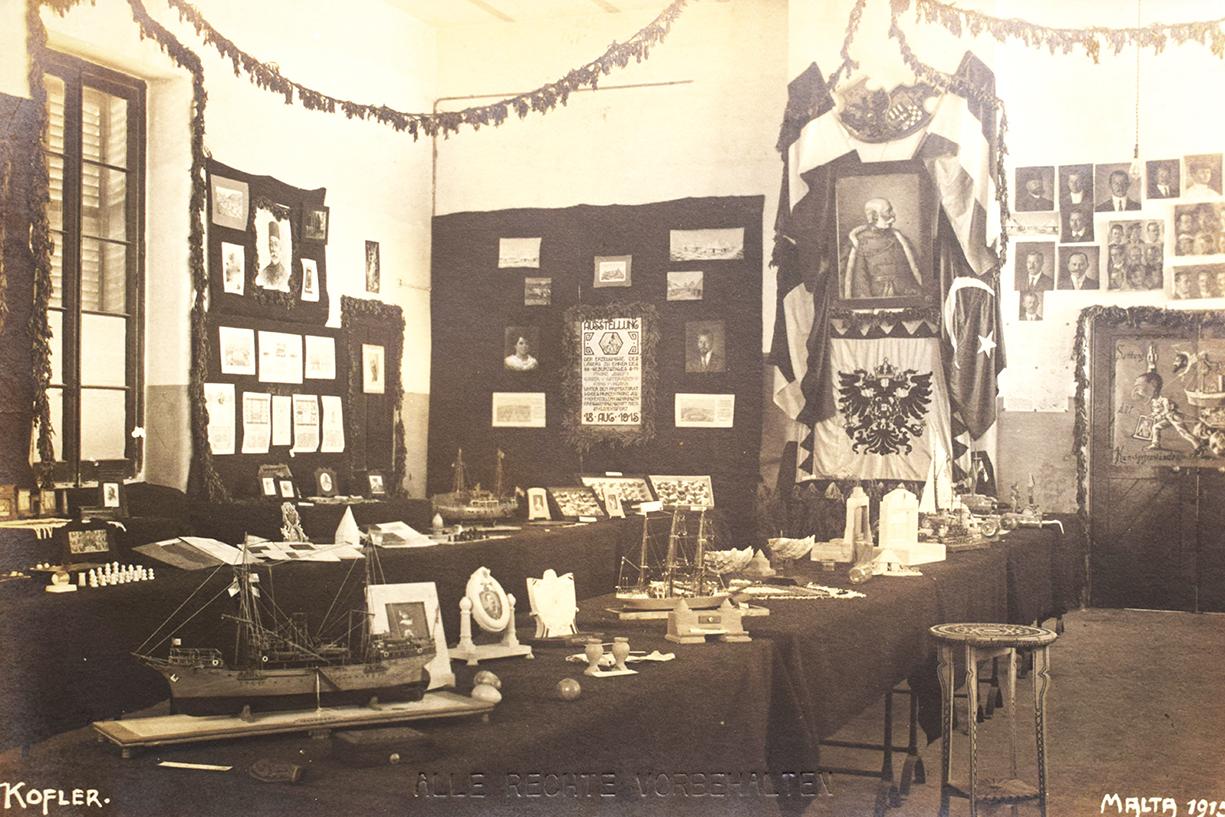
Another 1916 postcard of displays of POW handcrafts in Malta.
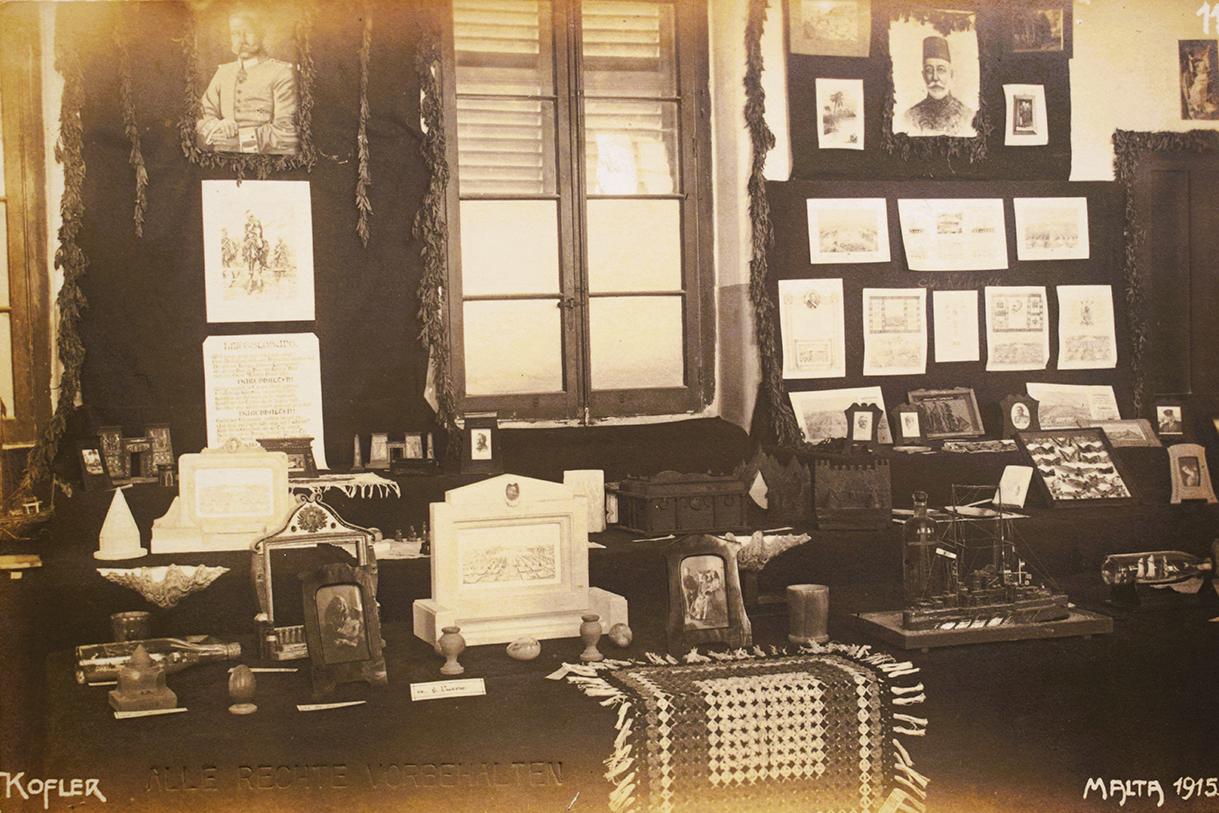
More displays of POW handcrafts in Malta in yet another 1916 postcard.
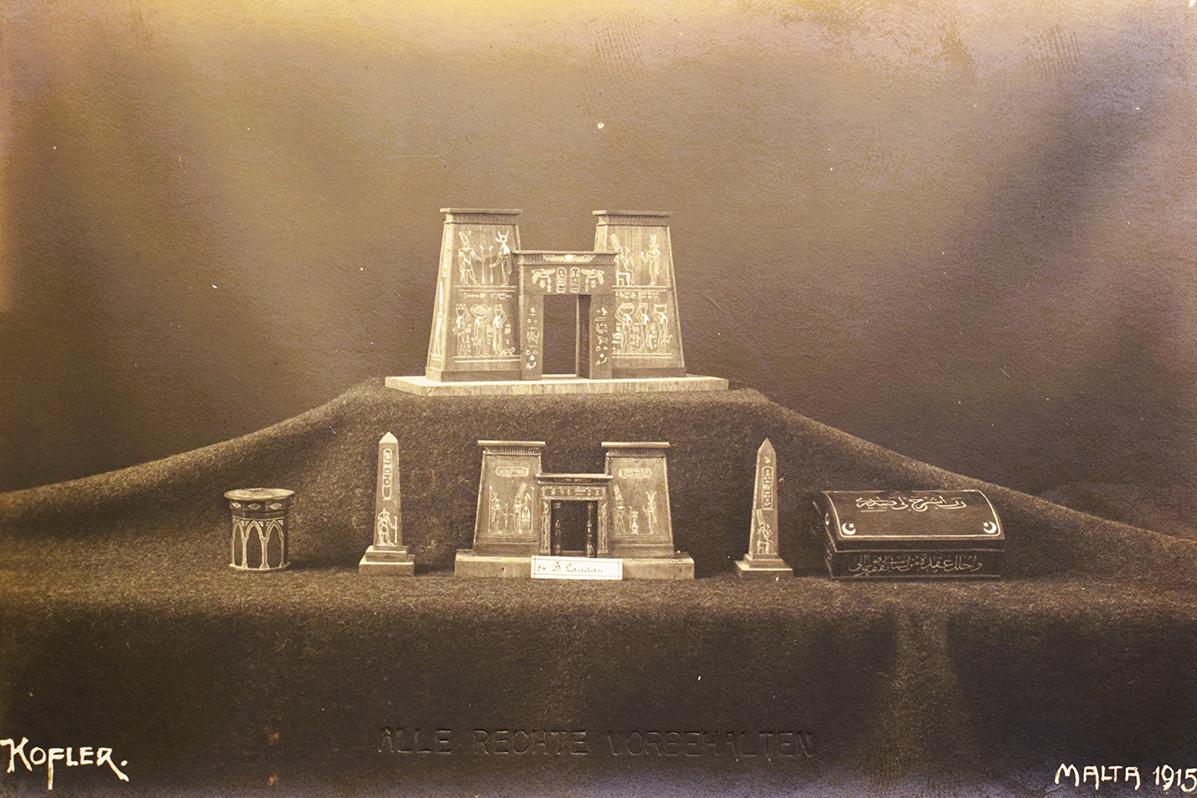
Postcard showing objects handcrafted by WWI Malta POWs.
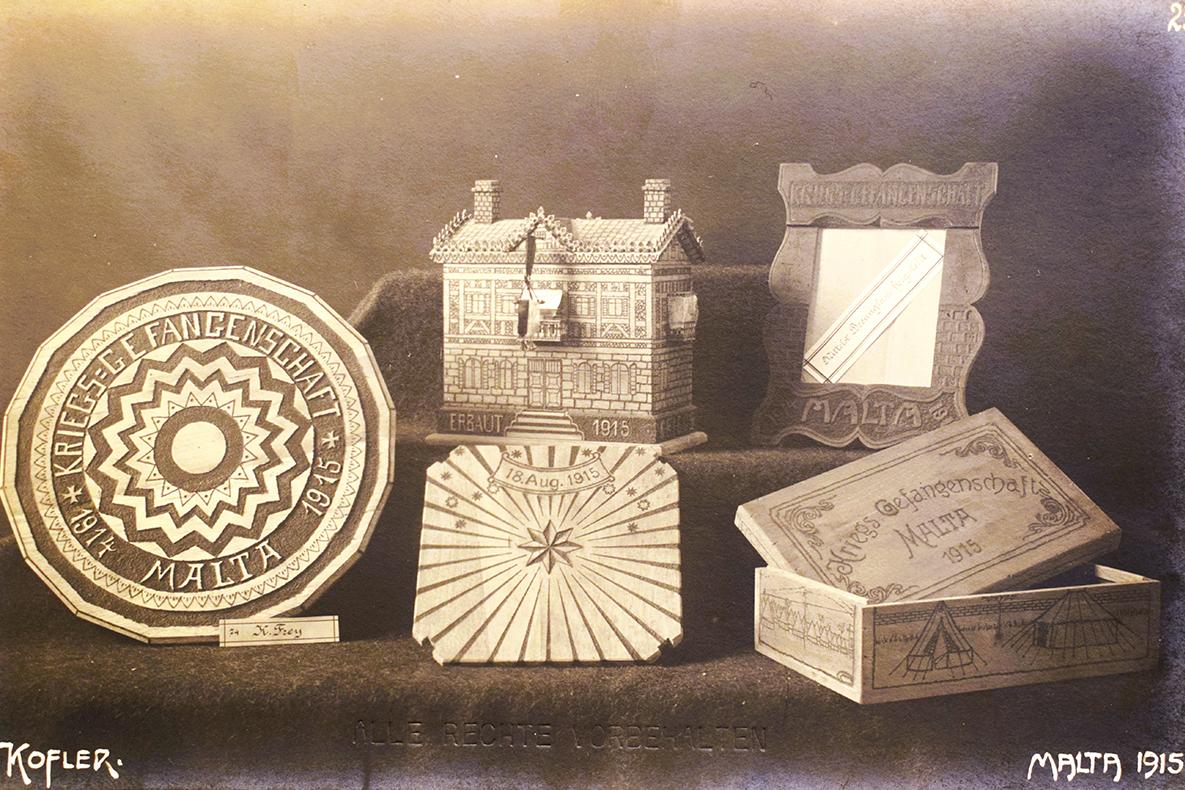
Postcard showing objects handcrafted by WWI Malta POWs.
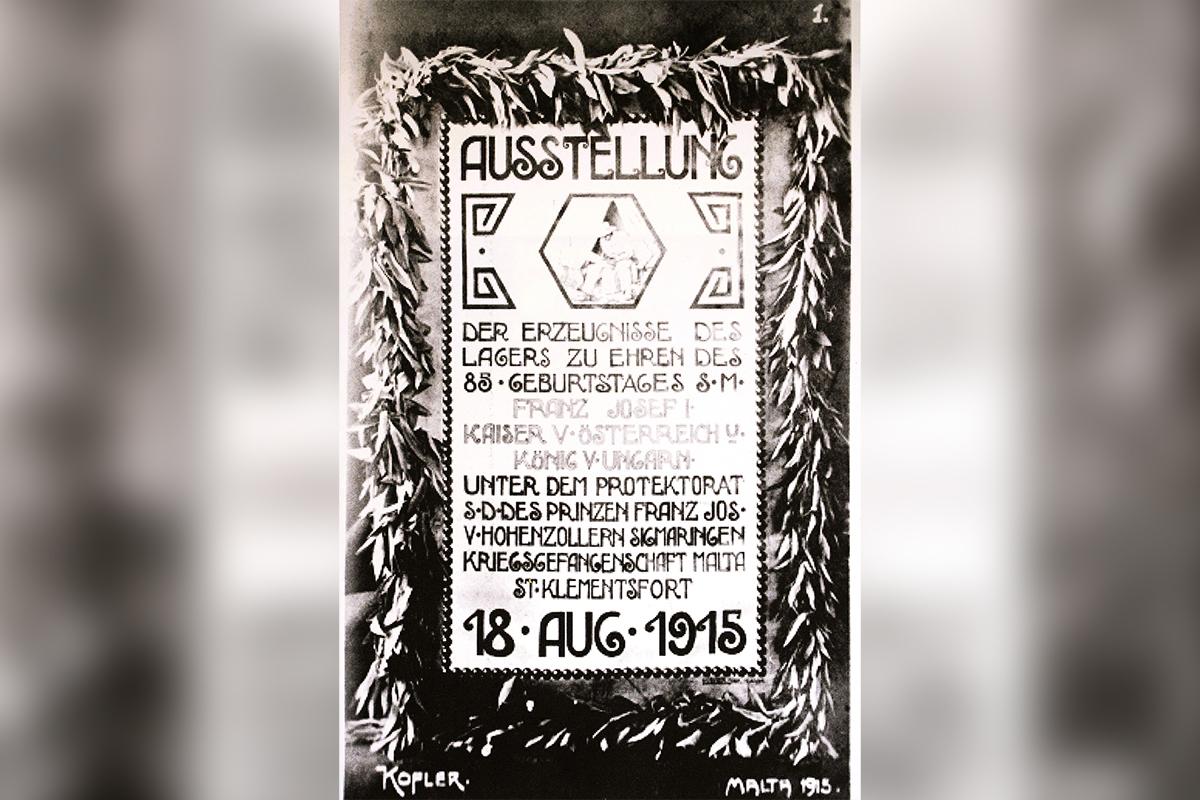
Postcard (and possibly poster) promoting a celebration of the birthday of Emperor Franz Joseph by Austrian POWs in Malta on August 18, 1915.