In pictures: 'Is-sienja' in Malta’s early agriculture
Maltese farmers often used to harness animals to turn wheels to scoop buckets of water from lower levels to irrigate their fields
For thousands of years, agriculture received no help from mechanised contraptions. Back-breaking labour dominated, occasionally assisted by strong quadrupeds. Probably, the only exception was the traditional sienja whose origins and history lurk in obscurity but, presumably, stretch back a very long time.
I am not aware of a correct English equivalent of the Maltese word sienja. The universally-used water wheel or water mill refer to a totally different mechanical device – running water turning a wheel and converting the movement into energy, commonly found in countries with abundant waterfalls or rapidly moving rivers or streams. This led to hydroelectric power.
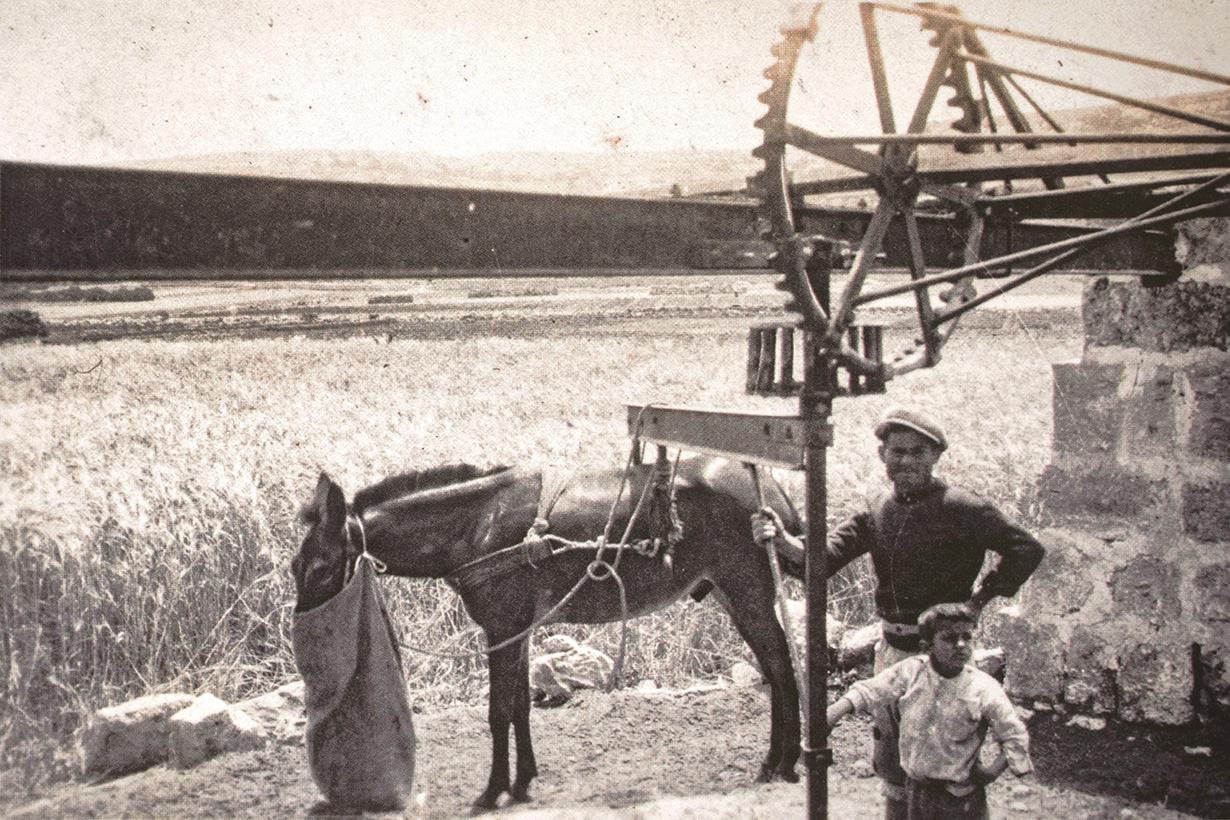
Photo from Giovanni Bonello's private collection

Photo from Giovanni Bonello's private collection
The sienja, on the other hand, collects water by rotating buckets moved by animal muscle. It proved its utility in arid countries. The closest translation would be noria in Italian.
Maltese farmers, probably since time immemorial, harnessed animals to turn a large horizontal wheel. This, through a system of cogs at right angles, rotated a vertical wheel fitted with small buckets round its rim which scooped water from lower levels, raised it and released it in troughs or canals.
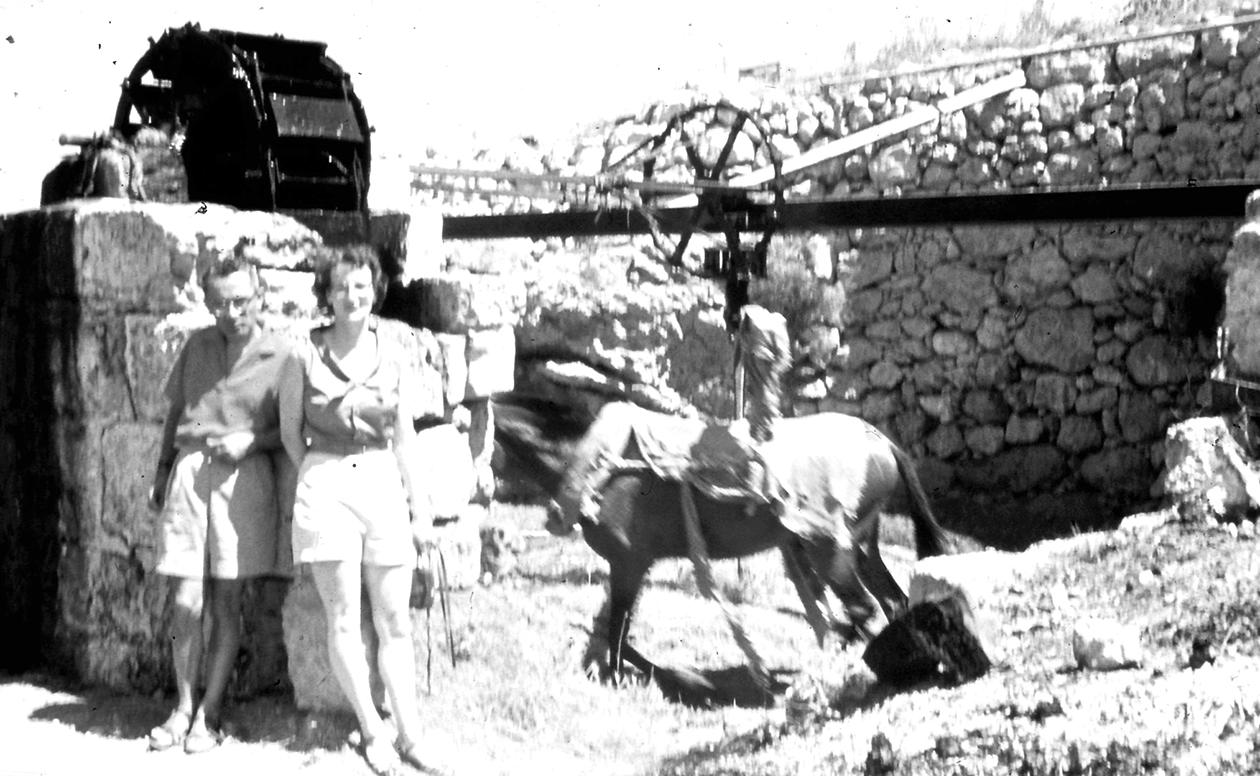 Photo from Giovanni Bonello's private collection
 Photo from Giovanni Bonello's private collection
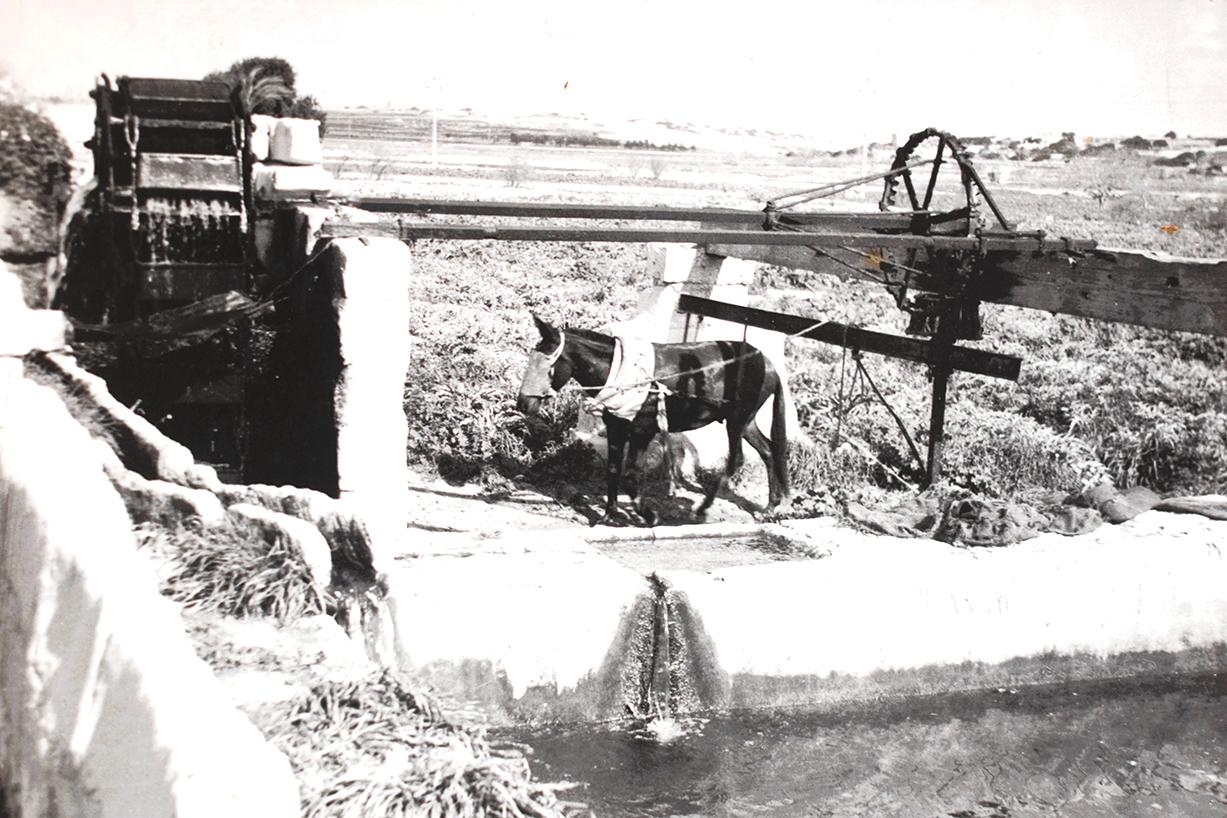 Photo from Giovanni Bonello's private collection
Farmers used any large livestock to turn the horizontal wheel – oxen, horses, mules or donkeys, sometimes blindfolded to avoid dizziness. This became an essential machine near fields that were bagħli, devoid of water supply, and useful in saqwi, fields with indigenous water supplies.
The usage contributed a phrase to the language – il-ħmar tas-sienja – a derogatory reference to anyone who repeats endlessly the same menial task.
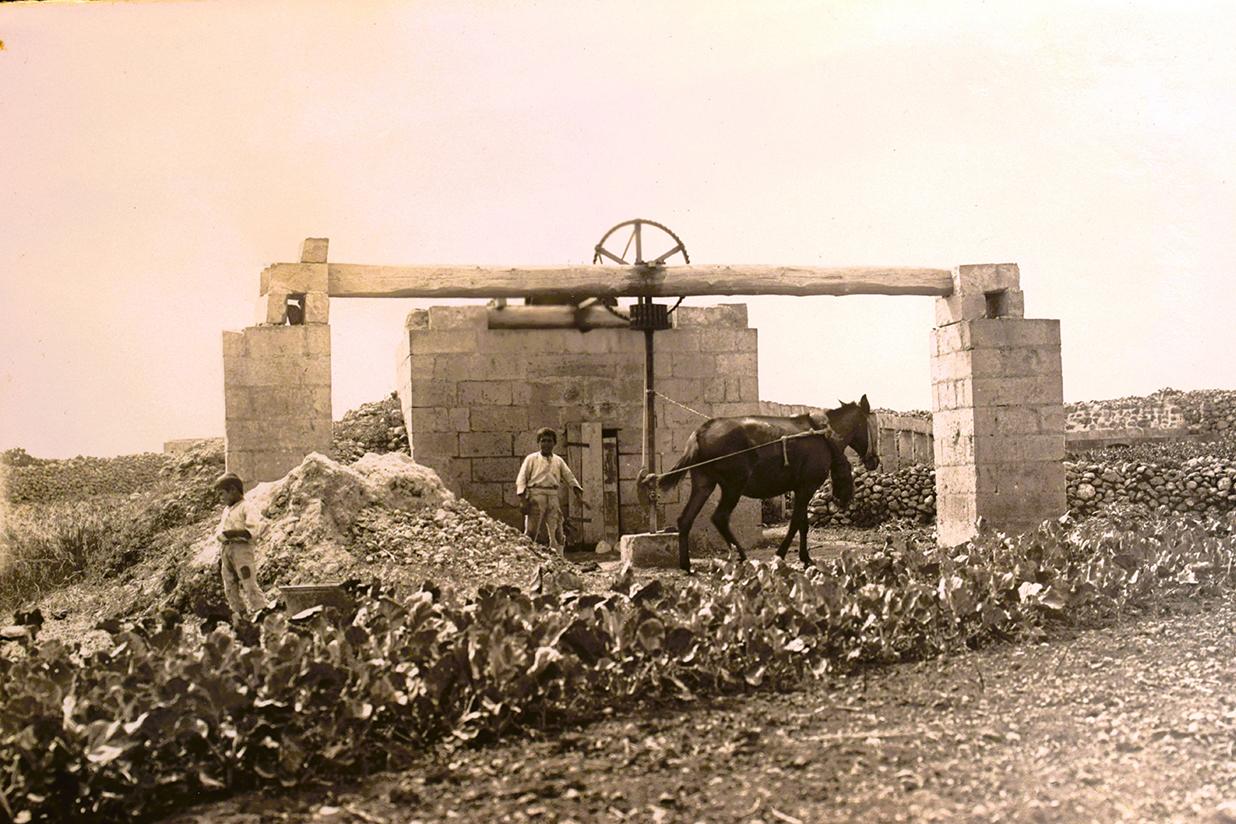 Photo from Giovanni Bonello's private collection
Though characteristic of the Maltese countryside, photographs of is-sienja prove anything but common to come by. Even camera artists who had a feeling for the local agricultural scene, like Salvatore Lorenzo Cassar and Richard Ellis, seem to have overlooked the sienja entirely.
All photographs from the author’s collection
 Photo from Giovanni Bonello's private collection