Planning reform will allow owners to pay to keep illegal developments
Reform will also allow illegalities in ODZ to be cleared after paying a fine
• Illegal developments, including in ODZ, may receive a concession, upon paying a ‘hefty’ fine
• Illegal developments built before 1994 eligible for full regularisation
• Owners of illegal developments have four years to apply
• Maximum daily fines to rise from €50 to €2,000
• Some temporary structures will no longer need permits
• Properties built before 1978 to automatically become legal
• Opposition can force a parliamentary vote
Owners of illegal developments across Malta will soon be able to pay for a concession or apply to have their properties fully regularised, under a sweeping reform of highly controversial planning laws proposed by the government. The reform offers a four-year window to come forward, with fines that could run into hundreds of thousands of euros to regularise the status of hundreds of properties.
The schemes apply to all illegal developments - from an unauthorised room in a house to a full-blown development on ODZ (Outside Development Zone) land.
Sources say the new plans are an attempt to address the swathes of illegalities across Malta’s urban and rural developments. The Planning Authority is believed to be faced with over 5,000 pending cases of illegal developments, with various administrative and legal obstacles preventing the authority from taking enforcement action.
Two major revisions to planning laws were proposed by the government on Friday, on the eve of parliament’s summer break.
The two bills sparked widespread protests on social media platforms yesterday with NGOs blasting the proposals as a “developers' wish list”.
The reforms also include a measure which would see planning permits suspended pending appeal.
According to the proposed law, the public will be given a four-year window in which to apply for a concession or regularisation, with the fine to be paid increasing in the window’s final year.
In practice, the owner of an illegal development will be able to approach the PA during this period, informing the authority of the irregularity and applying for a concession, against the payment of what sources describe as a “hefty fine”.
The Planning Authority is believed to be faced with over 5,000 pending cases of illegal developments, with various administrative and legal obstacles preventing the authority from taking enforcement action
The concession would mean that although the development would still be considered illegal, the authority would take no enforcement action.
It applies to all illegal developments with the only exceptions being illegal developments in areas designated as having special archaeological or social importance, which would be exempt from the scheme.
The award of the concession would not be automatic, with the PA vetting individual applications and deciding whether to award a concession on a case-by-case basis. If the application is refused, the authority may proceed to take enforcement action against the illegality.
Illegal developments built after 2024 (when the PA’s most recent aerial photographs were taken) will not be able to apply for the scheme, nor will any new illegal developments that crop up from this year onwards.
The new rules will also open the window for owners of illegal developments built before 1994 to have the development regularised altogether, although the fine to be paid would be double that of a concession.
Unlike a concession, regularisation would mean that the development would effectively be legal. If, by the end of the four-year window, the owner of the illegal development has not applied for either a concession or regularisation, it could potentially face the PA’s enforcement action.
 Prime Minister Robert Abela, Planning Minister Clint Camilleri, Environment Minister Miriam Dalli and Planning Authority CEO Johann Buttigieg have not yet said anything about the reform.
How much will fines be?
The fines will be set according to a schedule which will be presented in the proposed law, although they are likely to run into hundreds of thousands of euros.
In theory, the owner of an illegal development on ODZ land measuring 250 square metres would pay around €150,000 to receive a concession from the PA.
That fine would double to €300,000 for the development to be regularised altogether. It would double again, to €600,000, if the illegal development is located in a Grade 2 scheduled area.
If only part of a property (under a third of its footprint), rather than the whole building, is in breach of planning regulations, the owner will be able to apply for a concession or regularisation at a 50% discount.
For instance, an illegally-built washroom on a (legal) 250-square metre house would cost €75,000 for a concession or €150,000 for full regularisation, half the price of the amnesty for the full property.
Meanwhile, the fines being imposed in cases where enforcement action is already taking place are set to increase from the current €50 daily maximum to €2,000 per day.
The fines collected are set to go towards the Development Planning Fund, which typically funds restoration and embellishment projects. Sources say the proposed concession and restoration schemes are set to yield over €200 million in fines.
Although sources insist that the schemes do not constitute an amnesty, they are likely to stir controversy, with owners of illegal properties effectively being handed a new opportunity to regularise their position.
These changes are set to come into effect via legal notice, a mechanism that allows the government to pass legislation without parliamentary approval. The opposition, however, can object to the legislation, which would force a parliamentary vote.
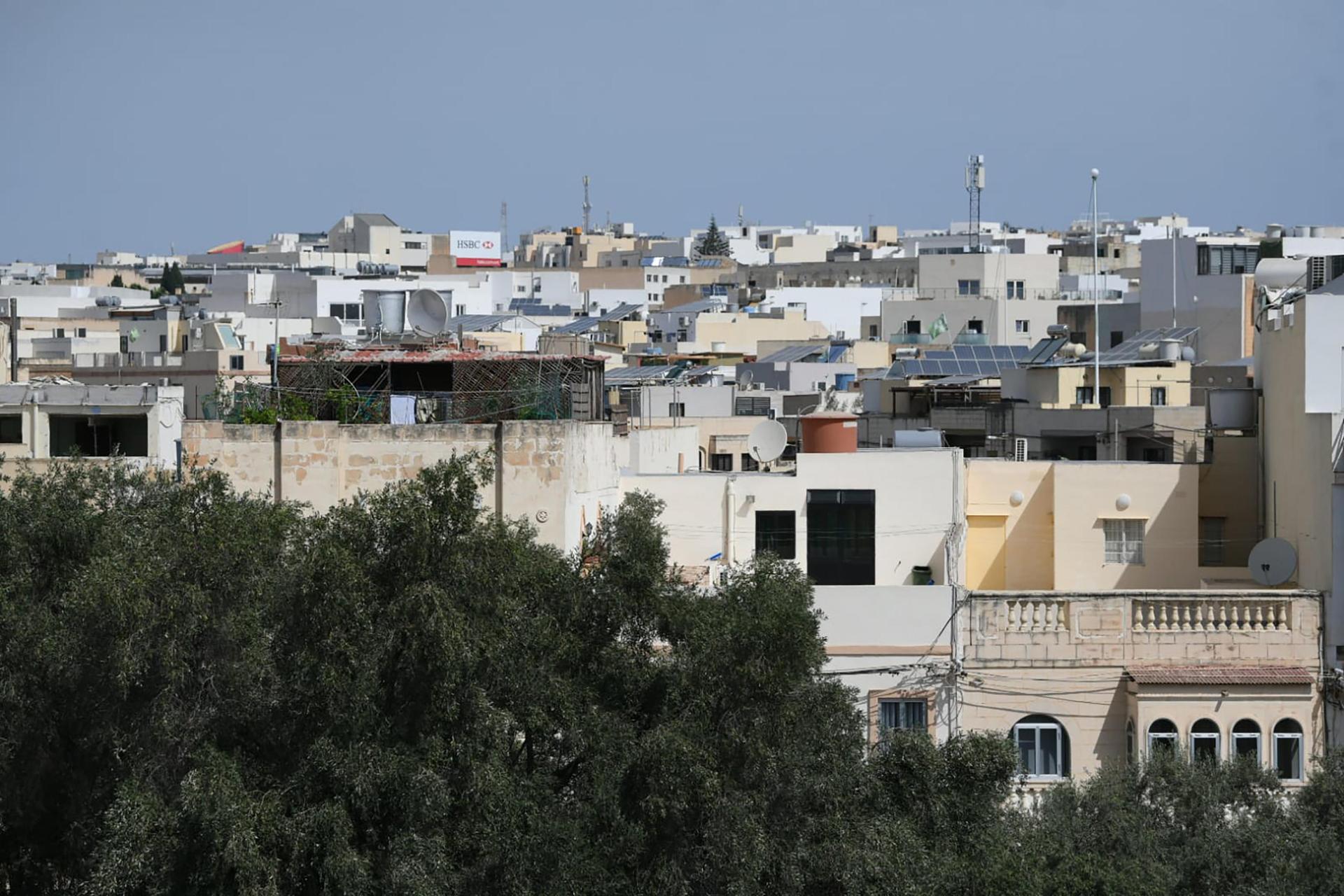 The reforms also include a long-awaited measure which would see planning permits suspended pending appeal. Photo: Matthew Mirabelli
Temporary structures to be exempt from permits
The new rules will also do away with the need to apply for permission to install temporary structures, such as rooftop canopies, in certain cases.
Sources say this will only apply to structures that are not visible from the road.
The structures must also be reversible and temporary, and their installation cannot involve any significant breakages.
And the watershed of what is considered legal development is set to be brought forward to 1978.
This was initially set at 1967 when planning laws were first developed because they constituted the earliest point in time for which aerial photos for most of Malta were available.
This effectively meant that any development that existed prior to 1967 was automatically considered to be legal.
However, there are few aerial photographs of land in Gozo before 1967, with 1978 being the earliest date for which photos of all Malta and Gozo are available.
The planning overhaul will also mean that approved development permits will be suspended for up to 10 months if objectors appeal the Planning Authority’s decisions, a government bill that has been presented to parliament says.
Objectors would also have to include their personal details if they want to appeal a decision and objectors will have 20 days (instead of 30) to submit their appeal to the appeals tribunal.
Changes are set to come into effect via legal notice
A history of amnesties
Over the last few years, the PA has issued schemes that allowed owners of illegal developments to regulate their position.
In 2016, the PA introduced a measure permitting property owners to pay to regularise illegal developments that could not be sanctioned under existing policies.
That programme saw 8,000 property owners apply to regularise their non-sanctionable property in 19 months.
That policy had far lower fees compared to either the upcoming concession or regularisation regime.
For example, illegalities in a 150-square metre apartment would cost someone €1,500 to regularise.
Back then, in 2016, planning junior minister Deborah Schembri had said abuse would not be tolerated from that point on.
“By setting a clear cut-off date, we are sending a signal that enforcement will be strictly applied going forward. If you build now, we will enforce. Nobody has an excuse,” she had said.
In 2022 that policy was extended to include buildings that partially encroached on ODZ land.