The politics of the Golden Calf
Public trust dies when politics rewards the powerful, writes Evarist Bartolo
One of the reasons distrust in politicians is growing, both in Malta and elsewhere, is precisely because too many politicians appear to favour those who already wield power and influence.
The Scottish economist Adam Smith, born 300 years ago and one of the greatest advocates of wealth creation and capitalism, warned that “the powerful manipulate the political and economic system against the rest of society”.
When this happens, Karl Marx cautioned in The Communist Manifesto, “the state becomes nothing more than a committee for managing the common affairs of the entire bourgeoisie’. George Bernard Shaw likewise argued that when professions are used primarily to acquire prestige, power and wealth, they become a conspiracy against the rest of society.
In a small society such as ours, it is even more difficult for politicians to treat everyone fairly because personal relationships – both visible and hidden – often become stronger than institutional ones, where laws and regulations are supposed to apply equally to all. The danger is compounded by the absence of public financing for political parties and by the lack of effective enforcement of rules governing the financing of electoral candidates. As a result, those who operate behind the scenes are often able to exert disproportionate influence.
In February 2024, Carm Mifsud Bonnici launched his book to commemorate 25 years of parliamentary service. In it, he praises politicians striving to improve the country; willing to speak uncomfortable truths rather than merely echoing partisan slogans. They retain the ability to smile and to laugh; committed to good governance, wealth creation and the fair distribution of prosperity; to strengthen the values of democracy, social justice and republicanism – a politics of the people and for the people, rather than one serving privileged elites.
He admires politicians who are “sailors in stormy seas”, particularly in the courage with which they confront adversity, including illness.
The politics of the Promised Land
He speaks highly of politicians who were “fair to their colleagues in the electoral district”. He also praises politicians who refuse to become cynical, even when confronted with intrigues orchestrated against them by members of their own political party.
Between the politics of Moses, who leads his people through the desert towards the Promised Land – even if that Promised Land is not “flowing with milk and honey” – and the politics of Aaron, who presents the people with the Golden Calf so that they can dance, feast and live without commandments, believing only in the present moment, convinced that tomorrow will never come and that endless consumption and production can continue at war with nature, Mifsud Bonnici chooses the politics of Moses.
He chooses the Promised Land – not as some distant destination forever receding beyond the horizon but as a continuous journey of searching, liberation and moral purpose.
The politics we need
This is the politics that Malta needs today. After 62 years of self-government, during which life on these islands has improved enormously – thanks in no small measure to the contribution of our politicians, but certainly not only – we must now ask ourselves a more important question: What kind of country are we building for the generations that will come after us?
We need political leaders capable of integrating economic development with social justice and environmental sustainability- Evarist Bartolo
Today, Malta enjoys one of the highest standards of living in the Mediterranean. It is widely regarded as one of the world’s 25 best countries in which to grow old. Yet, we must also strive to become one of the best countries in the world in which young people can build their future.
The challenges before us are immense. If we fail to confront them wisely, we risk losing many of the achievements we have worked so hard to secure. In a rapidly changing world, we must adapt if we are to continue earning our living and safeguarding our prosperity.
We need political leaders capable of integrating economic development with social justice and environmental sustainability.
While bringing an end to the overdevelopment that threatens to suffocate our islands, we must build an open and inclusive society – a common home embracing different identities and cultures, welcoming both ourselves and the people from every part of the world who now share these islands with us.
We also need politicians committed to ensuring that Malta never again becomes a base from which war is waged against another nation. In a world increasingly divided into competing geopolitical blocs, it remains firmly in Malta’s interest to maintain friendships with all sides.
Within an interdependent world, and while fully honouring our European and international obligations, we must nevertheless safeguard our sovereignty and avoid being dragged into conflicts that, ultimately, run contrary to our own national interests.
The politics of the Promised Land – as a continuous journey – is also the kind of politics our world desperately needs today. It is a politics through which we learn to live together without modern-day Pharaohs seeking to dominate others; a politics that commits itself to saving the planet by mitigating – and, wherever possible, repairing – the damage we have inflicted upon the climate and the natural world.
It is a politics that seeks to avoid nuclear annihilation and prevent wars, a politics that believes the billions currently spent on armaments should instead be invested in enabling more people to live lives of dignity, free from fear and free from want.
In any democracy founded upon electoral competition and the constant pursuit of votes, politicians inevitably find themselves caught in a recurring dilemma. They must choose between the popular politics of immediate gratification and the next election – the politics of the Golden Calf – and the more demanding politics of the journey towards the Promised Land, which looks beyond the present and towards the long term.
If that balance is lost entirely in favour of the politics of the Golden Calf, we shall ultimately lose both the Golden Calf and the Promised Land. And, in the greatest of ironies, we will deceive ourselves into believing that the Golden Calf is the Promised Land.
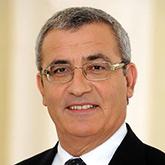
Evarist Bartolo is a former Labour education and foreign minister.