The poor at the centre of the Church
It is important that the poor are seen as an integral part of the Christian community, and not only as people who need help
On the Sunday marking the Jubilee of the Poor, during the Angelus, Pope Leo XIV spoke of the Apostolic Exhortation Dilexi Te. Pope Francis worked on it during his final months. However, it was then concluded by Pope Leo XIV. It speaks of the love of the poor and derives its name from the phrase taken from the book of Revelation: “I have loved you” (Rev 3:9).
After his last encyclical letter Dilexit nos, which spoke of divine love, Pope Francis seemingly wanted to call us for action. This was not something unusual for Pope Francis.
After his milestone encyclical letter Laudato Si’, his encyclical letter Fratelli Tutti charts the way for concrete action in various spheres related to the environment and the economy.
Poverty challenges Christians
In his homily during the Jubilee of the Poor in Saint Peter’s basilica, Pope Leo XIV highlighted how “Poverty challenges Christians but it also challenges all those who have positions of responsibility in society... there can be no peace without justice and the poor remind us of this in many ways, through migration as well as through their cries, which are often stifled by the myth of well-being and progress that does not take everyone into account, and indeed forgets many individuals, leaving them to their fate”.
The pope highlights how, as Christians, “we must not live a life closed in on ourselves, in a religious seclusion that isolates us from others and from history. On the contrary, seeking the Kingdom of God implies the desire to transform human coexistence into a space of fraternity and dignity for all, without exception. There is a constant danger of living like distracted wanderers, unconcerned about the final destination and uninterested in those who share the journey with us.”
It is indeed a transformative call, which cannot remain unheeded. It is in this context that Dilexi Te must be read.
The preferential option for the poor
This Apostolic Exhortation in fact reiterates that the preferential option for the poor is a source of renewal for the Church. There are various forms of poverty. Apart from material poverty, there are also the poverty of those who are marginalised from society, spiritual and moral poverty and the “poverty of those who find themselves in a condition of personal or social weakness or fragility, the poverty of those who have no rights, no space, no freedom” (9).
The illusion of happiness and comfortable life may actually drive us to seek the accumulation of wealth at all costs, even at the expense of other human beings. This may lead us to be indifferent towards the condition of others. Such an indifference may lead us to be ‘illiterate’ in how to actually accompany the poor and render us uneasy when confronted with situations of poverty.
Apart from material poverty, there are also the poverty of those who are marginalised from society- Daniel Borg
Rethinking current economic systems
Dilexi Te calls us to rethink current economic systems, which have fostered the creation of more wealth but have also led to a significant increase in inequality. It denounces ideologies which have defended the absolute autonomies of the marketplace and of financial speculation leading to a widening gap between rich and poor. To this end we need to be “increasingly committed to resolve the structural causes of poverty” (94).
Rediscovering our true vocation
The pope invites us to reread the Gospels, to rediscover our true vocation, at the basis of which is the emphasis that God’s actions “are moved by compassion towards the poverty and weakness of all humanity” (16). Jesus himself, through his actions, shared conditions of extreme poverty. His birth in a manger and his crucifixion as an outcast are clear expressions of this way of life. That is why “the renunciation of goods, riches and worldly securities” (20) is also a visible sign of those who follow him, and that is why the Church must be one “that makes room for the little ones, and walks poor with the poor, a place where the poor have a privileged place” (21).
Giving us a unique viewpoint
The Church cannot do without the poor who give her a unique viewpoint on itself and on the whole of humanity. The poor have a lot to teach us. The pope highlights how, “growing up in precarious circumstances, learning to survive the most adverse conditions, trusting in God with the assurance that no one else takes them seriously and helping one another in the darkest moments, the poor have learned many things... those of us who have not had similar experiences of living this way have much to gain from the source of wisdom that is the experience of the poor” (102). They can also instil in us “the rightful spirit of humility” (108) as prosperity may lead us to think that our happiness and fulfilment depend on ourselves alone.
An integral part of the Christian community
Within this context, it is important that the poor are seen as an integral part of the Christian community and not only as people who need help. As Christians, we are also called to act, as our religion is not limited only to the private sphere. It demands from us concrete actions.
Concluding this Apostolic Exhortation, Pope Leo XIV highlights how a “Church that sets no limit to love, that knows no enemies to fight but only men and women to love, is the Church that the world needs today” (120).
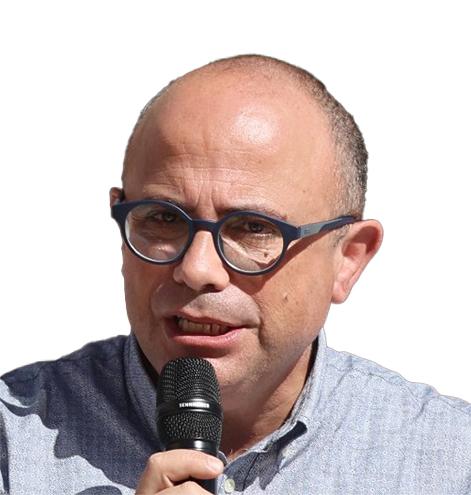
Daniel Borg is CEO of the Gozo Business Chamber.