Malta's poor street lighting is ‘harming health and road safety’
Nine years of observing light pollution led researchers to a worrying conclusion
Street lighting and public lighting at night in Malta are so badly designed they are jeopardising road safety, increasing health risks, ruining building aesthetics and majestic views of the night sky and killing insects at an alarming rate, according to a university professor.
Astrophysicist Joseph Caruana has been observing the night sky and studying light pollution for nine years. His research suggests Malta is among the countries most affected by light pollution and it is only getting worse.
“We have too much artificial lighting in our streets, on our buildings, in our shops and showrooms and emanating from billboards and which are lit all through the night and pointing in all the wrong directions,” he told Times of Malta.
“Instead of helping them to navigate better, bright lights often make it harder for drivers and pedestrians to see clearly and they disrupt important biological processes that could increase the risks of several illnesses like cancer and heart disease.”
Even worse, the night sky has effectively disappeared for much of the population, he said. Excessive lighting has washed out the beauty of the stars and is leading to a staggering loss of biodiversity. “I often ask school children whether they have ever looked up at the sky and saw the stars. And they genuinely say they haven’t. Because there’s hardly anywhere in the country where you can see them nowadays,” he said.
“People used to marvel at the sight of the Milky Way galaxy all the time in the past. You don’t even see it anymore now.”
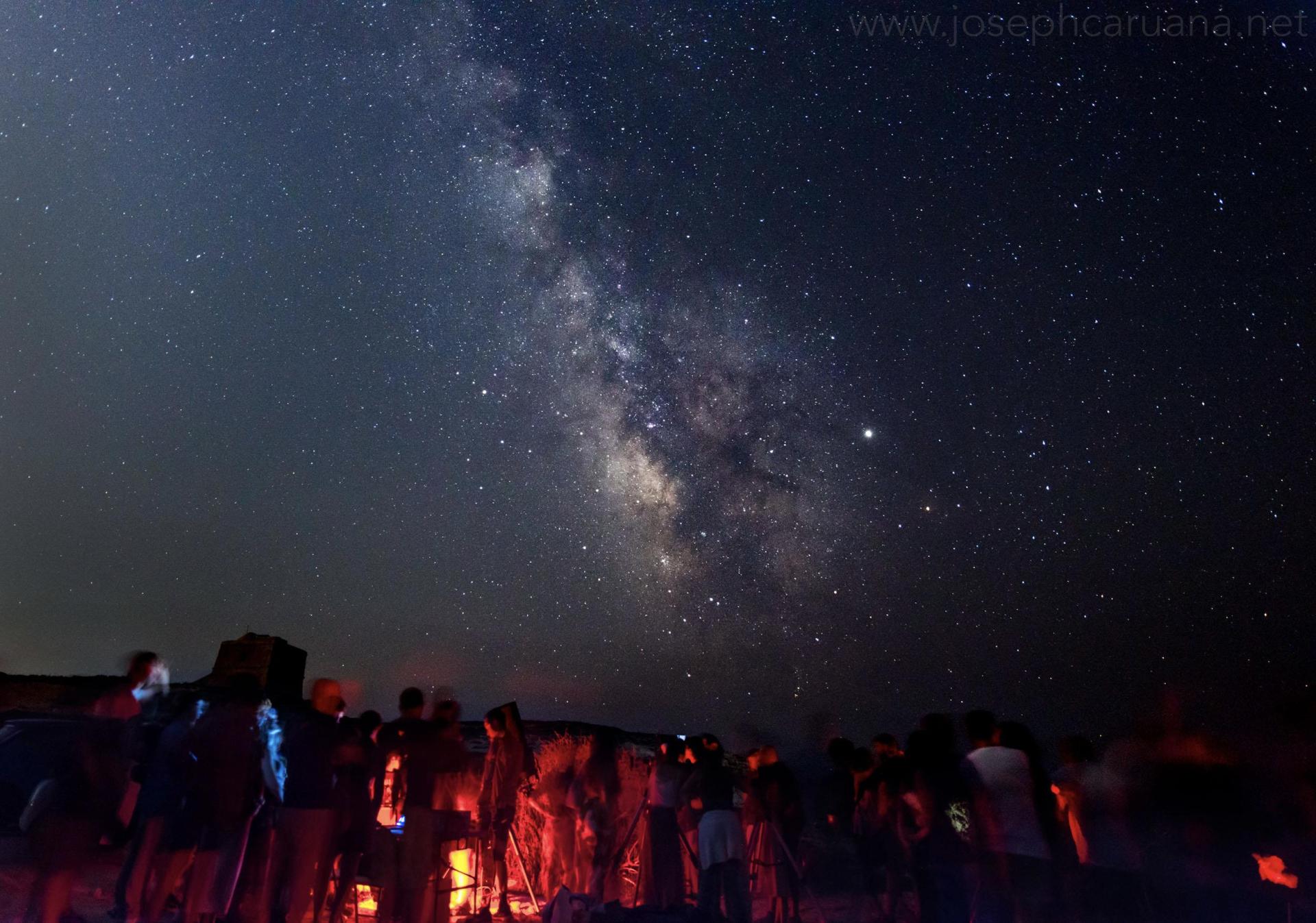 Gozo's Dwejra is one of the only places left where people can marvel at the night sky. Photo: Joseph Caruana
His years of research have, just a few weeks ago, won him the 2025 Dark Sky Defender Award for the European continent in recognition of his long-standing commitment to combating light pollution across the Maltese Islands.
The award was given to him in November.
Sky glow
Light pollution is often the result of poorly designed public lighting, he said.
Much of the artificial lighting we see is not directed to the areas that need to be illuminated. Often, bulbs are fixed in a way that allows light to spill unnecessarily onto the surrounding areas and upwards to the night sky, creating a ‘sky glow’ that washes away the stars and creating glares for people on the street.
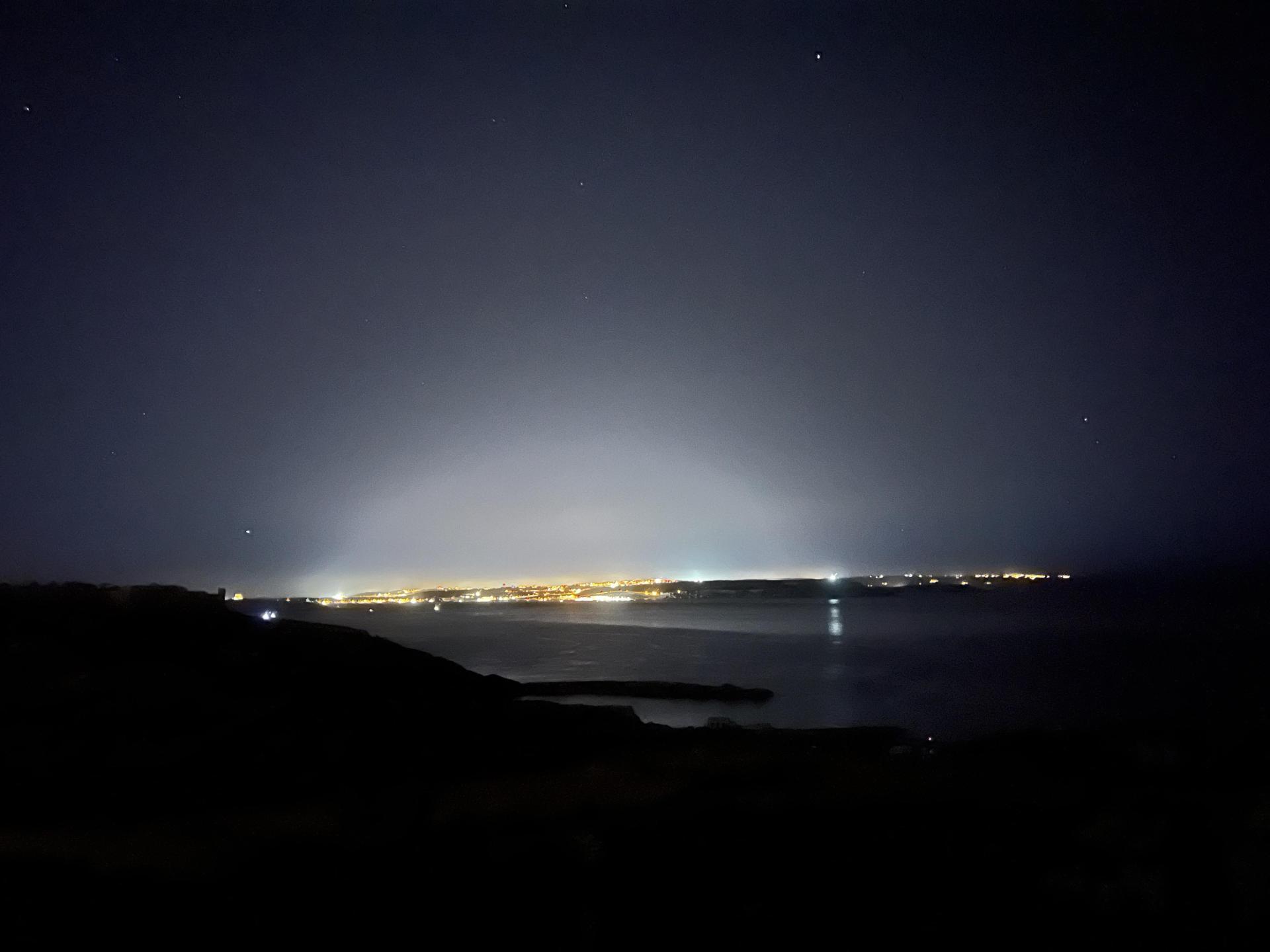 This is what sky glow looks like. Photo: Joseph Caruana
Roads are another key contributor, he said. Studies show that many roads are excessively lit, often with lights that are too strong for their purpose.
People used to marvel at the sight of the Milky Way galaxy all the time in the past.
“When strong rays of light hit your eyes, your pupils shrink rapidly, allowing less light to enter them,” he explained. “That means that, right after you drive past a bright light, your eyes are taking in less light than they should because your pupils are yet to dilate and you see less of the road ahead. Bright lights often make drivers struggle to see the road for this reason. Instead of helping them, we are reducing their visibility.”
Research is also increasingly revealing that light pollution is detrimental to human health and biodiversity just as much as other forms of pollution. In fact, countries like France and Belgium are introducing regulations and laws to control the issue.
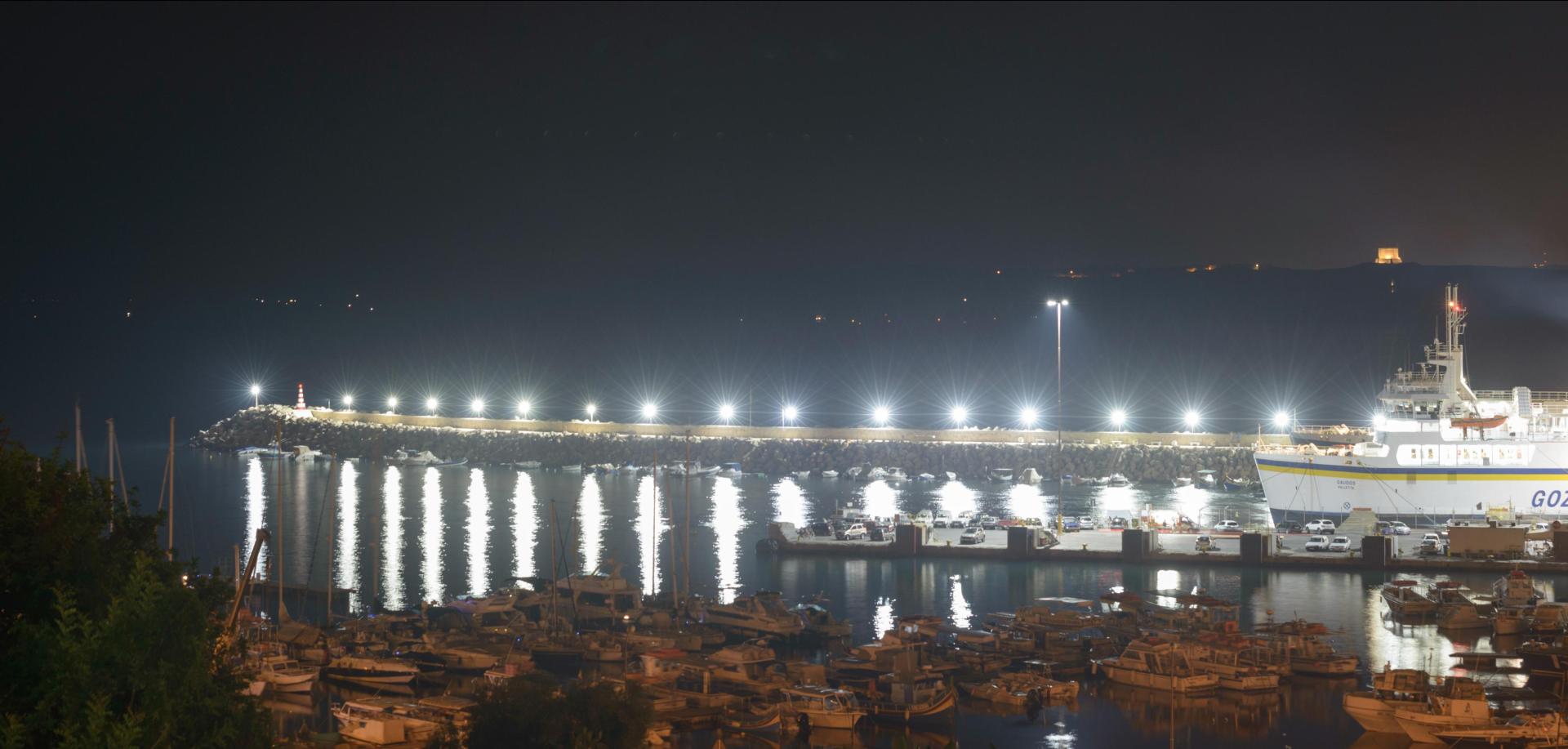 Gozo's Mġarr harbour is among the most badly lit places. Photo: Joseph Caruana
In France, strict light pollution laws require lights to be dimmed or switched off late at night. Belgium has also begun dimming highway lights, a move accelerated by the energy crisis following Russia’s invasion of Ukraine.
Contrary to what many people believe, dimming the lights or switching them off has not proven to increase road accidents or crime, Caruana said.
“Is it really necessary to have all building and church facades, streets lights, shops, showrooms and billboards switched on brightly all through the night?” he asked.
“I’m not saying the solution is to switch off all the lights and stay in the dark. We could still have ample lighting that is designed in a way that is safe for drivers and pedestrians and which caters for our needs without being excessive and harmful. Lighting must be designed responsibly.”
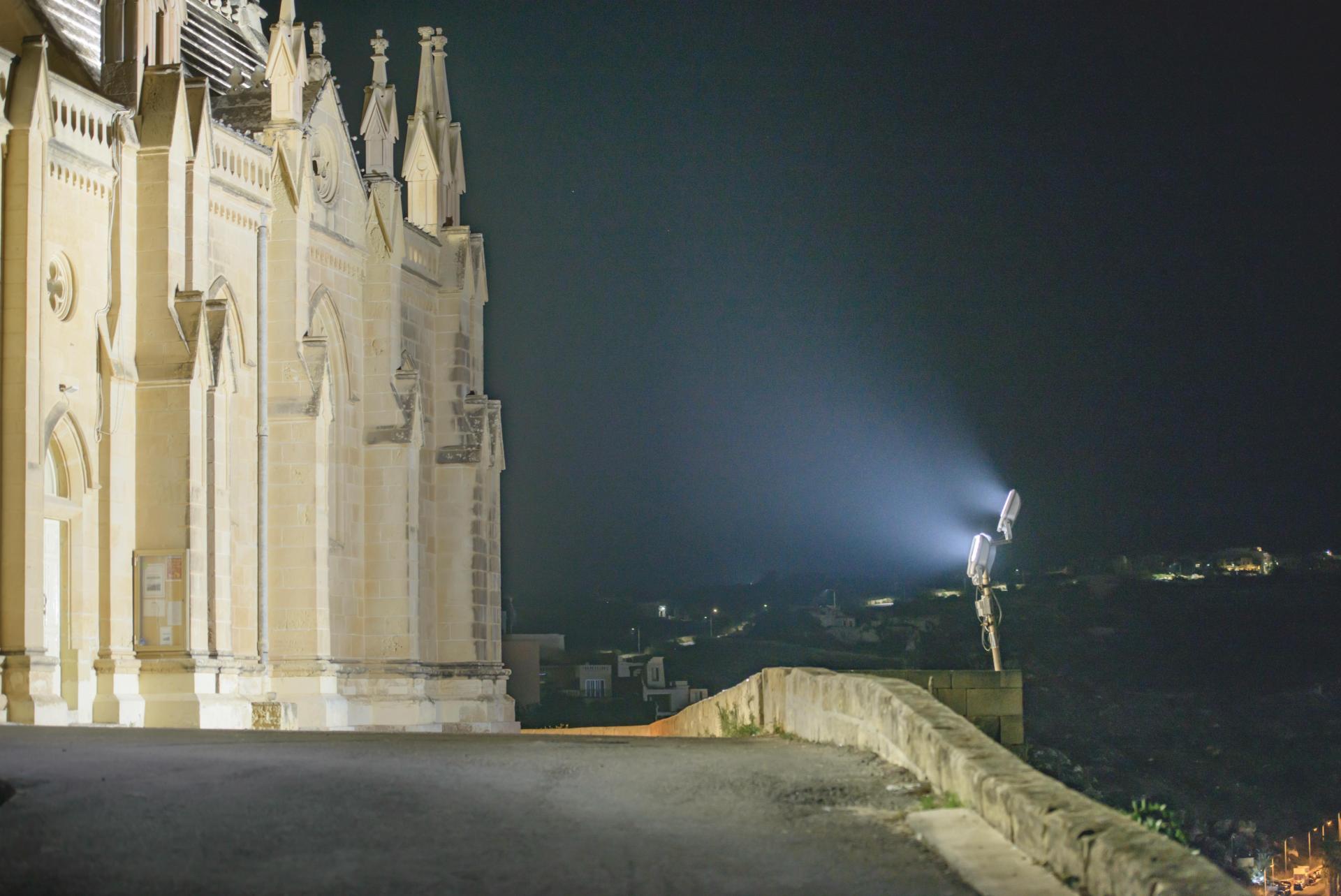 Floodlighting on buildings ruins their architectural aesthetic and contributes to sky glow. Photo: Joseph Caruana
Illness
The issue is even more concerning when considering human health could be at stake.
Caruana said that animals, including humans, evolved over millions of years to a natural cycle of day and night – light and darkness – and many biological processes in our bodies are regulated by this rhythm. As the night falls, light-sensitive cells in the eyes signal the body to produce melatonin, a hormone essential for sleep. If the lights remain too bright at night, the body mistakenly believes it is not nighttime yet and does not release as much of the hormone as it needs to.
Caruana said research is now linking melatonin suppression to depression, certain types of cancer, heart problems and diabetes.
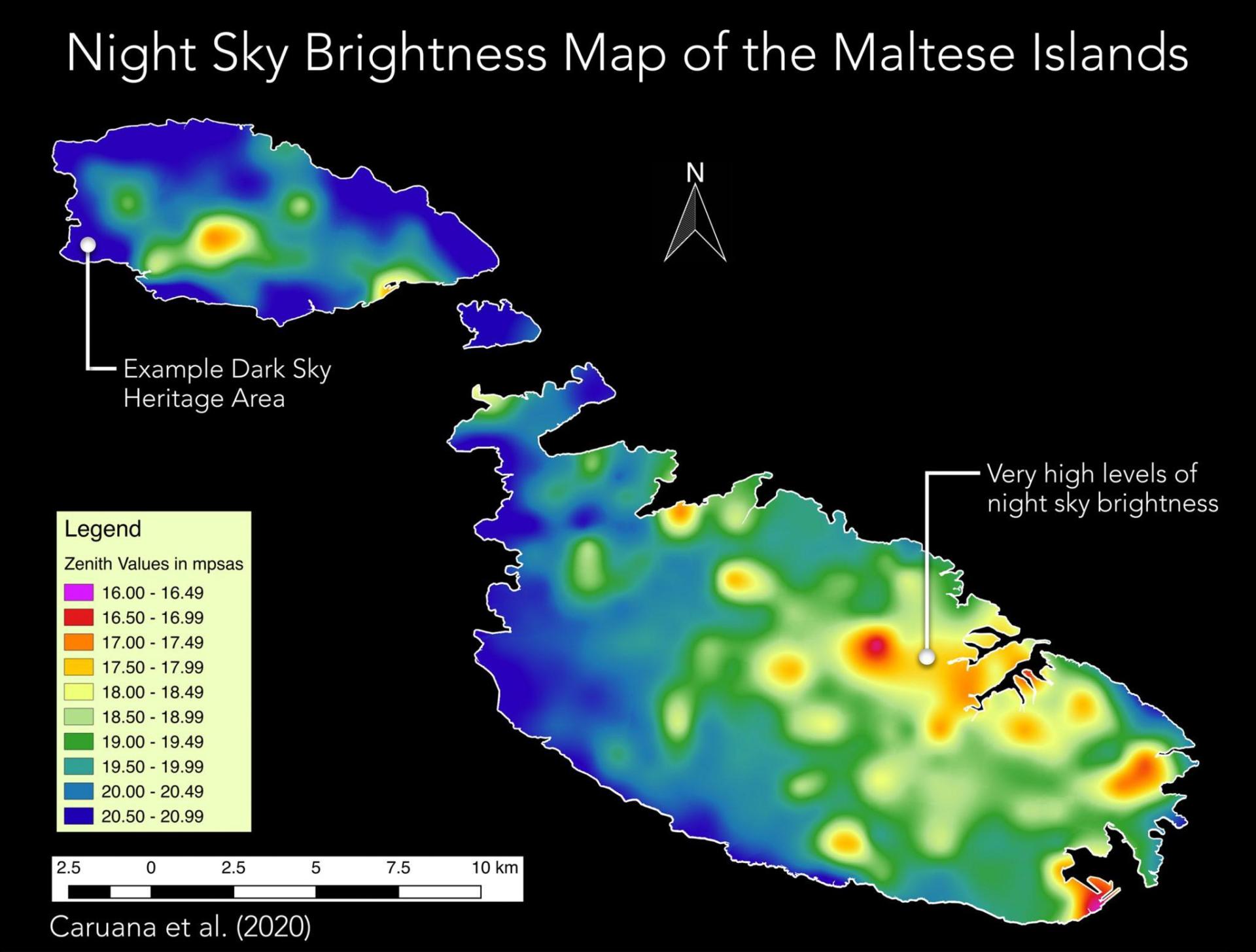 A light pollution map recorded by Caruana and other researchers in 2020. Photo: Joseph Caruana
Wildlife is also affected, he said, with some bird species becoming disoriented by artificial lighting and losing their way during migration.
The crisis is also ushering what scientists call an “insect apocalypse”, a staggering destruction of insect populations essential for keeping the food chain from collapsing.
“Insects die from exhaustion as they try to aim for artificial lights at night and, even if they don’t die, they become too weak to escape their predators,” he said.
In 2020, the Environment and Resources Authority and the Planning Authority drafted guidelines aimed at reducing light pollution. However, these guidelines were never published or implemented, he said.
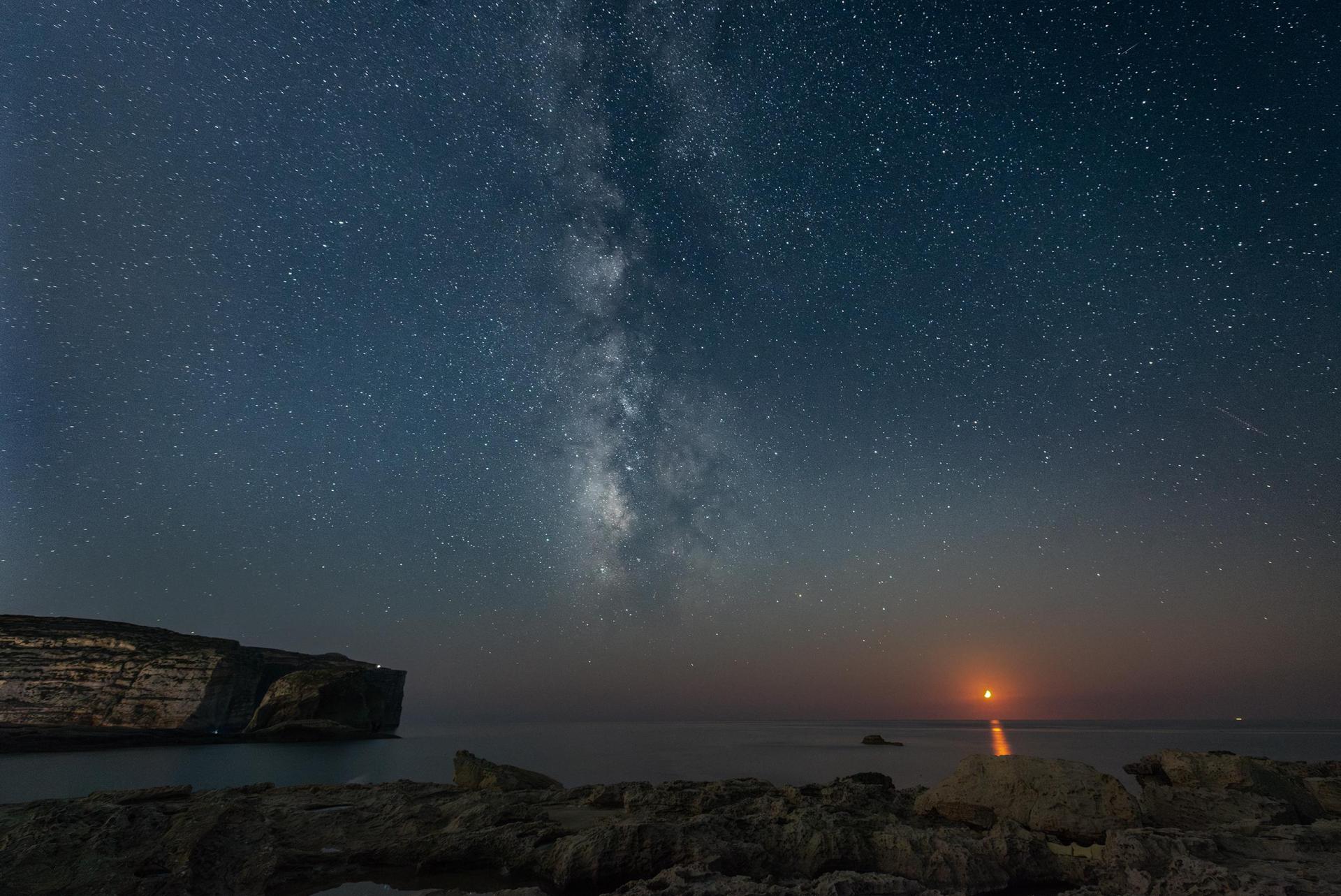 The Milky Way galaxy as seen from Dwejra. Photo: Joseph Caruana
Caruana also warned that the new, white LED lights being installed across the country could be harmful.
LED lights could be installed in warmer, more yellow colour temperatures, which makes them easier on the eye.
The white LED lights emit a sharper light that creates more light pollution.
Even worse, since LED lights do not consume as much energy, it is easy for the authorities to feel they can afford to make the lights brighter, which further exacerbates the problem.