Pope Francis has died
Pontiff dies a day after appearing in Vatican balcony to celebrate Easter
Updated 1.00 pm
Pope Francis, an energetic reformer who inspired widespread devotion from Catholics but riled traditionalists, died on Monday aged 88.
The Argentine pontiff, leader of the Catholic Church since March 2013, spent 38 days being treated for double pneumonia at Rome's Gemelli hospital before seeming to recover and leaving the facility on March 23.
His death came just a day after he delighted the crowds of worshippers at the Vatican on Easter Sunday with an appearance on the balcony at Saint Peter's Basilica.
"Dearest brothers and sisters, it is with deep sorrow that I must announce the death of our Holy Father Francis," said Cardinal Kevin Farrell in the statement published by the Vatican on its Telegram channel.
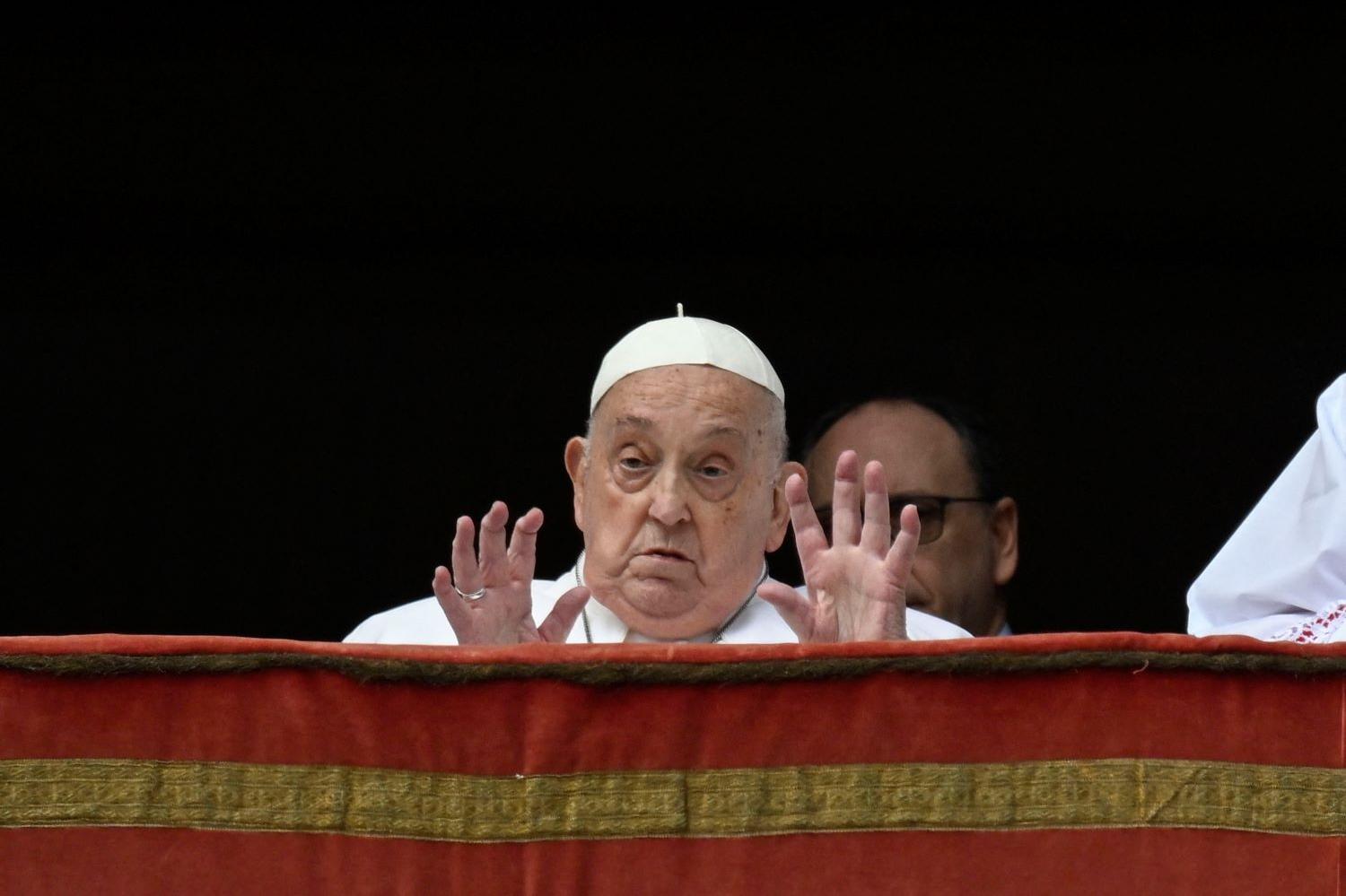 Pope Francis's last public appearance was on Easter Sunday. Photo: AFP
"This morning at 7.35 am the Bishop of Rome, Francis, returned to the home of the Father. His entire life was dedicated to the service of the Lord and His church."
His death sets in motion centuries-old traditions that will culminate in the gathering of a conclave of cardinals to choose a successor.
In the meantime, the day-to-day running of the tiny Vatican City state will be handled by the camerlengo, a senior cardinal, currently Dublin-born Kevin Farrell.
Later on Monday, the Vatican said Pope Francis' body will be laid in a coffin in the chapel at the Saint Martha residence, where he lived, at 8.00 pm (18.00 GMT).
"Tonight, Monday April 21 at 8:00 pm (1800 GMT), His Eminence the Most Reverend Cardinal Kevin Joseph Farrell, Camerlengo of the Holy Roman Church, will preside over the rite of certification of death and the laying of the body in the coffin," the Holy See said in a statement.
'Humble pastor'
Francis, whose real name was Jorge Bergoglio, was the first Jesuit to lead the world's almost 1.4 billion Catholics and the first from the Americas.
He took over after Benedict XVI became the first pontiff since the Middle Ages to step down -- and cut a sharply different figure from the German theologian.
A football-loving former archbishop of Buenos Aires who was often happiest among his flock, Francis sought to forge a more open and compassionate church.
He strongly defended social justice, the rights of migrants and the environment, while also pushing through governance reforms and tackling the scourge of clerical sex abuse of children.
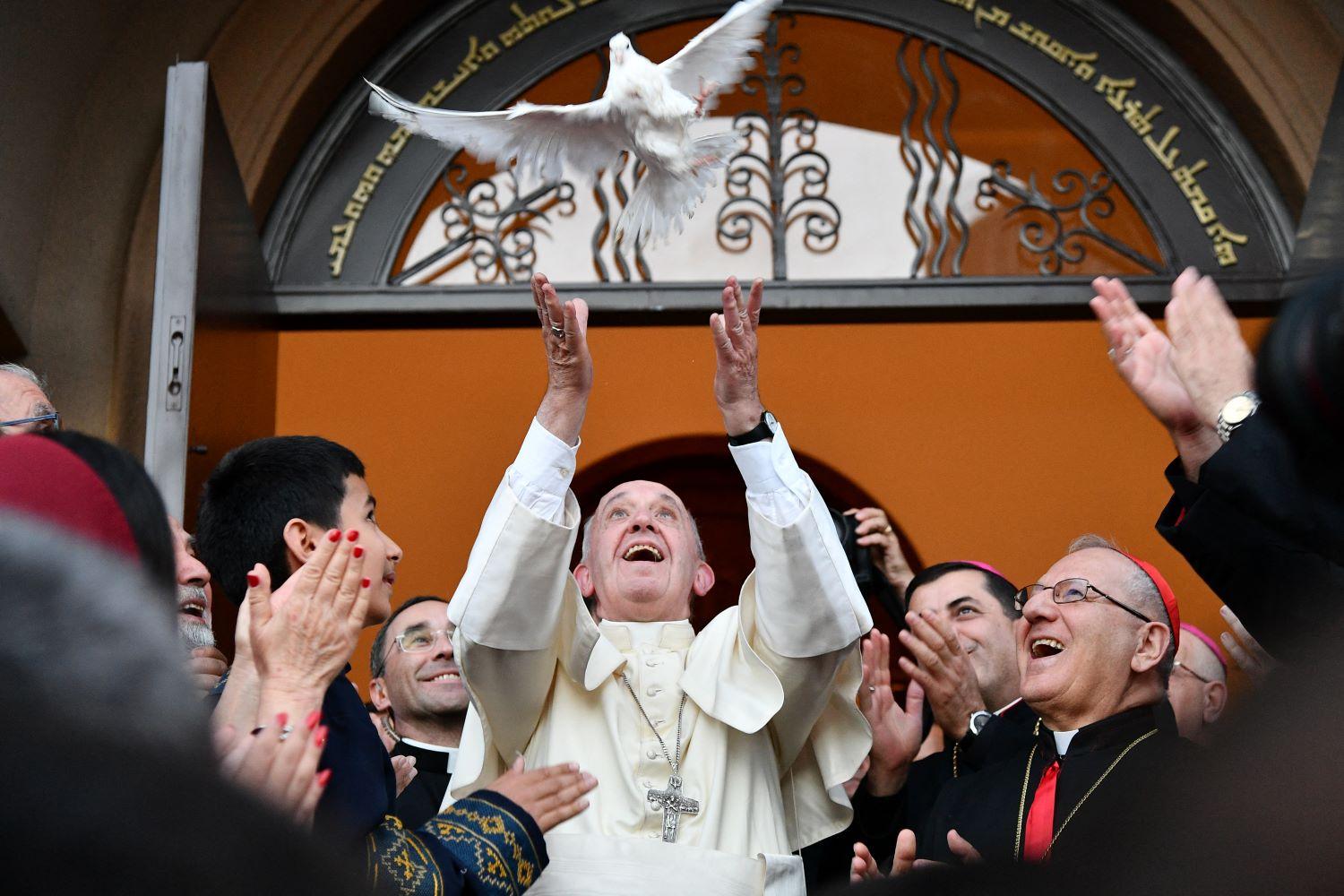 Pope Francis releases a dove as a symbol of peace during a meeting with Chaldean community at the Catholic Church of St Simon Bar Sabbae in Tbilisi. Photo: AFP
But critics accused him of creating doctrinal confusion and failing to defend traditional Catholic beliefs on key issues such as abortion and divorce.
Francis's desire to chart a different path was evident right to the end, with his decision to be buried not in St Peter's Basilica but in Rome's Santa Maria Maggiore basilica.
He will become the first pope in more than 100 years to be laid to rest outside the Vatican.
Francis also rejected the tradition of popes having three coffins, instead choosing to buried in just one, made of wood and zinc, to reflect his role as a humble pastor.
Health issues
Francis had left open the possibility of stepping down if he felt unable to do his job, following the example of Benedict, who quit citing his ailing health.
But he insisted for years that time had not yet come, and maintained a busy schedule, right up to hosting the prime minister of Slovakia shortly before his hospital admission.
Francis, who had part of his lung removed as a young man, was visibly breathless in the days before going to the Gemelli, delegating aides to read his homilies at public audiences.
Questions will now be asked whether the pontiff, known for being stubborn and refusing to take rest, should have been admitted to hospital earlier.
 Pope Francis I (C) appears at the window of St Peter's Basilica's balcony after being elected the 266th pope of the Roman Catholic Church at the Vatican on March 13, 2013. Photo: AFP
Even after he was released from hospital and ordered to rest for two months, Francis did not wait long before making public appearances.
He had been hospitalised with a respiratory infection in March 2023. That same year he also underwent surgery for a hernia, and in 2021 he had colon surgery.
He suffered knee pain that required him to use a wheelchair, and had fallen twice in recent months.
Yet he never took a day off and made frequent trips abroad, including a four-nation Asia-Pacific tour only last September.
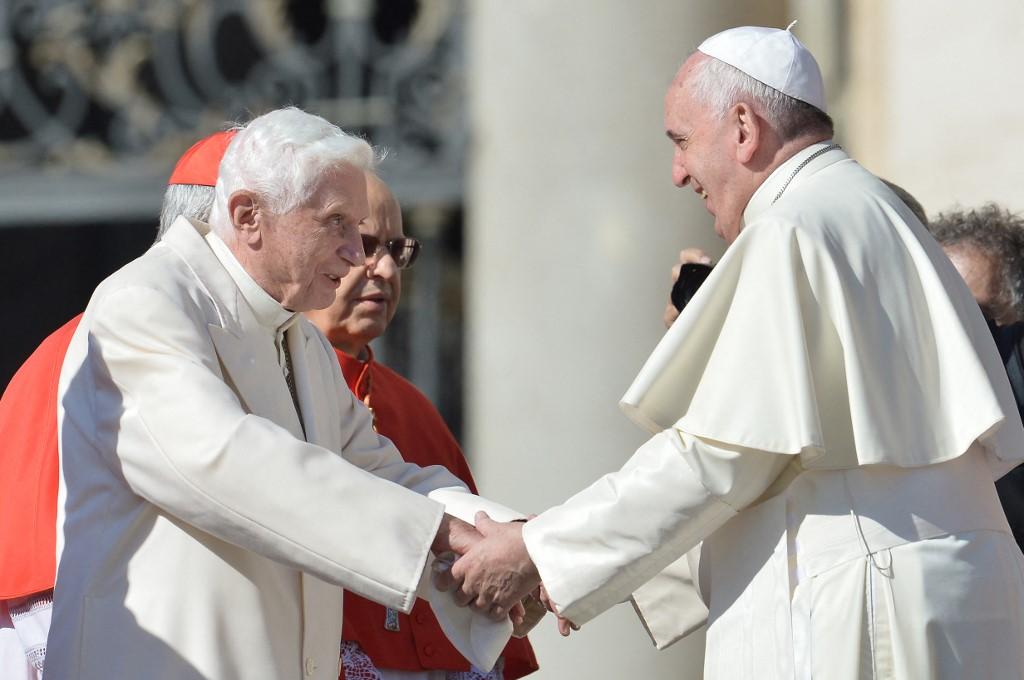 Pope emeritus Benedict XVI (L) speaks with Pope Francis during a papal mass for elderly people at St Peter's square at the Vatican on September 28, 2014. Photo: AFP
Huge crowds gathered wherever he went, a testament to his popularity and human touch, which saw him finish his Sunday Angelus prayer each week urging followers to pray for him and to have a good lunch.
'Who am I to judge?'
When Francis took over, the Catholic Church was mired in infighting and beset by a global scandal over clerical sex abuse of children and decades of cover-ups.
He promised an end to impunity and changed Vatican law to help tackle abuse, though victims said he could have gone further.
More widely, he initiated a major shake-up of the Vatican's powerful governing body, including improving financial responsibility and allowing lay Catholics to lead Vatican offices.
Throughout his papacy, Francis championed the poor and vulnerable and emphasised love over doctrine.
"If someone is gay and is searching for the Lord and has good will, then who am I to judge him?" he said at the start of his papacy.
However, his detractors accused him of failing to uphold established Church doctrine, and his final months were marked by increasingly outspoken attacks by senior cardinals.
Tensions with conservative Catholics marked the Synod congress that met at the Vatican at the end of 2023, part of a years-long global consultation on the future of the church -- that Francis now leaves unfinished.