Popular children’s magazine Sagħtar to publish 400th edition
4,000 students are subscribed to the monthly magazine first issued in 1971
Marco Bonnici’s most vivid memory of the popular children’s magazine Sagħtar is a comic strip – Tellerita.
Every issue of the magazine’s back page in 1985 and 1986 had a short comic strip written and designed by Trevor Zahra about a bird who would always engage in wordplay with other comic characters.
“I would be so excited to get Sagħtar, mostly to read about Tellerita,” Bonnici, now 50, said.
At the time, Sagħtar had already published more than 100 editions over 15 years.
Now, as president of the Malta Union of Teachers, Bonnici is overseeing the 400th publication of the popular schoolchildren’s magazine tomorrow.
Sagħtar’s first edition came out in 1971 – 55 years ago. Back then, it was a group of activist Maltese authors, Moviment Qawmien Letterarju, who published the magazine aimed at secondary schoolchildren.
The late author Oliver Friggieri was among that group, Bonnici said.
“They were a group who wanted to promote local literature, writing and reading in Maltese and culture. They wanted a product to be distributed in schools, and so they came up with Sagħtar,” he said.
The magazine was taken over by the teachers’ union in 1976.
The MUT continued publishing the magazine for almost 40 years, when they decided to indefinitely pause publication in 2015.
“We had taken the decision to stop and evaluate the future of the magazine,” he said.
But, in 2020, the MUT – this time through a foundation owned and managed by the union – restarted the magazine.
The children are so happy when it arrives- Fondazzjoni Saghtar chair Elaine Germani
‘For children, print is innovative’
Among the things reconsidered was a revision of the magazine’s target group, Elaine Germani, who chairs the foundation, said.
“We were trying to reach out to everyone, but you cannot have a magazine that is appropriate for early primary schoolchildren and those about to leave secondary,” she said.
Today, the magazine is much more focused on primary school and middle school children (Forms 1 and 2), she said.
Germani said that, at first, the idea was to only publish online.
“With children having tablets and so on, we thought there would not be a need for print,” she said.
But, soon enough, Germani and the editorial board she oversees realised they were wrong.
“Children are so used to spending time in front of a screen that having something physical in their hands has become unusual. For them, something that is not on a screen has become the innovation,” she said.
“I was in a school once when they were delivering it. You can see that the children are so happy when it arrives.”
The magazine now has a subscription of 4,000 students who receive an edition eight months a year (one for every scholastic month).
Those numbers are similar to the number of magazine subscribers throughout the 2000s, Bonnici said.
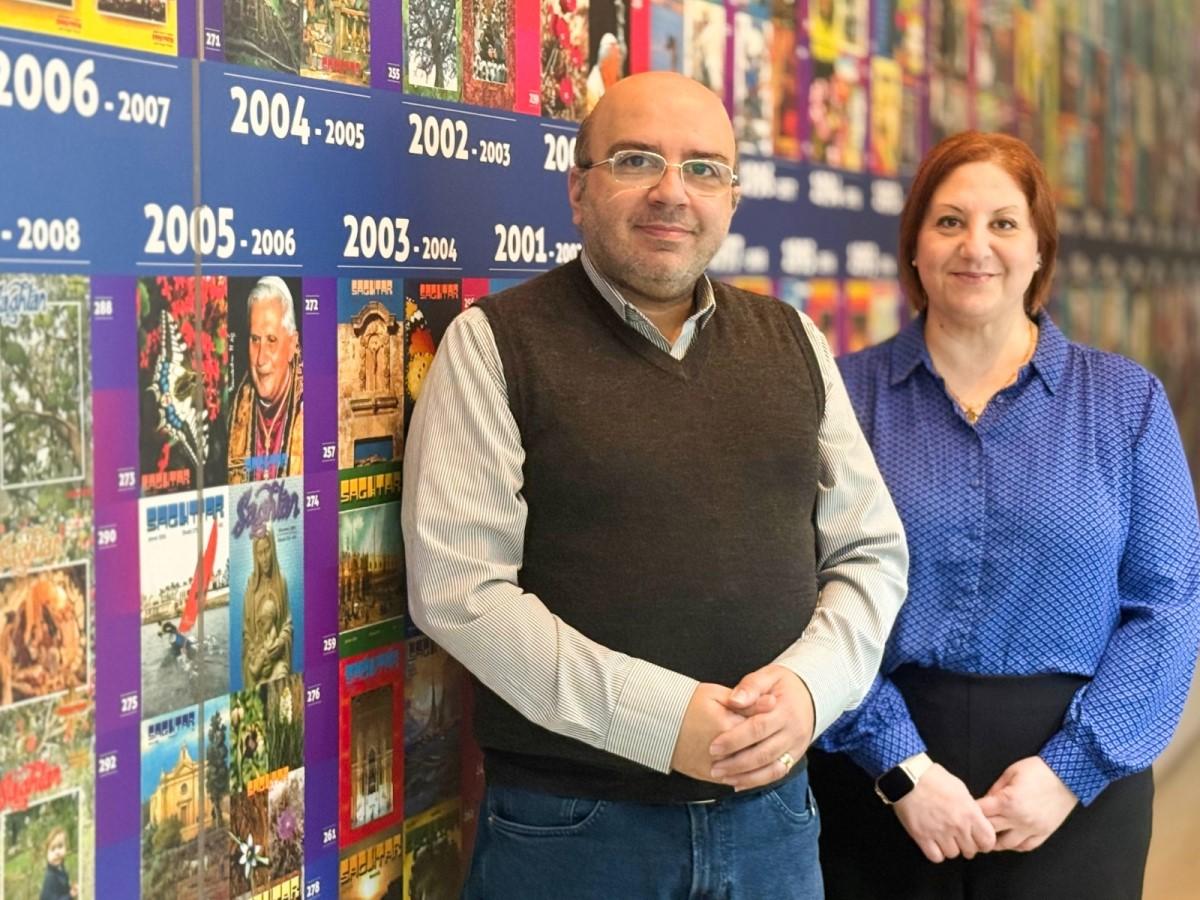 Marco Bonnici and Elaine Germani. Photo: Jonathan Borg
‘Everyone remembers the posters’
Compiling the magazine follows a similar pattern every month, Germani said.
“There is first a call for writers. Some of them write regularly for the magazine while others only do so occasionally. Sometimes it is students who contribute,” she said.
Editor Chris Giordano and the editorial board then decide what goes in the magazine and what stays out. Designers page the different parts of the magazine and include designs that are either given to them by the writers or produced in-house.
The magazine includes standalone features, comics and stories that either continue from one edition to the next or feature the same characters.
“Over the years, much of that format has stayed the same, although we have sought to improve the quality of the paper we print on, the writing and the design,” she said.
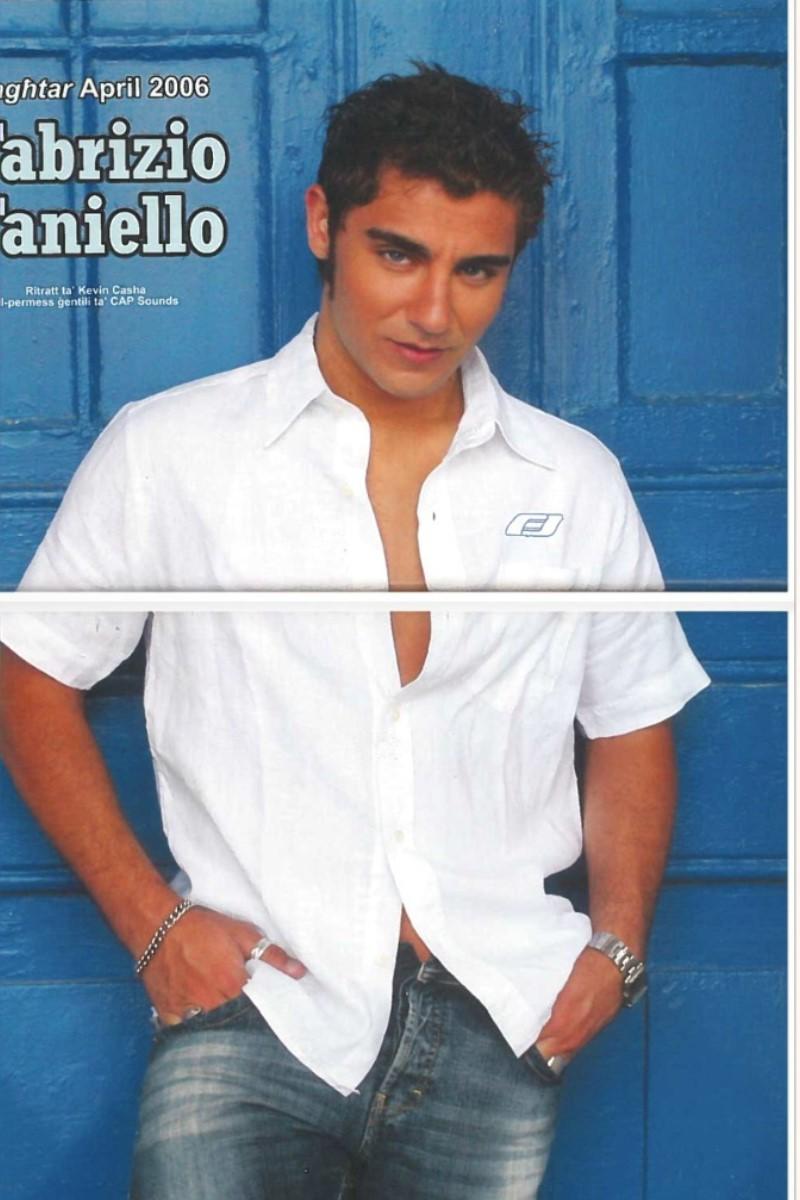 Posters appear in every edition but unlike in April 2006 when Fabrizio Faniello was featured, they are no longer in the centre of the magazine.
One constant in the magazine’s history has been the inclusion of a poster of a popular musician or band.
The last edition, for example, had a poster of Malta Eurovision winner Aidan. But, unlike the past, the new magazines make sure not to put the posters in the middle of the magazine.
“People used to tear out the poster in the middle and hang it on their walls but they would ruin the magazine by doing so,” he said.
The post-2020 editions also include interactive portions that can be accessed through the magazine’s website – saghtar.org.mt.
That website also includes all the magazine’s previous editions, including the first publication in 1971.
Agony aunt and ‘the young women’s section’
Several sections that appeared in the magazine’s first decades have since been phased out.
Among them was an agony aunt column that appeared in the 1980s, for which a priest – Dun Charles Cordina – answered.
One problem that appeared in the November 1986 edition came from a 14-year-old girl from Sliema.
“I am a 14-year-old girl, and I attend the youth centre where children of my age go. Some of my friends go to discos. I long to go with them, but my parents will not let me. I am now fed up, so I started going secretly. Am I committing a sin?” the girl, who signed as ‘C.B’ from Sliema, wrote.
Another section that appeared in the same period, called the “young women’s corner”, included recipes, sewing instructions and makeup tips.
Students would also request the magazine to publish song lyrics from bands that were popular at the time. They would also ask for pictures of their favourite football stars.
In one edition, a boy from Naxxar Secondary School – Noel Borg – asked for lyrics to Duran Duran’s Wild Boys. In that same edition, another boy asked for pictures of Juventus football star Michel Platini.
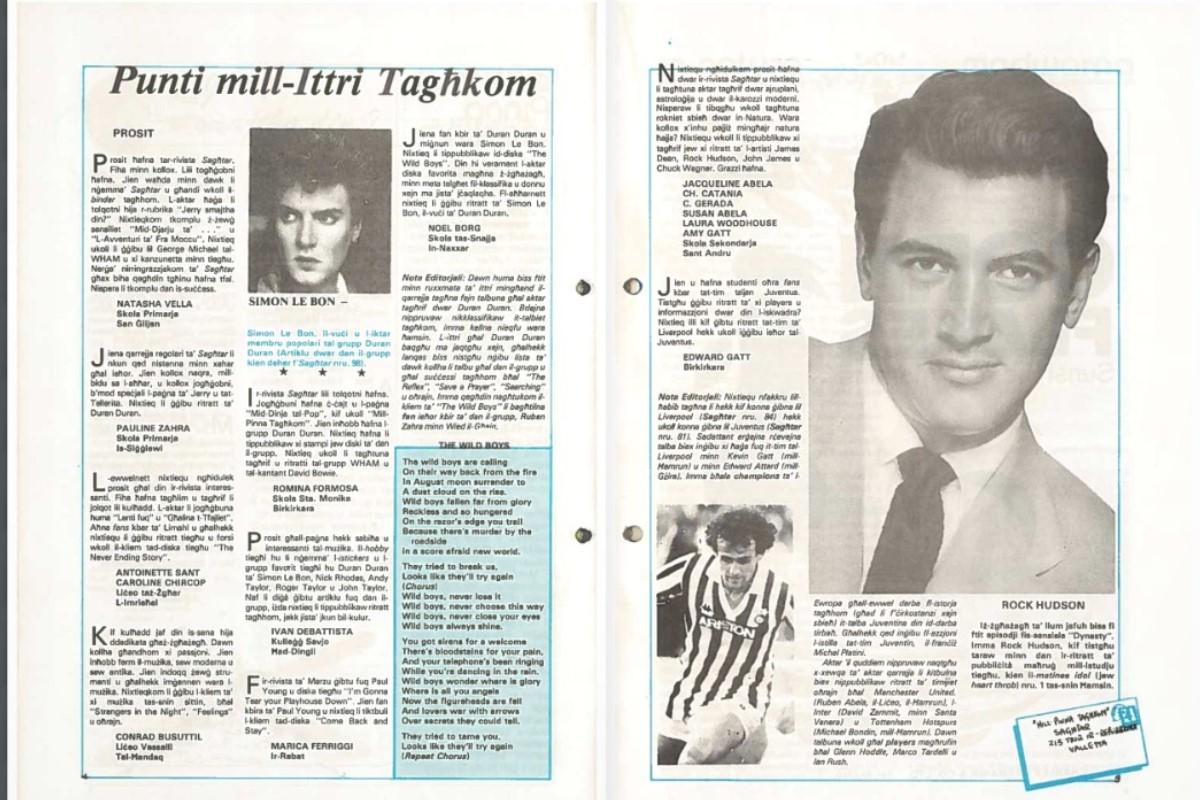 Students would also request song lyrics from bands they loved and photos of football stars to be published.
Podcasts, Sagħtarin and Sagħtar for foreigners
Over the last years, the foundation kick-started new initiatives, including Sagħtarin, a workbook aimed at kindergarten and early primary schoolchildren, and a podcast with children from schools across Malta.
The foundation even hosts a weekly radio programme on RTK 103FM – Sagħtar FM.
Sagħtar has also published a single magazine edition aimed at foreign national schoolchildren who are learning Maltese.
“The plan is to eventually start publishing that version of Sagħtar more regularly,” Germani said.
Bonnici said publishing Sagħtar fulfils some of the MUT’s professional obligations.
“As a union, we spend a lot of time negotiating for better working conditions, but we also have professional duties. Sagħtar has always been used as a teaching resource in itself,” he said.