Post-war watercolours on Malta postcards
A limited number of publishers and artists summoned sufficient courage to explore an unexploited niche – the postcard illustrated by watercolour painting
Over years of publishing history, photography asserted a constant predominance in world and Malta postcard artwork. Very few dared challenge this universal convention; well, not quite everybody.
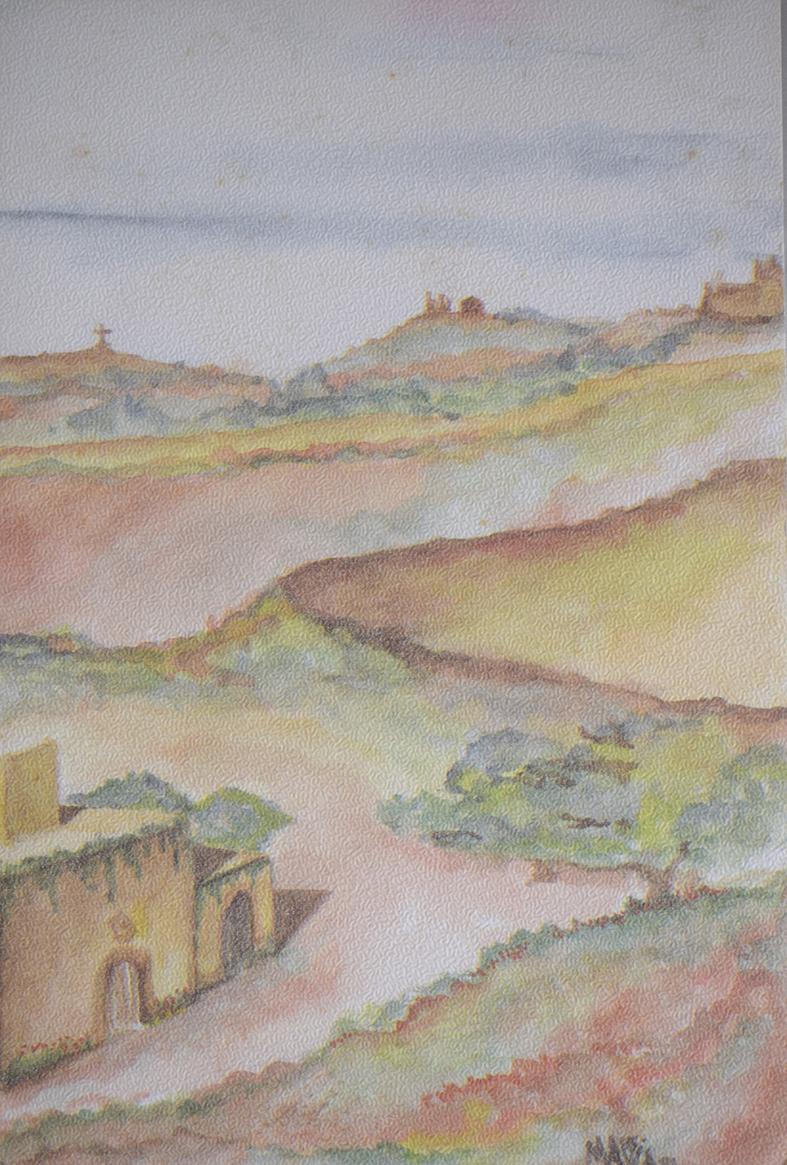 Farmhouses, a Spheres postcard by Mark Mallia.
A limited number of publishers and artists summoned sufficient courage to explore an unexploited niche – the postcard illustrated by watercolour painting.
This breaking with mainstream trends should not appear entirely rebellious or revolutionary. Pre-war, the artist Edward Caruana Dingli had blazed the trail with his splendid compositions, together with Vincenzo d’Esposito, Enrico Zarb, Luigi Maria Galea, Kathleen Airini Vane, Joseph Galea and others too. Prototypes existed, though the credit would more likely beckon the publisher, rather than the artist.
After the war, a change of emphasis becomes more evident – watercolours begin being turned into postcards by the painters themselves rather than by third-party editors or printers.
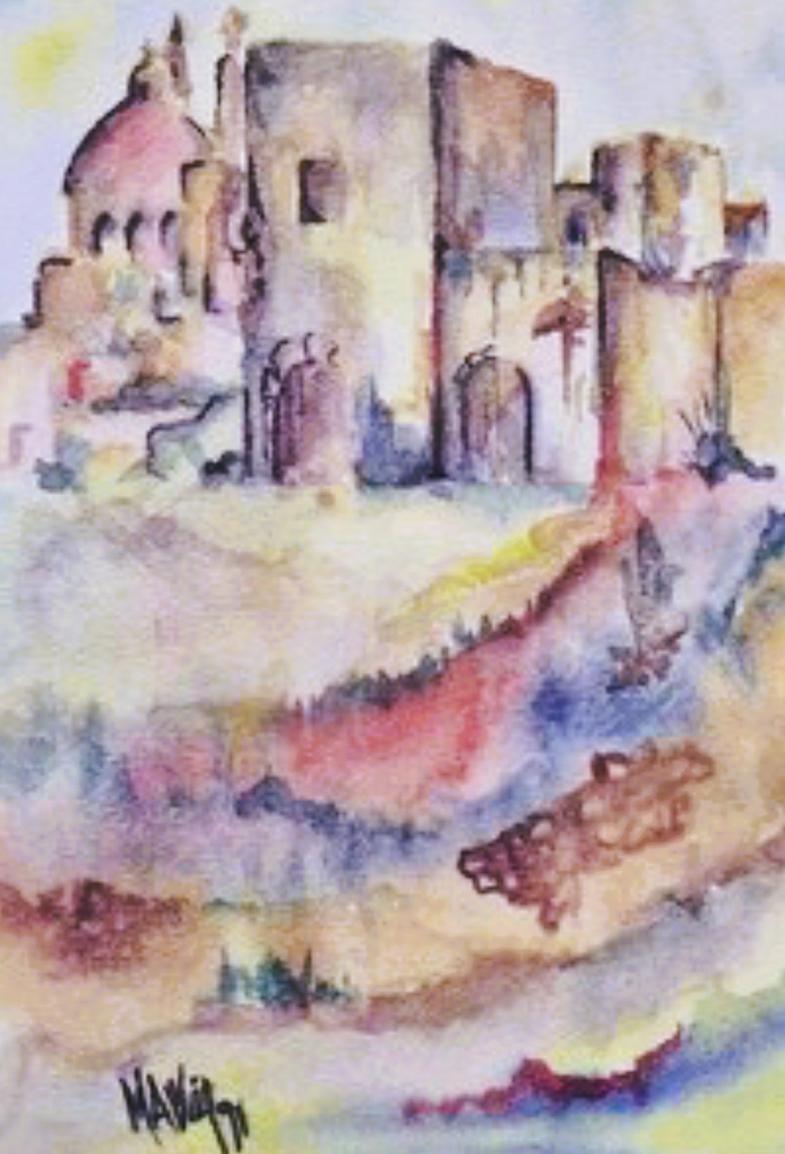 A Spheres farmhouse postcard by Mark Mallia.
The majority of the artists cling to tradition – customary 20th-century Italianate vedutisti. The only striking exception – the artist and photographer Mark Mallia (1965-2024), who, in the 1980s, self-published or inserted in the ‘Spheres’ sets, his transparent, feathery, aethereal landscapes.
Some watercolour postcards show the names of artists about whom I did not manage to uncover any information at all. Who was Captain J. B. Oakley, who put on sale the charming postcard set ‘Life in Malta’? Or the watercolourists Anton E. Mercieca and ‘Riccobaldi’, whose views illustrate some Maltese postcards?
Two prolific firms or watercolourists dominated the artists’ postcards market from the 1980s onwards – ‘Angelo’ and Stephen Formosa. Are those the names of the artists who produced the artwork? I rather doubt it.
The Formosa landscapes are signed with unclear initials or a monogram. The watercolours follow a realistic, pleasant, traditional style that must have made them popular with locals and tourists.
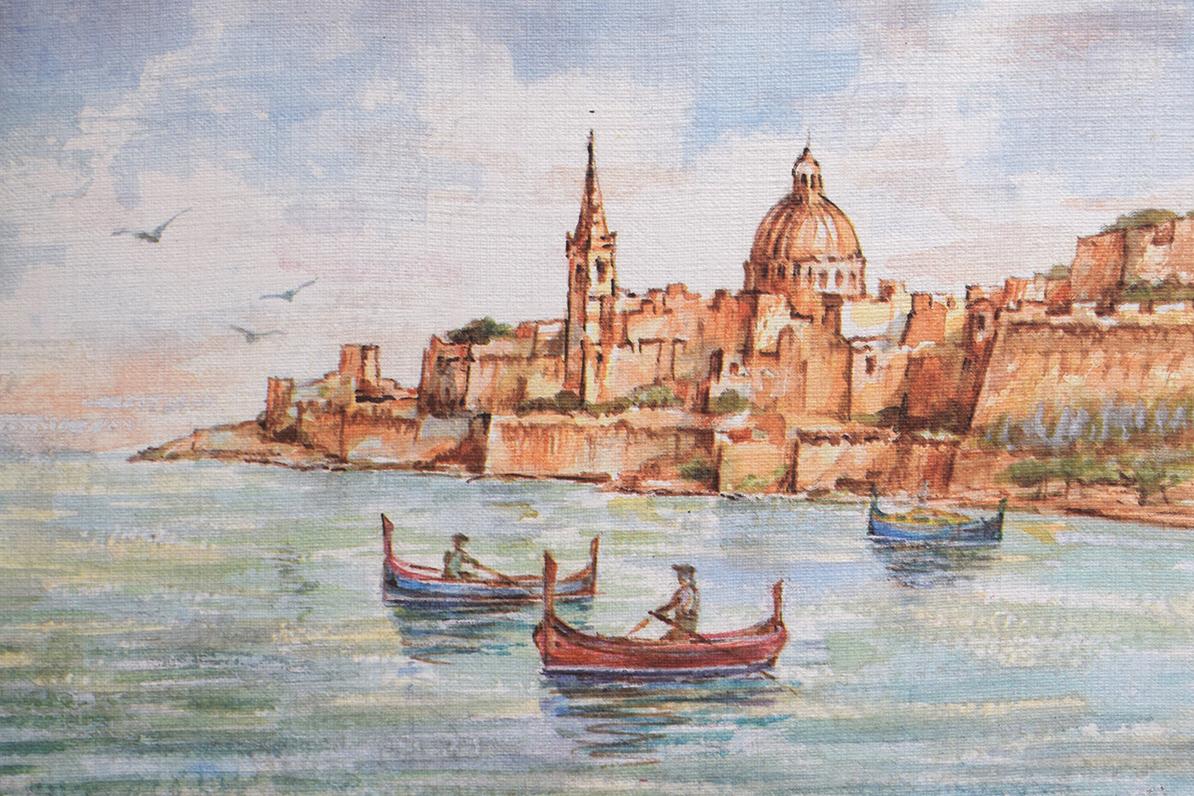
Boats in Grand Harbour (but really Marsamxett) by ‘Angelo’.
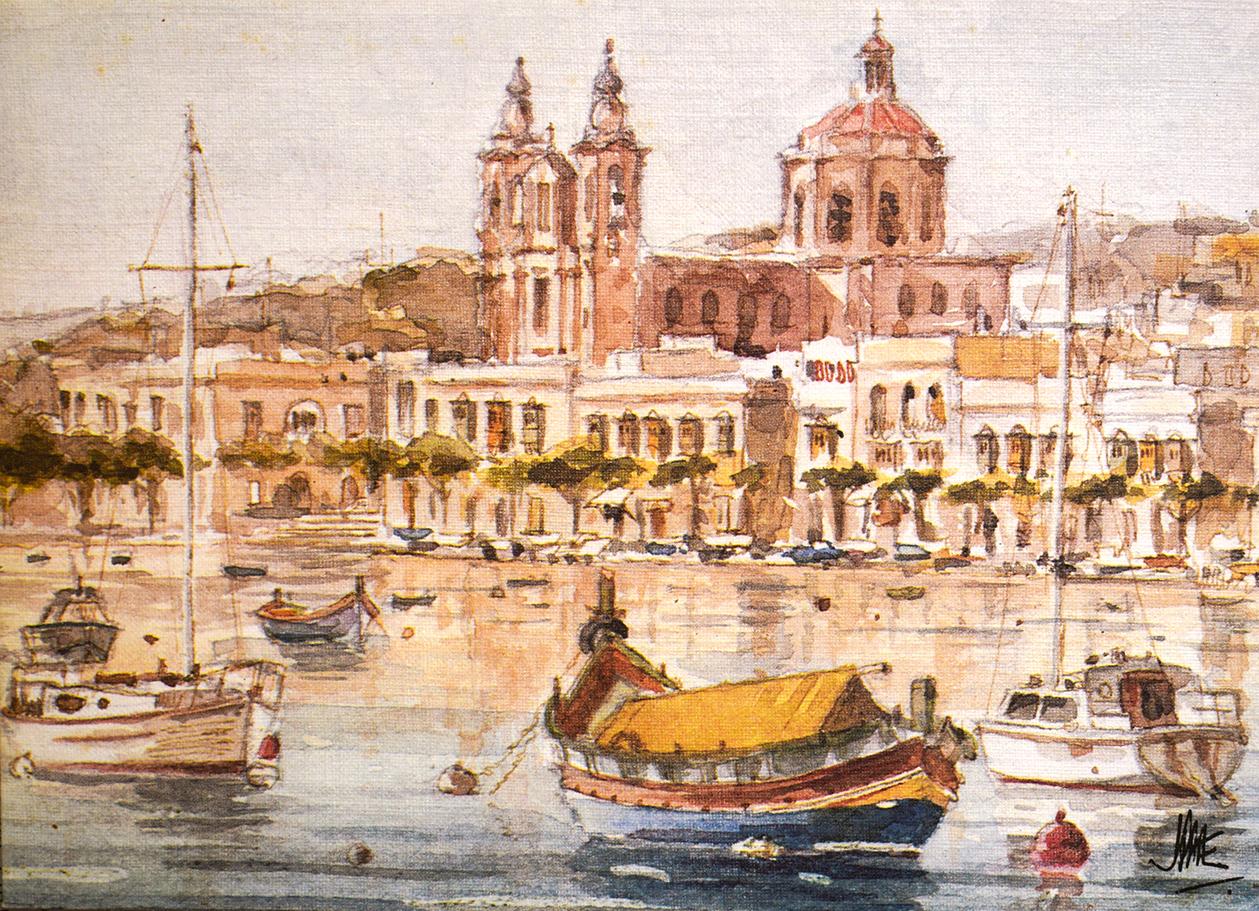
Msida Creek, by Stephen Formosa Ltd
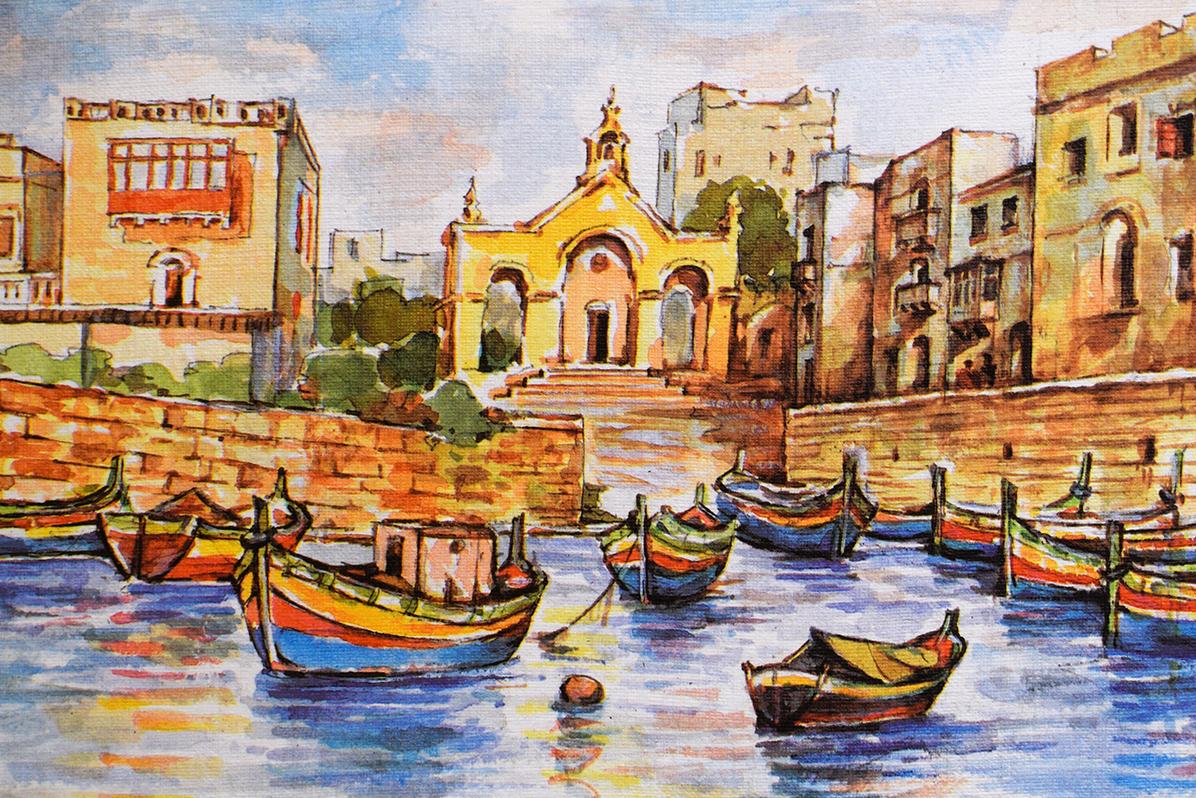
Tal-Menqa, St Paul’s Bay, by ‘Angelo’.
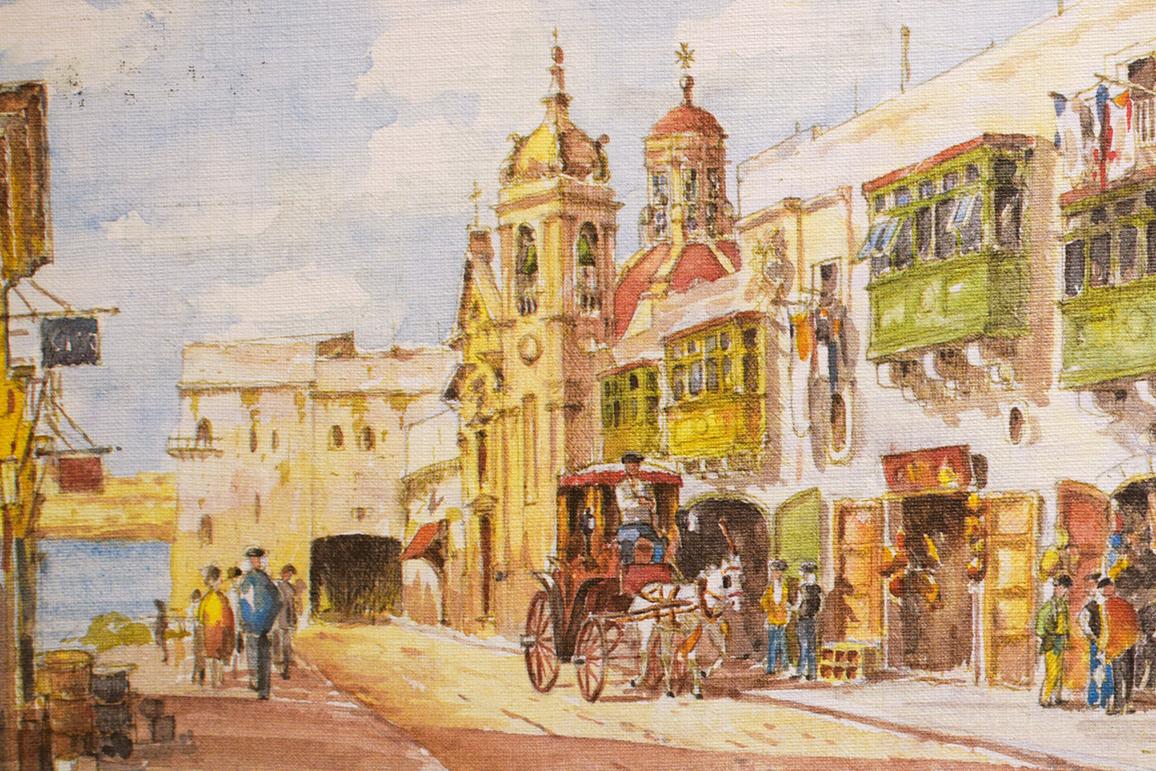
Ta’ Liesse church, Grand Harbour, by Stephen Formosa Ltd
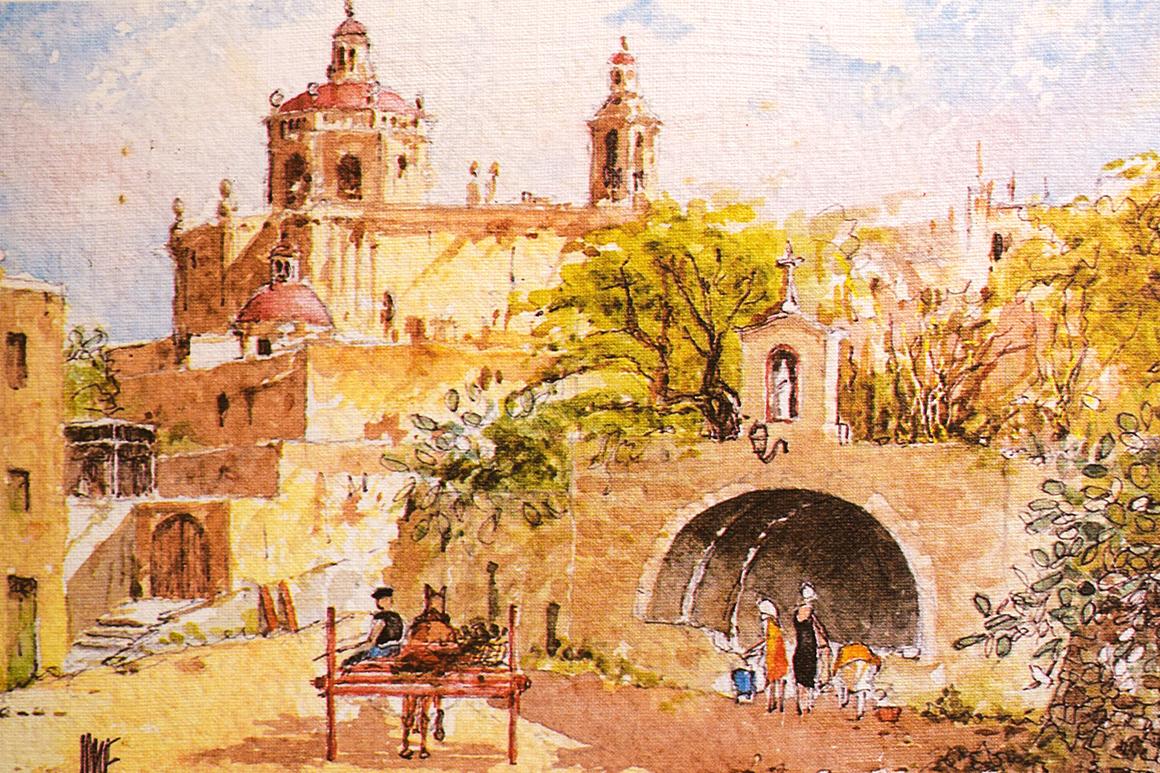
A Stephen Formosa Ltd postcard of Fontana, Gozo.
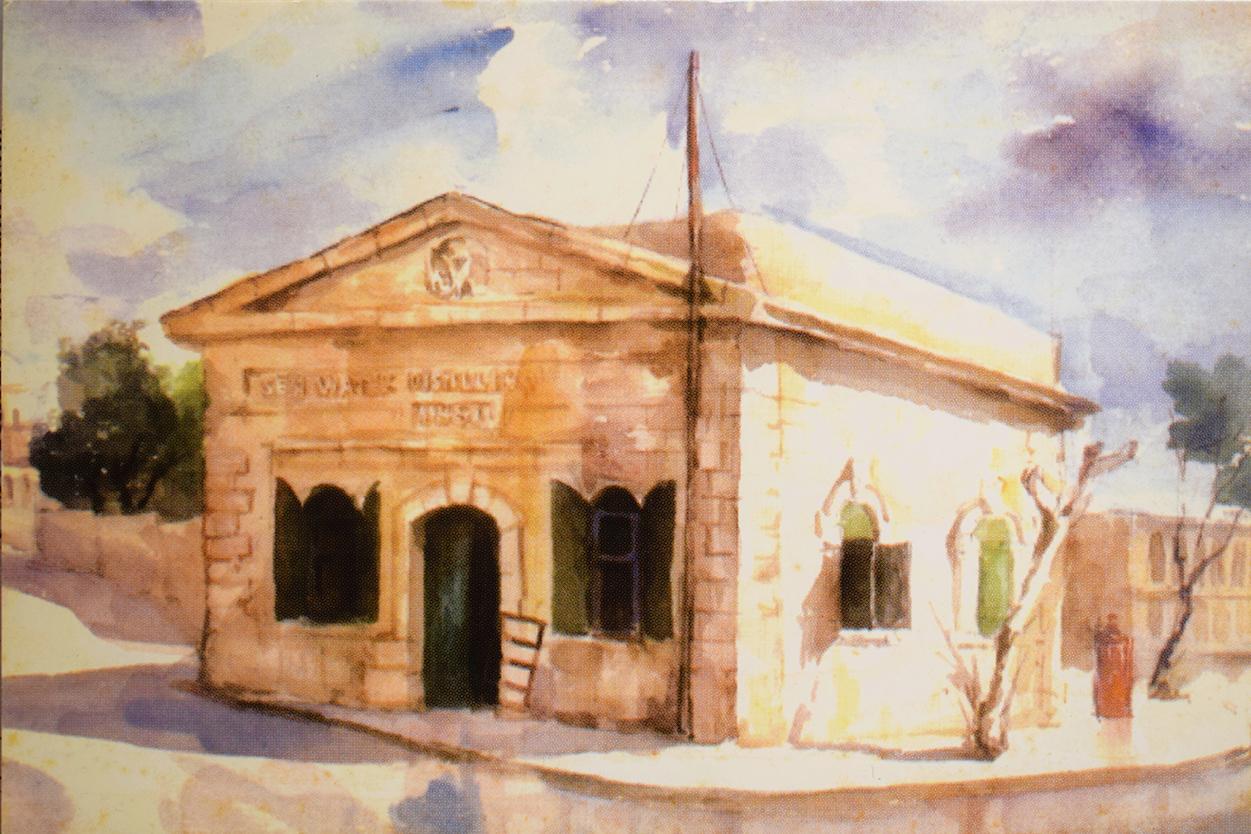
Postcard of the Sliema Sea Water Distilling Apparatus, by Bonavia Printers.
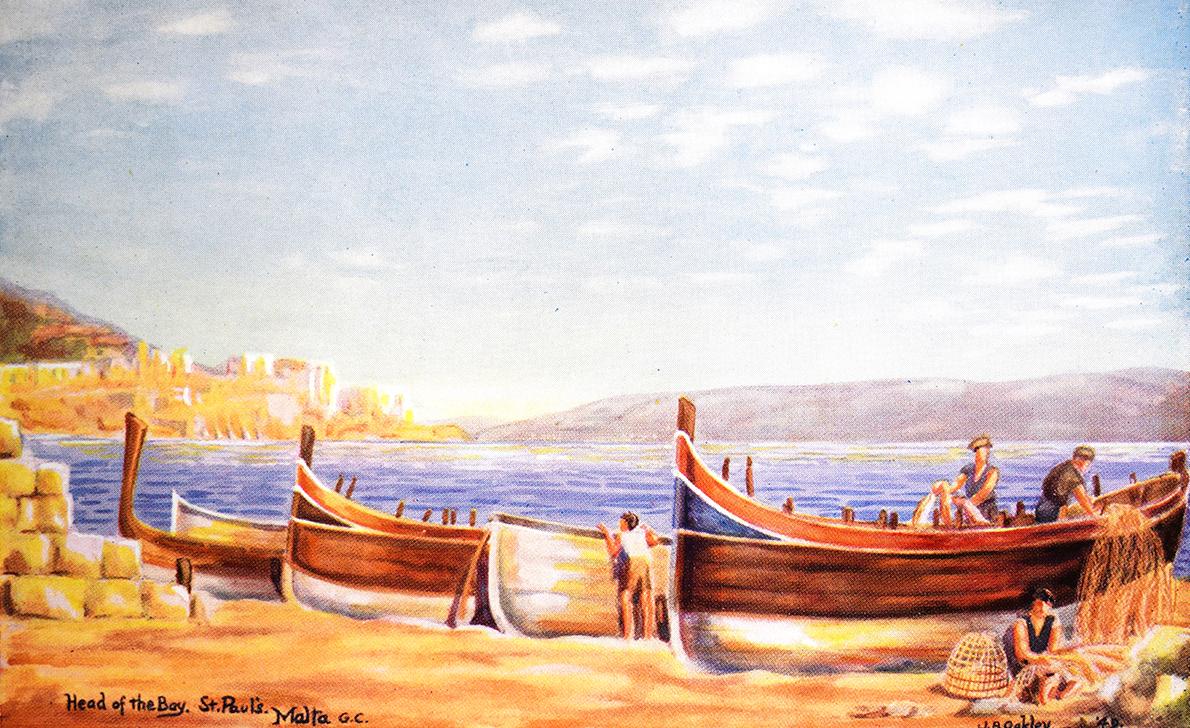
From the ‘Life in Malta’ set by Capt. J.B. Oakley
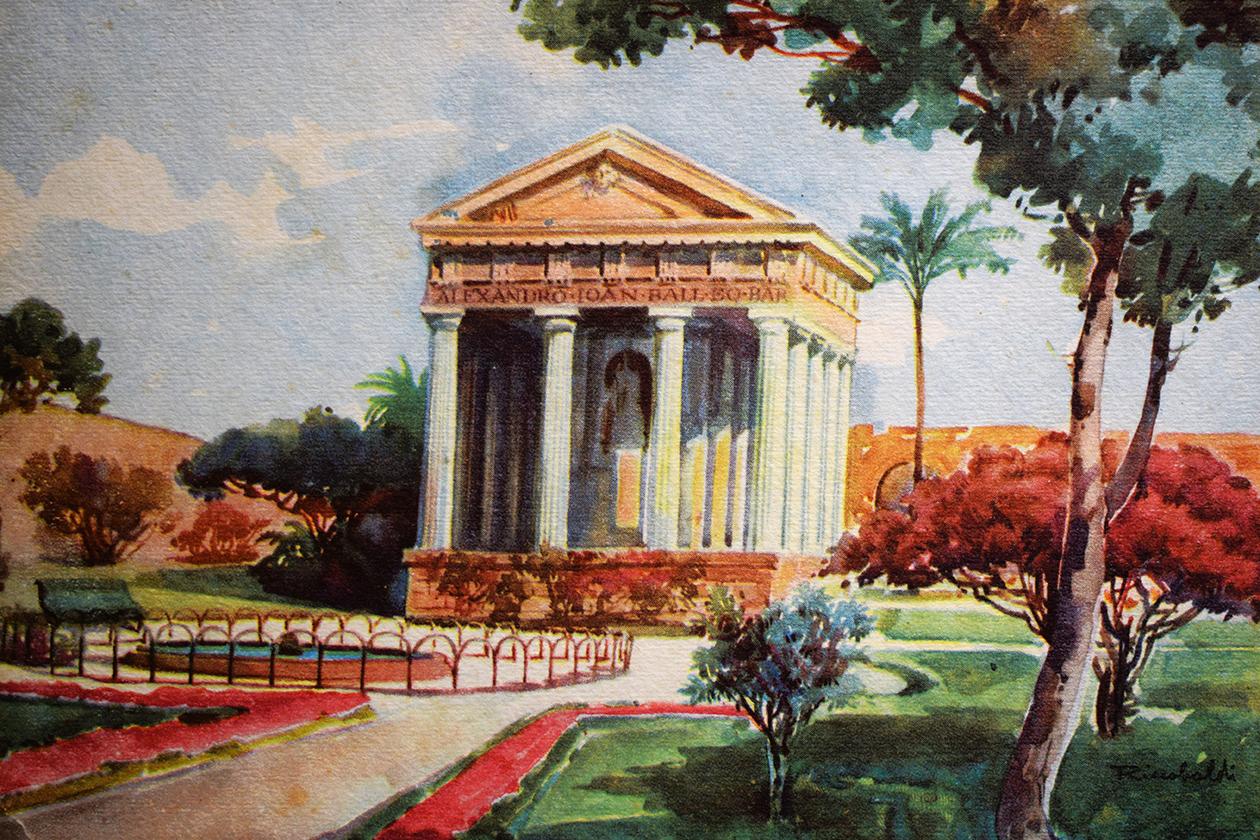
The Ball Monument at Lower Barrakka, signed ‘Riccobaldi’.
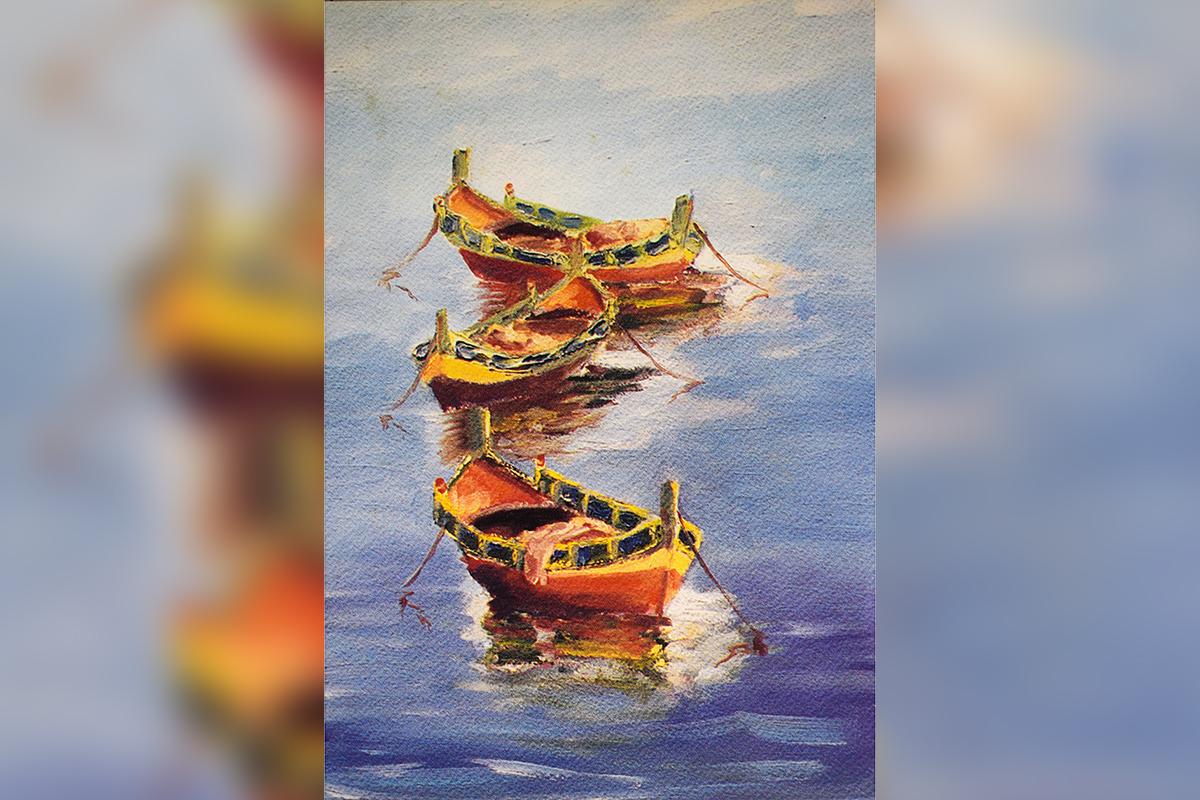
Luzzus, a postcard by Anton E. Mercieca.