‘Prepare for stronger storms, hotter heatwaves’
Scientist says Malta could also learn from countries engaged in ‘re-soiling’
Malta must prepare for more weather extremes such as powerful storms and hotter heatwaves in the coming years, a leading climate scientist has warned.
The Mediterranean is a “climate hotspot” set to see more intense and worsening conditions than other parts of the world, according to Stefano Moncada, associate professor and head of the University of Malta’s Islands and Small States Institute.
And as a result, more extreme weather events are expected to become more frequent.
“We had to invent the term ‘Medicane’, because they were coming every few years and now, they’re more intense, they’re coming more often,” said Moncada. Medicane refers to a tropical-like Mediterranean cyclone.
He cited as examples Storm Harry, which battered Malta in January and a heatwave that melted underground power cables in 2023.
Heatwaves, rising temperatures, longer periods of hot weather and fewer cool nights will be accompanied by less rain but more intense rainfall in shorter periods of time – meaning more storms and flooding.
And the fringe months are set to bring less relief than Malta has been used to, with hot weather extending beyond traditionally sunny months.
“The challenges are only going to increase and be more intense. Sea level rise is also an important aspect, but it’s happening at a lesser pace than the Pacific.”
One person intimately familiar with the climate challenges facing the Pacific region is Australian National University Pacific Institute director Salā George Carter, a climate security specialist recently in Malta as part of a six-country tour. Salā is an honorific title referring to Carter’s high chief title in his native Samoa.
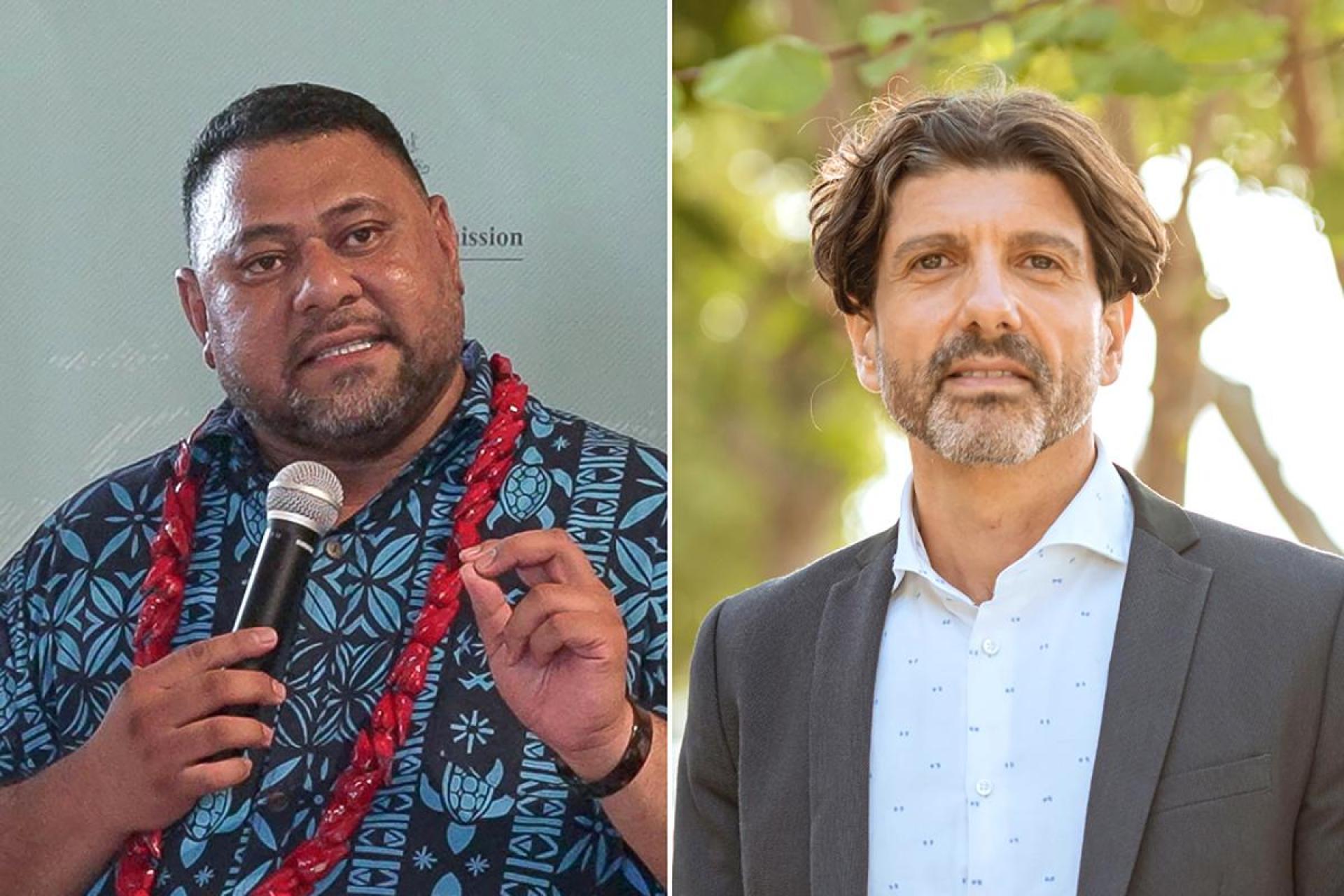 Climate academics George Carter (left) and Stefano Moncada stressed the importance of multilateralism in tackling the climate crisis. Photos: Australian High Commission / Kurt Mizzi.
Speaking to Times of Malta alongside Moncada at the Australian High Commission in Ta’ Xbiex, Carter said there were things Malta and the Pacific could learn from each other.
‘Challenges are only going to increase and be more intense’
Malta was forging ahead in desalination technology and transport solutions, said Carter. He also pointed to the University of Malta’s Resilient and Sustainable Islands Initiative training, which has seen climate professionals from across the world come to Malta for training.
“In terms of the transport systems and electric systems here, that’s an advancement that we don’t necessarily see often in the small island nations, and that’s where Malta comes through as having these great forms of resilience.”
Moncada said Malta could also learn from countries engaged in ‘re-soiling’, removing concrete and replacing it with soil, which absorbs heat, to bring down the air temperature.
“Given the high level of construction and cement use in Malta, we should try to replace some of this with soil,” he said, adding that planting trees in strategic locations could also help bring down the air temperature.
“Using nature is one of the quickest and easiest ways to adapt to climate change; we underestimate its importance”.
The climate specialist said Malta should also consider shifting the hours of some schools, workplaces and tourism activities to fringe hours of the day.
Emphasising that Malta had made great strides in developing its economy, he said “We now need to put adaption above GDP growth at all costs – or it will turn on us”.
Multilateralism
While Pacific islands were not always able to harness the same technological solutions as Malta, they held a key leadership position in multilateralism, joining other small island states to spearhead environmental discussions, said Carter.
Good examples show that coming together works
Multilateral solutions to climate change featured heavily in the discussion, with both Carter and Moncada agreeing that a multi-pronged, multinational approach was key to solving some of the greatest challenges of climate change.
In fact, small and island states have a track record of spearheading international legal efforts to combat climate, they explained, with Malta and Pacific states having played a key role in pushing a key 1992 UN convention to curb greenhouse gas emissions.
But with multilateralism seemingly under threat globally as the US retreats from long-held international partnerships while pivoting sharply away from climate action, can multilateralism survive?
“We have to appreciate the situation we’re in,” said Carter. “It’s now the time of middle powers – you see it in Europe, and I see it in the Pacific where you have 16 nations working collectively”.
How to stay optimistic
With reports of so-called “eco-anxiety” on the rise, however, what would they say to those pessimistic about mankind’s chances of successfully combating climate change – and how do they remain optimistic?
Carter stressed that while it was easy to feel “disenchanted, like the world is crumbling, you need to look at the big picture… you’re part of a genealogy of people who have survived and adapted”.
Emphasising the importance of adaptation, he said Malta and Pacific islands should “relearn island solutions and island ways”, something Moncada agreed with, advocating reexamining construction and agriculture practices, including using traditional building methods and switching crops when there is less water.
But while many may be experiencing apprehension about the long-term damage of anthropogenic climate change, there are others who remain skeptical. What do Carter and Moncada say to those who do not believe climate change is happening?
“If you have 99.9% of the scientific community telling you this is happening because of man-made causes, and that it’s happening much faster, you have to trust them like you trust them when you are unwell and take a pill,” said the University of Malta academic.
“Good examples show that coming together works; the ozone layer is smaller because we had an agreement, forest areas are increasing in Europe because we protect them. Why can’t we do this also on climate change?”
Drawing on his experience living and working in the Pacific, meanwhile, Carter stressed the importance of seeing the impacts of climate change firsthand, and those in areas not impacted as much as others, not being lulled into complacency.
“In the Pacific, we value being present … you have to be there to see it, feel it, and understand – not to sympathise, but to find pragmatic solutions,” he said.