The price of prosperity
Economic growth without limits risks destroying the very quality of life it promises to improve, argues Albert Buttigieg
Malta’s economy is celebrated as a success story. Strong growth, record-low unemployment and rising investment have transformed the country over the past decade. Although these achievements deserve recognition, they also raise a legitimate question that is hard to ignore: What is the price of this prosperity?
On a small, densely populated island like Malta, growth cannot continue without further thoughtful deliberation. There comes a point when economic success begins to erode the very quality of life it is meant to enhance.
Many already feel that we have approached saturation point.
Traffic congestion, relentless construction, overcrowding, pressure on public spaces and strain on infrastructure are now part of our daily lives. The environmental degeneration is equally evident.
Open spaces are disappearing, tranquillity is becoming harder to find and the character and identity of our towns and villages are steadily being eroded.
The island is at risk of becoming a neurotic nation.
This is not an argument against economic growth. A healthy economy creates jobs, supports families and funds essential public services. The question is whether growth has become an end in itself rather than a means to improve people’s lives.
Discourse by our political class and other stakeholders continues to enable an economic model in which more is a guarantee for continued prosperity: more apartments, more hotels, more restaurants, more cars, more tourists and more consumption. It is a rat race.
The island is at risk of becoming a neurotic nation
The crude truth is that Malta is a small island with limited space and resources.
We cannot continue growing indefinitely without diminishing the very quality of life that prosperity is meant to enhance.
It is therefore time to ask some bold questions.
How much more development can Malta realistically absorb? How many more hotels do we need? Should attracting ever-increasing numbers of tourists remain our primary goal? At what point do our towns and villages cease to be places where people live and become spaces designed mainly for commercial activity?
The challenging issue is how we define success.
Tragically, we have come to equate prosperity with constant expansion.
Yet, more does not necessarily mean better. Unchecked growth risks producing a society that is wealthier but poorer in what matters most: time, community, relationships, a healthy environment, quality of life and mental health, amongst others.
The Gospel offers a timeless reflection in the parable of the rich fool. Having accumulated great wealth, he built larger barns to store even more, believing that security lay in accumulation. He failed to comprehend that life is measured by more than possessions.
Thus, a society that is always chasing “more”, risks forgetting what it is really living for.
None of this is easy for politicians to acknowledge.
Admitting that endless growth has limits carries political risks. It is rather like telling a child that Father Christmas is not real. The child may already suspect the truth but prefers the comforting illusion because of the gifts.
Likewise, we know that infinite growth on a finite island is not sustainable, yet, we continue to embrace the promise because it delivers immediate rewards.
Leadership, however, is not about preserving comforting illusions. It is about preparing society for reality and making courageous decisions before reality makes them for us.
Recognising our limitations is not defeatism; it is wisdom. Every nation has constraints. The most successful countries are not those that deny them but those that build their future around them.
Singapore and Iceland offer two different but instructive examples. One is a densely populated city-state with limited land; the other is an island nation shaped by a demanding natural environment. Both have recognised their limitations and transformed them into strengths, developing distinctive identities and long-term strategies instead of pursuing growth for its own sake.
Malta should do the same. Our small size is not a weakness to overcome but a defining characteristic that should shape our national vision.
Instead of becoming bigger, busier and more crowded, we should strive to become better; a country known for thoughtful planning, environmental stewardship, cultural heritage, innovation and an exceptional Mediterranean quality of life.
Accepting limits does not mean lowering our ambitions. It means redefining them.
Our success should be measured not only by GDP but also stronger communities and a quality-of-life worthy of future generations.
The real question is not whether Malta should continue to prosper.
It is whether we have the wisdom and the audacity to recognise that, on a small island that has finite resources, true prosperity begins when we understand that enough is sometimes enough.
Have we missed the bus?
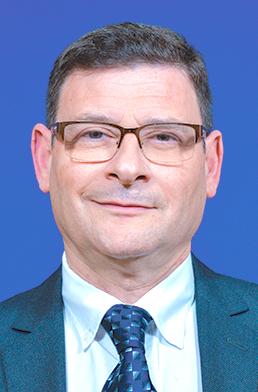
Albert Buttigieg is a former Nationalist Party MP and former mayor of St Julian’s.