‘Prison authorities knew I wanted a baby’ – murderer Erin Tanti breaks silence
Corradino Correctional Facility bosses deny they approved the procedure
Convicted murderer Erin Tanti has broken his silence on how he fathered a child from inside prison, saying the Corradino authorities were aware of his desire to have a baby with his partner and twice permitted a medical vehicle inside the prison to transport his sperm to a fertility clinic.
Tanti, who is serving a 20-year sentence for the murder of teenager Lisa Maria Zahra in 2014, made headlines in May in the wake of revelations that his partner of nine years underwent an artificial insemination procedure to have his child while he is imprisoned.
The story has sparked widespread anger over whether a man convicted of murder should have the right to father a child while still incarcerated.
Speaking to Times of Malta from prison, Tanti said his partner sent multiple emails to prison boss Chris Siegersma and prisoner welfare commissioner Steve Libreri last year, specifically explaining she wanted to explore legitimate ways to get pregnant with his baby.
Tanti said his partner met with Libreri to discuss if it could be done, adding that both Siegersma and Libreri verbally told him they had no objection to the procedure, although they never issued a formal, written authorisation permitting it.
But he did not think that would be a problem since two medical prison officials offered to help him with the procedure and prison guards allowed a medical van inside the facility twice to transport sperm to the fertility clinic where doctor Josie Muscat allegedly helped his partner with the artificial insemination procedure.
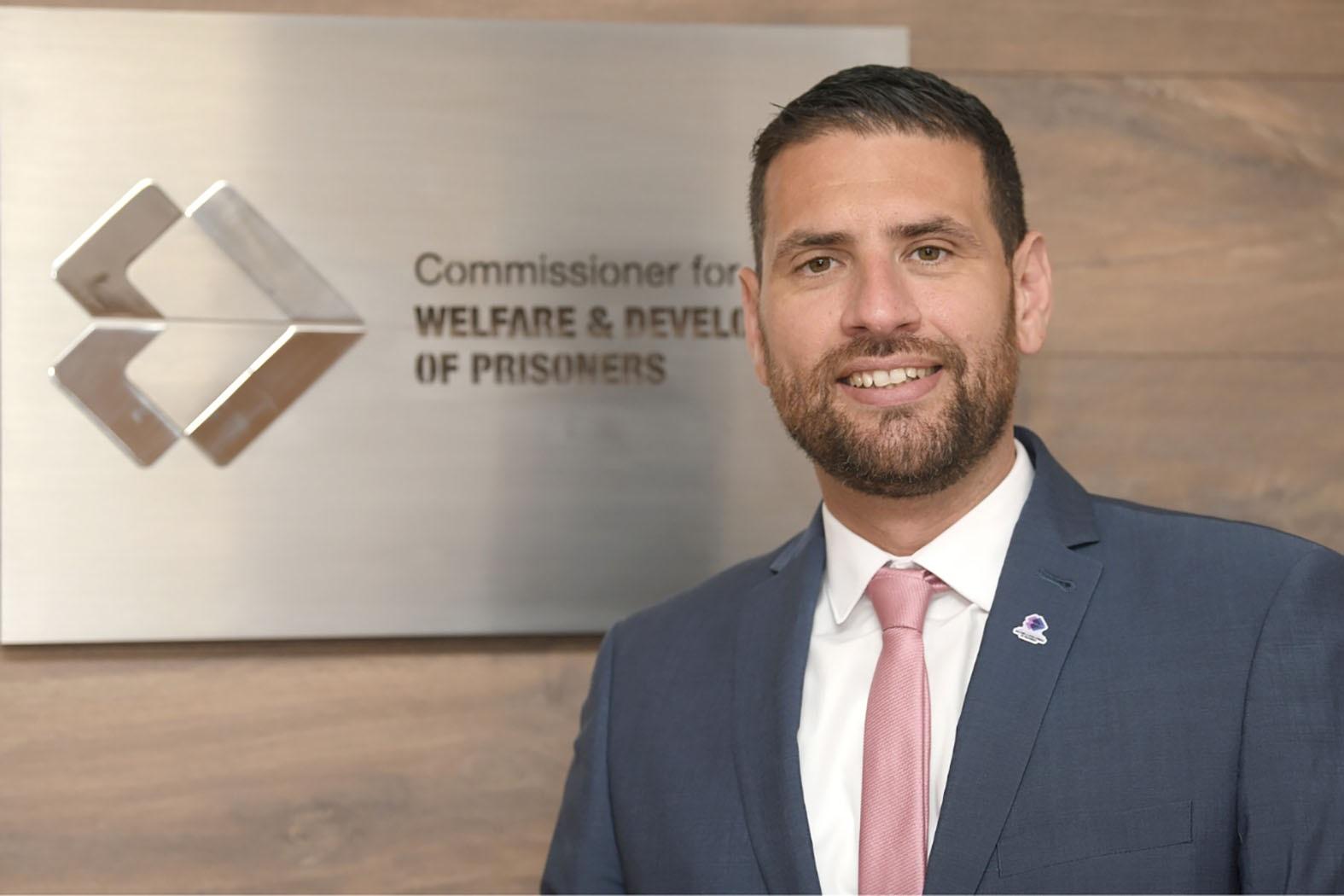 Chris Siegersma. Photo: Matthew Mirabelli
“Everybody in here knew I wanted to have a baby with my partner. It’s not true I did it behind prison’s back. My partner and I had been asking to do it legitimately for months,” he said. “We exchanged emails and had meetings about it for months before we went ahead with it.”
Times of Malta saw an email thread, copied to both Siegersma and Libreri, in which Tanti’s partner outlined their family planning intentions in June last year, five months before the procedure.
The thread shows Siegersma never replied to the emails but Libreri did set up a meeting with Tanti’s partner. The thread does not document what happened beyond that meeting.
Both Siegersma and Libreri denied they somehow approved of the procedure or that they gave their go-ahead for it. Both said it was not even within their remit to issue such an authorisation.
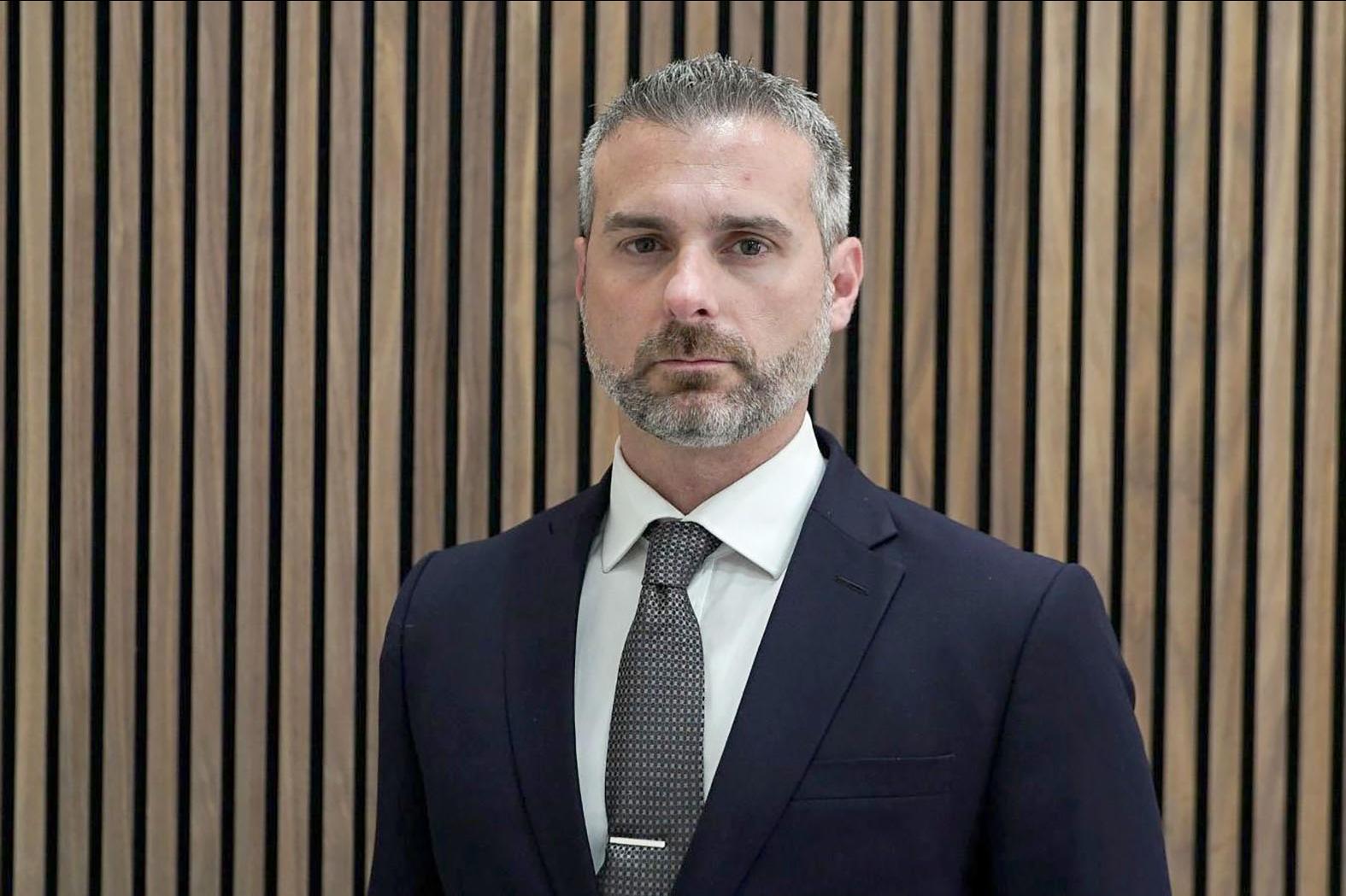 Steve Libreri. Photo: Home Affairs Ministry
Controversial
When the story first surfaced, many assumed the pregnancy was the result of intimate intercourse between Tanti and his partner. But the prison authorities had said Tanti could not have had such contact outside prison because he was never left unattended during prison leave.
At the time, sources close to prison said the procedure was illicit and unauthorised by the prison authorities and subsequent police investigations led to Tanti and his partner being arrested and interrogated at police headquarters.
Now, the couple is arguing that not only did the prison authorities not object to the procedure but the mere fact that they were arrested over it breaches his right to become a father and to a private family life.
In a judicial protest filed last month through lawyers Franco Debono and Matthew Xuereb, Tanti said his murder conviction takes away his liberty but not his right to become a father. He said the late-night police interrogation was unfair on the baby and his heavily pregnant partner.
The couple was arrested over a suspected breach of the embryo protection law and Muscat is set to be charged in court for his alleged role in the procedure.
Relationship
When Times of Malta first reported the story in May, Tanti did not reply to a request for comment but eventually came back saying he was ready to speak. Times of Malta met him in prison.
Tanti first met his partner in 2016, while he was on bail and awaiting sentencing over Zahra’s murder. The two were in a relationship for three years before he was sentenced to 20 years in 2019 and they sustained a long-term relationship since then.
“If I wanted to have a baby irresponsibly, I would have done it then, when I was still out of prison. I’m only doing it now because I feel I am reforming and have matured enough to take this next step in my life,” he said.
Tanti said, last year, eight years into the relationship, he and his partner decided they were ready to have a child. “I couldn’t wait until after I’m out of here as it would have been too late for my partner to safely have children and it wouldn’t have been fair on her,” he said.
“That’s when she emailed the prison director and prisoner welfare commissioner informing them of our intentions. By then, my partner had already held a meeting with the Embryo Protection Authority to explore how a procedure could be done.
“The prison director asked the commissioner to carry out an assessment on the best interest of the child but at no point were we told there was any law or rule prohibiting me from becoming a parent.”
Tanti said, last September, the commissioner verbally told him the outcome of the assessment was “positive”.
“Later that month, I ran into the prison director during an exhibition held at prison and asked him for an update following the commissioner’s recommendation. And he said: ‘I will not stand in your way.’ And he told me to get the doctor’s referral and apply for prison leave,” Tanti said.
He said this made it clear to him he could go ahead with the artificial insemination procedure. So, he made a request for prison leave to be able to accompany his partner in a private clinic for the procedure. But he was informed inmates might not be eligible for prison leave for such appointments.
“So, I asked, through the intervention of the health care staff, if it was possible to give a medical sample to the prison clinic and a doctor said that if we could find a medical courier to transport it, he would authorise it,” Tanti said. “The courier was permitted access on two separate occasions.”
The procedure was first attempted in the beginning of November. A medical courier was allowed through the prison gates and transported Tanti’s sperm to a private hospital but insemination failed. Tanti said the courier was allowed in again, a second time, later that month, for a second attempt. This time, the insemination was a success.
He said his partner told him she was pregnant with his baby when the two met for a family event, an occasion for which he did get prison leave.
Denial
In a reply to questions, both the prison director and the prisoners’ welfare commissioner denied they ever gave Tanti the green light.
Siegersma said that “any verbal communications that may have occurred were solely meant to direct the involved parties to the relevant legal authorities; any other conclusions are merely misinterpretations or distortions of facts”.
“Neither the CEO nor the Correctional Services Agency possesses the authority to approve or permit any individual in custody to father a child through assisted reproductive methods. IVF procedures are exclusively under the jurisdiction of the Embryo Protection Authority,” he said.
“While the prison leave board governs other matters in your questions, the CSA has never received any directions on the matter from the prison board. Therefore, it is amply clear that no form of approval, verbal or written, was issued or could have been issued by it for such a procedure by the CSA.”
Libreri said Tanti’s version of events “appears to be based on serious misrepresentations” and “does not reflect the factual circumstances” as known to him. He said he would allow court proceedings to reveal the true version of how the story unfolded.
“More importantly, the commissioner categorically denies ever granting any form of permission to Mr Tanti or his partner to proceed with this intervention. It has been clearly communicated to Mr Tanti, his partner, and any other relevant parties that the commissioner has no legal authority or standing to authorise any such action,” he said.
“Therefore, there were no circumstances that can reasonably be interpreted as an endorsement by the commissioner.”
The case has drawn widespread condemnation over the rights of a convicted murderer.
The murder victim’s cousin, Winston Zahra has staunchly objected to Tanti’s intentions to father a child. He wrote on social media: “This is not a case of rehabilitation of someone jailed of a petty crime! This is a certified psychopath who has killed a 15-year-old girl. So, it’s OK to murder someone else’s daughter but then you claim your right to becoming a father, while serving your term in prison after admitting to killing Lisa Maria, is being breached. The audacity is incredible.”
Can inmates have babies? And should they?
The issue of whether incarcerated individuals have a right to procreate is a complex ethical and legal debate around the world, balancing fundamental human rights against public safety and the purpose of imprisonment.
The European Convention on Human Rights asserts that prisoners retain all rights except the right to liberty. Many say that restricting this freedom does not take away their freedom to have children but others argue that is one of the liberties that should go away with freedom.
Opponents frequently cite concerns for public perception and justice, particularly when serious crimes are involved, arguing that such privileges undermine punishment.
Child welfare is also a significant concern, given the challenges of raising a child with an incarcerated parent.
On the other hand, many argue, inmates have a fundamental right to have children, like everybody else, and nobody can take that away from them. Furthermore, for many, the prospect of having and raising children can be a powerful motivator for rehabilitation, encouraging inmates to engage in programmes, maintain good behaviour and plan for a law-abiding future upon release.
Even if inmates do retain the right to become parents, this right is not absolute and can be restricted if necessary and proportionate to legitimate state aims.
In Malta, until a few years ago, inmates could technically have children during conjugal visits, which were periodical intimate visits that allowed them to be sexually intimate with their partner within prison walls. Those visits were stopped and are yet to be reinstated.
Approaches to this issue vary globally. Many European countries, including Denmark, France and Germany, permit conjugal visits, viewing them as crucial for maintaining family ties and aiding rehabilitation. However, nations like the United Kingdom largely do not, preferring limited “home visits” for prisoners nearing release.
The debate has also extended to assisted reproductive technologies, with landmark cases like Dickson vs United Kingdom at the European Court of Human Rights highlighting that blanket bans on artificial insemination for prisoners may violate human rights if not individually justified and proportionate.
In Italy, some prisons, including those in Milan with “love rooms”, allow for “permessi premio”, a temporary release facilitating private intimate contact. This aligns with practices in other EU countries such as Belgium, France, Germany, Spain, Estonia, Romania, Denmark, Norway and Sweden, which also permit intimate visits with varying frequencies, setups and conditions.