Halfway house programme helps inmates break crime cycle
95% of those previously unemployed found work and reliance on social assistance dropped by 60%
A community-based halfway house programme for inmates significantly reduced the factors that drive former prisoners back into crime, according to a study.
The research, published in the International Journal of Offender Therapy and Comparative Criminology, offers a possible model for tackling the high rate of repeat offending in Malta.
It followed 40 inmates who completed the RISe Foundation Malta programme between 2016 and 2021. It found major improvements in employment, housing, mental health, relationships and attitudes to drug use.
Among participants who had previously been unemployed, 95% found work and reliance on social assistance dropped by 60%.
Also recorded was a 45% improvement in avoiding “socially inappropriate” activities, a 30% shift in attitudes against drug use and a 43% drop in the risk of relapse.
The study was conducted by forensic psychologists Yanika Tabone, who also works with RISe, and Kevin Sammut Henwood. It tracked inmates in the final year of their sentence as they moved from prison back into the community.
RISe Foundation Malta is an NGO that works with inmates serving the last 12 to 15 months of their sentence. Its aim is to reduce reoffending by addressing changeable risk factors such as unemployment, unstable housing and poor mental health.
Unlike traditional prison-based programmes, RISe operates in the community, helping inmates unlearn behaviours developed to survive in prison and build skills for life outside it.
It aims to tackle Malta’s high recidivism rate, which recent data suggests could be as high as 86%.
The results show marked personal and social gains.
Some 80% of participants developed better coping skills for stressful situations and half of those experiencing depressive episode reported significant recovery. More than 57% stopped associating with criminal peers and, instead, built more conventional social networks.
Family relationships also improved. Participants were 28% more likely to feel satisfied with their current relationships, 23% more likely to engage with their children and 55% less likely to report trust issues.
The researchers said most participants improved their relationship with partners, children and parents, while also showing more trust and social connectedness. Interest in education rose by 40%.
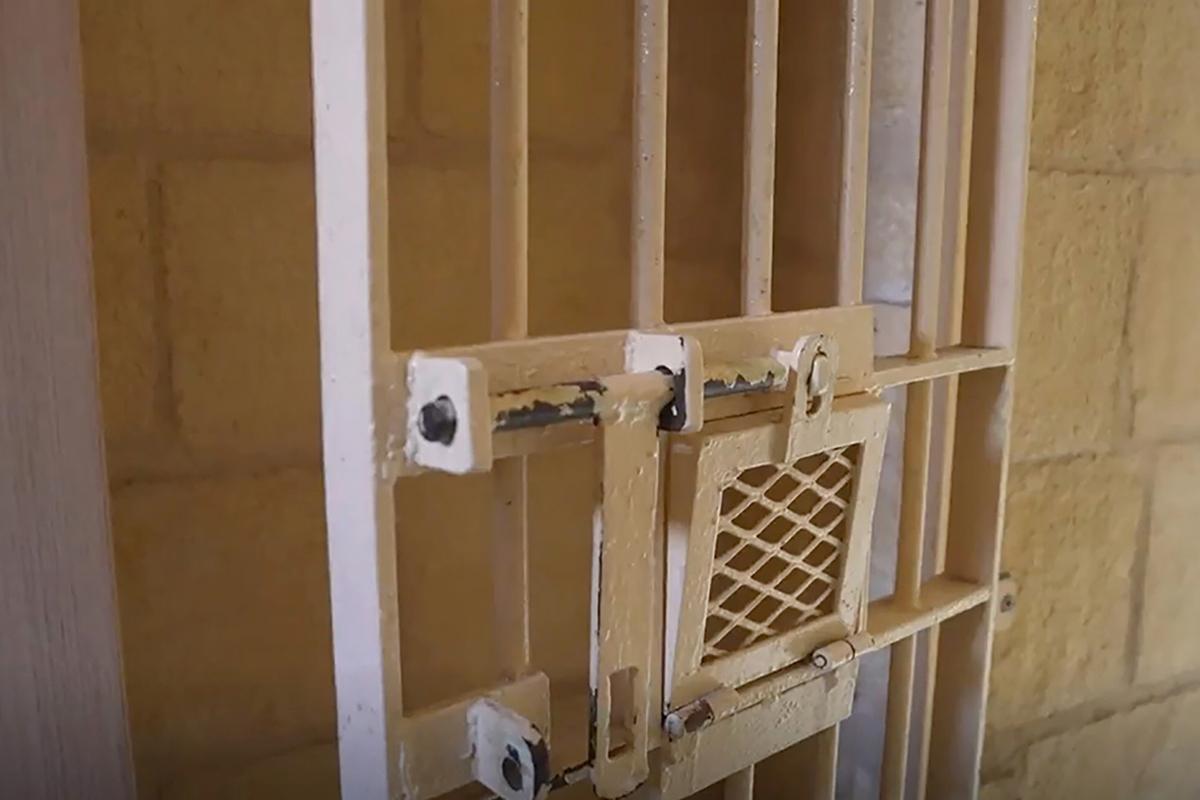 Malta has high rates of reoffending. Photo: Times of Malta
Housing was another success, according to the study. Every participant who completed the programme was placed in suitable accommodation, effectively eliminating homelessness in the group studied.
“This study provides compelling evidence that the RISe Foundation’s evidence-based and community-based programme significantly reduces the risks associated with recidivism,” the researchers concluded.
However, one area showed no statistically significant improvement: domestic violence. The researchers said future versions of the programme should include more specialised interventions to address abusive behaviour and harmful gender-role attitudes.
They also cautioned that the sample was small and only included those who completed the programme. Ten people who dropped out or were removed for breaking rules were not included, meaning the findings do not give a full picture of what works and for whom. The study also cannot yet confirm whether reduced risk factors will translate into lower long-term offending.
The RISe programme includes 300 to 350 hours of training in social, financial and family skills, as well as unsupervised family visits in natural settings.
In the context of Malta’s high recidivism rates, the researchers concluded that community-based models provide a much stronger chance of preventing the next crime before it happens.
“The authors aim to promote social change and challenge the prevailing punitive mentality within the Maltese population, which often discounts rehabilitation despite the country’s demonstrably high recidivism rates,” the study said.
The RISe Foundation is also set to bring this global conversation to Malta this summer, hosting an international conference on June 16, 17 and 18. The event will gather justice ministers from Portugal, Belgium, Ireland, the Czech Republic and Albania to discuss a shift toward decentralised justice.
The conference is being held in collaboration with RESCALED, an international movement advocating for the rescaling of detention.