Promises to pensioners must be clear
Political leaders have a duty to speak with precision when discussing fiscal measures, says Adrian Delia
In politics, words matter. When a prime minister makes a public promise, especially to pensioners, those words carry enormous weight. Pensioners are among the most respected members of our society. They are people who have spent decades working, contributing to our economy and paying into the system through taxes and social security contributions. When they hear a political leader promise them relief from taxation, they hear it as a commitment.
This is why the recent controversy surrounding the taxation of pensioners’ income deserves serious scrutiny. The issue is not merely a technical debate about tax thresholds but about honesty in public communication, respect for pensioners and about ensuring that political promises match legislative reality.
During a recent political activity in Naxxar, Robert Abela spoke at length about measures relating to pensioners and taxation. He suggested that pensioners would no longer be caught in the tax net, even if they continued working part-time or had additional sources of income such as rental earnings or returns from investments.
For many pensioners listening to those remarks, the message seemed clear: that they would be exempt from paying tax on their income. It sounded like a significant reform that would allow elderly citizens to supplement their pensions without worrying about additional taxation.
Three days later, the government published Legal Notice No. 53 of 2026. Rather than confirming a full exemption from taxation on pensioners’ income, the legal notice clarified the change involved increasing the tax-exempt ceiling on pension income itself to €37,104. In other words, the exemption applies specifically to pension income and not to the entirety of a pensioner’s earnings.
The distinction may appear technical but it is far from trivial.
Under the new framework, pension income up to the specified threshold is exempt from tax. However, other income received by pensioners, such as wages from part-time work, remains subject to taxation under the normal tax rates, after the applicable tax-free allowance.
In simple terms, a pensioner who chooses to remain active in the workforce or who relies on additional income streams will still face taxation on those earnings.
It was precisely this discrepancy that the Nationalist Party highlighted during a press conference.
From the perspective of the opposition, this raises a fundamental question about transparency and political responsibility. If a government intends to introduce a technical change that affects only a specific component of income, it should communicate that change clearly.
The government has responded by defending the reform as part of a long-term process that began several years ago. According to the finance ministry, the current measure represents the culmination of a gradual policy shift aimed at reducing the tax burden on pensioners. The government continued that, under the latest reform, pension income is effectively exempt up to the new ceiling of €37,104. However, additional income is treated separately.
The opposition maintains that the central issue is not whether the measure provides some level of benefit but whether the public was given an accurate understanding of what the reform actually entails.
Political leaders have a duty to speak with precision when discussing fiscal measures. Taxation is complex and most citizens rely on the explanations provided by their elected representatives.
Political leaders have a duty to speak with precision when discussing fiscal measures- Adrian Delia
When those explanations create expectations that the legislation does not fully support, the result can be disappointment and mistrust.
This is particularly sensitive when the discussion concerns pensioners.
Many pensioners today supplement their pensions through part-time employment. Some continue working because they enjoy remaining active in society while others do so because the cost of living requires them to maintain additional income.
Others rely on small rental incomes or modest investments that they built over decades of careful saving.
For these pensioners, the difference between tax-free income and taxable income is not a minor detail. It directly affects their financial security and their ability to maintain a dignified standard of living.
If a government wishes to promote the benefits of a reform, it should do so in a way that accurately reflects the policy’s scope. There is nothing wrong with explaining that pension income is now largely exempt from taxation up to a certain threshold.
This episode also highlights a broader challenge in modern politics: the tension between communication and substance.
In today’s political environment, announcements are often framed in ways designed to generate maximum positive impact. Press statements, speeches and social media posts tend to emphasise headline benefits rather than technical details.
Yet, those technical details are precisely what determine how policies function in practice.
When the gap between headline claims and legislative reality becomes too wide, the result is public scepticism.
For the opposition, the responsibility is clear: to scrutinise government statements and ensure that policy measures are accurately represented.
It is important to recognise that pension policy remains one of the most critical areas of public policy in Malta.
Our society is ageing. Life expectancy continues to increase and the number of citizens entering retirement grows each year. Ensuring that pension systems remain both sustainable and fair will require careful planning and honest dialogue across the political spectrum.
Taxation policies form part of that broader discussion. If the goal is to allow pensioners to remain economically active without facing excessive taxation, then reforms should be designed and communicated with that objective in mind.
Encouraging pensioners who wish to continue contributing to the economy – whether through part-time work, entrepreneurship or investment – is something that benefits society as a whole.
Pensioners have given decades of their lives to building this country. They have worked in our factories, offices, schools and public services. They have raised families, paid taxes and contributed to the prosperity we enjoy today.
When political leaders address them, they deserve honesty and respect.
If there is one lesson to be learned from this episode, it is that public communication must match legislative substance.
Anything less risks eroding confidence not only in individual policies but in the broader political process itself.
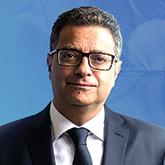
Adrian Delia is a PN MP and a former opposition leader.