Will property prices keep on increasing?
If we have excess demand for property rather than excess supply, then this would suggest that prices will continue to rise, says Lino Briguglio
The price of property was still increasing when this article was written – even though it appeared that there was an oversupply of residential and office buildings, seemingly defying economic theory. Two reasons for this might be that (1) economic theory is wrong or (2) there is no excess supply after all – instead there is excess demand.
As an economist, having taught the subject for over 50 years, I believe economic theory is right. Excess supply – the opposite of excess demand – is expected to lead to price decreases, everything else remaining constant. There is nothing wrong with economic theory in this regard. But why is it then that although we see many unoccupied flats and business premises, seemingly indicating excess supply of property, prices have increased persistently over the years?
It is sometimes argued that the increase in property prices has nothing to do with demand and supply, as the real reason is the rising cost of land, materials and possibly labour, as well as increasing expenses to meet bureaucratic controls. However, in theory, even when the cost of inputs increases, prices could still fall in a situation of real excess supply.
By way of example, if the cost of cultivating vegetables increases, say due to the increase in the cost of fertilisers and fuel, vegetable prices could still fall if there is a large harvest. Vegetables are perishable goods and the market response in this case will be quick.
In the case of property, real oversupply may persist for a time without leading to a decrease in prices, given that property is not so perishable, but, at some point, the increasing burden of holding to unsold property will set in, leading to a fall in its prices.
Given that economic theory is right, the logical conclusion is that, in Malta, the reason for increasing property prices is excess demand rather than excess supply.
Demand for property is mainly driven by two motives, namely as a residence and as an investment. Malta’s growing population, driven by immigrants, has led to an increase in demand for residential property. Furthermore, demand for dwellings has been reinforced by schemes to attract relatively wealthy foreigners to buy or rent property in Malta.
Those who are rich enough may decide to buy property as an asset and not mainly to live in it themselves or to rent it out. This is like buying gold, with zero interest, because it is perceived that this metal tends to hold, or even increase, its value over time.
Malta’s growing population, driven by immigrants, has led to an increase in demand for residential property- Lino Briguglio
The price of property also depends on its supply. The large number of vacant flats and houses would seem to suggest that excess supply exists in Malta.
About 25 per cent of dwellings in the Maltese islands are currently unoccupied, partly because it is very difficult to sell them, mostly due to inheritance disputes and partly because the owners may consider this asset as desirable in itself. Such vacant property therefore should not be considered as part of supply.
An issue that straddles demand and supply relates to money laundering, because a developer may benefit from constructing a building, even if it remains totally or partially unsold. There could be pecuniary returns from such activity because this provides the developer with a possibility of ‘parking’ his/her income, without the surveillance that exists in the case of commercial banks, where the audit trail would expose sources of wealth.
If indeed we have excess demand rather than excess supply, then this would suggest that prices will continue to rise, unless things change. There are indeed some changes which could reverse the trend, namely: a slowdown in population growth, due to, for example, a lower inflow of foreign workers; a rise in interest rates, which would make buying property a less attractive investment; tax on vacant property or greater oversight on investment in property, which could make hoarding of property less attractive; and stricter regulations on short-lets, which would suppress demand for property for tourism purposes.
These changes could possibly lead to a decrease in demand and an increase in supply, which would push down property prices and may also affect demand for property as an investment – with ripple negative effects on the local banks and, possibly, leading to a property market crush.
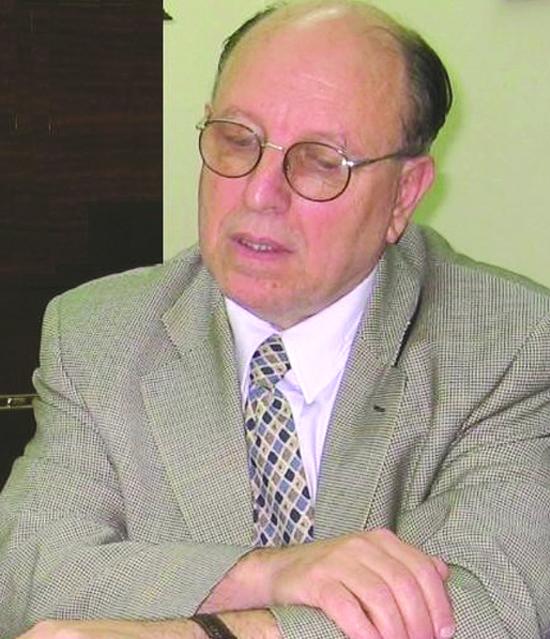
Lino Briguglio is an economist.