Property is not the only way to build wealth
There is a proven mechanism for building wealth that most Maltese are not exposed to, writes Patrick Debattista
As Malta’s first and only full-time financial coach, I spend most of my working life sitting across from people who are trying to make sense of their finances.
And, over the past few years, one conversation has been coming up increasingly. It usually starts the same way: “I want to buy a place but I just cannot see how.”
The numbers bear that out. A young couple on minimum wage in Malta can afford just 2.2% of properties currently on the market. Two years ago, that figure was 5.7%. It has more than halved and, for many of the people I work with, it shows.
I am not a politician and this is not a manifesto. But I do believe that those of us working closest to people’s financial well-being have a responsibility to speak up when something is going wrong.
This is Proposal 5 in my Financial Blueprint for Malta, a series of practical ideas rooted in what I see in my daily work on financial well-being.
Of all the proposals I have put forward, this is the one that challenges our culture the most. We grew up being told that property is the goal, the dream and the finish line of financial success.
“Every man’s home is his castle.” This is a phrase so deeply embedded in Maltese culture that questioning it almost feels like an act of defiance.
And I understand why. Owning a home is psychologically safe. It provides stability, identity and a tangible sense of security that a portfolio of investments does not seem give people. I do not dismiss that.
But it is not the only way to build wealth. And, right now, for a growing number of young Maltese people it is not even an available one.
Between 2021 and 2024, the median property loan for 18 to 25-year-olds surged from €162,900 to €216,000, a 32% increase in three years.
More than one third of first-time buyers now require parental financial support and access to homeownership is increasingly tied to inheritance and family savings rather than salaries.
And, yet, we have never seriously built a second path. And that, from a financial well-being perspective, is a problem we can no longer afford to ignore.
Consider what is sitting alongside this reality. Maltese residents held €27 billion in bank deposits in 2025. Yet, on the other side of the equation, young couples cannot afford to buy a home. This is a structural problem with a cultural root.
We save, we park and we wait. We were never taught to do anything else with our money.
Only around 24% of Maltese adults have invested in stocks and shares. I see this every week in my coaching practice and I want to be honest about what I actually observe rather than reach for a comfortable explanation.
Maltese residents held €27 billion in bank deposits in 2025
I firmly believe that the main reason most Maltese people have never invested is that nobody ever sat them down, without an agenda or a product to sell, and explained how it actually works.
Schools do not teach it. Employers rarely encourage it. And, on the rare occasion it does come up in conversation, it usually comes from someone with a vested interest.
Property, by contrast, has always had the full weight of culture and policy behind it.
Your parents did it. Your neighbours did it. There is a government scheme for it, a grant for it, a tax incentive for it. And, yet, even with all of that support, it still feels out of reach for most young people.
Investing, meanwhile, gets none of this exposure. That is a structural failure and it has a direct impact on the financial well-being of an entire generation.
There is no denying that the stock market is the greatest wealth-building vehicle in modern history. I have benefited from it personally and I have watched it transform the financial well-being of people I have coached.
It is not a shortcut. It is not a gamble. When done properly, it is a long-term, proven mechanism for building wealth that most Maltese people have simply never been given the tools to access.
My proposal is straightforward. Malta should introduce a modest first-time investor incentive: a lump sum of €2,000 invested into a diversified portfolio of low-cost ETFs or passive funds.
It could equally take the form of a tax credit or a matched contribution on whatever the young person puts in themselves. The message is this: start investing for your future self and the state will back you in doing so.
Because that first step is the hardest one. A young person who begins investing at 18 and stays invested has time on their side. That is a resource far more powerful than any government grant, especially if we give people the knowledge to use it.
This proposal is not about telling people to abandon the dream of owning a home. In fact, quite the opposite. A young person who starts investing and stays disciplined has a genuine chance of building the deposit that gets them that dream.
Investing is not the alternative to property ownership. For many young Maltese people right now, it may actually be the most realistic path towards it.
We have €25 billion sitting in bank deposits earning next to nothing, a generation being priced out of property and political parties looking for ways to make a difference to people’s lives.
The tools are already there. What is missing is the will to point people towards them.
Let’s create a clear incentive, a credible educational programme and the political courage to say out loud what most financial professionals already know: property is not the only path to financial well-being and it is long past time we started building the other ones.
This article is for educational purposes only and does not constitute personalised financial advice. Financial decisions depend on individual circumstances, goals and risk tolerance.
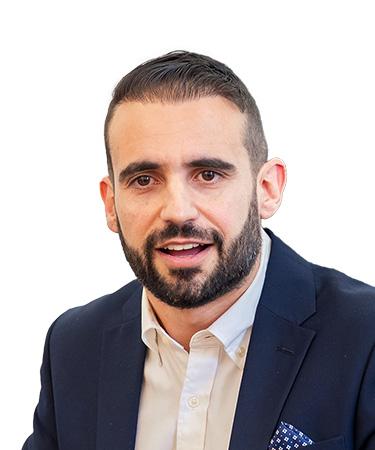
Patrick DeBattista is Malta’s first and only full-time financial coach. He is the founder of Finance For You, a financial education and well-being platform.