Quo vadis Malta?
We may be destroying what makes us Maltese and we risk becoming foreigners in our own country, argues Noel Muscat
Malta must decide which direction to take. Should it persist with the current model, which relies on unlimited growth in population, tourism, and construction, or should it recalibrate and focus on quality rather than quantity?
It is very clear that for the foreseeable future Malta will be embracing the unlimited population growth module.
Even though there are times when the prime minister and the finance minister, together with certain people in authority and the odd economist, claim that we cannot keep on squeezing more people on this tiny rock, it is clearly evident that our leaders do not have the courage, capability or even the will to discuss the issue let alone to change tack.
Overdevelopment, overtourism, and overpopulation generate significant economic activity and consumption, which in turn produce revenue. However, they also put tremendous pressure and stress on the country’s infrastructure, environment, quality of life and finances.
Oblivious to the carrying capacity of the island, the Planning Authority keeps dishing out permits to the mighty developers who seem determined to leave their mark by building the tallest towers and biggest projects.
Generally, these projects offer a varied mix of use, such as tourism, residential, office, retail, entertainment and more.
Projects of this magnitude must attract thousands of people, otherwise they will fail. They will also employ thousands of people to administer them.
With so many projects under construction and others in the final stages of planning, it is a certainty that development, tourism and foreign workers are going to keep increasing in leaps and bounds. Likewise, all the ancillary services will need to increase too.
Is this increase sustainable? Is it necessary? Is it the only choice for Malta’s survival and prosperity? Or is this sheer madness?
To cope with this rapid increase the state must necessarily invest in new hospitals, a new road network system, improve the power supply and infrastructure, produce more potable water and deal with the increase in garbage generated.
It will take years to construct new hospitals, a new traffic network system and an infrastructure that will be able to cope with the tremendous increase in the population. As things stand today, Malta is already struggling, and people are huffing and puffing. How will it fare until these projects are completed?
Can we afford the expense required to carry out all these upgrades? Is the expense justifiable? Is the land take-up sustainable? Will Malta reap a return, or will it be driven into overtrading mode?
Will Malta remain attractive or are we shooting ourselves in the foot?
We cannot pretend to be Las Vegas, Dubai, or Singapore- Noel Muscat
Certain localities such as Msida, Gżira, Sliema, St Julian’s, San Ġwann, and Swieqi are already very densely populated, with little or hardly any open space or sports facilities. The only open spaces within these towns consist of tarmacked roads dedicated to vehicular traffic rather than green areas for people.
Do we intend to continue overcrowding these localities until they suffocate? Do we plan to undermine the tranquility and charm of other localities as well?
The number of cars, taxis, buses, delivery vans, and heavy vehicles will continue to increase. How will our already jam-packed roads cope? How will our ailing hospitals fare? What impact will this have on already sky-high property and rental prices? How many more foreign workers will be required? How many additional residences will need to be built? How many more supermarkets and shops will have to open? How will this affect our schools? Our national infrastructure? Our waste collection and disposal systems? What will be the impact on our language, culture, and religion? How much more land will have to be sacrificed?
I am deeply concerned about Malta’s uncertain future and its lack of direction. I am convinced that the central government is pursuing this course not out of conviction, but because it sees no viable alternative. Unfortunately, the government appears more focused on the present than on the future.
This line of reasoning is both dangerous and completely unacceptable. Our country needs serious, level-headed leadership. The size and resources of our islands are what they are, and while we must maximise their potential, we cannot pretend to be Las Vegas, Dubai, or Singapore.
We are custodians of two unique, small islands at the heart of the Mediterranean, blessed with a remarkably rich history and an enviable culture.
Though we lack natural resources, we possess a magnificent natural harbour encircled by formidable fortifications; a majestic capital city proud of its architecturally and historically significant buildings and auberges; a captivating Silent City; and the imposing Vittoriosa, home of the Knights of St John.
We are endowed with magnificent cathedrals and charming villages crowned by impressive churches. Our islands are surrounded by crystal-blue seas, and we are home to Ħaġar Qim, the Neolithic temples, and numerous other historical sites that are the envy of many nations. This is what makes us unique, and this is what we must protect and promote.
Too many people are dangerously silent about Malta’s uncertain future. We may be destroying what makes us Maltese and we risk becoming foreigners in our own country. We should be discussing this important topic relentlessly every day and night because we need a clear direction. We cannot remain at crossroads since what we are doing now may change the country irreversibly. Politicians, trade unions, economists, activists, NGOs and the public need to make their voice heard. Time is running out.
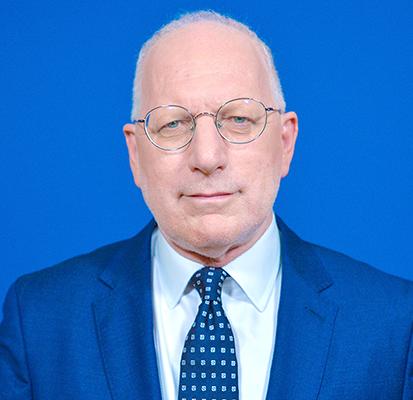
Noel Muscat is the mayor of Swieqi.