The real cost of a crash is after the road reopens
The greater cost of a traffic accident comes after the headlines, through legal, financial and emotional fallout, writes Adrian Galea
In 2025, figures published by the NSO show that over 40 traffic accidents were reported to the authorities every single day. The cost of these accidents runs into millions of euros – claims increased by three per cent over 2024 – but the heavier price last year was paid by the 21 people who lost their lives on Malta’s roads.
These are not just figures for insurers, the police, courts or policymakers. They are a snapshot of what Malta’s roads are costing us.
Some of that cost is immediately visible through long tailbacks, ambulance sirens, police tape and mangled vehicles. But what comes after the headlines – the medical reports, legal letters, repair estimates, magisterial inquiries, disputed liability, compensation negotiations and families waiting for closure – is the greater cost.
By the time an insurance claim is opened, it is already too late to prevent the accident. The only question left is how to deal fairly with the consequences.
For years, the Insurance Association Malta had been calling for stronger deterrents against driving under the influence of alcohol or drugs because, as insurers, we see the aftermath of serious accidents and, too often, intoxication is strongly suspected.
Progress has been made and we welcome the recently enacted drug- and drink-driving law. But this alone is not enough.
A reckless driver does not slow down because a law has been introduced; behaviour changes when enforcement is visible, consistent and credible. People will think twice when they believe there is a real chance of being stopped, tested and brought before justice without delay.
While we commend the police’s efforts, we still need to see enforcement that is truly effective. If drivers are not going to see enforcement happening with their own eyes, they will continue taking the risk… and everyone pays the price after the crash.
The claims figures, fatalities and complexity that follow every accident all point to one direction: the importance of building a road safety system that prevents accidents in the first place, establishes responsibility quickly, compensates victims faster and makes dangerous driving socially and legally unacceptable.
There is another change reality on our roads that deserves attention. Since 2022, the number of motorcycles in Malta has increased by 26 per cent, with more than 50,000 now on the road.
This is not just a transport statistic but also an insurance and public safety issue as motorcyclists are far more exposed than car drivers. A collision that may be minor for a car can leave a motorcyclist seriously injured. More motorcycles, more exposure and more injuries inevitably feed into the cost of claims.
Just 40% of motorists in Malta are estimated to be comprehensively covered- Adrian Galea
The cost of putting things right has increased. Vehicle parts are more expensive. Labour is more expensive. Insurers, like every other business, face higher operating costs. And, in the most serious cases, involving death or permanent injury, we have noticed that the courts sometimes use new methods to calculate compensation, which is leading to much higher payments.
One common complaint from non-comprehensive policyholders involved in an accident they believe they are not to blame for is that “my insurance company did not take any action to recover my losses”.
While Third Party insurance is mandatory, it only protects others, not your own car. Comprehensive insurance is what covers your vehicle, yet, only around 40 per cent of motorists in Malta are estimated to have it.
Too often, insurance is viewed simply as an unavoidable expense rather than as protection and peace of mind. Many motorists choose the minimum cover required by law to reduce cost but then discover – unfortunately when it is too late – that the level of protection they purchased is far more limited than they expected.
That gap matters. A driver who is not at fault but has no Comprehensive cover may still be left chasing the other party’s insurer if liability is disputed.
Another part of the system that requires urgent attention is the long-promised Accident Investigation Unit to establish what caused the traffic accident and to make recommendations to prevent similar ones.
There is no doubt that the quality of the traffic reports prepared by the Road Policing Unit is far superior compared with what existed before but, unfortunately, these do not always reach the insurers concerned, so we are missing the opportunity to speed up the process.
Insurers would also like their clients to be given access to CCTV footage of an accident they were involved in because this can greatly help establish fault. When relevant evidence is not available, compensation for victims can be delayed.
Looking ahead, Malta’s ambition, in line with the EU’s road safety targets, is to reach Vision Zero by 2050 but I fear we may not reach our goals. To get close, we require serious enforcement and a real change in drivers’ mentality, or it will remain a slogan.
The progress made so far should not be dismissed but the pace of change remains too slow to be truly effective. We urgently need the necessary will and courage to take difficult decisions that are not always popular.
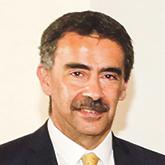
Adrian J. Galea is director general of the Insurance Association Malta.