Five terraced houses recommended for approval in Għargħur UCA, ODZ
ERA against proposal as it would result in the 'urbanisation and formalisation of ODZ and useful agricultural land'
The construction of five terraced houses in Għargħur’s Urban Conservation Area and partly outside the development zone has been recommended for approval in a case officer’s report that was strongly slammed by residents as “blatantly misleading”.
They have “vehemently” objected to the development planning application report’s recommendation on the grounds that the proposal goes against a long list of policies and legislative constraints while “contributing nothing to the area”.
There was nothing of any worth in the proposal other than the destruction of a vernacular dwelling and conservation area, a detailed letter of objection to the Planning Commission said in reaction to the recommended approval.
In the letter, Patrick Calleja, speaking in his personal capacity as an architect who lives in the area and representing a number of residents, listed several points to back the refusal on the application and lambasted the case officer for “absolutely no critical discussion of the proposal or reference to the objection points raised”, resulting in a misleading report.
“It is clear that the report is biased, superficial and completely avoids any discussion whatsoever of the nature of the site, the Strategic Plan for Environment and Development (SPED), Local Plan and DC 2015 policies attached to it, the impact of the proposal on the UCA and the objections raised by Environment and Resources Authority and the Superintendence of Cultural Heritage,” the letter states.
PA 00229/19, which proposes changes from permit PA/00481/13, lies within the UCA and should be treated as such, Calleja insisted, explaining that it extended through agricultural land from Sqaq Krom il-Baħar to Sqaq Charlotte, incorporating a vernacular farmhouse that was still inhabited.
That courtyard dwelling could be upgraded, and part of the adjacent land turned into its garden, Calleja insisted.
Instead, it proposed the construction of a four-storey blank party wall along third-party gardens and would involve the “complete ruination” of an existing UCA dwelling to provide a “very convoluted access” to three of the houses.
The site formed part of a large stretch of fields bordering the UCA, extending down into the valley onto the scheduled Grade 1 Victoria Lines, and access to the proposed development was limited to a three-metre-wide alley with just one entry and exit point.
Nothing of any worth in the proposal other than the destruction of a vernacular dwelling and conservation area
Calleja said the application should be refused also because of the “misleading” proposal description, intended to give the impression it would only involve changes to a previous permit, which, however, did not impinge on the vernacular farmhouse, or extend to Sqaq Charlotte.
Listing other reasons for refusal, the residents pointed out that ERA continued to object to the proposal, which it said would result in the urbanisation and formalisation of ODZ and useful agricultural land.
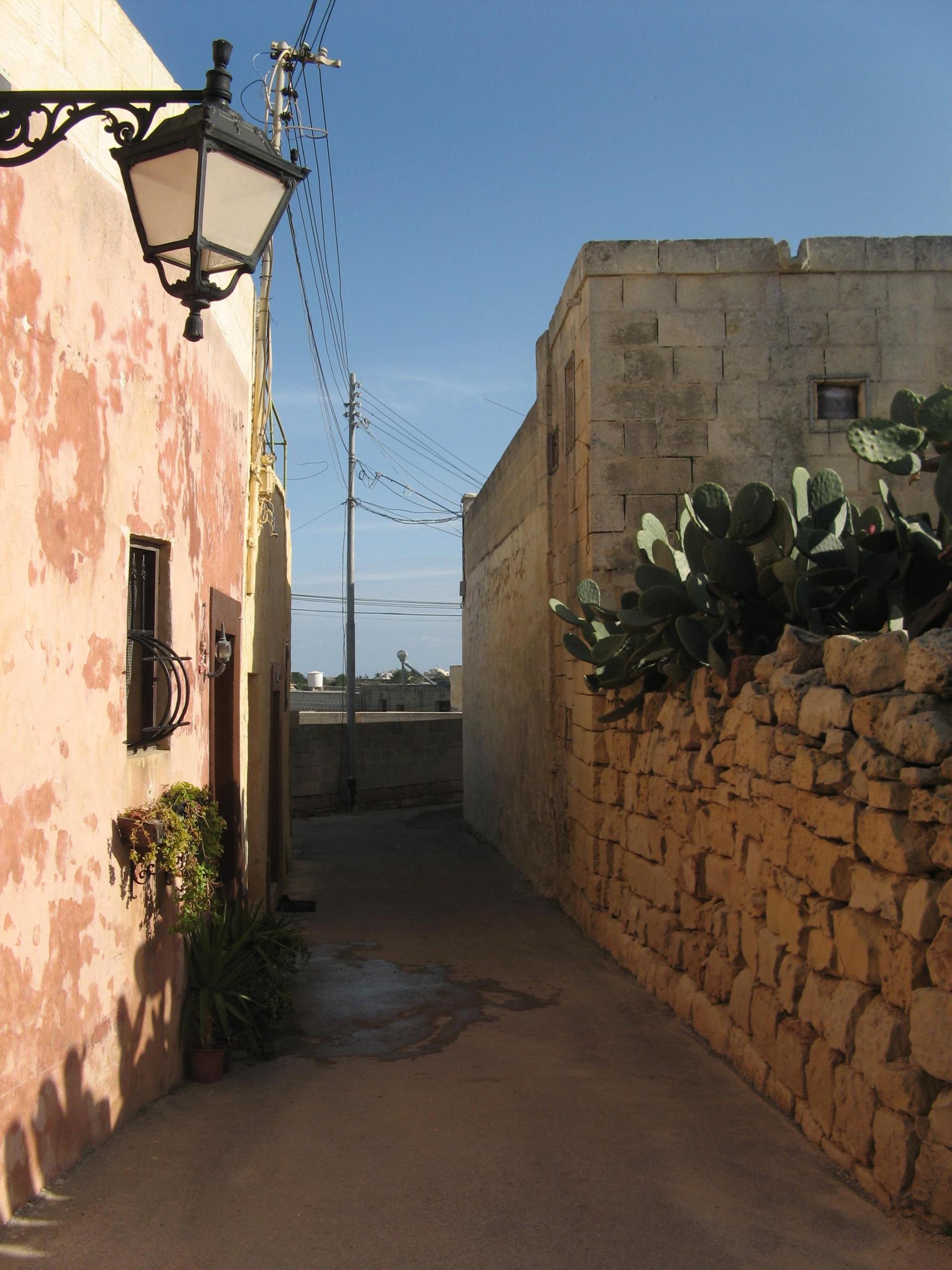 Access to the proposed development was limited to a three-metre-wide alley with just one entry and exit point.
Proposal ruins skyline within UCA, destroys character: ERA
The proposal would ruin the skyline of this picturesque corner within the Għargħur UCA and destroy the character of the conservation and rural area that was also listed as a Site of Scientific Importance along a popular public footpath leading to the protected Victoria Lines, the ERA said.
Also designated an Area of Very High Landscape Sensitivity, the development ran counter to SPED objectives that regulated the development of agricultural land, constituting urban sprawl in a zone that “clearly should remain agricultural”.
Other objections from the SCH and the Għargħur local council were based, respectively, on the proposal’s “strong impact on the nature of this conservation and rural area” and the destruction of a beautiful part of the village and its interface with the surrounding countryside.
But they were all overlooked, and the case officer’s report did not even consider that the PA’s own design advisory committee was critical of the proposal and its effects on the surroundings.
The original DPAR prepared by a previous case officer for the same site (PA 5214/08) had recommended a refusal for a development that was a quarter of the size, Calleja observed.
The application had been heavily criticised at a parliamentary hearing, and Calleja requested the PA Commission to refrain from taking any decision on the case until the review of the Local Plan for Għargħur and the SPED document was finalised.