What do we want early childhood education to be about?
The early childhood curriculum should be lived, relational and child-centred, says Josephine Deguara
On a typical morning in a Maltese kindergarten classroom, children arrive carrying the richness of their lives with them. Conversations move fluidly between Maltese and English, and sometimes other languages, as children engage in role-play, share family stories, and ask questions. These interactions remind us that early childhood education is shaped not only about what is planned, but by what is lived.
Yet practices across kindergarten settings vary. Some classrooms adopt a responsive approach, with observing, listening attentively and adapting learning to children’s interests. Others follow a more traditional, prescriptive approach, focusing on early numeracy and literacy.
This contrast raises an important question: What do we believe early childhood education is really for? Is it mainly about preparing children for formal schooling or about supporting their holistic development through play, inquiry and exploration; nurturing curiosity, confidence and belonging?
Curriculum reflects values
Curriculum is not neutral. It reflects underlying values and beliefs about children, learning, and the purpose of education. In Malta, early childhood education has undergone significant reform with the introduction of the National Curriculum Framework (MEDE, 2012), which promotes quality learning beyond academic readiness, emphasising inclusion, equity and wellbeing.
In practice, this aspires to environments where every child is welcomed, supported and challenged, with differences in ability, background and pace of development are recognised as part of learning. Yet, familiar pressures remain, including the early introduction of formal learning, assessment-driven progress, and standardisation.
How we understand curriculum therefore matters. Curriculum is not simply a syllabus or a list of content to be taught, in a linear and measurable way. Rather, it is a broader and complex process shaped not only by what children are expected to learn but how learning unfolds, whose knowledge is valued, and how children are positioned.
When curriculum is treated as something to be delivered, children risk becoming passive recipients of predetermined content. When it is understood as something to be co-constructed, children are recognised as active participants: thinking, questioning, contributing, and making meaning as they learn.
Why curriculum change can be challenging
Child-centred, flexible approaches are sometimes dismissed as unrealistic because they can be difficult to sustain. This view overlooks the complex realities of classrooms and the pressures educators face. The issue is not that these approaches lack value, but the conditions needed to support them are often insufficient.
Many Maltese educators already draw meaningfully on responsive approaches in their everyday practice: observing children closely, listening to their conversations, and building learning around developing interests. When learning grows from children’s curiosity and experience, literacy and numeracy develop naturally through meaningful activities, rather than in isolation.
The challenge lies in how curriculum change is supported. Educators are often encouraged to value relationships, and child-led learning, while simultaneously are held accountable to standardisation, early formal outcomes, and measurable progress.
Children learn best when learning is meaningful, connected, and play-based- Josephine Deguara
Limited time for reflection, uneven professional learning, and assessment pressures make sustained relational and emergent approaches challenging. As a result, a gap develops between policy intentions and classroom realities, not because educators resist change, but because the conditions needed to support that change are insufficient.
Beginning with a shared image of the child
At the heart of curriculum lies a fundamental question: Who do we believe the child is? Without a shared understanding, reform risks becoming fragmented. When children are viewed primarily as passive learners, curriculum remains tightly adult-driven. When children are seen as competent, curious, and capable meaning-makers, curriculum becomes negotiated, shaped through play, dialogue, and inquiry. Developing this shared image of the child requires professional dialogue, reflections on assumptions and close attention to children’s learning. How educators see children profoundly shapes how they teach.
Children’s identities and relationships
Malta’s social and cultural diversity is reflected in its early years settings. When children enter kindergarten, they do not leave their experiences at the classroom door. Their language choices, family narratives, play themes, and questions often reflect who they are and how they understand the world.
A meaningful curriculum recognises these lived experiences and treats them as valuable resources for learning rather than as distractions. This kind of learning requires time, trust, and professional confidence. Curriculum, in this sense, is not a document that sits in a folder, but it is lived and negotiated daily through relationships.
Language, numeracy and social skills matter, but when early childhood education becomes narrowly focused on school readiness, something essential is lost. Children learn best when learning is meaningful, connected, and play-based. Strong foundations for lifelong learning are built through confidence, belonging, and engagement not through academic pressures.
Supporting educators and creating enabling conditions
Curriculum reform cannot rely on one-off training sessions alone. It requires ongoing practice-based professional learning. Educators increasingly act as curriculum-makers: observing children, interpreting their interests, and shaping learning responsively. This work is best supported through in-class feedback that offers guidance rather than judgement.
Curriculum intentions must align with assessment practices. When holistic, child-centred learning is promoted but assessment remains narrow or linear, mixed messages arise.
Formative, narrative assessment can make learning visible while supporting reflection and planning. Equally important are the conditions that make thoughtful practice possible: reasonable adult-child ratios, time for reflection, in-class support and classroom environments that allow educators to slow down, listen and respond.
A curriculum of possibility
Malta has made important progress in early childhood education, including greater attention to early years provision and a growing recognition of the importance of play, relationships and well-being. The challenge is to move beyond compliance and towards care; aligning structures with values and recognising reform as a cultural and ethical process.
Early childhood education, at its best, is not preparation for life: it is life itself. If we truly believe that every child matters, then our curriculum must reflect this not only in policy, but in everyday practice and encounters.
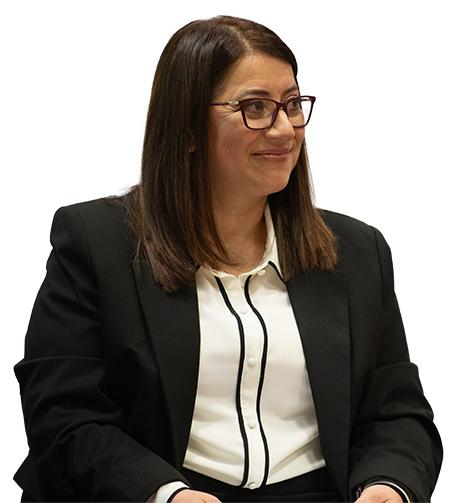
Josephine Deguara is a senior lecturer and researcher in early childhood education at the Department of Early Childhood and Primary Education, Faculty of Education, University of Malta.