Rewriting Malta’s waste story
WasteServ is succeeding because each day citizens are choosing to separate their waste at source, writes Richard Bilocca
For years, Malta has had a difficult waste record, defined by landfill reliance, low recycling rates and missed environmental targets, a reality that risked ruining Malta’s environment under the shadow of sprawling landfills.
These failings, which rightly made headlines, pushed everyone at WasteServ to work harder. The focus was clear: to address emissions, reduce odours and visual impact, rehabilitate old dumps, invest in modern treatment plants and crucially persuade the public of their individual power to make an environmental difference.
These efforts were recently recognised when the European Commissioner for Environment Jessika Roswall heaped praise on the island’s rapid transformation in waste management and the circular economy.
During her visit to ECOHIVE’s facilities, she said: “Being here on this facility… seeing how the development has moved from seeing waste as a problem to how we can use this as an opportunity… I’m amazed by how fast things are working here [at WasteServ]… truly inspirational.”
Her words matter. Not because they flatter us but because they come from someone who leads Europe’s agenda on the environment and circular economy; someone who has seen best practices across the continent.
Her vote of confidence was also humbling for myself, my team and all those who work tirelessly in challenging environments and remain passionate about our shared purpose.
In the past, many gave the impression that we were dragging our feet, so Commissioner Roswall was keen to understand how Malta had progressed so rapidly.
The answer is not a single measure but a combination of factors, starting from Europe’s financial support to the political direction of Environment Minister Miriam Dalli, to a long-term investment strategy, the dedication of our employees and, most importantly, the public.
WasteServ is succeeding because, each day, citizens are choosing to separate their waste at source.
This is not rhetoric but hard facts borne from daily data, which shows a consistent and encouraging trend – week after week, performance is improving.
Household mixed waste, the black bag, has dropped by around 30 per cent over the past five years. At the same time, the public has embraced organic waste separation.
WasteServ now receives over 750 tons of organic waste each week; material that, until a few years ago, would have been landfilled, causing long-term environmental harm.
WasteServ now receives over 750 tons of organic waste each week- Richard Bilocca
Today, that same waste is being transformed into resources. Last year alone, it generated 8.5GWh of electricity, enough to power around 1,200 homes for a year, and producing compost for the agricultural sector.
This capacity is set to grow further. A new €75 million organic waste processing plant in Magħtab – €45 million of which is co-financed through European funds – will double our capabilities in the coming years.
At the same time, we are addressing the legacy of the past by rehabilitating old landfills. The transformation of Wied Fulija – which was used from 1979 to 1996 and held around 1.85 billion kg of waste – into a green park is a clear example of how former waste sites can be reintegrated in the community. A similar transformation was carried out in Qortin, in Gozo, which has also been converted into an open space for families to enjoy.
Education is another pillar of this transformation. Through our ECOHIVE Academy in Marsascala we are helping shape a new generation that understands waste not as an abstract issue but as a daily responsibility.
Each time I visit the academy, I am struck by how impatient children are for change. They are demanding a cleaner environment and, in many cases, are leading change within their own households.
This cultural shift, together with projects like the regeneration of Sant’ Antnin, in Marsascala into a green park, is what Commissioner Roswall witnessed during her visit.
If we want cleaner seas, healthier communities and a sustainable economy, this is the path we must continue to follow.
Of course, challenges remain. We must further reduce landfill dependency, improve separation rates and continue investing in infrastructure that will serve the country for decades to come.
But, today, for the first time in a long time, there is a growing recognition that this national effort is working, that Malta is changing its story.
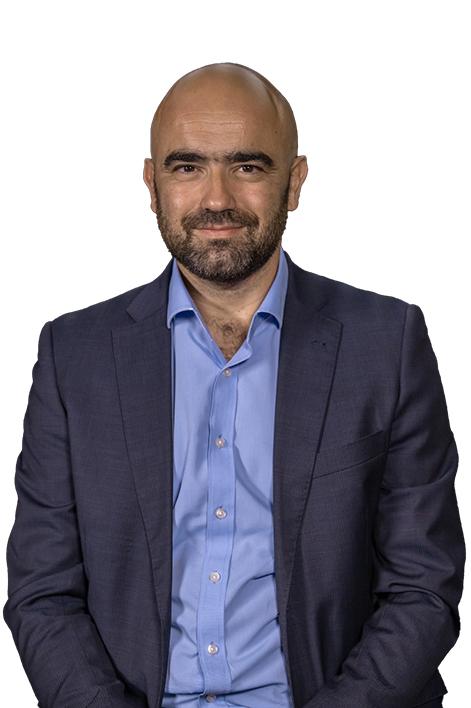
Richard Bilocca is CEO of WasteServ.