Richard England’s retrospective in Le Corbusier’s Unité d’Habitation
Richard England, Malta’s most recognised architect, talks to architecture writer, Ann Dingli, about his work, legacy and what being an architect demands today
When architect Richard England began his career in the early 1960s, Malta was moving into a new chapter of its political history. As it braced to detach from its colonial identity, the re-annexing of its autonomous national persona was ripe for the taking. The islands would now occupy not just a new dimension of political freedom, but like a teenager conquering adulthood, the hope of a rounded and sustentative sense of self.
Six decades later, in 2025, England is still working. He never stopped – beginning with his first project at the chapel of Manikata, until most recently unveiling the latter stages of his completed Dar Il-Ħanin Samaritan in Santa Venera. His career has been so full and widely published that, by those who have followed him, it can be cast into discernible phases.
His early work, defined in large part by Manikata; his prolific hotel years; and his larger-scale civic projects. Throughout, he has also remained faithful to sacred spaces and produced some of the islands’ most recognisable post-modernist residences, all marked with colour and geometry that spiritually join Luis Barragán and Gio Ponti – two of his giant influences – in novel and surreal union.
Yet his biggest contribution has been the global impact of his work, which has grown up in tandem with Malta’s nationhood – his built portfolio, his teaching, writing and role as an orator for the profession. In October this year, a gallery in Marseille called Gallery Kolektiv Cité Radieuse opened a retrospective of England’s work – the first outside of Malta. The gallery spans two rooms on the third floor of the modernist icon known as the Unité d’Habitation.
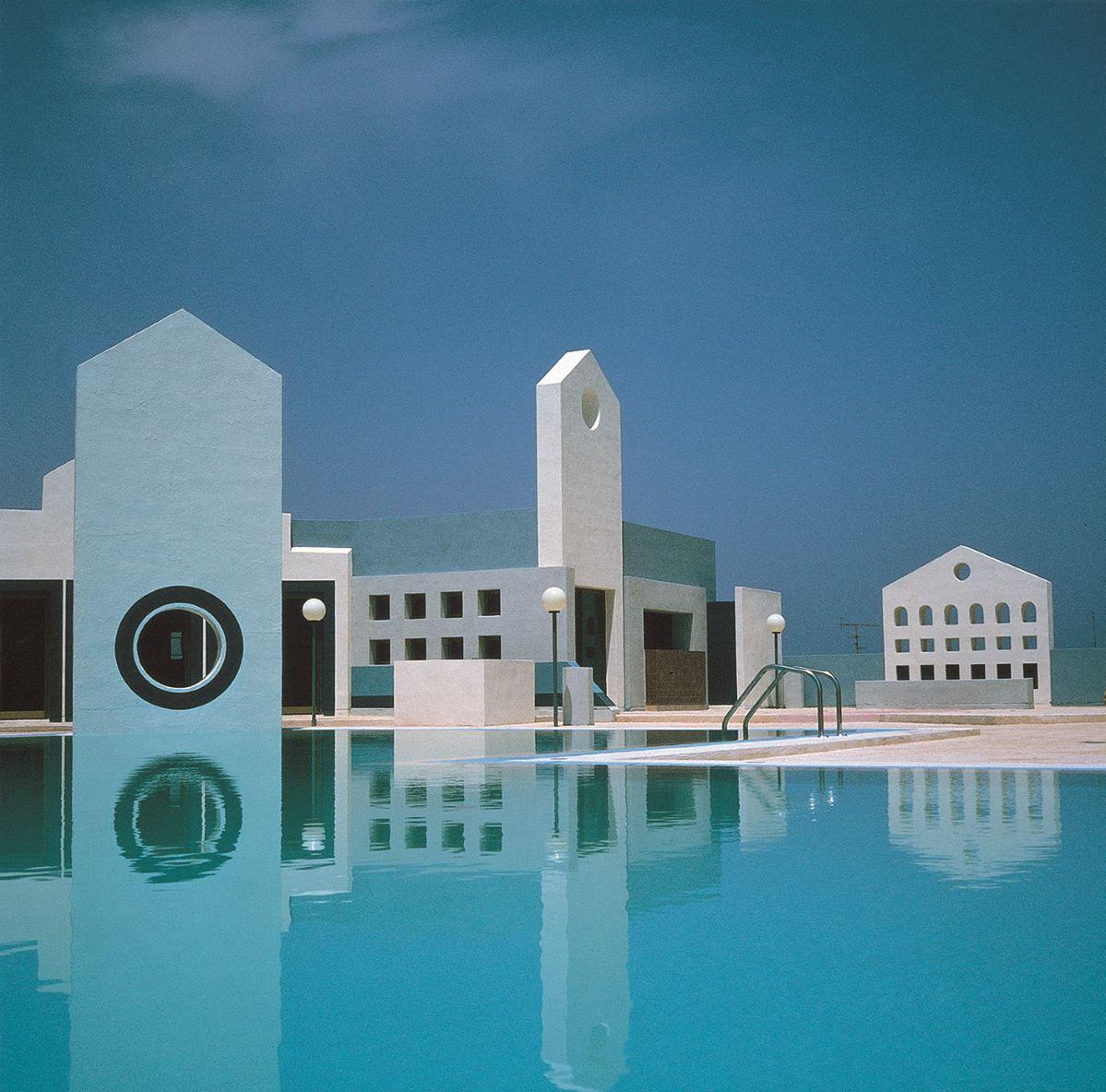 Aquasun Lido, St Julians. Photo courtesy of Richard England
Completed in 1952, the building was revolutionary for its time, not just for its béton brut build, but for its structural system – it stacked duplex apartments into one unrelenting concrete frame, containing in total 330 apartments of 23 different types. Its rooftop terrace is etched into the minds of archi-enthusiasts as a concrete playground of form and folly – shifting between linear, boxy spaces and sculptural towers and mounds. Like England would in his own career, Le Corbusier uses colour as a tool for recognition, deploying primary shades across the giant block as a morse code for identity.
Looking for Richard is a multi-media showcase of England’s vision. In an interview inside the Unité, England touches on the bearing of Le Corbusier and modernism on his own journey; the voice of his counter-narrative; the power of universality; and the spirit needed to subsist as an architect today.
Ann Dingli (AD): Let’s start with the building we’re in – how does it feel to have an exhibition in one of Le Corbusier’s most significant projects?
Richard England (RE): Humbling. My generation grew up when Corbusier was at the height of his career; this building was completed in 1952 and I was at university later in the 1950s. This building was iconic, his books were everywhere – we kept Modulor in our pockets. So yes, one is humbled.
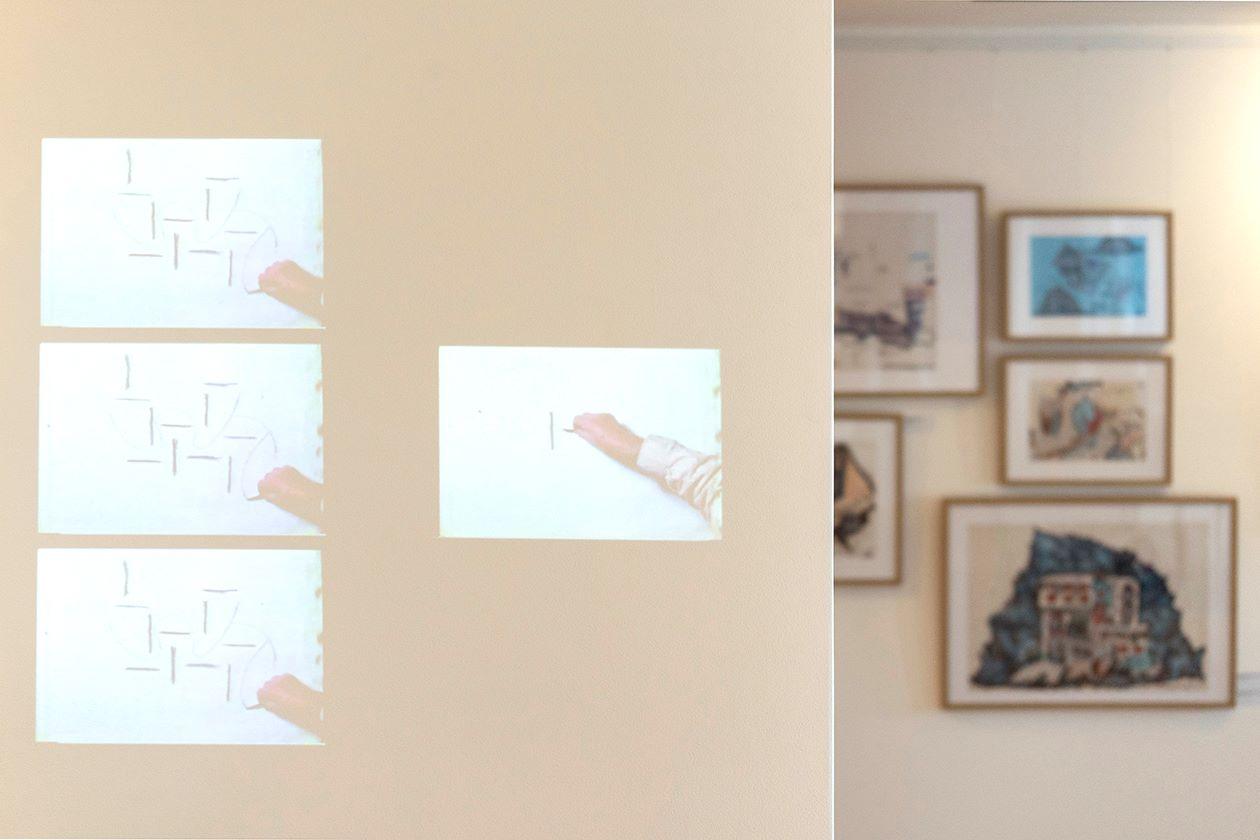 Installation view of the exhibition Looking for Richard in Marseille. Photo: Corentin Vagne/Courtesy of Kolektiv Cité Radieuse
AD: I want to discuss that cohort of influence, because Modernism is a prickly one. The famous ‘ornament is crime’ adage, for example – your work actually challenges that.
RE: Yes, I’ve always difficulties with it. Whenever my work was published, there was usually a sting at the end, because it was – in a way – alienating the modernist theory. The modernist theory goes back to its origin in the Bauhaus, where Walter Gropius said, “modern architecture is a new tree”. He talked about how we must destroy all the old trees and build something completely new. And my contention was – why a new tree? Why not a new branch? Or a new leaf? So there is a sense of continuity within change.
I’m very interested in music, so I’ll pick a quote from Béla Bartók, who said: “What is new and significant must, of necessity, be grafted to old roots.” We, ourselves as human beings, are a thread of continuity. So it’s extremely difficult to suddenly say modern architecture must eliminate all the past.
AD: You often describe architecture as a sensorial experience – the idea of a building moving a person beyond expression. But that’s still a condition created by an architect, informed by his or her relationship with the elements, how they understand them and can frame them. That’s not something written in any client’s brief. I want to discuss this vis-à-vis the notion of architecture and commodification. Because no one gives a brief to create a cosmologically transporting building.
RE: No, nor to elevate the soul or to enhance the spirit. This is why I’m particularly interested in the architecture of the Ancients, especially the Neolithic culture of Malta. Because this was a group of people who thought about architecture through the lens of nature and the movement of the stars. They had discovered that the Earth could be made fertile and began to understand that the movements of nature dictated when things would grow. They had to work on the terms of, and in relation to, the cycles of nature. That was an era when the land had more meaning.
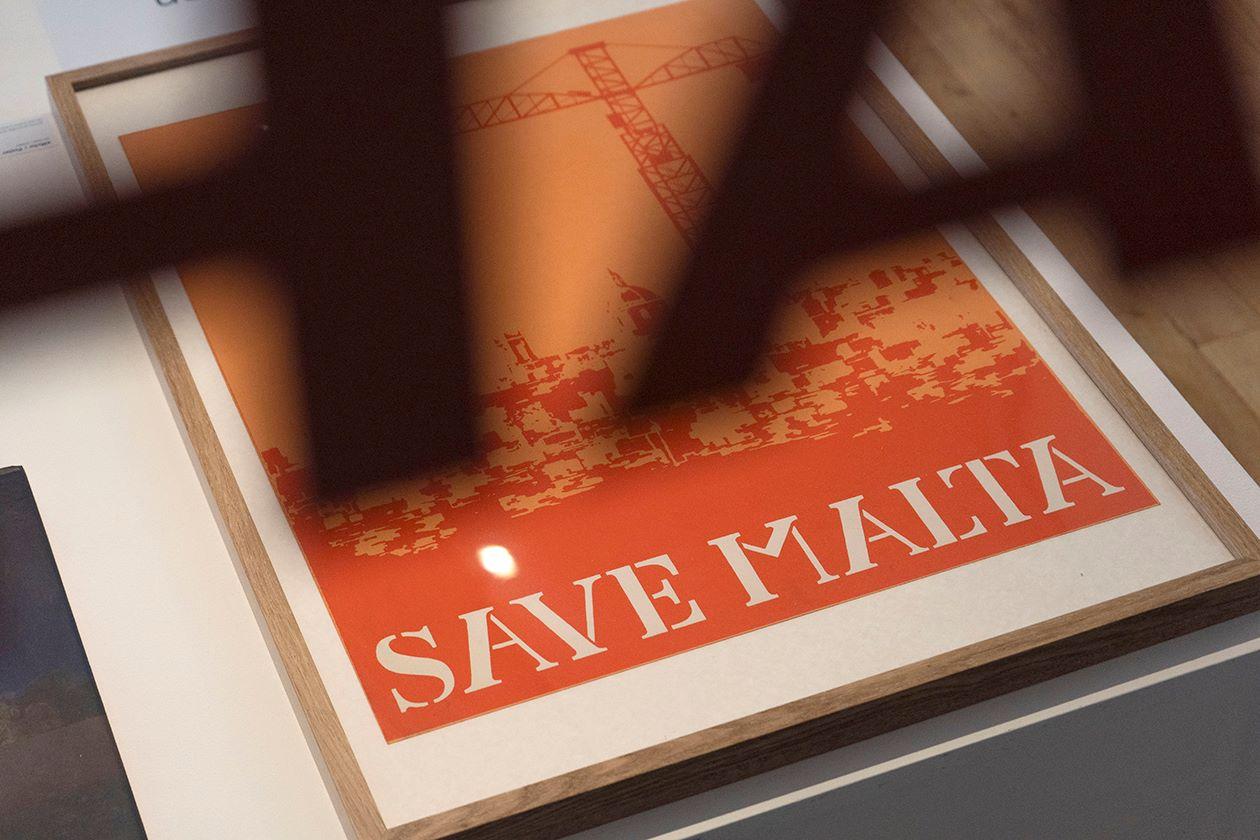 An item in the exhibition Looking for Richard in Marseille. Photo: Corentin Vagne/Courtesy of Kolektiv Cité Radieuse
AD: What is the impetus for architects today to create a relationship between architecture and nature. Ergo, how can we move past commodification? What instruction would you give to an architect today on that score?
RE: I used to give my students a task to design a room in which you feel uncomfortable. Why? Because once you learn how to make a room which is uncomfortable, you can then possibly try and make a room in which you feel comfortable.
I still do a lot of reading, because I believe that you need to learn and to keep learning. One of my favourite authors is Jorge Luis Borges – one of the most extraordinary people – and he said, “my business is to weave dreams”. I remember watching a television programme when he was still alive – he was being interviewed – and he was blind at the time. The interviewer said: “Let me ask you what might be an uncomfortable question; you’re blind – why do you still travel so much?” And Borges said: “Because it’s more important to feel a place than to see it.” And that’s exactly what it’s about.
That’s what we’ve lost. Because now, the other thing aside from architecture becoming a tool for making money, architecture has become a brand. Certain countries want a building from a specific architect. Buildings have been commodified. So I don’t know what the answer is.
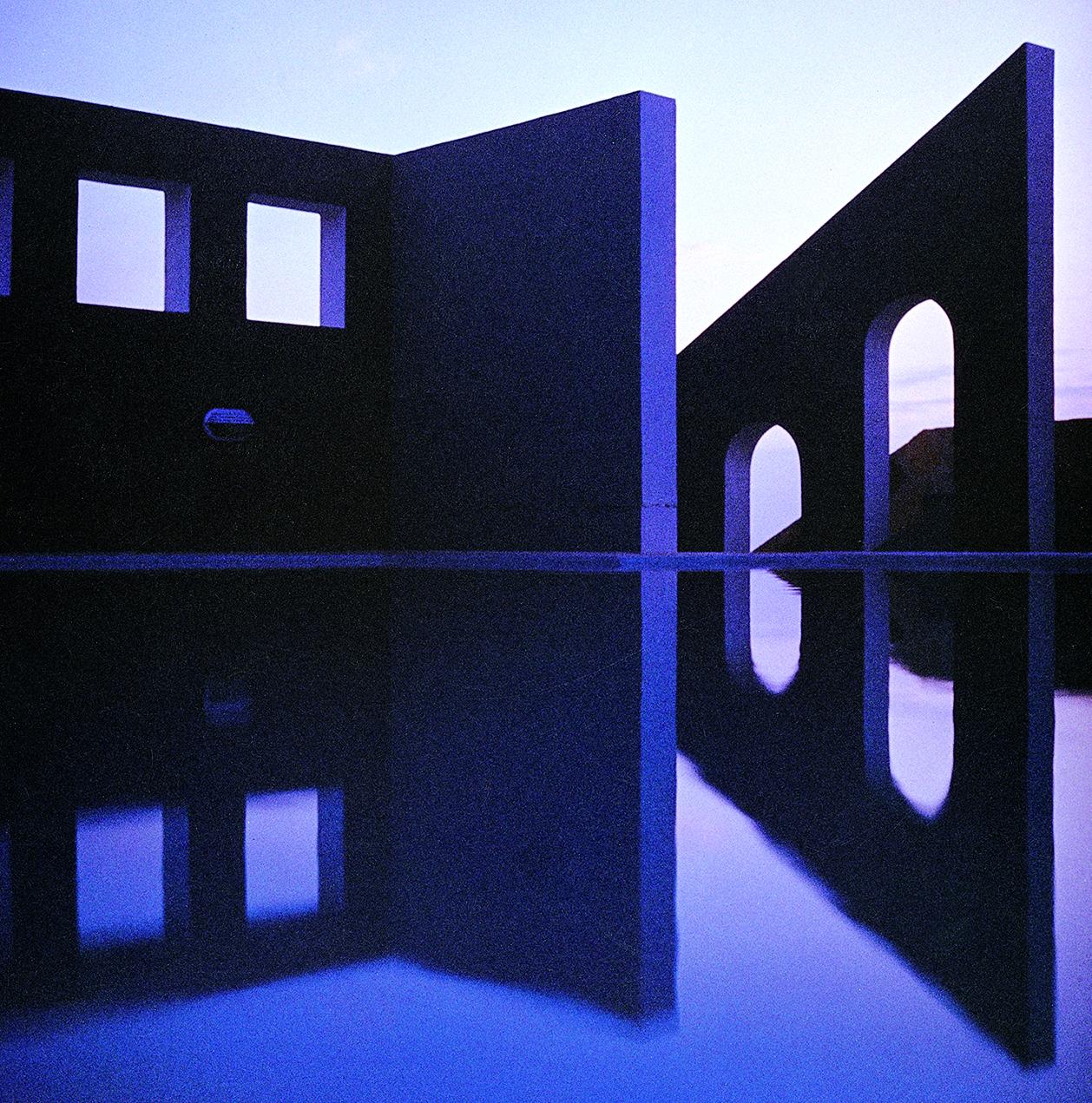 Razzett ta’ Sandrina, Mġarr, Malta. Photo courtesy of Richard England
AD: I think the answer is here today, in this building. Which is that no matter what we do or how we dress up agendas and manipulate space to their ends, the universal conditions that touch human beings won’t change. Light, air, space, proportion. Feelings of being secure and protected – but also of being in spatial awe.
RE: Features that makes us human. It’s about how to create a timeless architecture, which is case in point the building we’re in. This building is around 75 years old.
AD: And not built for the rich.
RE: On the contrary. So what about air? What about proportion? Those things are not considered anymore. I remember walking into Louis Kahn’s building at Yale (the British Centre for Art) and thinking – it can still be done. The way he blends wood, marble, concrete. It’s a poem – a visual poem. It’s also about creating ‘space’ in architecture – it’s about silence. Luis Barragán’s chapel (Chapel of the Capuchinas Sacramentarias), for example – which is absolute minimalism – probably works more emotionally than perhaps it does functionally.
AD: There are different levels of functioning.
RE: Exactly. Because the geography of the space influences the geography of the body. I’ve always said that architecture is not a profession, it’s a vocation. The onus of the work of an architect is to create the environment within which we exist. How can we produce an architecture which makes us feel better? That’s it. It’s as simple as that. How you can create a space in which one feels: this is beauty.
Looking for Richard is taking place at Le Corbusier’s Unité d’Habitation in Marseille, France, until December 6. The exhibition is organised with the support of Arts Council Malta and Heritage Malta, in collaboration with The University of Malta and the Fondazzjoni Patrimonju Malti under the patronage of Malta’s ambassador to France.