The Royal Opera House in complete view
Two-volume book by Vicki Ann Cremona zooms in on the wide significance of a sorely missed Valletta building
The Malta Royal Opera House: Power, Culture, and the Stage
by Vicki Ann Cremona
published by Fondazzjoni Patrimonju Malti
The Malta Royal Opera House: Power, Culture, and the Stage by Vicki Ann Cremona consists of two volumes forming one complete book. Not only are they the culmination of years of assiduous and detailed research in Malta, London and beyond but they are also the coming together of great finds. The exquisite book design by Daniel Cilia completes the beauty and interest of this comprehensive seminal work, a true labour of love.
The subject of this book is one that has been part of our troubled collective memory as a nation for a long time. There is hardly anyone in the Maltese islands who remembers the building as it stood before 1942 or witnessed it as a functioning theatre. And yet not a month goes by that someone does not post a picture of the opera house on Facebook and asks for it to be rebuilt.
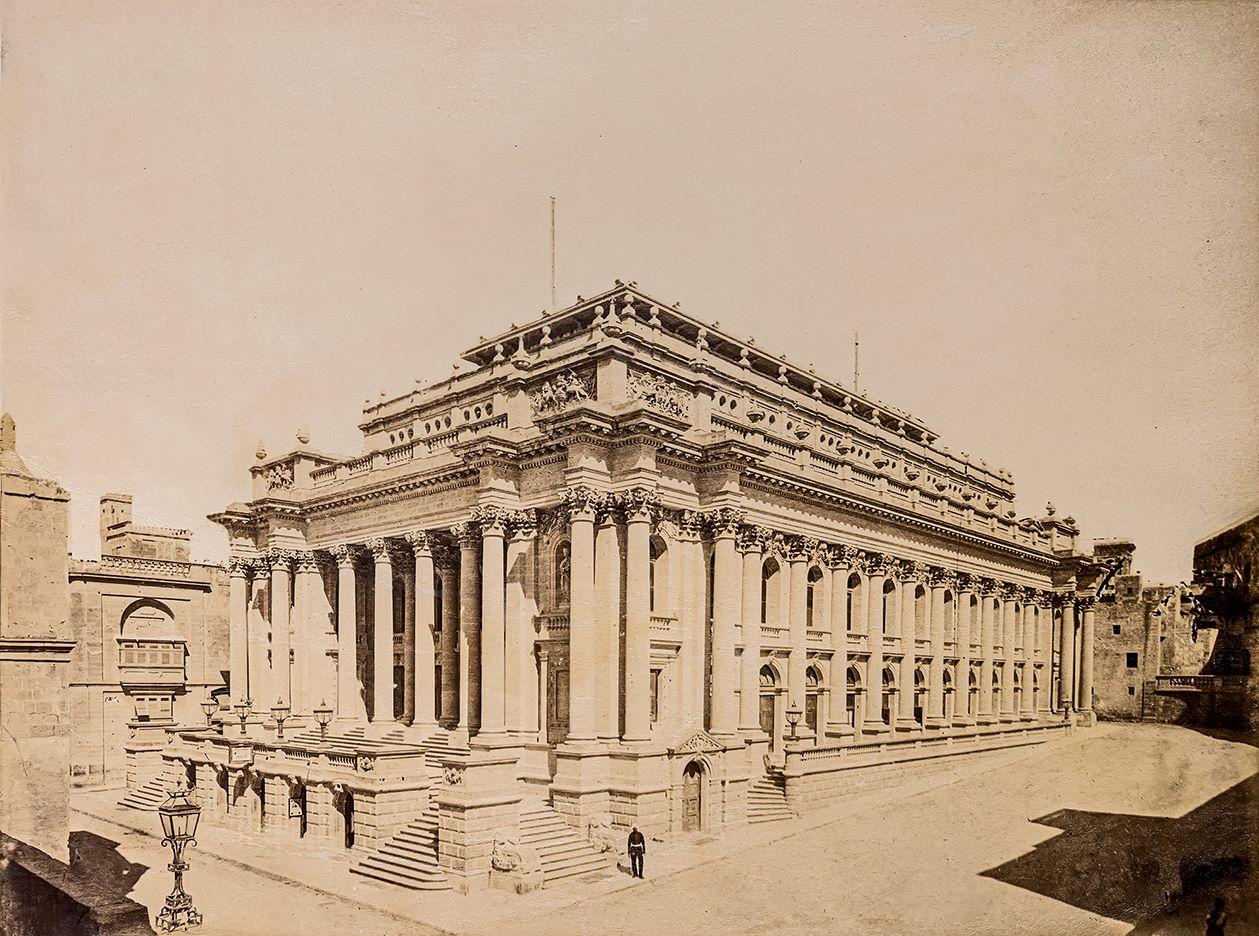 Albumen print of the Royal Opera House, Valletta.
Cremona’s two books give us as full a portrait as we will probably ever get of this building and what went on inside and around it. It answers many of the questions we always asked: Who wanted to build this theatre? Who was it built for?
Who went to the opera house? Who decided what was performed? Were the performances always spectacular? The answers to some of these questions will astonish us.
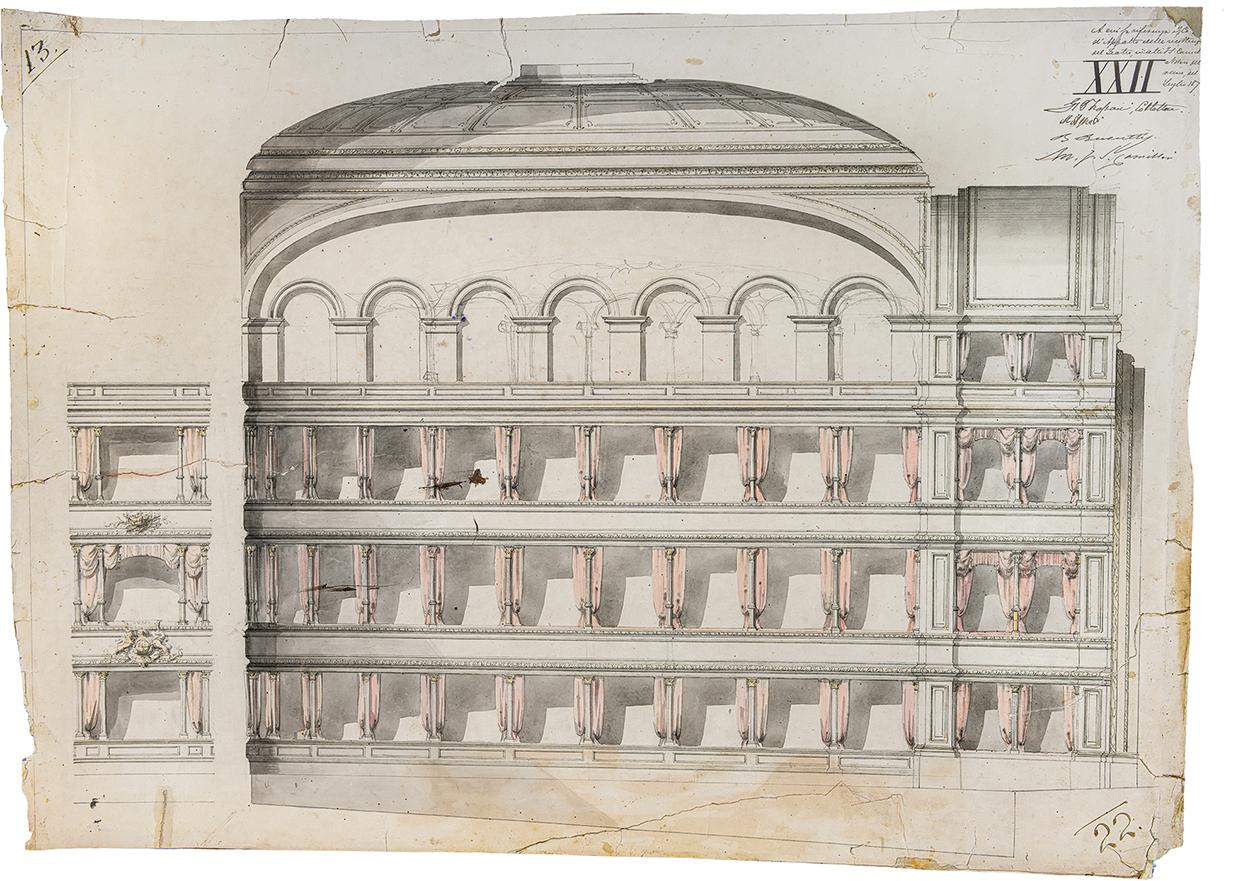 Plans of some of the Royal Opera House interior.
Her description of the exterior and interior of the building, seen from a theatre historian’s perspective, shows an important undertaking both from an architectural as well as financial point of view. Her discoveries of some of the theatre’s wonderful scenery and its painters, as well as her study on the way the theatre and its personnel was managed, provide interesting insights into theatre life behind the scenes.
Yes, the scenery was wonderful, and the audiences did listen to some of the foremost opera singers of the time, who featured in some of the most popular operas. However, the books tell a much more nuanced and much more interesting story.
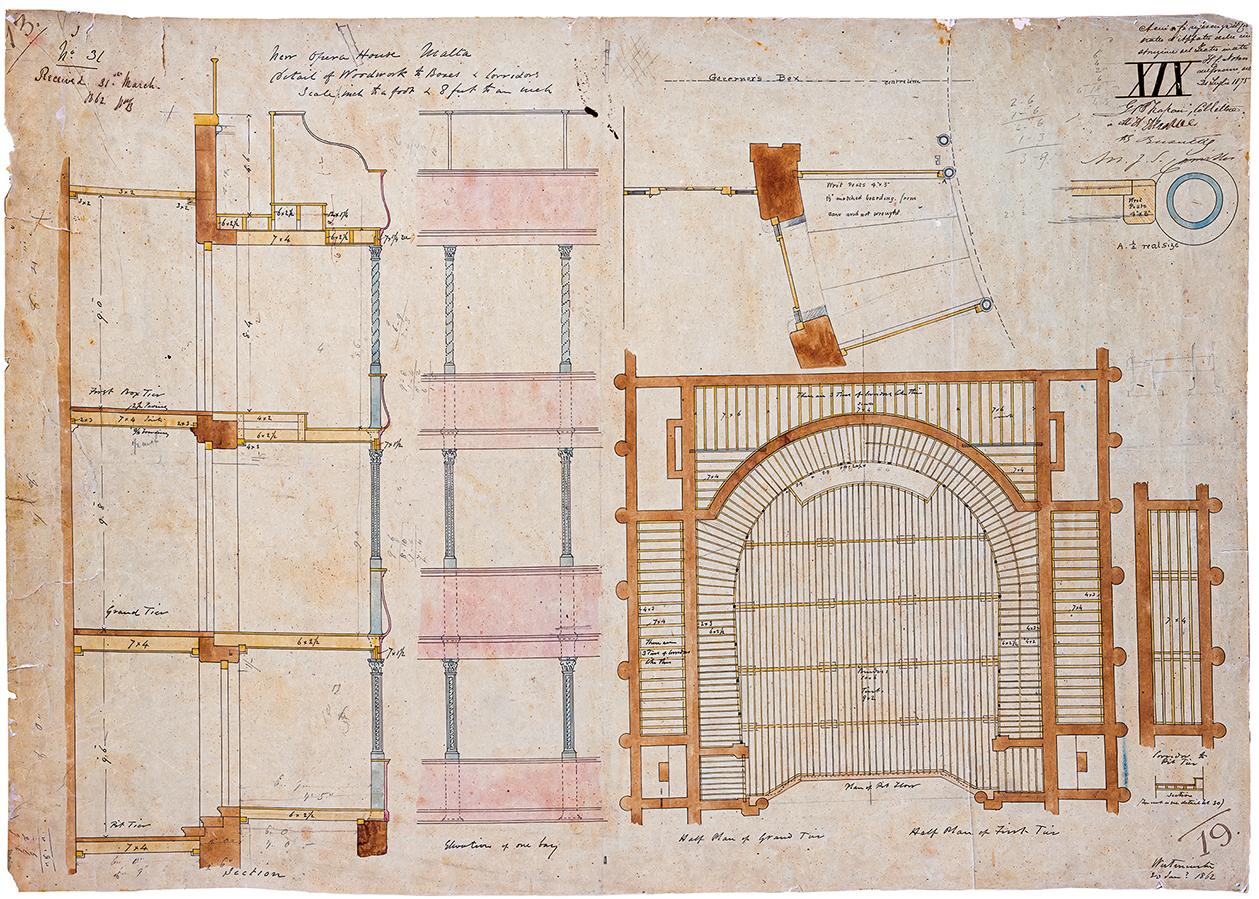 Plans showing details of the woodwork, boxes and corridors at the Royal Opera House.
The way the theatre was run emphasised the class divisions that were already in existence in Maltese society. Cremona provides useful data which juxtaposes average earnings to ticket prices. British officers had privileged seating at the opera. Maltese spectators, primarily upper and middle class, also frequented the theatre regularly, while poorer members of society, for example the teachers in elementary schools, could at most afford a distant seat in the gallery.
Cremona’s two books give us as full a portrait as we will probably ever get of this building and what went on inside and around it
Cremona zooms in on the political significance of this building. “Built through British will and Maltese money,” the theatre’s existence served multiple purposes, especially colonial and imperialistic ones.
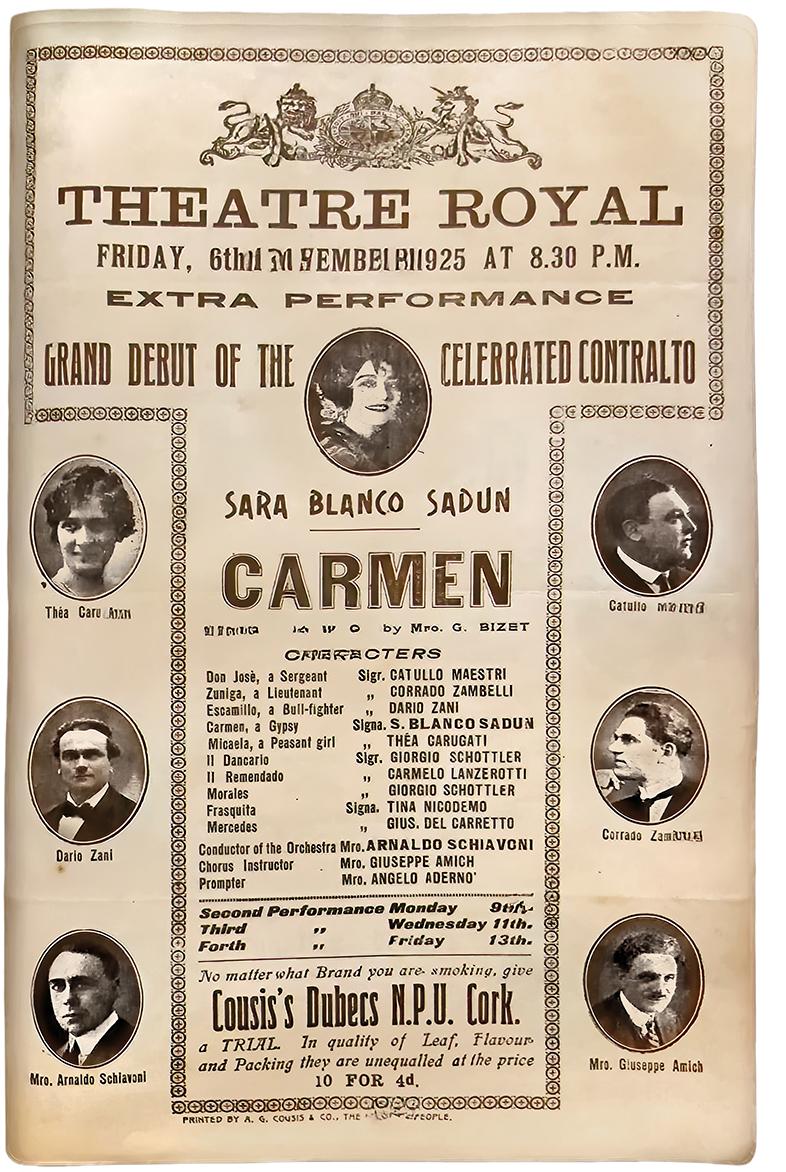 Poster for a production of Carmen at the Royal Opera House in November 1925.
And yet, a nationalist politician like Andrea Pullicino would claim in 1919 that “The Maltese are very jealous of their Royal Theatre: we rightly consider it a national monument.” The author highlights the involvement of Maltese architects and engineers in the innovative solutions found for the rebuilding of the theatre after the 1873 fire, and the changes wrought by developments in light and scenery.
She also highlights the various projects that were drawn up to rebuild the opera house after its destruction in 1942 and consequent demolition.
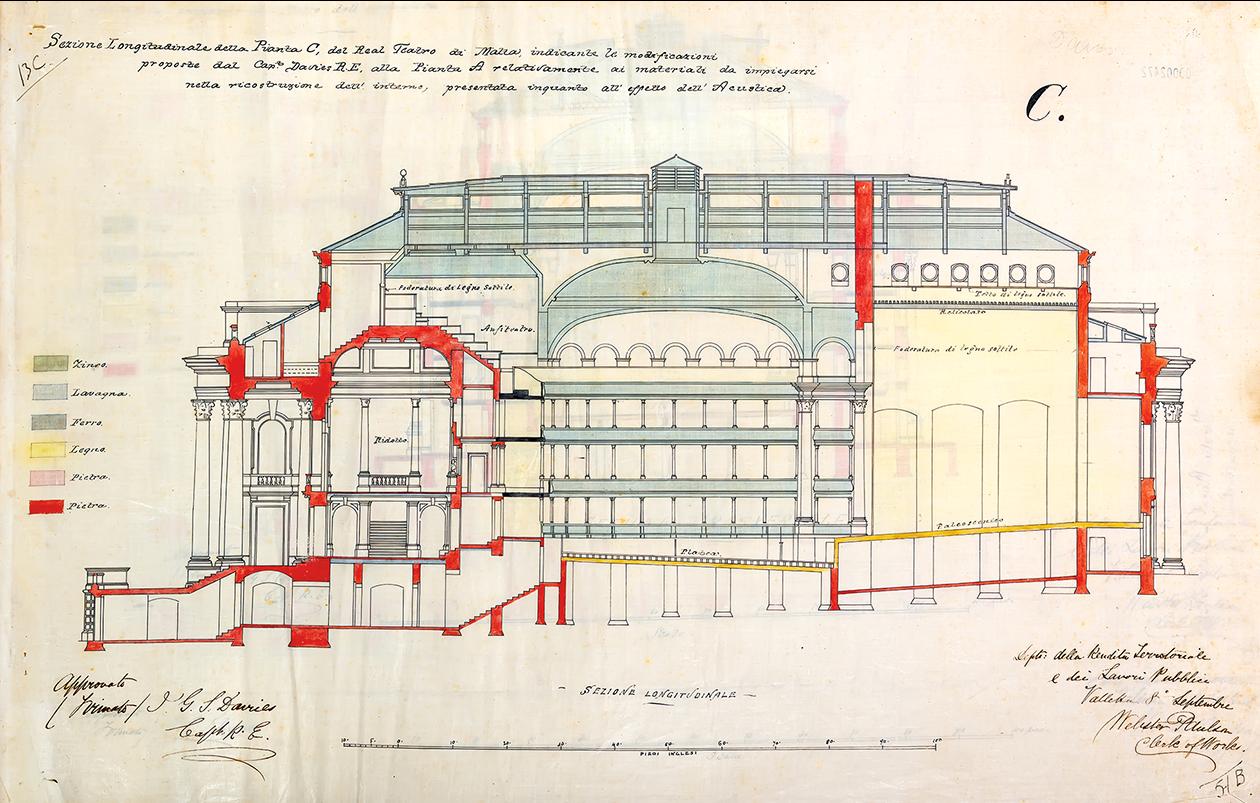
Plans showing a longitudinal section of the Royal Opera House building.
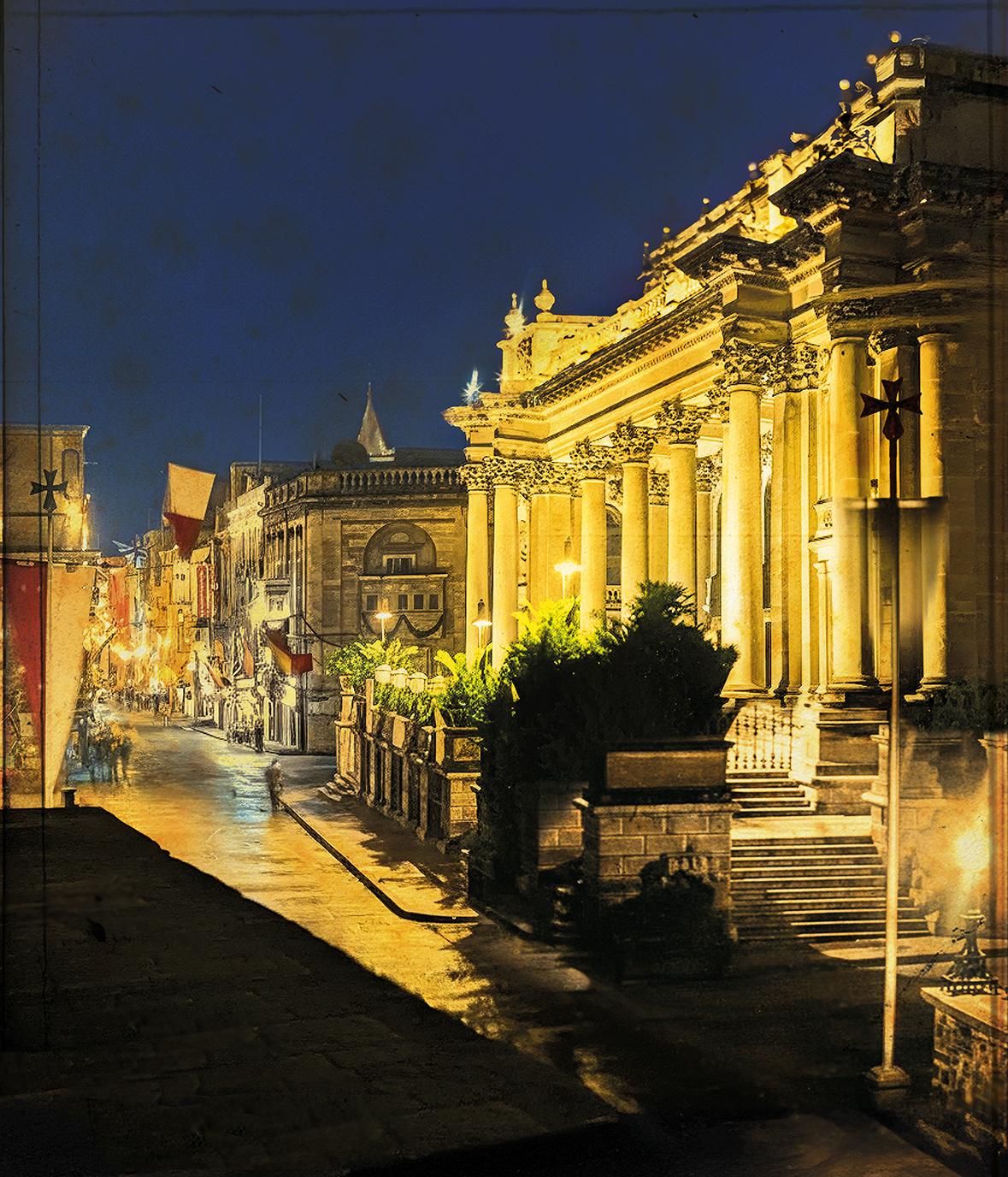
A view of the floodlit theatre from a colourised 1935 photograph.
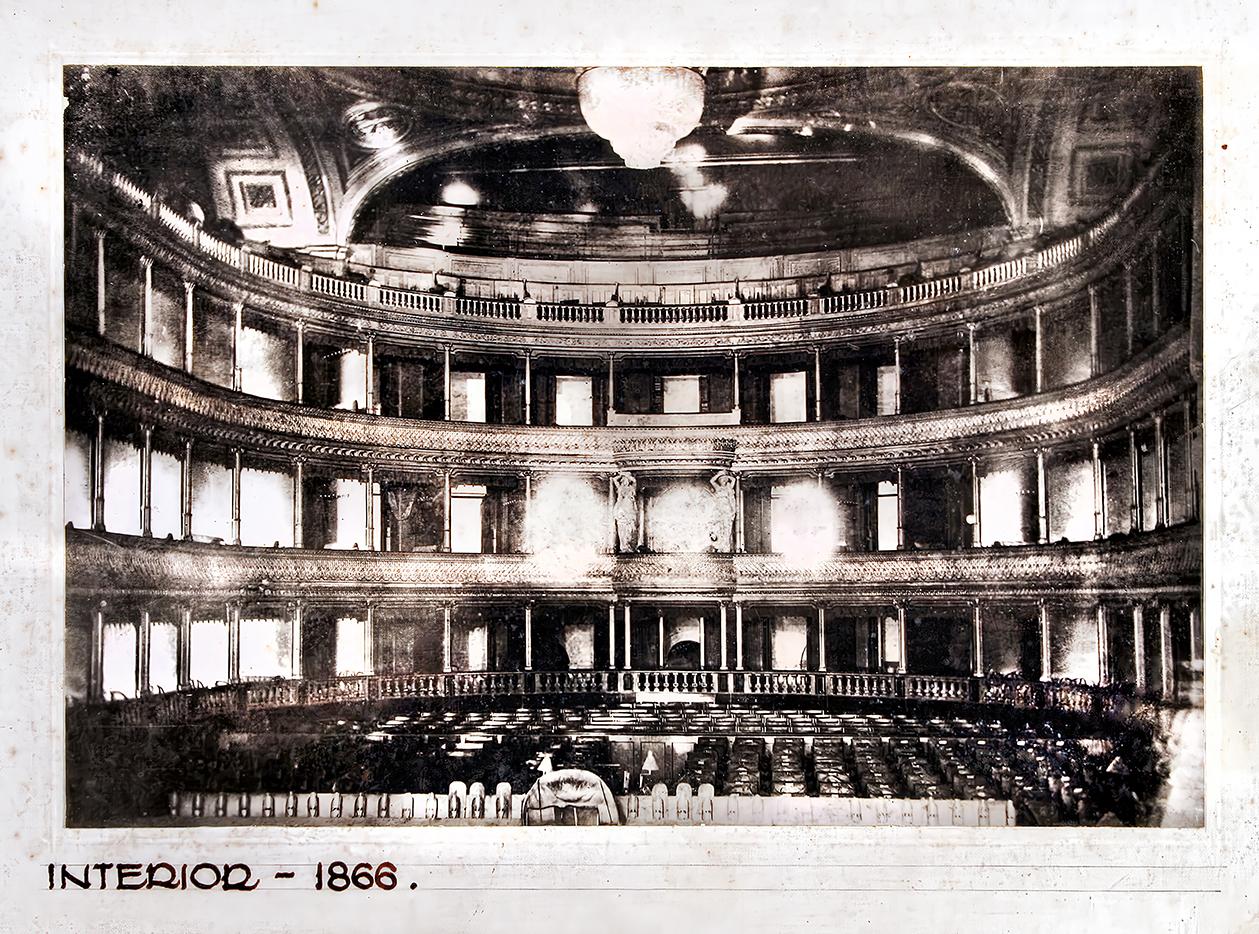
Interior of the theatre in a photograph from 1866.
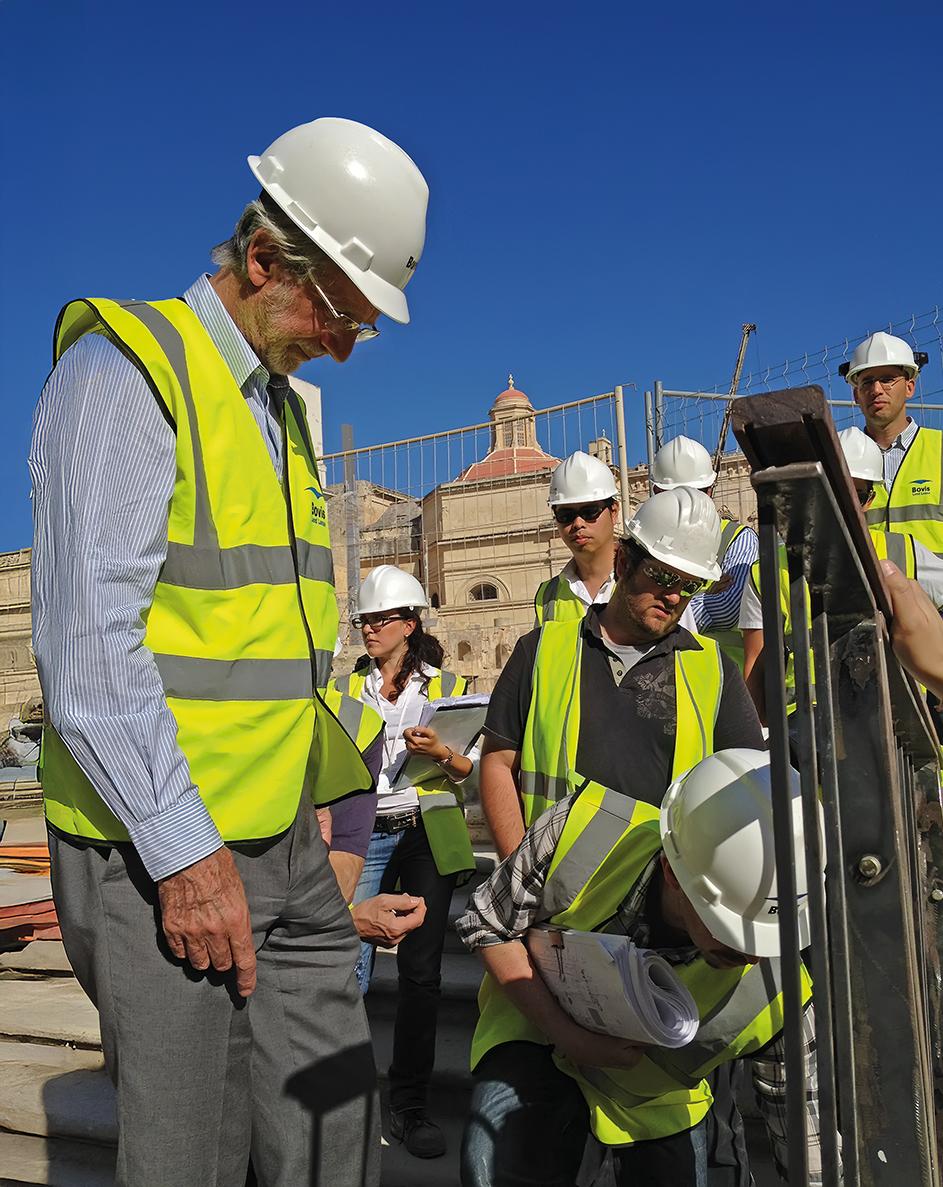
Renzo Piano on site at the theatre.
This book, published by Fondazzjoni Patrimonju Malti and sponsored by Farsons Foundation, gives us all the tools we need to examine what the Royal Opera House meant for the Maltese people during a fundamental period when the community was coming to terms to what being a nation could be.
It should be read by all of us who are interested in theatre, but is also a necessary reading for anyone interested in the history of architecture, theatre matters and management, and especially the evolution of Maltese society. The ghost of the Opera House will continue to hang over us as a nation but the distinguishing features of this apparition are now much clearer, thanks to Vicki Ann Cremona’s exceptional contribution.
Marco Galea is an associate professor of Theatre Studies at the University of Malta.