Saved by a phone call: How supportline 179 has changed lives for 30 years
More than 460,000 calls received since 1996, with loneliness topping the reasons for calling
A woman with an intellectual disability was rescued from years of abuse after making a desperate call to the national supportline 179. She had been locked in a room for hours a day and forced to assemble Playmobil figures for nine years by the woman she lived with.
In another case, a man who was on the verge of ending his life received life-saving support after calling the same helpline and was successfully traced by the authorities.
These are just two of the thousands of calls received by the national support line 179 since it began operating nearly 30 years ago.
The calls cover a wide range of issues, from loneliness and grief after losing a loved one, to suicidal thoughts, mental health struggles, homelessness, and domestic violence.
Martina Testa, the service’s manager, provided an overview of the helpline’s evolution. The support line was launched in 1996 to address cases of child abuse and domestic violence and was initially run entirely by volunteers.
Loneliness increased over the years
From its launch until June 2025, the service received 461,169 calls, of which 329,016 were identified as genuine. As societal challenges evolved and expanded over the years, the number of volunteers began to decline.
The service became a 24/7 operation in 2002, and in 2006 it expanded to handle a broader range of emotional and social issues.
Today, the most common reasons for calling are loneliness, mental health issues, and homelessness. Eventually, volunteers were replaced by employed staff.
More recently, a pilot live-chat service was launched to support people who are unable or unwilling to make a phone call.
Testa also shared several success stories, including a call received on New Year’s Day 2024 from a man who said he intended to end his life. Through collaboration with other authorities, including the police, the man was located and offered immediate support.
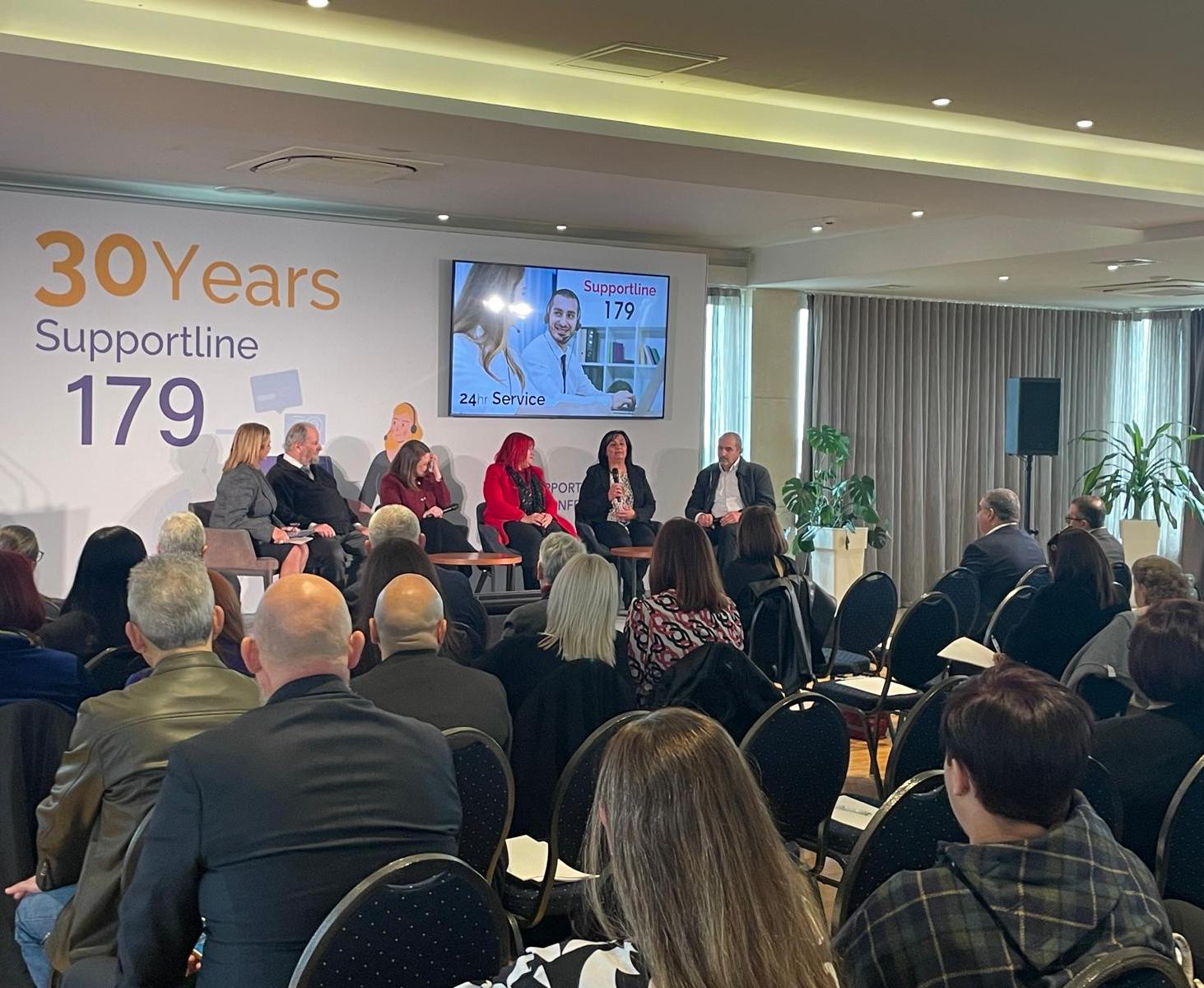 Volunteers and staff of supporline 179 shared stories during an event held to mark 30 years of the service.
One particularly harrowing case involved a woman with an intellectual disability who contacted supportline 179 following an intervention related to domestic violence. With the help of support agency Agenzija Support and the police, the perpetrator was eventually convicted.
The case attracted widespread media attention. Reports revealed that the woman had spent nine years locked in a bedroom of a Birżebbuġa flat, living in unsanitary conditions with two dogs and a bucket. She was confined from around 10pm until 3pm. During this time, she was given Playmobil parts to assemble, which were later exchanged for money at a factory. She was only released when the perpetrator returned from work, at which point she was fed and the room was cleaned.
The support line also receives regular calls from people struggling with mental health issues who simply need someone to listen and often call back to express their gratitude.
'He cried while his wife beat him'
Actor Ronnie Galea was among the first volunteers to work on the support line. He recalled taking the very first shift while in his mid-40s, balancing work, family life, and acting. Wanting to give something back to society, he responded to an advert seeking volunteers for the newly launched service.
“I was there on the first shift. We even received calls from journalists asking what the service was about and what training we had,” he said, adding that he volunteered for around 25 years.
“One case that stayed with me was a man who called in tears because he was being beaten by his wife. He cried while his wife beat him. I could hear her swearing in the background,” Galea recalled.
He also remembered one of the regular callers - a man who would phone in and remain completely silent. This posed a challenge for volunteers, who had to patiently draw him out through one-word responses.
Social Policy Minister Michael Falzon noted that despite the growth of technology, which is meant to improve communication, loneliness remains on the increase, which goes to show that people need people.
“It is so important that we are here for one another. The latest figures of the WHO estimate that one out of three people will have a mental health issue at some point in their lives,” he said as he praised the work of all those people behind the supportline.