School parents take lead to clamp down on smartphones, social media
‘Unplug. Play. Grow’ initiative’s main aim is to combat rise of digital dependency, online harm from an early age
Parents of very young students at San Anton School have launched an initiative to delay children’s access to smartphones and social media, to try to combat the rise of digital dependency and online harm from an early age.
Driven by parents whose children are aged three to seven, the idea is to ban children from owning a smartphone until the age of 15 and banning access to social media until 16.
The initiative, ‘Unplug. Play. Grow’ is led by the Early Years Parents Focus Group and the school’s well-being team and is spearheaded by parent and board-certified behaviour analyst Natasha Attard.
Instead, parents are to focus on providing children with the skills needed for real-world connections and to develop self-confidence that does not come from online likes or the number of followers.
While in its early stages, San Anton School plans to take the initiative to a national level and push authorities towards legislation to ban social media for those under 16.
Since its launch on Wednesday afternoon, the online pledge has gained 600 signatures, while another independent school reached out to San Anton School, showing interest in the initiative.
The school also received messages from parents whose children do not attend San Anton, asking if they, too, could sign up for the pledge.
“A lot of children are accessing harmful content, children as young as 10 have a social media account, and research shows teens spend an average of nine hours a day on their phones, whilst others say they are constantly on their phones,” Attard told Times of Malta.
“Parents have told us the initiative is a good idea but would be difficult or impossible to do. But what if all of us parents come together? We would all be in the same boat, and our children won’t feel so left out.”
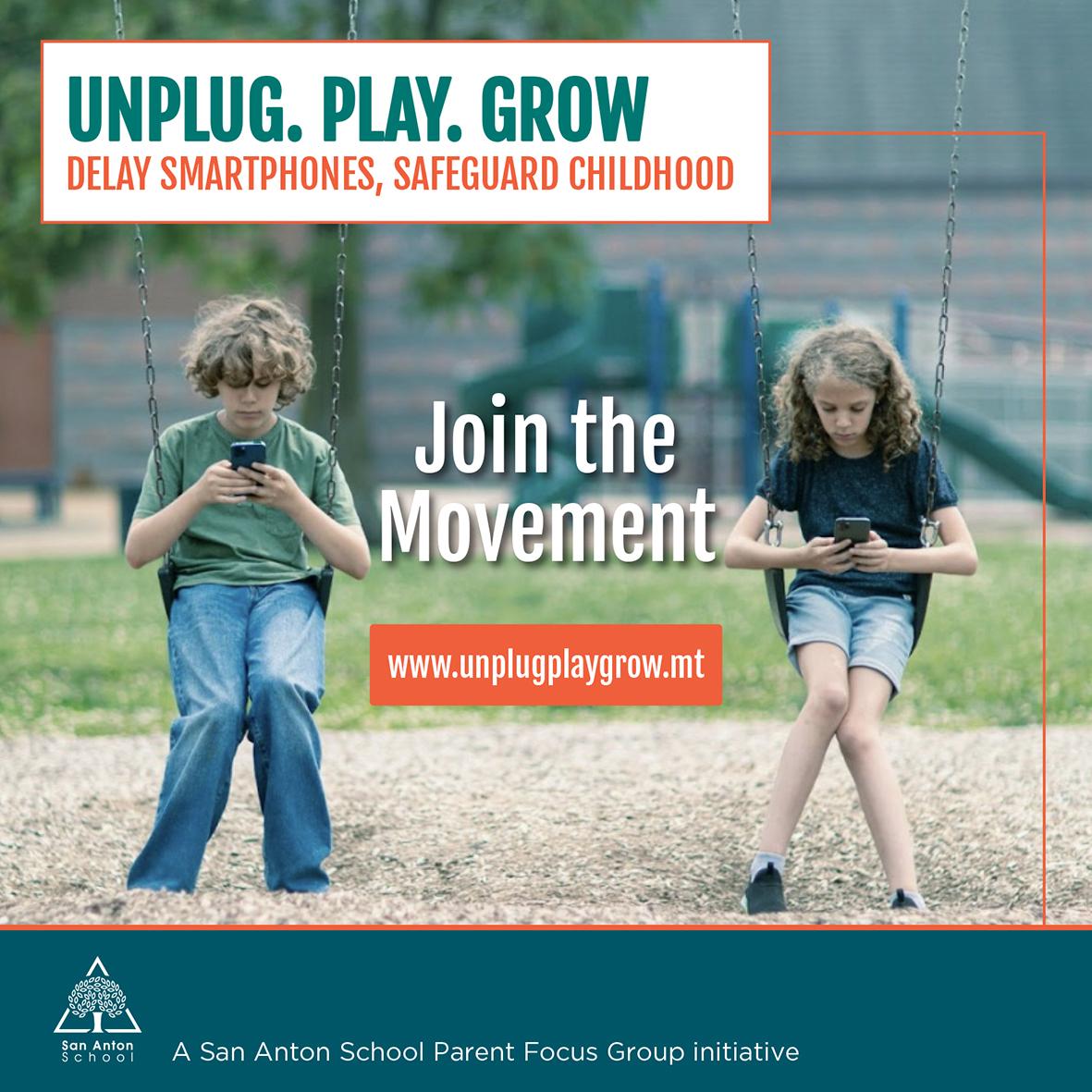 San Anton received messages of support from another independent school. Photo: San Anton School
Children with shorter attention spans, social anxiety
With a background in supporting young learners with behaviours of concern, Attard comes across children who experience social anxiety and tantrums when they are left without a mobile phone.
She explained she is often called in to schools to support children struggling in class, impacting attention and focus.
“Research shows children can receive hundreds of notifications in a day and social media is a constant dopamine hit. So how can our children sit for an hour lesson without the constant dopamine hit?”
She said social media addiction is seen in people of all ages, and people no longer allow themselves to feel bored, instead of spending countless hours scrolling.
She cited cases of parents who raised concerns about their very young children refusing to go out to dinner with them and who would rather stay in their rooms on their phone.
The concept is to normalise a childhood without smartphones and social media, rather than stigmatise it- Natasha Attard
“How many children would rather stay isolated than play? I’ve had cases of 12-year-olds being verbally aggressive and wanting to stay alone just scrolling on their phones,” she said.
Nicky Azzopardi, Head of Early Years at San Anton School, and who is also part of the focus group, said that while the school has a strict mobile phone ban, some older students are still caught trying to hide their phones. She said the impact of social media can be seen more directly on older students, some of whom experience higher levels of anxiety.
The idea is to build a community for parents who find themselves facing the same dilemma and provide them with the necessary support.
Attard, whose four-year-old attends San Anton, joined the Early Year Focus group in October and thought it would be a good starting point to discuss the idea of a childhood free of social media.
The concept is to normalise a childhood without smartphones and social media, rather than stigmatise it, she explained.
Not a ban on technology, but a movement away from social media
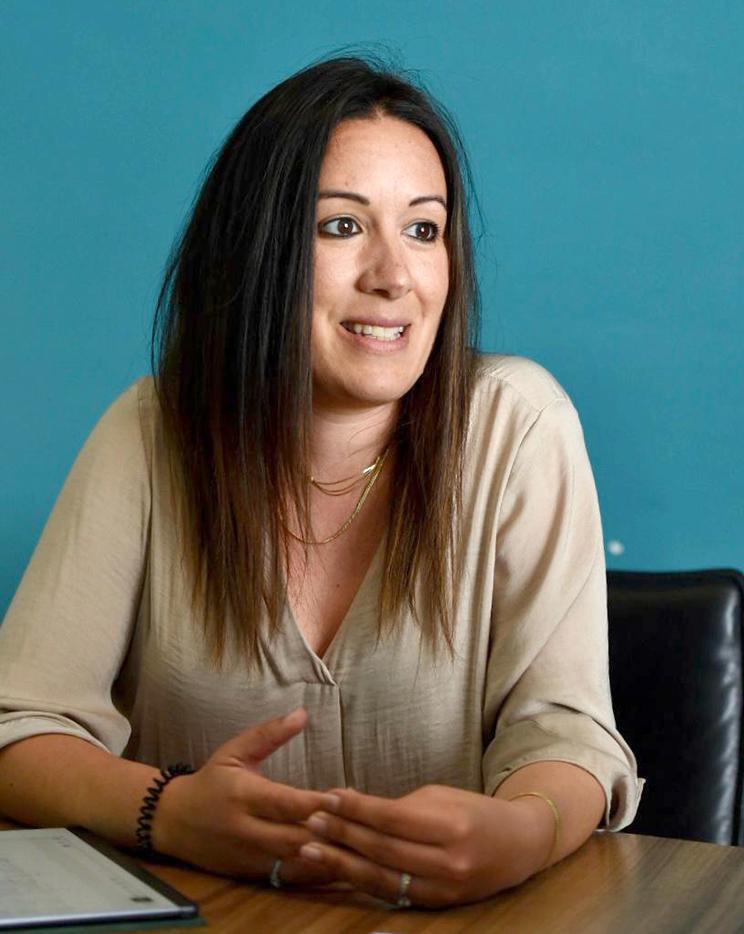 Natasha Attard is spearheading the smartphone and social media-free movement among the San Anton school parents. Photo: Chris Sant Fournier
Attard made it clear the school is not against technology or screentime.
“We are against endless scrolling time. We agree that children need to have digital literacy, but on age-appropriate devices. Eleven-year-olds do not need a smartphone, they do not need social media to network with adults.”
She said young children experiencing puberty should be focused on developing their personality and image in real life, rather than online.
“What we want is to get our children offline during the most vulnerable time of their life, allow them to develop friendships and understand different social situations,” she said.
Mobile devices could help children keep in touch with parents who live abroad or are separated, or friend groups outside of their school.
“Children can have a dumb phone, which gives them access to apps like WhatsApp but no social media accounts,” she explained.
“They can call a friend or meet them outside to play. We want our children to develop an image offline, to be confident and not depend on their phones.”
San Anton School will also be hosting workshops for their parent community in the coming week to explain the plan further and to gain further feedback.
The negative impact of social media addiction on young children is not new. In a study published last October, Maltese teenagers ranked the second highest out of 44 countries for addiction-like social media use, with girls at a higher risk than boys. Girls aged 11,13 and 15 show an addictive-like pattern of social media use.
Politicians have called for the need to regulate social media platforms, while a World Health Organisation official called for a national debate on regulating social media use for children and teenagers.
The conversation was further brought to the spotlight after Australia passed a law to ban social media for anyone under the age of 16, and with the hit Netflix mini-series Adolescence, which brought the dangers of toxic online cultures to the screen.
More on San Anton School’s initiative can be read on unplugplaygrow.mt