Scientists ‘baffled’ by absence of jellyfish in summer
Meanwhile, other species have been plentiful, including those not native to Malta’s waters
Jellyfish practically vanished from Malta’s shores last summer, leaving scientists across the region puzzled.
Marine biologist Alan Deidun admitted the disappearance of the gelatinous creatures was “difficult to answer – and it’s baffling my colleagues elsewhere in the Mediterranean too.”
Jellyfish numbers had exploded in recent years, washing up in their thousands on Malta’s beaches and even leading scientists and Michelin-star chefs to consider the species as a new food source.
Two years ago, Olympian swimmer Neil Agius was forced to abandon his attempt to break the record for the longest open water swim after being stung more than 60 times while spending hours navigating a jellyfish bloom at sea.
Deidun last spoke to Times of Malta in July when jellyfish were conspicuous by their absence from swimming spots – much to the delight of bathers. Back then, he did not rule out a bloom appearing later in summer, especially one from the northern Mediterranean.
But in the months since, the situation has remained unchanged, leading scientists to try to understand why.
“It could be that there is a predator – perhaps a species we don’t even know about – that is feeding on jellyfish eggs or on other life stages, or it could be due to currents,” said Deidun, noting that while some jellyfish blooms were locally derived, others were carried to Malta from other countries’ waters.
And with jellyfish reproducing in the winter – with eggs taking between two and three months to mature – Deidun explained that scientists might need to wait until spring to better understand the phenomenon.
“If the situation repeats itself, and we don’t see blooms of jellyfish in the spring – which is when we would expect to see the next generation of jellyfish, following winter spawning season – then it could indicate that something is affecting that part of their life cycle,” he said.
“I’m intrigued to see what happens.”
However, he emphasised that despite decades of research, scientists’ understanding of jellyfish was far from complete.
“They’re one of the most elusive creatures; we only see a tiny part of their lifespan... Even after decades of research, fully understanding jellyfish is proving elusive.”
Despite Malta becoming used to seeing large and regular blooms of jellyfish, Deidun pointed out this was not the historic norm. In the past, such occurrences were “sporadic”, suggesting the recent absence of the species might be less significant than first thought.
He added that while discussions on jellyfish in Malta typically focused on the mauve stinger and fried egg jellyfish, further research was needed to understand the recent prevalence of other types of jellyfish.
“We’re attentive only to those that sting, but it’s a very varied group,” he said.
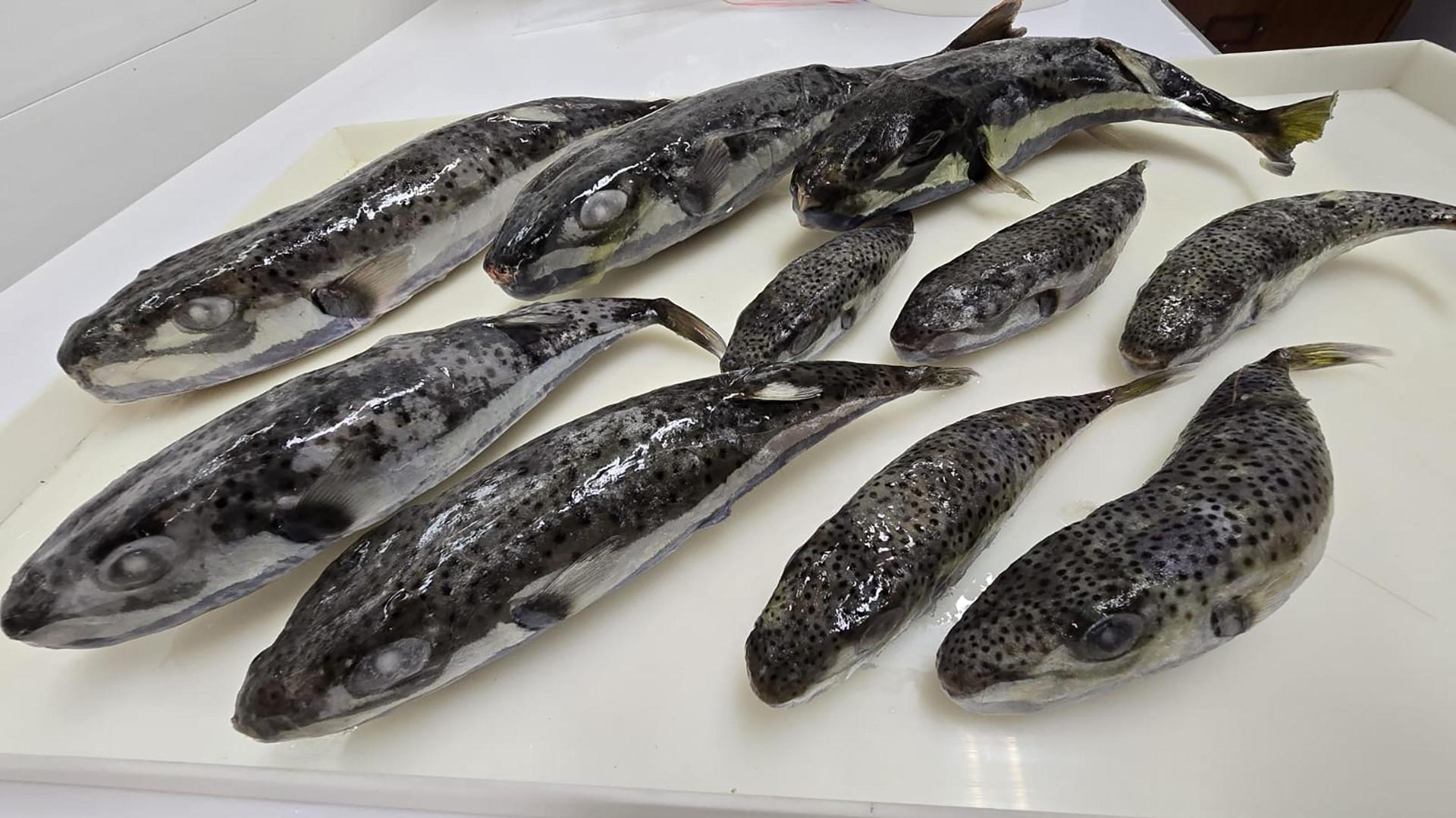 The invasive silver-cheeked toadfish was “highly toxic”, Deidun warned.
Meanwhile, as jellyfish have been absent, other species have been plentiful, including those not native to Malta’s waters like the silver-cheeked toadfish (Lagocephalus sceleratus).
“They’ve been spreading like mad,” said Deidun of the silver-and-black coloured fish first spotted in Malta in 2015. He noted that “tropicalisation” of the Mediterranean as temperatures rise was believed to be responsible for invasive alien species moving in.
And some of those species bring danger with them. Deidun warned that the silver-cheeked toadfish was “highly toxic”, containing a “very potent poison – even more so than cyanide”.
He noted the species was even being banned from Japanese Fugu preparation, where poisonous pufferfish is preferred for consumption by expert chefs.
While Deidun did not rule out a link between rising numbers of invasive species and declining jellyfish stock – acknowledging the possibility of new species feeding on jellyfish eggs – he stressed such a hypothesis would require further study.
The citizen science campaign ‘Spot the Jellyfish’, coordinated by Deidun, was kickstarted in June 2010 and is reachable through the ocean.mt/jellyfish website or on social media.