Senior civil servant listed as advertiser behind PL videos
The activity appears to breach civil service rules on political impartiality
A senior civil servant is listed as the advertiser behind almost 300 Labour Party (PL) Int Malta-themed YouTube adverts published in the days leading up to last month’s general election, seemingly in breach of the public administration’s rules on political impartiality.
The adverts, which were ubiquitous throughout the campaign, promoted key pledges made by the PL, including a €1,000 super bonus.
Google records list the advertiser as Clive Farrugia, head of secretariat at the office of the principal permanent secretary, a role he has held since 2022. The principal permanent secretary is the country’s top civil servant, responsible for managing Malta’s public administration, implementing policy and issuing guidelines for the conduct of public officials across the country.
According to Google records, Farrugia published 292 adverts in the last 10 days of the campaign, starting on May 20. The adverts continued to be published throughout the following days, until May 29, the so-called day of silence, when the law bans political campaigning.
A total of 88 of the adverts were either published or aired on the day of silence, Google advertising records show. The adverts stopped after this date, with none published since election day.
The records appear to link the adverts to The Journal, the PL-affiliated online news site.
The adverts were first flagged by researchers at the Mediterranean Digital Media Observatory, which monitored political advertising throughout the recent election campaign.
Restrictions
Farrugia’s role in publishing the adverts appears to be in breach of his function as a public official, with civil service rules warning against any activity that could put the public administration’s impartiality in doubt.
“Ministerial and public confidence in the impartiality of the Public Administration shall not be impaired in any way,” the rules governing public officials say, later adding that “no employee can indulge in political discussions or any other political activity during working hours or on official premises”.
“Political activity cannot be carried out on government-owned property and/or premises occupied by a department, a government entity or some such similar organisation,” the rules demand.
Meanwhile, a series of directives issued by the public service over the years have sought to establish rules “reconciling the political impartiality of the Public Service with the personal rights of public officers”.
An initial directive, first introduced in 2011, says it is of “utmost importance” for “public confidence in the impartiality of the Public Service” not to be damaged.
“For this reason, activity in the political field, legitimately open to the ordinary citizen, is not considered compatible with the holding of certain posts in the Public Service,” the directive says.
The directives, most recently updated in 2015, distinguish between “politically free” and “politically restricted” public sector posts.
While the former are allowed to apply for unpaid leave to engage in political activities at election time, the latter are “required to maintain a reserve in political matters and abstain from any public manifestation of their views which might associate them prominently with any political party”.
Officials in managerial posts, such as that held by Farrugia, are typically considered to be politically restricted and prohibited from engaging in any political activity.
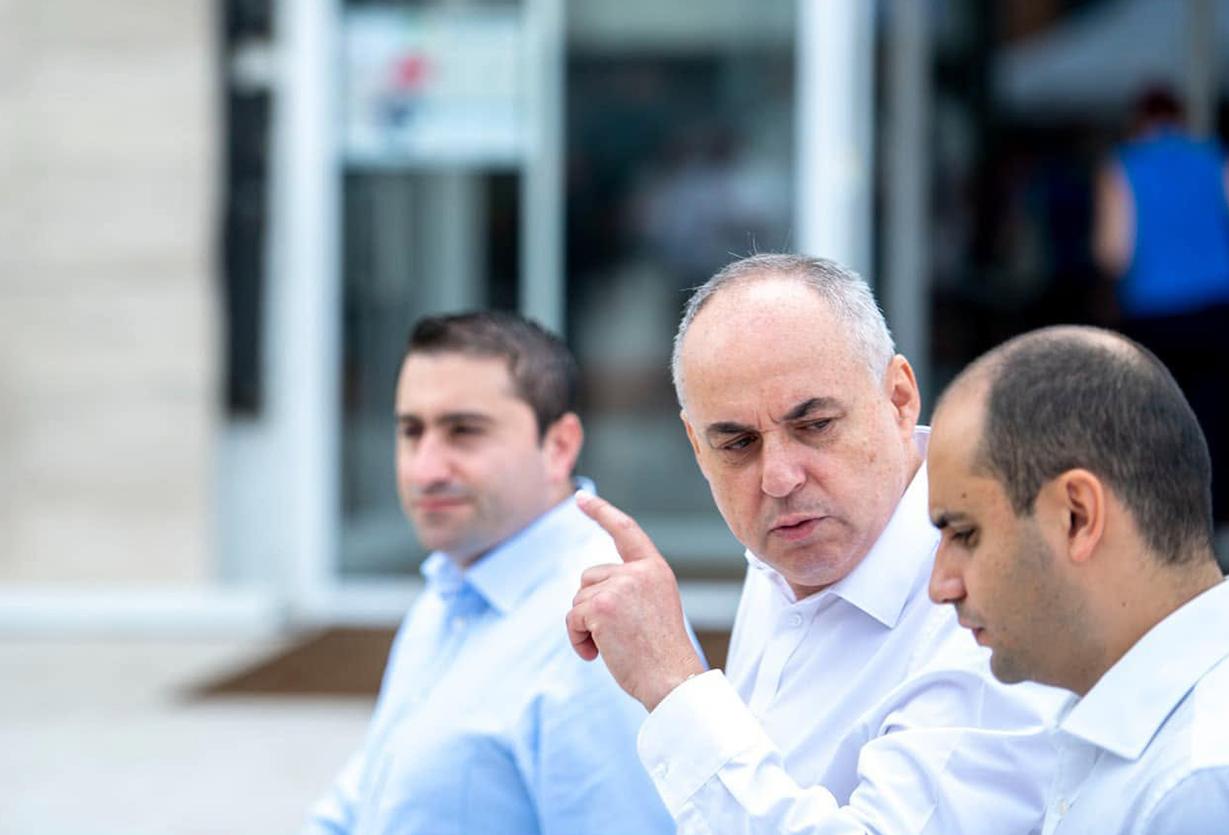 Clive Farrugia (right) alongside principal permanent secretary Tony Sultana. Photo: DOI/Jason Borg
According to his LinkedIn profile, Farrugia, who has a background in digital marketing, spent several years as a marketing manager at MITA, the state’s IT agency, before joining the central public administration. In his youth, he served as president of Pulse, the Labour-affiliated student political organisation.
Barred
Online political advertising has become a contentious issue in recent years, with EU lawmakers tightening rules around political adverts. The rules have led tech giants, including Google and Meta, to effectively bar political adverts on their platforms entirely. Nevertheless, political actors frequently get around the rules by not tagging their adverts as political.
The adverts posted by Farrugia throughout the recent campaign were not tagged as political adverts, as required by EU law. Instead, they appear to have been automatically tagged by Google at times as “news, books and publications” and, at others, as “travel and tourism” or “jobs and education”.
Questions have been sent to both Farrugia and principal permanent secretary Tony Sultana. Both were asked whether Farrugia had obtained permission to publish the adverts and whether doing so went against civil service rules on political impartiality.
Questions remained unanswered at the time of writing.