Our hopes for a brave new world now lie in ruins
With Russia advancing from the East and the United States asserting itself from the West, Europe must confront the question of its own role, says Mario de Marco
With the conclusion of the Cold War, there was widespread optimism that the world was finally on the brink of lasting peace. The dissolution of the Soviet Union paved the way for the rise of new democracies, and the advent of digital networks began to connect people across the globe.
The media revolution weaponised public opinion and helped to break down barriers and contributed to the fall of oppressive regimes. Even China, long a bastion of communism, embarked on a period of transformation, adopting free-market principles and rapidly emerging as a major economic force.
But our hopes for a brave new world now lie in ruins. Humanity reverted back to its default state of hostility and conflict, much to the satisfaction of those profiting from the arms industry. News headlines once again became dominated by stories of regional disputes and military interventions.
The two former superpowers, the United States and Russia, are referencing old enmities as justification for extending their influence around the world as they both start to assert control within their respective spheres, claiming it is necessary for their national security.
The lines between adversaries and allies have blurred, with former rivals now acting in concert when it suits their interests. Looking at the leadership in both the United States and Russia, one could be justified in feeling that there is seemingly little to distinguish between them, echoing Orwell’s depiction of indistinguishable characters in Animal Farm, even if today’s reality seems even closer to the dystopian world portrayed in his novel 1984, where hatred fuels society and alliances are shaped by whatever is expedient at the moment.
In this shifting geopolitical landscape, Europe faces a profound challenge. With Russia advancing from the East and the United States asserting itself from the West, Europe must confront the question of its own role. What steps can Europe take and what should it strive to achieve as the continent finds itself caught between these two powerful forces that are no longer counterbalancing each other?
What will Europe do if the United States invades or otherwise seeks to annex Greenland? What can Europe do if Russia keeps moving even further to regain additional parts of its former empire? These are closer to reality than they are to theoretical assumptions.
The sad reality is that Europe is politically weak. It lacks leadership and purpose. There can be no strength in unity when that unity is undermined by the divergent interests of the composite parts and by irrational fear.
Fear has always been part of the politicians’ arsenal but the advent of mass media has helped turn it into a weapon of mass destruction. History is replete with examples of fear being used to catapult the wrong politicians into power.
The last century was dominated by two world wars, with World War I being precipitated by a complex web of alliances and widespread paranoia, ultimately leading to a catastrophic conflict. Fast-forward 20 years, Adolf Hitler’s rise in 1930s Germany was fuelled by propaganda that exploited anxieties about economic hardship and external and mainly anti-Semitic threats. That same irrational fear is now being used again.
What will Europe do if the United States invades or otherwise seeks to annex Greenland?- Mario de Marco
We can either continue down this path of fear or we can look to the example set by our forefathers at the end of World War II, when they established the United Nations “to save succeeding generations from the scourge of war, which twice in our lifetime has brought untold sorrow to mankind”. They pledged “to practise tolerance and live together in peace with one another as good neighbours, and to unite our strength to maintain international peace and security, and to ensure, by the acceptance of principles and the institution of methods, that armed force shall not be used, save in the common interest”.
Despite the innate failures and historical shortcomings of the United Nations, it is time we reclaim the European spirit of unity and common interest that once inspired global cooperation and resist the divisive politics of fear.
Europe needs strong leadership. It needs to rediscover its purpose and political will. It needs to stand strong on its own two feet, unsupported by others who, ultimately, rightly or wrongly, will put their interest first and foremost. It is in the interest of other superpowers that Europe remains divided, and rest assured that they will be doing their utmost to ensure that the current divisions remain.
It is up to us Europeans to rekindle the enthusiasm for a strong unified Europe that offers a balancing influence beyond its frontiers.
My favourite quote from the Schuman Declaration that was the basis for the foundation of the European Union is the following: “World peace cannot be safeguarded without the making of creative efforts proportionate to the dangers which threaten it.”
In a world dominated by hate and fear, Europe has to become the beacon of hope and understanding. Europe and its leaders need to show unity, accept and embrace diversity and show the world that our highest common factor is our humanity, beyond our religion or country of birth.
More fundamentally, Europe needs to show that the bottom line of politics is not profit and empty political rhetoric but human advancement that looks beyond our individual little state sovereign interests.
Only then can Europe be a force to be reckoned with and try to change the current course of history with the hope for a better world.
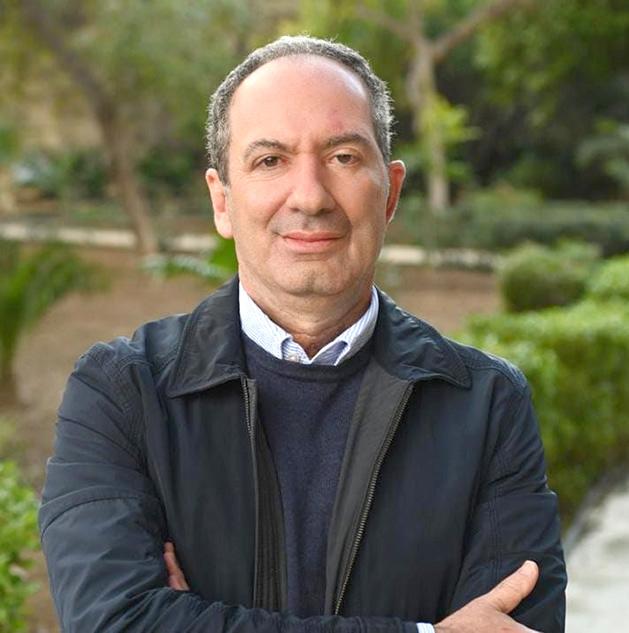
Mario de Marco is the PN’s spokesperson on tourism.