Shoreline director calls freezing order an ‘extortion attempt’
Contractor strongly disputes claims, rejects assertions it defaulted on its obligations
The director of the Shoreline retail and residential project at SmartCity has claimed that a €43 million freezing order obtained against his group of companies by the project’s Turkish contractor amounted to an “extortion attempt”.
In an interview with Times of Malta, Shoreline director Ryan Edward Otto claimed Koray Global Malta Limited (KGML) was using the garnishee order to delay the conclusion of legal proceedings he said would show the contractor owed his companies millions.
“It’s an extortion attempt; they’re purely trying to extort us to pay them something which is not due.”
Describing the contractor struggling with cash flow issues throughout the project, Otto said KGML had regularly demanded advances of €1 million to cover wage costs while threatening to delay the mall opening if he refused.
“I carried on increasing my advances to them, so that we could at least get the shopping mall open. They were two years late with the opening of the mall.”
The director also claimed KGML locked the doors to all residential units in an apartment block at the site in response to Shoreline cancelling its contract with the company, telling the group it would not return the keys unless it was paid some €50 million.
Contending that the project had been beset by delays, Otto claimed the contractor “didn’t finish one apartment,” and that Shoreline group had been forced to continue working on the residential blocks with new contractors.
Advocates representing KGML “strongly disputed” the claims, rejecting assertions it defaulted on its obligations and contending that Shoreline’s “financial difficulties” pre-dated the dispute, adding that “significant sums” were owed to the contractor.
‘They’re trying to delay’
Otto claimed the contractors owed Shoreline group €20 million, a figure he said had been confirmed by an independent assessment.
While Otto pledged in the interview to provide documentation he said would show the outstanding figure, Times of Malta had not received the documentation at the time of publication.
“They’re trying to do everything in their power to delay, delay, delay,” he said of the freezing order affecting five Shoreline-linked companies.
The order was the subject of media attention last month, when Shoreline Mall plc asked bondholders to give the company another two years to pay back a €14 million bond originally payable on August 1. Bondholders agreed to the request Wednesday.
‘We want it to be resolved’
Lawyers representing KGML have disputed that the arbitration was lodged in response to legal action opened by Shoreline. Both parties claim to have cancelled the contract for the project.
Otto said the contractor was “hurting us purposely, trying to get us to pay them something that is not due, and they’re using the system to their advantage... We want to move as quickly as possible, because we want it to be resolved”.
The director said he offered KGML a €44 million guarantee in properties at the site as security to avoid the need for a garnishee order, an offer the contractor refused.
Alleging a raft of project delays, the director added that if damages were not capped in the contract, they would have totalled some €120 million.
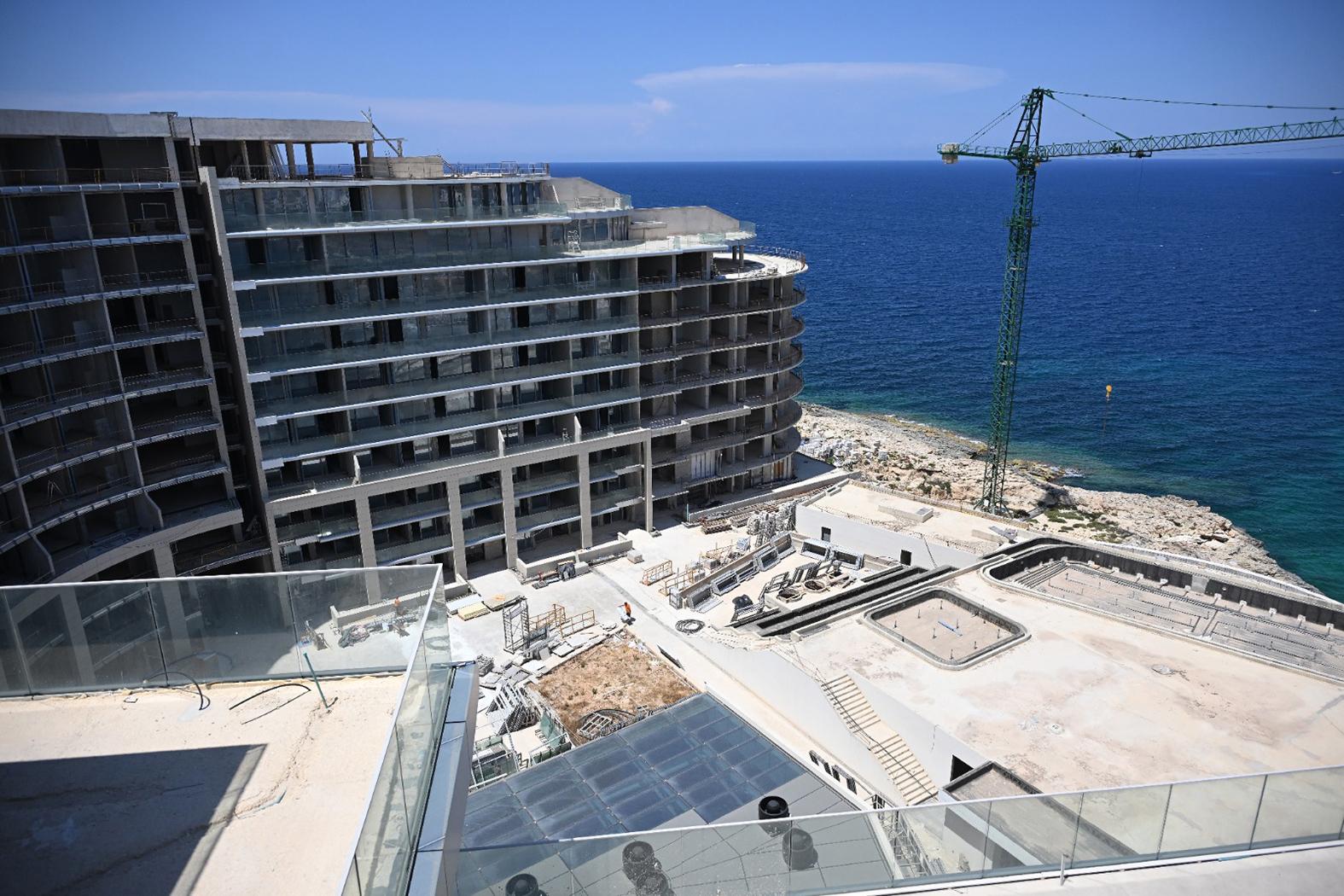 Otto said contractor KGML failed to finish a single apartment at the residential development.
‘Blatant attempt to prejudge dispute’
Advocates representing KGML described Otto’s claims as a “blatant attempt to ‘prejudge’ aspects of the dispute that are sub judice and bring them into the public domain”.
“KGML condemns these attempts to put pressure and/or influence the arbitrators or judges,” legal representatives said.
The contractor “strongly disputes” Otto’s characterisation of the garnishee order, they said, rejecting the suggestion that it constituted an abuse of process.
Noting that “multiple” challenges to the garnishee order by Shoreline had been unsuccessful, lawyers for the contractor said rental income from the project to date amounted to just over €500,000, “a relatively modest amount, substantially below the sums claimed by KGML”.
That income “does not support the contention that the garnishee order alone could account for Shoreline’s current financial position”. The project’s “financial difficulties”, predating the dispute, made continuing the project “impossible” and led to the contract’s termination.
“KGML also rejects any suggestion that it defaulted on its contractual obligations or acted in a manner prejudicial to the project”, the response read, stressing that, by contrast, the contractor accommodated requests to complete the mall before the residential units in a bid to generate rental income earlier than planned.
While declining to comment in detail on Otto’s claims of pre-payment or underpayment, the contractor said the amounts were not reflected in the arbitration claims and had not been proven.
Overseeing of payments by the project engineer would have made overpayments “impossible”, and an expert report commissioned by the tribunal concluded that “significant sums remain due to KGML”.
The contractor opposed the offer of securities in properties for several reasons, including concerns over the valuation of the properties.
Emphasising that two arbitration proceedings – one issued by each party – and separate legal proceedings remained ongoing, the contractor’s legal representatives said their client believed it important the matter be resolved privately.
Mall performance and moving to Malta
On the mall’s performance, Otto said: “The footfall keeps growing, turnovers keep growing, tenants are happy, and we’re building on our success year on year. It’s going very well.”
Describing the project having a “strong impact on the people of southern Malta,” he said brands typically hosted their flagship stores at the shopping complex. Clothing brand New Yorker recently launched at the mall, he said.
Turning away from the Shoreline project, the director and investor explained that he decided to move his family to Malta following a security incident in his native South Africa.
“Johannesburg is a tough background to grow up in, and as a result of poverty and historical imbalances, it’s a very violent background,” he said. “Unfortunately, my family was a victim of an incident, and since I had young children, it was a watershed moment to move”.
Otto became a Maltese citizen through the controversial and now defunct Individual Investor Programme (IIP), or “golden passport” scheme. While describing the scheme as a “good concept”, he said it was important to attract people intent on putting down genuine roots in the country.
What is next for him after Shoreline?
“I have other relatively small projects in Malta ... this [dispute] has really sucked the life out of me; the way that the system works, I think it’s not been very conducive to big projects”, he said.
“Being able to do smaller, manageable projects would probably be the way that I go in the future.”
The interview, which took place before Shoreline bondholders voted on the bond extension, has been edited for brevity.