Storm Harry moves to Sicily, leaving parts of eastern coast ‘unrecognisable’
Catania, Messina and other coastal towns hit hard as ANCI says island has been ‘struck to the core’
Storm Harry may have caused damage in Malta, but in Sicily, the level of destruction has left the island “unrecognisable”, according to the National Association of Italian Municipalities (ANCI).
With the storm having passed over Malta and Gozo earlier in the week, it then swept through Sicily, hitting the eastern coast particularly hard.
Areas familiar to Maltese, including Messina, Catania and Ragusa, were described as being “struck in their core” and transformed by what Sicilians are calling Cyclone Harry.
 Damage in Catania after the cyclone Photo: La Sicilia
"After what happened in the last few days, Sicily is unrecognisable,” ANCI president Paolo Amenta and secretary general Mario Emanuele Alvano said, commenting on the cyclone’s effects.
"Entire communities have been struck to the core, transformed, and in many cases disfigured in terms of their structure, their identity, and their historical connection to their surroundings."
ANCI highlighted several badly affected areas, including Messina, Catania, Syracuse and the smaller islands.
“On the economic and social level, in many municipalities, infrastructure and businesses have been wiped out, and entire productive sectors have been brought to their knees. Local economies will struggle to recover,” ANCI representatives said.
Meteorological data confirmed the storm’s severity.
“Cyclone Harry was the most violent in recent years. Not because of its maximum speed—in 2019, Novara di Sicilia reached peak speeds of 52.2m/s, now 36m/s. But it was violent because of the vastness of the Sicilian territory affected and its duration,” said Luigi Pasotti, director of the Sicilian Agrometeorological Service.
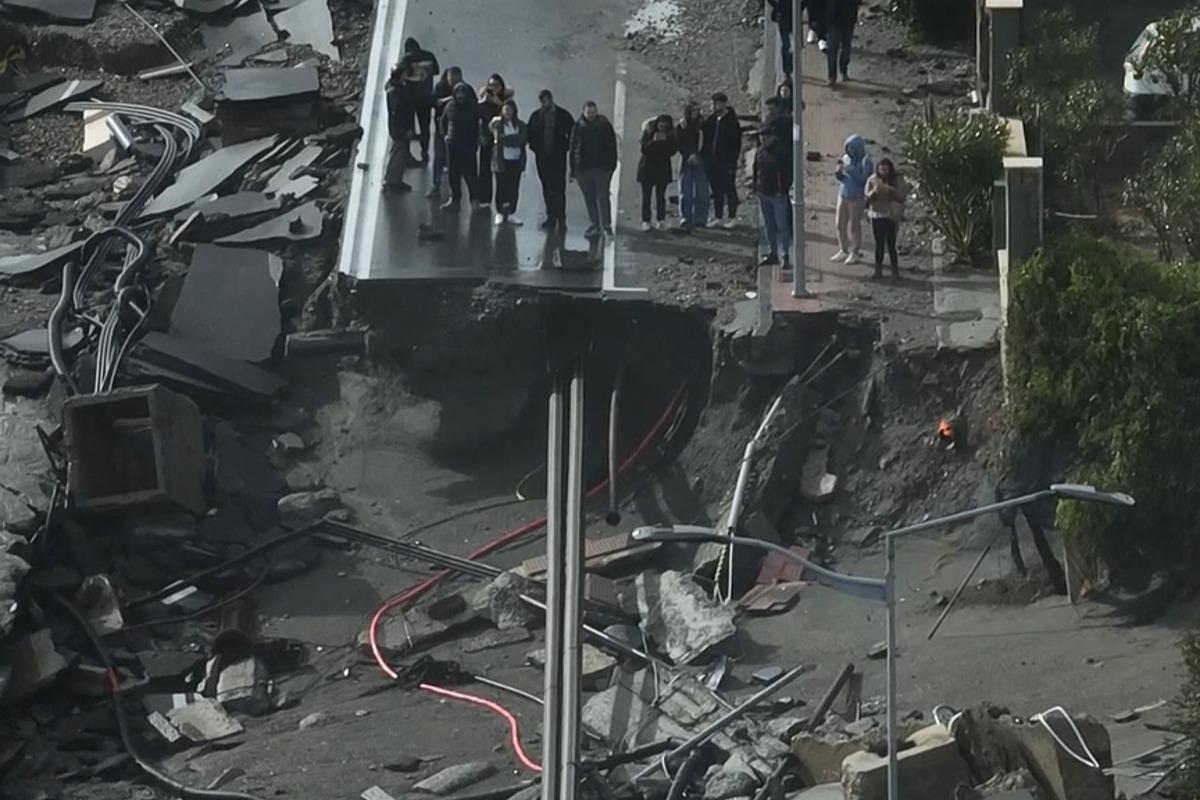 Roads and other infrastructure was badly damaged in many areas across Sicily. Photo: Weather and Radar International Social Media
Pasotti said the Sicilian Agrometeorological Information System, which has tracked wind speeds from 96 stations across the island since 2002, recorded new records at five of those stations.
These included Calascibetta (Enna) at 29.6m/s, Corleone (Palermo) at 24.2m/s, Castelvetrano (Trapani) at 20.5m/s, Sclafani Bagni at 20.4m/s and Canicattì (Agrigento) at 20.3m/s. Novara di Sicilia (Messina) was also affected.
“What characterised Cyclone Harry was its average daily speed,” said Pasotti.
He also noted that, at a regional level, January 20 was the windiest day recorded between 2002 and 2026, even when excluding Cyclone Athos in 2012.
Catania’s coastal areas were particularly hard hit.
Reuters reported dramatic scenes of waves crashing into a restaurant and flooding it.
According to Giornale di Sicilia, families had to be evacuated from homes near La Plaia beach due to flooding.
Transport infrastructure suffered significant damage. Meridio News reported that the railway network along the Ionian coast from Messina through Catania to Syracuse was heavily disrupted.
Riposto, a coastal town, was also hit hard, with debris hurled by powerful waves into streets and homes. La Sicilia described waves hitting the coastline "like giant hammers". “On the most critical night, entire families, with children clutched in their arms, were rescued by firefighters and volunteers as the water rose inexorably,” the paper reported.
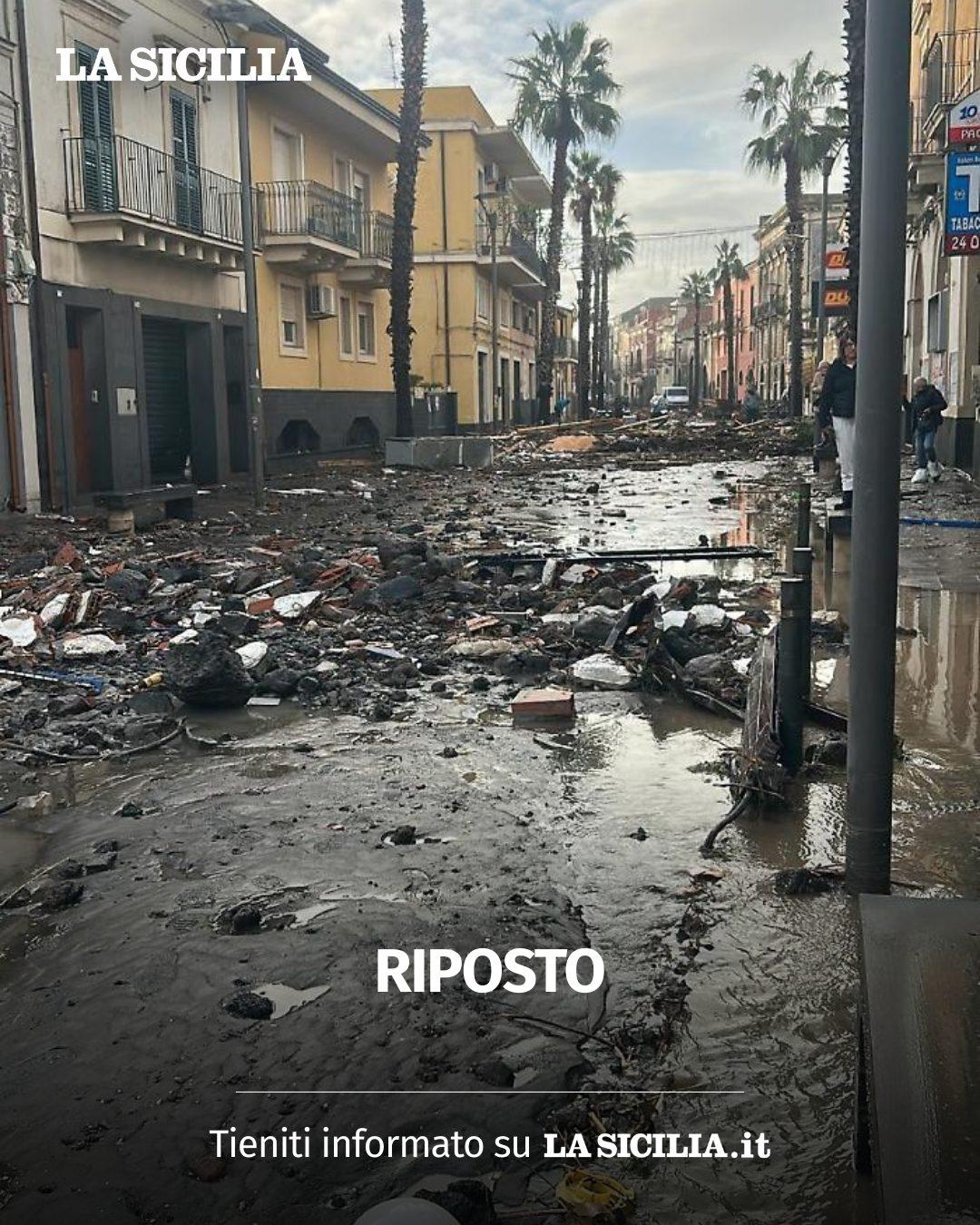 Damage in Riposto Photo:La Sicilia
In Santa Teresa di Riva, a small town in the Messina region, the damage is expected to cost €55 million to repair, according to its mayor. On the day he spoke to Giornale di Sicilia, he was still assisting with precautionary evacuations.
In Malta, while Storm Harry caused significant damage, it did not leave the same lasting impact as in Sicily.
Wind gusts reached over 100km/h, destroying farms, beaching fishing boats and smashing seaside restaurants.
Over more than 24 hours, trees came down, travel was disrupted and events were cancelled as the storm swept across the country, bringing strong winds and heavy rain.
One of the worst-hit areas was Għar Lapsi bay, which has been left unrecognisable.