Snapshots of invisible people
The book Ritratti mill-istorja offers a glance at a number of aspects of life on our islands as they were transitioning from an agricultural to an early industrial society
My book Ritratti mill-istorja consists of a series of snapshots of the daily lives of the Maltese over a century ago.
I make absolutely no claims of this being the history of our people in the first two decades of the 20th century. History is more than a series of snapshots of everyday life. But collecting these fragments is helpful in piecing together an era.
The historian Carlo Ginzburg explains the historical method he pioneered in microhistory: a whole “picture emerges only when occurrences are viewed as a whole and studied chronologically – when the many diverse incidents are pieced together and analysed day by day, if not hour by hour. Only then does the link between them become clear. I’m convinced that chronology, pure and simple, is one of the historian’s most powerful weapons. It may be treated with suspicion in modern historiography, but its critical efficacy is greater than many people realise.”
Ritratti mill-Istorja offers a glance at a number of aspects of life on our islands as they were transitioning from an agricultural to an early industrial society still serving as one of the largest naval and military bases of the British Empire.
At that time, only seven per cent of adult males had a vote while female adults had no vote at all. This book is about the thousands of anonymous persons – farmers, coal-heavers, beggars, cab drivers, babies and children, workers from overseas – who are usually invisible in our history books, especially those who narrate history as if it is made by ‘extraordinary’ and ‘great men’.
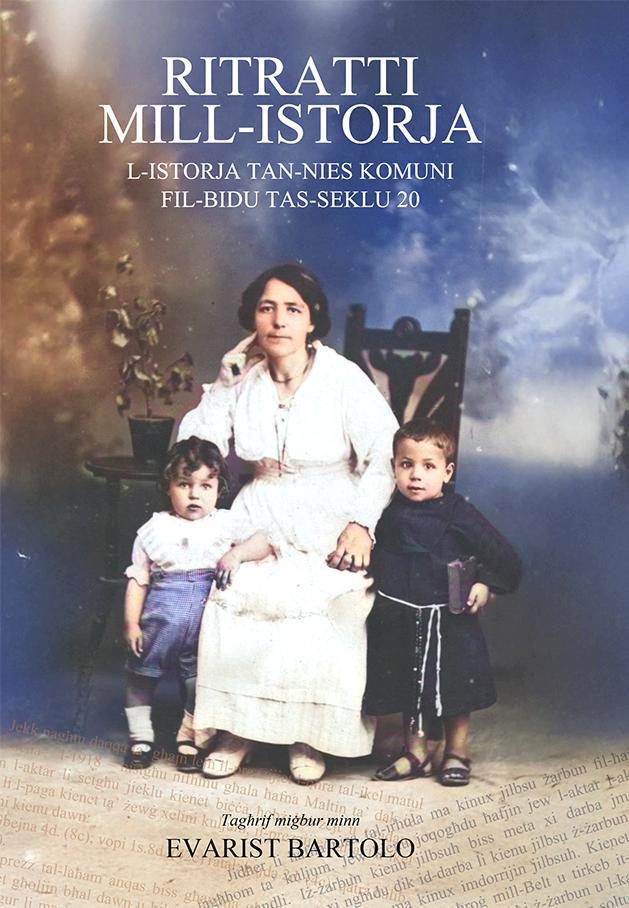 Evarist Bartolo's book Ritratti mill-istorja
Ritratti mill-istorja attempts to give us a feel of how life was on our islands a century ago. In 1918, more than half of the government employees earned €2.72 a week; €1.82 of that income had to be spent on bread, which cost 14c per rotolo. Families with five to seven children had to survive on a daily wage of 52c, provided the father was lucky enough to have a job. A sheep cheeselet cost 8c, an egg cost 4c and a drop of milk cost 2c.
The parish priests of Żejtun, Kalkara, Cospicua, Senglea and Valletta’s St Paul signed a petition to visiting British commissioners telling them that their parishioners were suffering hunger due to unemployment. They asked for protected local industries to be set up and a new system of taxation that did not exempt the rich.
Ashamed of being Maltese
On May 17, 1917, dockyard workers organised the first industrial strike in our country as prices had trebled while wages increased by only 10 per cent. The strike lasted for a week. A number of workers were arrested and thrown into prison. Finally, the dockyard workers were given a rise of 2c per day in subsidised bread for every child they had.
Forty per cent of the families lived in houses with two rooms or one, most of them with no windows. A newspaper article appeals to the police to stop the corpses of the poor from being carried in the main streets on planks for their burial as their families could not afford a coffin.
Infant mortality reached over 300 deaths per 1,000 births and midwives took the newborn to church for baptism immediately after birth. The father paid the priest a day’s wage. A noble family would have the baby arrive in church in a carriage drawn by two horses. The family would give the priest a silver jug and basin and a silk towel to use during the ceremony. The marquis poured perfume over the priest’s hand and then did the same to the congregation.
Families with five to seven children had to survive on a daily wage of 52c- Evarist Bartolo
Other snapshots show us the Maltese complaining of too many foreigners in Malta. At the time, out of a local population of around 200,000 there were 1,857 workers from overseas, 978 of them from Sicily who worked as actors, actresses, singers, maids, shop assistants, confectioners, midwives, tailors, barbers, shoemakers, carpenters and prostitutes.
A newspaper article in 1917 complains that Kingsway, South Street and Valletta City Gate were going to end up like certain notorious backstreets of Naples, Syracuse and Catania with so many prostitutes. Even local girls and women had no alternative to prostitution to bring some money home. Many others took to begging.
The police had strict instructions to clear the streets of beggars. Police superintendent Tancred Curmi in 1911 admitted: “The police cannot keep up with the number of beggars we have running around in our streets. Eighty per cent of them have no job and they tell us: I cannot find work. I would like to work but there are no jobs and I have a family to feed.”
Other issues mentioned in newspapers over a century ago sound familiar: the court system is very slow and expensive. The country is becoming so immoral and decadent: Il-Ħmar of May 3, 1919, reports that a foreign woman swam naked at Għar id-Dud and appealed to the police to take all necessary measures to clamp down on mixed and nude bathing.
Even though party politics had barely started, politicians are already being
attacked. Il-Ħmar of June 14, 1917, carries a satirical poem saying that, before, Maltese politicians were respected, wise and very clever. But nowadays they are people who have gone into politics because they are not good at doing anything else and they are like puffed up balloons and like flags and weather vanes changing direction depending on the prevailing wind.
Another newspaper carrying the insignia of the Order of St John on its banner Taħt dan is-Sinial Niccumbattu attacks those Maltese who have become more English than the English. It says they should be hanged for treason in St George’s Square as they are ashamed of being Maltese and want to erect a monument to King Edward VII, who was visiting Malta, instead of honouring local heroes like Mattew Callus and Mannarinu.
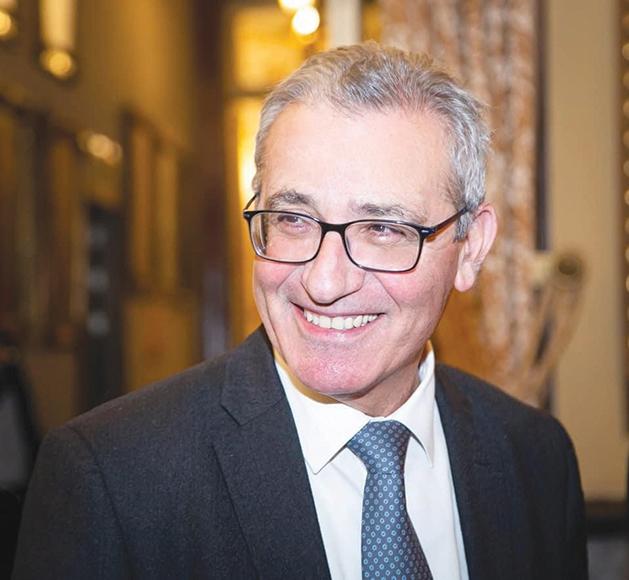
Evarist Bartolo is a former Labour education and foreign minister.