The sour grapes of public life
Disagreement with institutional decisions cannot be disguised as proof of dishonesty, writes Anġlu Farrugia
Kevin Cassar’s article, ‘You’re not fooling anybody’ (July 12) is built upon a convenient political formula: select a number of parliamentary decisions delivered over 13 years, remove each one from its legal and procedural setting, attribute an improper motive to the Speaker and then present the resulting accusation as an established fact.
Throughout my term as Speaker of the House of Representatives, I was required to decide questions concerning the interpretation of the Standing Orders, ministerial responsibility, the admissibility of parliamentary questions, requests for urgent debates, the jurisdiction of committees, the summoning of witnesses and the procedures governing the consideration of reports by the Commissioner for Standards in Public Life, and all these decisions were made according to the Standing Orders, precedents, including landmark constitutional judgments and rulings of the European Court of Human Rights.
Cassar cannot now replace that constitutional procedure with a newspaper column in which he appoints himself complainant, prosecutor and judge.
He repeatedly claims that I “saved” one person or another. That is not an argument. It is an allegation of motive, offered in place of evidence, and the repetition of familiar political narratives.
Cassar consistently ignores these studied rulings and bases his accusations on confusing procedural decisions with political judgements.
Cassar also refers to decisions involving reports of the Commissioner for Standards in Public Life. Yet, he does not distinguish between the commissioner’s investigative function, the committee’s statutory role, the powers available to the committee and the responsibilities of the person presiding over it. Nor does he properly address the constitutional nature of a casting vote. The Speaker does not have an original vote. However, when the votes are equally divided, the casting vote is applied and, whenever I exercised it, my decision was fully reasoned and explained, both factually and legally.
Cassar also refers to my evidence before the public inquiry into the assassination of Daphne Caruana Galizia, where I answered the questions placed before me, including also one name, although I had no other names to mention. Did he expect a witness to manufacture names?
As to my testimony before the public inquiry, when I stated that I had no other names to give, I was answering the question put to me truthfully. A witness is required to give evidence of facts within his knowledge, not to supply names by conjecture or to make accusations unsupported by evidence. To portray that answer as concealment is to invite speculation in place of testimony – an approach which no responsible lawyer, court or inquiry could accept. During my testimony, which lasted for more than an hour, not even one question was asked about Caruana Galizia.
In my recent interview with The Sunday Times of Malta, when asked about the arrest of Caruana Galizia at the time I was a police inspector, I answered questions concerning both her arrest, together with others, and the allegations she made regarding my conduct in the course of my duty.
When those allegations were subsequently published more than 20 years later, at the time when I contested the leadership of the Labour Party in 2003, I instituted criminal libel proceedings against her. The Court of Magistrates found in my favour and the Court of Criminal Appeal confirmed that judgment.
Kevin Cassar confuses procedural decisions with political judgements
Cassar saves his most personal passage for the matter of the opposition leader’s driver. A magisterial inquiry completely exonerated the driver of criminal wrongdoing. Yet, the fuel consumption of the same car subject to the inquiry decreased by nearly half.
Cassar is free to dislike my rulings. He is free to argue that another interpretation should have prevailed. He is not free, however, to transform disagreement into proof of dishonesty without producing the evidence required to support so serious an accusation.
The headline claims that I am “not fooling anybody”. Yet, the article itself asks the reader to accept motive without proof, guilt by association without legal reasoning and political suspicion without an examination of the parliamentary record.
Who, precisely, is expected to be fooled?
Parliamentary history should not be rewritten according to the resentments of the moment. The rulings remain on record and are all published for public consumption. The proceedings remain on record. The objections, where made, remain on record. So too does the absence of objections where no formal challenge was submitted. That record will endure long after the rhetoric of an opinion column has been forgotten.
Public life inevitably produces disappointment. Offices change hands. Political influence passes. Those who once expected events to follow their preferred course sometimes find it difficult to accept that institutions operate according to rules rather than personal expectations. But disappointment is not evidence, insinuation is not analysis and repetition does not convert an allegation into truth. Cassar’s article is not a judicial finding, a parliamentary determination or a reasoned examination of the Standing Orders. It is an expression of political grievance directed against decisions whose legal basis he has chosen not to confront.
There is a familiar name for grievance that survives after the opportunity for proper challenge has passed.
It is called the sour grapes of public life – because, in public life as in life itself, it is not how much one says that matters but whether what one says can survive the test of truth; those who cannot answer the record often attempt to drown it in noise.
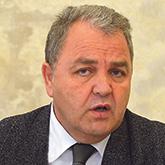
Anġlu Farrugia is a former Speaker of the House of Representatives.