St Aloysius primary completes landmark carbon footprint audit
Transportation of pupils is responsible for 61% of the school’s emissions
In a pioneering step for Malta’s education sector, the primary school of St Aloysius College has completed an extensive carbon footprint audit, positioning itself as a national leader in climate-conscious schooling.
Conducted in collaboration with the Jesuit European Social Centre (JESC), the audit revealed that the school generates 166 tonnes of carbon dioxide equivalent (tCO₂e) annually. The findings, presented in detailed executive and public reports, not only quantified emissions but also engaged the entire school community in a journey of ecological reflection and action.
The data confirmed what many suspected: transportation is the school’s largest source of emissions, responsible for 61% of the total. Of this, students commuting alone account for 38%, largely due to a reliance on private vehicles. In a country like Malta − where car dependency remains high − this result reflects both a national challenge and a local opportunity.
In response, the school is exploring the use of electric vans, improving carpooling systems and introducing initiatives to encourage cycling and walking. One modelled scenario estimated that switching to electric vans could cut emissions by 26%, a significant reduction for a single intervention.
But the audit was not just about emissions − it was also a deep reflection on how values, governance and education intersect with sustainability.
Rooted in the teachings of Laudato si’, the school sees climate action as a moral imperative, embedded in the daily life and ethos of its community. Catholic social teaching provides a unique ethical framework through which technical findings can be translated into practical and spiritual commitments.
One Year 6 student captured the spirit perfectly: ‘If we learn to take care of the Earth at school, we can do it anywhere
This initiative forms part of a broader European effort led by the Jesuit European Committee for Primary and Secondary Education (JECSE). Several Jesuit schools across Europe − including those in France, Ireland and Malta – took part in a shared pilot project under the JESC Carbon Initiative (JCI).
The triangulation of three pilot schools − Lycée privé Sainte-Geneviève in Versailles, France, Ensemble Scolaire Fénelon La Trinité in Lyon, France, and St Aloysius primary school in Balzan − provided a unique opportunity to gather comparative data, test shared methodologies and strengthen the educational and community impact of the audit process.
Together, the three schools engaged over 2,000 pupils, alongside teachers, staff and families, in a coordinated ecological transition journey.
As part of this project, JESC and JECSE co-hosted a public webinar on November 18, titled ‘Advancing Sustainability in Jesuit Schools – Designing the Ecological Transition as a Common Challenge’.
The event offered a behind-the-scenes look at how the three-school pilot unfolded, sharing insights, key challenges and lessons learned from each school.
Educators, Jesuit networks and partners across Europe were invited to attend and explore how ecological transformation can become a driver for educational renewal.
The report gathered input from students, teachers and families. An overwhelming 90% of students expressed a strong desire to learn more about nature, while 80% of staff and families rated the school’s commitment to sustainability as excellent.
Students identified outdoor learning and gardening as their favourite ways to connect with the environment, and parents encouraged more eco-activities both in and out of the classroom. Teachers proposed a shift towards paperless systems and renewable energy sourcing, with solar panels to remain a long-term aspiration.
Though the audit found the school in a strong position ethically and educationally, it identified room for improvement in formalising its sustainability governance. While environmental care is clearly embedded in the school’s identity, the lack of a structured sustainability strategy, monitoring cycle or designated eco-coordinator was flagged as a gap. Still, the school scored 68% in eco-governance overall − well above average for first-time audits.
What began as a technical audit has become a blueprint for transformation. St Aloysius primary is not only teaching sustainability − it is living it. In doing so, it reminds us that schools can be more than places of learning; they can be seeds of hope and change.
One Year 6 student captured the spirit perfectly: “If we learn to take care of the Earth at school, we can do it anywhere.”
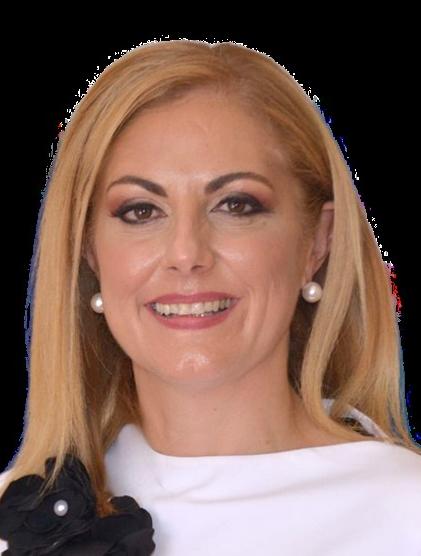
Maria Montebello is rector of St Aloysius College.