Stop treating Maltese as a second-class language
The central question is not which language to choose, but how to sustain both, writes Jacqueline Zammit
Write “becos” instead of “because”, and you will correct it instantly. Write “ax” instead of “għax”, or “żażuħ” instead of “żagħżugħ”, and it may pass without comment. That difference is telling. It suggests that Maltese is not always held to the same standard as English.
In Maltese, lapses are often excused. We tell ourselves we were in a hurry, forgot the “għ”, misplaced the “h”, or skipped the hyphen in the article, writing “il” instead of “il-”. It is treated as inconsequential. In English, however, there is usually a pause, a revision, a second look. We may know how to write Maltese correctly, but we do not always consider it worth the effort.
Part of this is reinforced by the digital tools we use. English is constantly corrected: spellcheckers underline errors, autocorrect reshapes sentences, and systems impose discipline. In Maltese, such support is limited or absent.
Messages are often sent without rereading or revision. Yet, the absence of correction should not justify carelessness. Over time, habit shapes perception. And perception can resemble hierarchy. A language treated casually may come to be trusted with less.
This issue surfaced in a recent discussion on Popolin about language and identity. Peppi Azzopardi argued that Maltese does not necessarily define identity, suggesting that in an interconnected world, we are better understood as global citizens. The argument is generous, emphasising shared humanity over division.
Yet, recognising the role of language in identity is not about exclusion but depth. Language carries memory, rhythm, humour, and ways of seeing the world that are not easily translated, as Ħaley Xuereb and Norbert Bugeja noted. One can belong to a wider world while remaining grounded in a specific place. A tree may extend its branches widely, but it still depends on its roots. Those roots do not confine it; they sustain it.
A related concern raised in the same discussion is that elements such as “għ” and “h”, inherited from Maltese’s Semitic roots and no longer always pronounced, complicate the language unnecessarily; as Peppi Azzopardi remarked, these letters could even be removed to simplify matters. Forms like “ax” may appear more convenient than “għax”.
But these features are integral to the structure of Maltese. As Doris Zammit pointed out, earlier generations learned not only how to include these consonants, but where to place them, and passed that knowledge on. The question is whether that attentiveness is being sustained now.
Maltese was never meant to be a language of convenience. It follows a Semitic system of consonantal roots, typically three or four consonants, which carry core meaning. Yet, in everyday digital writing, especially in messages, “għ” and “h” are often omitted, whether due to the absence of a Maltese keyboard or the inconvenience of typing diacritics. In such cases, the language is bent to fit the limits of our tools. But a language should not be reshaped by technology; technology should adapt to the language. Remove enough of its structural elements, and it may still function, but with diminished integrity.
Malta’s widespread use of English makes participation easy, but learning Maltese opens further layers of meaning and connection- Jacqueline Zammit
Languages are not only tools of communication but repositories of history. Reducing Maltese to convenience risks narrowing its expressive range. Historically, Maltese was confined largely to speech, often dismissed as a “kitchen language”, while Italian and later English dominated writing and administration.
It was only in 1934, under British rule, that Maltese gained official status alongside English, in what was something of a paradox: the Maltese language was elevated in part due to British concerns over Italian linguistic and cultural influence in Malta. Though Maltese endured, it was not always entrusted with authority. Echoes of that hierarchy remain. When Maltese is treated as informal or secondary, a similar division re-emerges: one language for precision, another for ease. Yet, Maltese is capable of complexity, abstraction, and nuance.
As Norbert Bugeja noted in the discussion, reducing language to its utility risks narrowing what it means to be educated. Language shapes thought, interpretation, and connection. Efficiency alone does not cultivate depth.
There is also a tendency to assume that what is foreign is superior, while what is local is merely sufficient. This perception is often subtle, but language reveals it clearly. Framing the issue as a choice between English and Maltese misses the point. Malta’s bilingualism is an asset. English connects us outward, offering access to global networks and opportunities. Maltese connects us inward, preserving cultural continuity and shared understanding. One extends reach; the other deepens it.
This balance also has implications for those who come to live and work in Malta. In countries such as Germany, France, and the Netherlands, learning the national language is seen as part of integration. Malta’s widespread use of English makes participation easy, but learning Maltese opens further layers of meaning and connection. As Sebastian Debono noted, a basic knowledge of Maltese is not a barrier, but a bridge. The issue is not the presence of foreign workers, but whether they are given the tools to engage fully with society. Encouraging both Maltese and English among foreigners would broaden communication. More importantly, it reflects confidence in Maltese as a living language to be used and shared in everyday settings.
The example of Yana Psaila illustrates this well. Having learned Maltese as an adult, she uses it with precision and care, sometimes exceeding native speakers who may take it for granted or fail to value it fully. Her work in translation and language learning has helped extend Maltese beyond its borders. Her position is clear: foreigners living in Malta should learn Maltese properly and make use of available resources.
This expectation, however, must begin internally. The future of Maltese will not be decided in debates, but in habits: how carefully it is written, how seriously it is treated, and how much it is expected to carry. Languages rarely disappear abruptly.
The central question is not which language to choose, but how to sustain both. Maltese and English are not in competition. Neglecting one does not strengthen the other; it diminishes both. And a society that allows one of its languages to recede risks losing not just a means of expression, but part of its capacity to think clearly, remember deeply, and express itself fully.
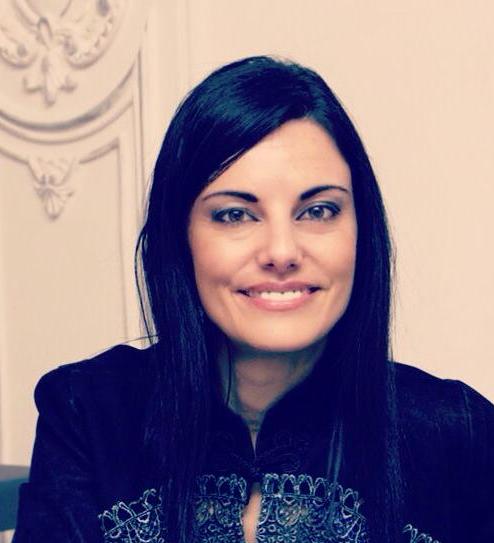
Jacqueline Zammit is a Senior Lecturer in Maltese, University of Malta.