Suicide: proactive prevention
According to the WHO over 700,000 deaths by suicide occur annually worldwide, making it the fourth leading cause of death among people aged 15-29, writes Mark Xuereb
People often ask why people die by suicide and whether we can predict it. These questions haunt loved ones and researchers alike. Until recently, it may have been impossible to give answers. Evolving research offers new hope to stem these tragic deaths. Globally, someone, somewhere, is continually losing this desperate battle every 40 seconds. This stark reality underscores why World Suicide Prevention Month (WSPM), commemorated on September 10, carries such profound significance.
The WHO’s latest statistics paint a sobering picture: over 700,000 deaths by suicide occur annually worldwide, making it the fourth leading cause of death among young people aged 15-29 (WHO, 2024). Yet, behind these numbers lies a story of remarkable scientific progress, as reflected in a decrease in suicide rates. We are getting better at talking about suicide, yet, more needs to be done. The International Association for Suicidology (IASP) reports that emerging diagnostic frameworks and prediction tools are transforming clinical practice, potentially saving countless lives (IASP, 2024).
At Oxford University’s Centre for Suicide Research, Prof. Seena Fazel spent years developing what many consider the future of suicide prevention. His pioneering work on risk assessment tools, including the innovative OxMIS and OxSET models, represents a paradigm shift from intuition-based clinical judgement to evidence-driven precision medicine. These sophisticated algorithms analyse multiple risk factors simultaneously, offering clinicians improved accuracy in identifying individuals at highest risk (Fazel et al., 2019).
Remember that suicide ravages generations,-hence the importance of identification.
His research, published in BMJ Mental Health, challenges long-standing criticisms of predictive models in suicide prevention (Fazel et al., 2024). His meta-analyses demonstrate that modern assessment tools achieve 90% accuracy in distinguishing between those at higher and lower suicide risk, a level of precision previously thought impossible in mental health. This breakthrough suggests we may finally possess the tools to identify those most vulnerable during crises.
The implications extend far beyond academic circles. On Wednesday, September 10, Prof. Fazel will present his latest findings at The Imperial, in Sliema, as part of Crisis Resolution Malta’s WSPM lecture. His presentation, ‘Advances in Suicide Assessment and Management’, promises to unveil cutting-edge research on psychotropic medication effectiveness and other therapies in suicide prevention – findings that could reshape treatment protocols globally.
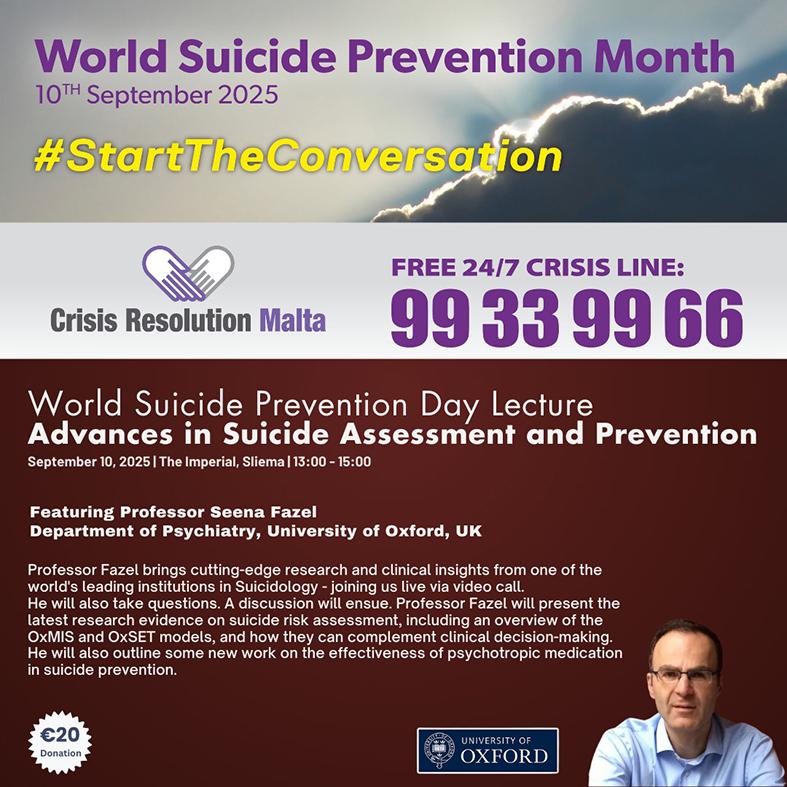 Seena Fazel’s lecture on Wednesday, September 10, is open to the public.
Equally transformative is the emerging concept of Suicide Crisis Syndrome (SCS) – a time-limited, groundbreaking diagnostic framework that captures the acute mental state preceding suicidal behaviour. Recent systematic reviews reveal that SCS, characterised by entrapment (that suffocating sense of being trapped with no escape route), affective disturbance, loss of cognitive control, hyperarousal and social withdrawal, provides clinicians with a specific target for intervention (Galynker, 2017). Unlike traditional diagnostic approaches that focus on underlying mental illness, SCS identifies the psychological constellation that precedes imminent danger, allowing resolution.
Studies reveal SCS as a reliable cross-cultural predictor of suicidal behaviour, bearing 83-95% accuracy (Rogers et al., 2023). Importantly, emergency departments implementing SCS assessments report significant reductions in three-month readmission rates.
Critically, COVID-19 has amplified suicide risk factors globally, with social isolation, economic uncertainty and healthcare disruption creating unprecedented challenges.
Globally, someone, somewhere, is continually losing this desperate battle every 40 seconds- Mark Xuereb
Traditional approaches, while valuable, often prove insufficient for identifying suicidality. The new diagnostic frameworks and prediction tools offer precision instruments for navigating this complex landscape.
Yet, perhaps most encouraging is the emphasis on conversation – this year’s campaign theme, ‘#StartTheConversation’. Research consistently demonstrates that open dialogue about suicide reduces risk rather than increasing it (Burnette et al., 2015). When combined with sophisticated assessment tools and targeted interventions, these conversations become powerful therapeutic instruments.
Prof. Fazel’s work exemplifies how rigorous science can transform clinical practice. His Oxford team’s research on risk stratification demonstrates that we need not accept suicide as inevitable. Instead, we can identify vulnerable individuals, understand their specific risk profiles and intervene with improved precision. This represents a fundamental shift from generic mental health treatment to suicide-specific therapeutic interventions.
His lecture – open to all – offers evidence-based practical tools, glimpsing the future of suicide prevention to save lives based on solid, fresh evidence.
This transformation from reactive to proactive suicide prevention marks a watershed moment in mental healthcare. We’re blending crisis response with prevention, armed with diagnostic precision and therapeutic specificity previously unimaginable.
The conversation about suicide prevention must continue beyond WSPM. Our national strategy needs more stakeholder input, collaboration between mental health services and input from all ministries as per WHO guidance. Conspicuously absent are dedicated Offices for Suicide Prevention to spearhead research, campaigns, signposting and surveillance of hotspots etc. Be very vigilant for copycat behaviours when public figures die by suicide or on suicide anniversaries. Light a candle for them.
With scientists leading the charge, armed with sophisticated tools and deepening understanding, there’s genuine reason for hope. Every conversation started, every risk assessment completed and every intervention delivered brings us closer to a world where suicide becomes increasingly preventable. The battle against suicide remains challenging, but we’re no longer fighting blind and we are determined.
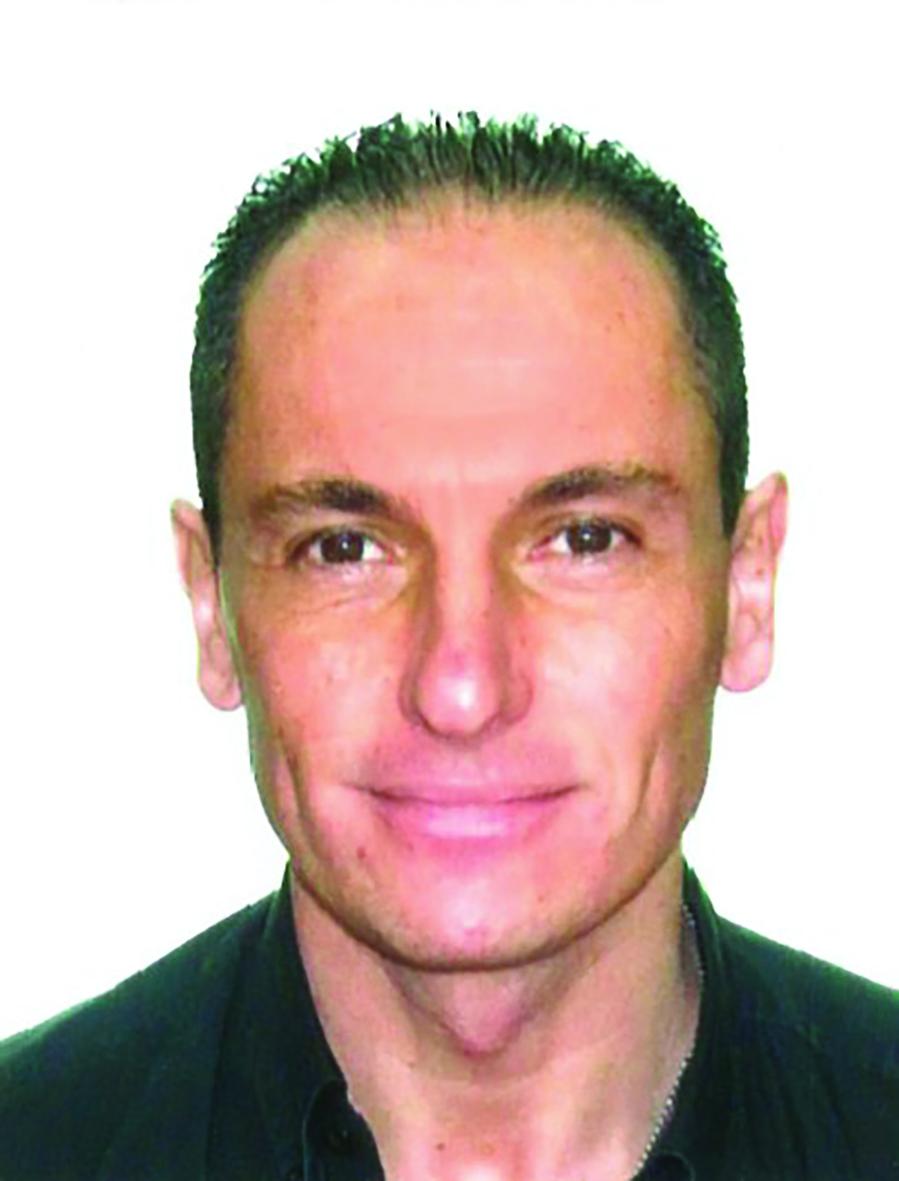
Mark Xuereb is a crisis psychiatrist who leads Malta’s Crisis Team.