He survived the Titanic tragedy, only to meet an untimely death in Malta
Allen Marden Baggott now lies in an unmarked grave in Ta’ Braxia.
In 1921, a British sailor suddenly took ill while his ship was docked in Grand Harbour.
He was taken ashore after suffering a seizure and died on his way to the hospital.
But Allen Marden Baggott’s life had nearly ended nine years before, because he had survived the sinking of RMS Titanic.
Baggott was from Middlesex in England and lived in Southampton with his wife, Hannah. The couple had six children, although two did not survive infancy.
An experienced seaman, he had previously served aboard the RMS Oceanic, a famous White Star Line ocean liner known as the “Ship of the Century”.
At more than 17,000 tons, it was the world’s largest ship when it was launched in 1899.
That title was later taken by RMS Titanic, which weighed more than 46,000 tons.
This luxurious and groundbreaking ship, the largest man-made moving object in the world, was preparing for her maiden voyage in April 1912, from Southampton to New York.
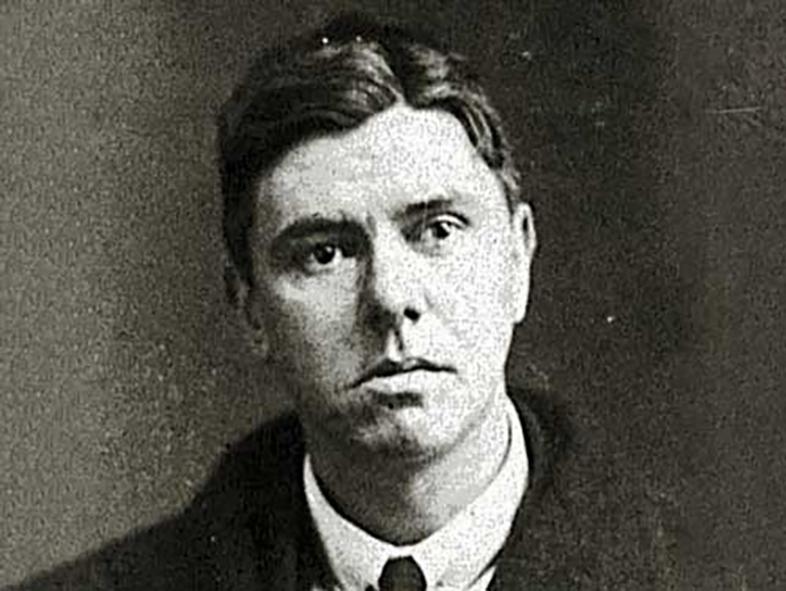 Allen was an experienced seaman.
According to the Encyclopedia Titanica, Baggott had previously worked as a chief steward but signed up to work on the Titanic as a first class steward on April 4.
These were senior crew members responsible for maintaining the luxurious standards found on the Titanic. They provided a personalised service, including making beds, managing luggage and handling requests made by high-end passengers.
There were many of these aboard the Titanic’s maiden voyage, which included real estate tycoon John Jacob Astor IV, American businessman Benjamin Guggenheim, and Isidor Straus, owner of Macy’s department store.
Also aboard were George Dunton Widener, who was a prominent Philadelphia streetcar magnate, and Margaret ‘Molly’ Brown, an American socialite and philanthropist.
Little wonder that the ship’s nickname was the “Millionaire’s Special”.
Baggott went aboard the Titanic at 6am on April 10, 1912. The ship set sail from Southampton the same day, carrying both its fabulously wealthy passengers and hundreds of people from across Europe.
These second- and third-class passengers were looking to start a new life in the United States.
Tragically, the ship hit an iceberg and sank quickly at 2.20am on April 15, with the loss of about 1,500 lives. Many of these were the crew, of whom about 700 perished at sea.
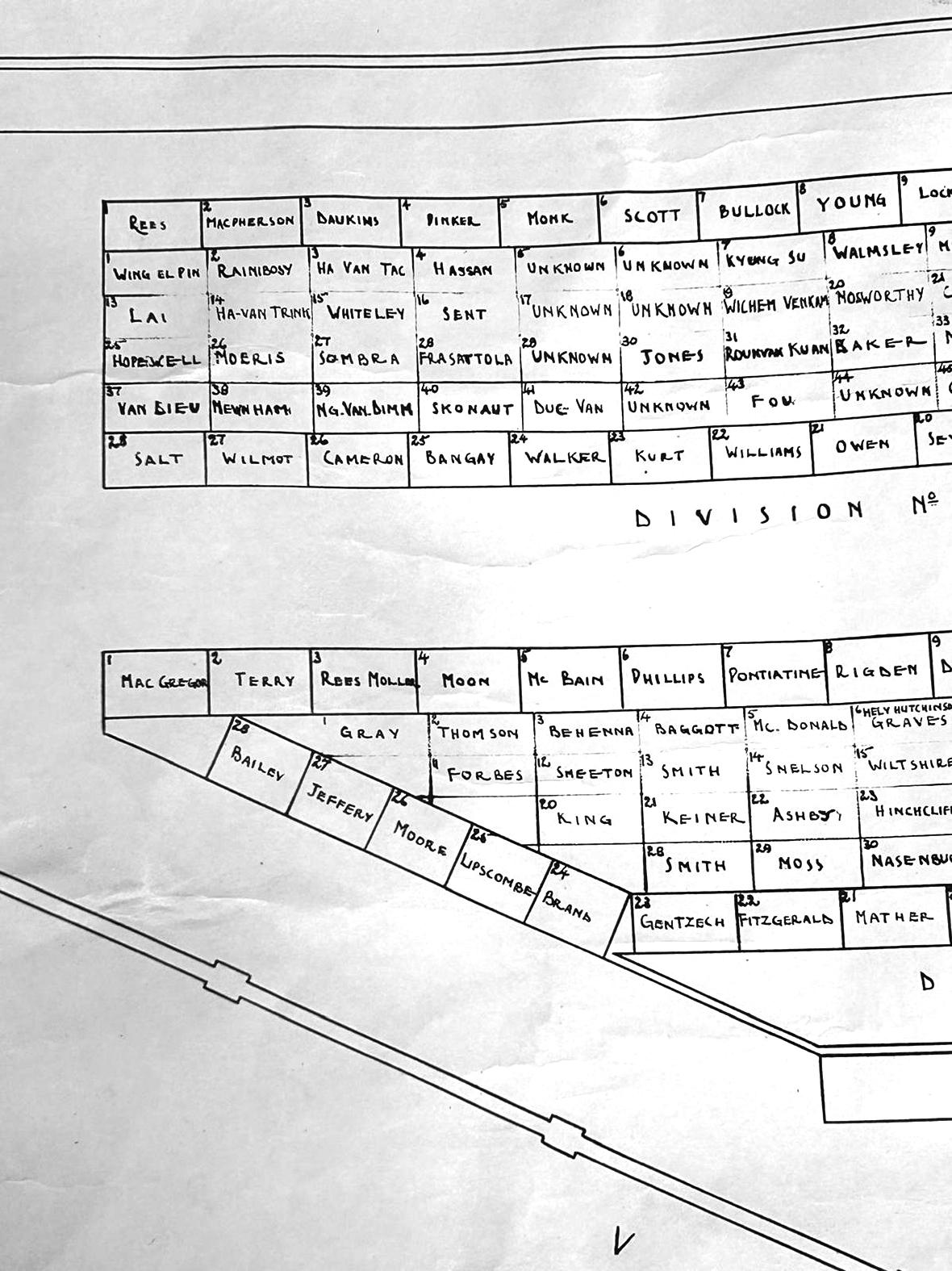 Map of the Titanic grave.
But not Baggott, who managed to get aboard lifeboat number nine, which is said to have allowed men to get aboard once no more women were seen in that part of the deck.
That lifeboat, which is thought to have not been at its full 65-person capacity, was picked up hours later by the RMS Carpathia, which had heroically steamed to the Titanic’s last known position and managed to find some survivors.
Following his rescue, Baggott returned to Southampton and restarted his sea-faring career. He had no official support to help him process the trauma of seeing and hearing hundreds of people freeze to death around him in the icy waters of the Atlantic.
By the early 1920s, Baggott was serving on the RFA Perthshire, part of the Royal Fleet Auxiliary, which provided logistical support for Britain’s Royal Navy.
But by now, Baggott was drinking heavily and repeatedly getting into trouble aboard his ship. The Perthshire’s log records numerous incidents of his drunken and disorderly behaviour.
We can only speculate, but it seems likely Baggott was deeply traumatised, and that the horrors of the Titanic’s sinking had scarred him so much that being drunk was his way of escaping what he’d seen and heard that night.
He also lived in an era where post-traumatic stress disorder was not fully understood or even recognised by doctors.
In November 1920, while in Constantinople, he reported for duty at a British naval base in a drunken state. He was detained for three days, then returned to the Perthshire.
This ship, with Baggott aboard, docked in Grand Harbour early in 1921, and it was on February 15 that the seaman had a seizure, collapsed and died while he was being transported to a naval hospital. He was buried on February 21 in Ta’ Braxia Cemetery in Pietà.
Alexander Welsh, the president of the Friends of Ta’ Braxia, said Baggott’s story had been discovered by the group’s volunteers “a long time ago”.
“We found out about him as part of our long-term project to write biographies of all those buried in the cemetery, which is still ongoing. I was surprised to learn his story, but there are many surprises in Ta’ Braxia.”
Welsh said he felt sorry for Baggott.
“He became an alcoholic and died in reduced circumstances, but if he hadn’t been on the Titanic, then he might have otherwise had quite a good career.”
Baggott was just 36 when he died and can perhaps be seen as another victim of the sad story of the Titanic.
He now rests in an unmarked grave, covered in grass, in a quiet corner of Ta’ Braxia.
Mario Cacciottolo is a tourist guide who runs Dark Malta Tours.