Technology is no longer an IT issue
The future of business depends on technology leadership, writes Nick Spiteri Paris
During a recent information session at The Malta Chamber of Commerce, in collaboration with BMIT, titled ‘When IT Fails, Business Stops’, one message emerged with remarkable clarity: technology is no longer simply supporting the business, it is increasingly becoming the business itself.
For today’s leaders, perhaps the most important question is also the simplest: If our systems stopped for just a few minutes, what would happen to our customers? If the answer is that trading would come to a halt, then technology has evolved far beyond a support function. It now sits at the very centre of an organisation’s operating model and competitive advantage.
The greatest risk facing many organisations today is not outdated software, ageing infrastructure or a lack of digital tools. It is leadership that continues to view technology as someone else’s responsibility.
For too long, technology has been delegated to the IT department while leadership focused primarily on financial performance. That distinction no longer exists. Technology now shapes customer experience, operational resilience, employee productivity, decision-making and long-term growth. As a result, every leadership team must regard digital capability as a core strategic responsibility.
Leadership has always been measured by an organisation’s ability to deliver results. Yet its true test lies not in how well a business performs today, but in how well it is prepared for tomorrow. Business leaders’ responsibility extends beyond delivering quarterly targets, it is about building organisations that are resilient enough to withstand disruption, agile enough to embrace change, and innovative enough to remain competitive in an increasingly digital economy.
I have always viewed this responsibility through three interconnected lenses: protecting business continuity, driving sustainable growth and future-proofing the organisation. Today, artificial intelligence has become the common thread running through each of these priorities. It is no longer simply another technological advancement; it is one of the defining leadership challenges of our time.
AI is no longer an IT topic. It is a leadership imperative. This does not mean every business leader or business owner needs to become a technology specialist. It does, however, require leaders to ask better questions, challenge assumptions and understand how technology enables strategy, strengthens competitiveness and creates value.
One of the most common mistakes organisations make is attempting to digitise everything at once. Every business has countless ideas, but only a handful will genuinely transform performance or deliver meaningful returns.
Successful digital transformation is rarely about doing more. It is about identifying the one problem that matters most and solving it exceptionally well before moving on to the next.
If stock visibility is your biggest operational challenge, start there. If delayed reporting slows decision-making, solve that first. If inconsistent customer experience is limiting growth, invest there. Technology should remove friction, simplify complexity and enable better decisions, not create additional layers of process.
Cybersecurity offers perhaps the clearest illustration of why technology has become a boardroom issue.
We often imagine cyberattacks as sophisticated operations carried out by highly skilled hackers. The reality is usually far more ordinary and therefore far more dangerous. Many attacks begin with a single e-mail, one compromised password or one employee clicking the wrong link.
Within hours, the conversation is no longer about servers or software. It becomes a discussion about customers who cannot be served, suppliers who cannot be paid, payroll that cannot be processed, regulatory obligations, reputational damage and, ultimately, whether the business can continue operating.
A cyber incident is not an IT crisis. It is a business continuity crisis. Technology alone, however, will never eliminate cyber risk. Culture remains the strongest firewall any organisation can build. Employees who feel empowered, informed and confident enough to question suspicious activity provide a level of protection that no software can replicate.
Interestingly, the greatest obstacle to stronger cybersecurity is often not financial. It is prioritisation. Too many businesses believe cybersecurity is something they will invest in once they become larger or more established. Ironically, by the time they recognise its importance, they are often responding to an incident that could have been prevented.
Cybersecurity should not be viewed as an insurance policy that sits on the shelf until disaster strikes. It should be regarded as business hygiene, no different from locking the office door at the end of each day.
Funding, both local and EU-based, certainly has an important role to play. As a member of the Council of The Malta Chamber of Commerce, I strongly believe we must continue advocating for simpler funding mechanisms, greater awareness and less bureaucracy so that businesses are encouraged to invest earlier rather than later. Yet transformation rarely begins with grants. It begins with mindset.
The organisations that adapt fastest are not always those with the largest budgets. More often, they are those led by people who are willing to challenge established ways of working, embrace change and invest consistently in capability.
When asked where organisations with limited resources should invest first, many expect the answer to be technology. My answer is different. The greatest investment any organisation can make is in its people.
Technology, regardless of how sophisticated it becomes, is only as effective as the people who lead it, embrace it and use it to create value. Strong leadership, capable teams and a culture of continuous learning will always generate a greater return than technology alone. Technology is, in many ways, an amplifier.
In a high-performing organisation, it accelerates innovation, collaboration and growth. In a poorly led organisation, it simply magnifies existing inefficiencies. Artificial intelligence demonstrates this more clearly than anything before it. The organisations gaining the greatest advantage are not necessarily those spending the most on technology, but those investing the most in developing the people who use it.
There is understandable excitement surrounding AI, but we should remain clear about its purpose. Artificial intelligence should never replace the uniquely human qualities that define exceptional organisations. Its greatest value lies in removing repetitive tasks, automating routine administration and delivering faster insights, allowing people to spend more time exercising judgement, building relationships, coaching colleagues, solving problems and serving customers.
Technology matters. Cybersecurity matters. Artificial intelligence matters. But culture determines whether organisations are capable of benefiting from all three. Leadership has never been about having every answer. It has always been about asking the right questions, making the right decisions and creating the conditions for others to succeed.
Over the next decade, the organisations that thrive will not necessarily be the biggest or even the most technologically advanced. They will be those that learn faster than their competitors, adapt more confidently to change and build cultures where technology, people and purpose reinforce one another.
Technology is no longer a department. It is no longer a support function. It is one of the defining responsibilities of modern leadership.
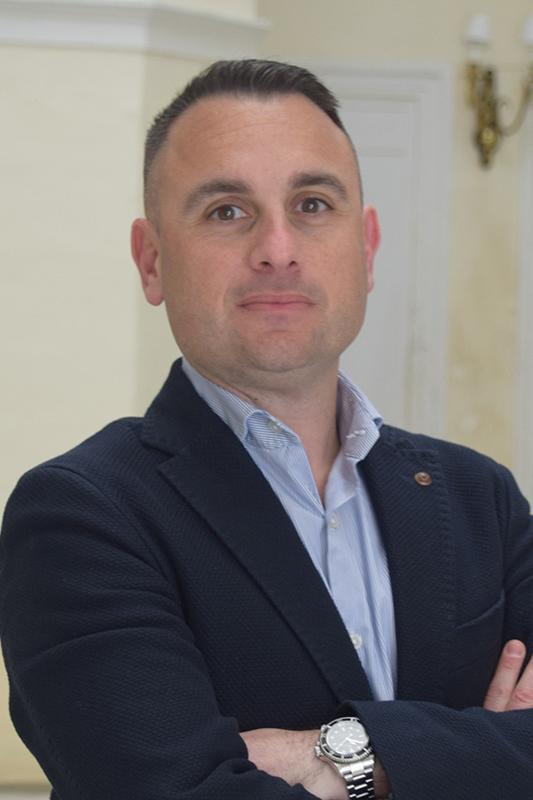
Nick Spiteri Paris is a council member of The Malta Chamber of Commerce, Enterprise and Industry.