The impact of French rule on Mellieħa
Mellieħa witnessed intriguing episodes related to the French arrival and influence on the island
Ridley Scott’s 2023 epic Napoleon reignited global interest in the French general and statesman, particularly in Malta, which had served as a historical backdrop for the film.
Despite being long gone, Napoleon continues to stir controversy to this day. Opinions about him remain divided – hailed by some as a military genius and the architect of modern Europe, while condemned by others as a dictator, a tyrant and a murderer. The French occupation of the island also remains contentious locally.
From the outset, the French administration plundered numerous Maltese treasures, including the Treasury’s funds, sparking an uprising. The Maltese revolted against the French, confining them to the cities around the Grand Harbour for nearly two years, until finally ousting them with British assistance. During those two years, countless lives perished – not only in battle but even more so due to starvation and disease. Hence, many Maltese view Napoleon and the French occupation as a dark chapter in their history.
Yet others do not view French rule of the island as entirely dark. Napoleon issued several orders in Malta, including establishing 15 primary schools, ensuring legal equality, abolishing slavery, dissolving the Inquisition Tribunal and creating a government commission, which, remarkably for that time, even included Maltese members. These measures aimed to modernise Malta.
Analysing the pros and cons of French rule lies beyond the scope of this article. Instead, it delves into some of the key events linked with Mellieħa during the French occupation of Malta. Although far from the Grand Harbour area and Mdina – where the most significant events unfolded – Mellieħa also witnessed intriguing episodes related to the French arrival and influence on the island.
The French Invasion and Mellieħa
As the French fleet advanced towards Egypt, it first had to invade Malta – a conquest Napoleon had been contemplating for at least a year. He believed that controlling the islands of San Pietro (near Sardinia), Corfu and Malta would ensure French dominance over the Mediterranean.
On June 8, 1798, an overwhelming armada of French warships stretched across the horizon from Gozo to Marsaxlokk Bay, heralding a new chapter in Maltese history. Aboard the flagship Orient, Napoleon ordered his generals to execute the invasion of Malta in the early hours of June 10.
The French troops were to land at four key locations: General Reynier’s troops were assigned to invade Gozo; General Baraguey D’Hilliers was tasked with landing troops at either ‘Vielle-Salines’ (Mellieħa Bay) or St Paul’s Bay; General Vaubois’s troops were tasked with capturing St Julian’s and its surrounding areas; while General Desaix and his men were to land at Marsaxlokk.
The exact location of the invasion of northern Malta remains uncertain
After landing in northern Malta, D’Hilliers’s troops were to swiftly seize the coastal batteries and watchtowers, to ensure a safe landing for the rest of the army. Meanwhile, the French soldiers needed to find a freshwater source to refill their barrels before proceeding to Egypt.
The exact location of the invasion of northern Malta remains uncertain. A map titled Plan du Débarquement de l’armée Française à Malte shows D’Hilliers’s fleet surrounding the shores of Selmun and Mistra. However, this rugged coastline, with its cliffs and small bays, would have made landing here difficult. The sole advantage of disembarking in this area was that it was defended only by Għajn Ħadid Tower and Mistra Battery.
Although the abovementioned map indicates otherwise, Napoleon’s official report to the French executive directory stated that the ships under D’Hilliers landed their troops at St Paul’s Bay, without any mention of Mellieħa.
Late on June 10, D’Hilliers reported to Napoleon the successful capture of the batteries and fortifications guarding St Paul’s Bay and Mellieħa. His forces seized several cannons, ammunition and three Maltese standards.
Despite the Maltese soldiers’ determined resistance, they were outmatched and forced to surrender. A total of 147 Maltese soldiers, along with three knights, were taken prisoners. Among the captured knights were St Simon, responsible for the Red Tower, and De Bizier, entrusted with defending Mellieħa. Their capture suggests that the French troops either launched a land assault on Mellieħa or possibly disembarked at Mellieħa Bay as well.
While the three knights remained in captivity, the Maltese prisoners were freed and allowed to return to their families. However, this initial act of mercy towards the Maltese was short-lived.
A petition to the British government submitted by Rosario Micallef in 1827 recounts how French soldiers stole clover from his fields near Mellieħa during the invasion. When he tried to stop them, they threatened to shoot him.
Another account tells of a farmer at Għajn Żejtuna attacked for the silver buttons on his waistcoat.
A notable report from Mellieħa’s parish archives, dated September 1802, describes how French troops ransacked the sanctuary’s donation box upon landing in Mellieħa. Though the handwriting is difficult to decipher, research by Ġanni Mifsud suggests that the box ‘fu rovinata’ (was damaged) by French soldiers during the 1798 invasion and repaired around 1800. Afterwards, the rector changed the practice of opening it yearly, opting for monthly recordings instead.
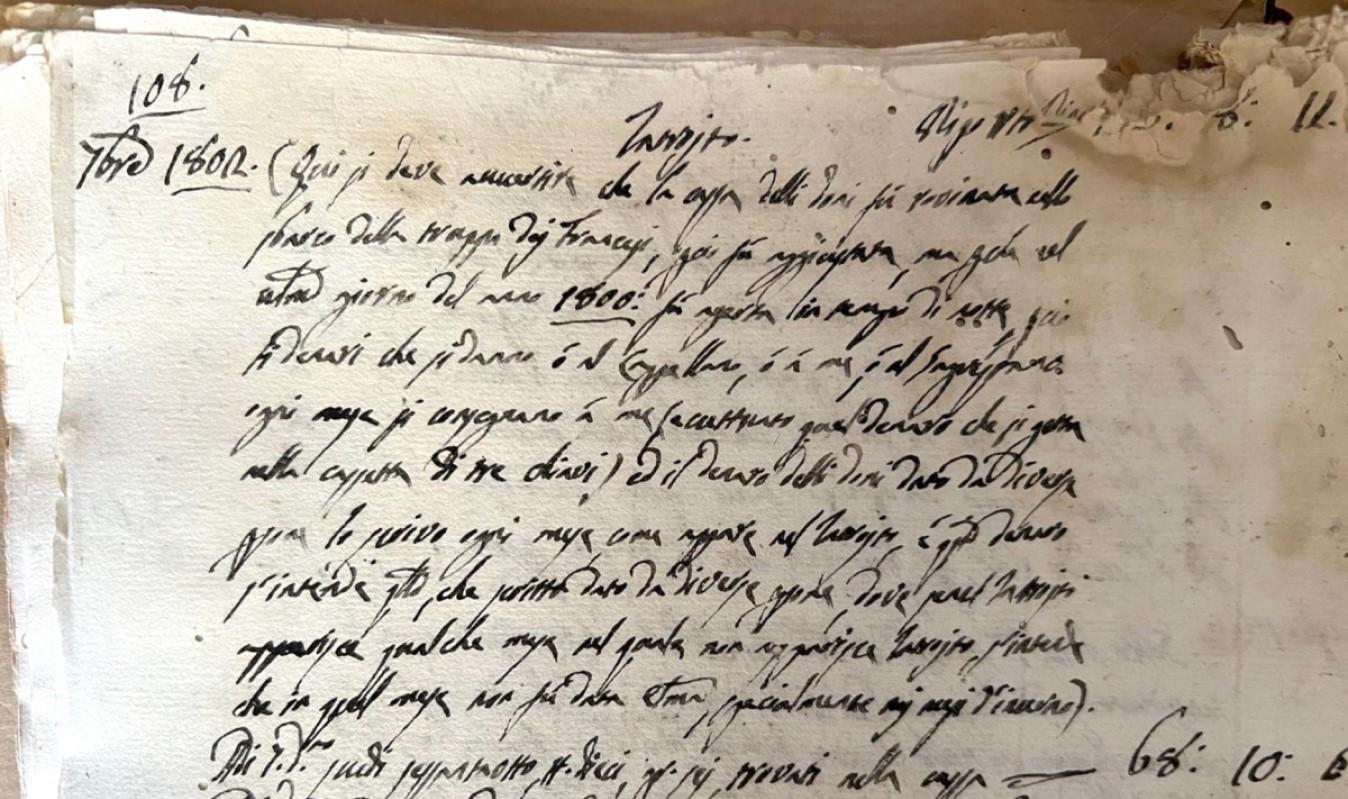 Part of an 1802 document from Mellieħa’s parish archives recounting how French troops broke open the offering box at the Sanctuary during their landing in Mellieħa. Photo: APM, Libro Viii, Page 108
In his 1838 book Description of Malta and Gozo, George Percy Badger recounts a sacristan’s claim that French troops decapitated three statues in the Grotta della Madonna. Research by Jimmy Muscat shows that these statues had lost their heads long before 1798. Records from the sanctuary of Our Lady of Mellieħa reveal that in 1614, the Turks landed at Għadira, beheaded the statues and attempted to deface the image of Our Lady of Mellieħa.
It seems that while the sacristan may not have been well-informed of the true perpetrators behind this act of vandalism, the lingering resentment towards the French occupation still influenced such accounts. Though the French had departed 38 years earlier, they were still blamed for misdeeds they had not committed.
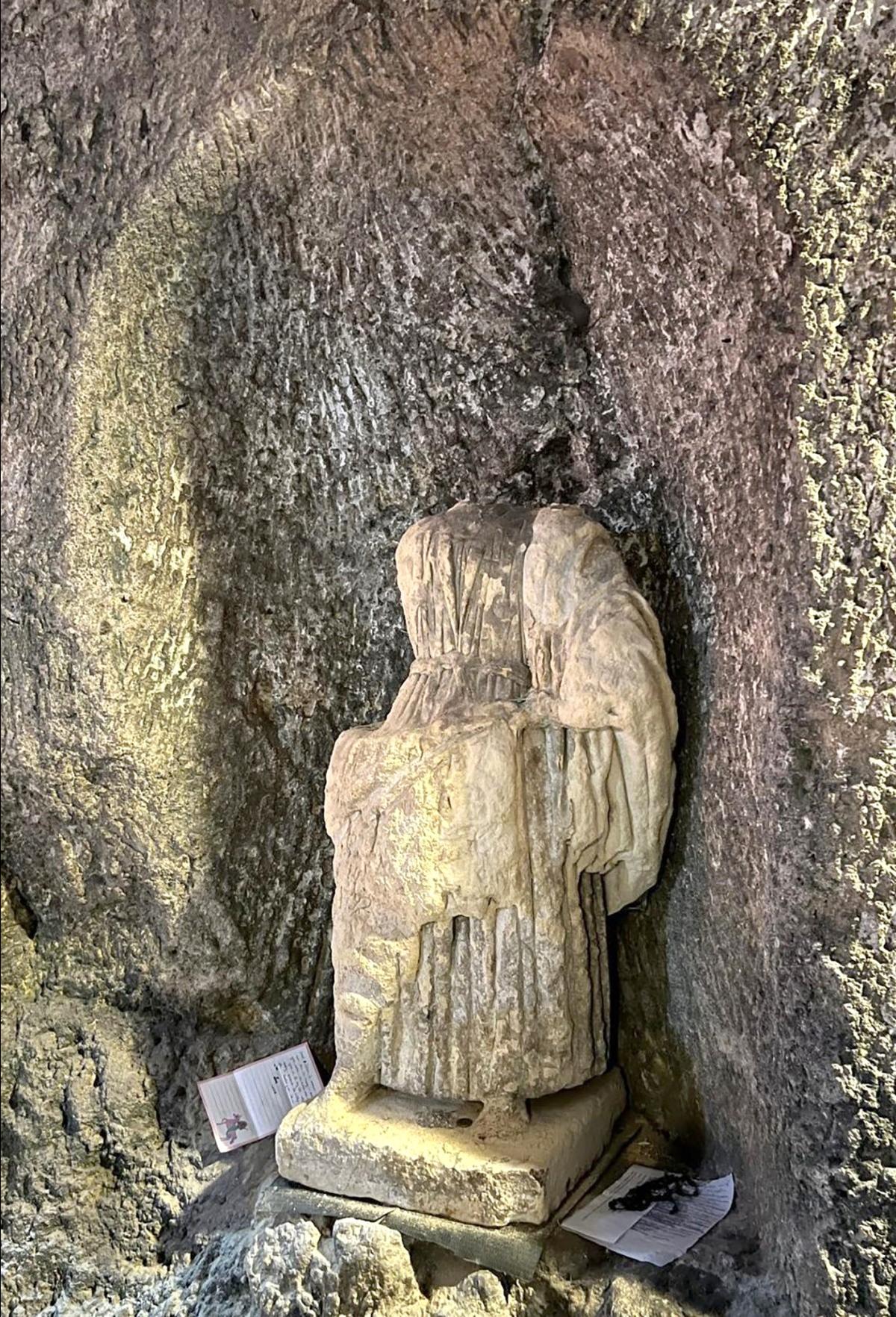 One of three headless statues in the niches of the underground chapel of Il-Madonna tal-Għar. Photo: Author’s collection
The ‘Legion Maltaise’
At the Pilgrim’s Lodge, an ex-voto painting highlights the impact of French rule on Maltese soldiers, who were coerced to fight as part of the French army during the Egyptian campaign.
One might wonder: what connects this incident to Mellieħa? When the French conquered Malta, Napoleon issued an order on June 13 instructing Maltese officials and soldiers to gather by June 14 for an inspection by General Lannes. This situation seemed suspicious to the Maltese and only a few showed up.
Noticing the poor turnout, Napoleon issued a proclamation stating that any former Maltese soldiers of the Order who failed to attend the inspection would be enslaved and condemned to a year of galley rowing. Consequently, on June 16, a large group of Maltese soldiers gathered in Fort St Elmo. These soldiers were forced to join the French army and board the ships bound for Egypt.
The Maltese soldiers enlisted in the French army were promised by Bonaparte that their women and children would receive financial support, albeit deducted from their wages. This was probably the only comfort these soldiers had while fighting on foreign land. It’s a bitter thought that their families never received a penny!
The Maltese soldiers serving in the French army were organised into a battalion known as the ‘Legion Maltaise’. In Egypt, they endured the scorching desert heat, frequent Arab attacks, hunger and inadequate clothing, prompting several to desert the battalion.
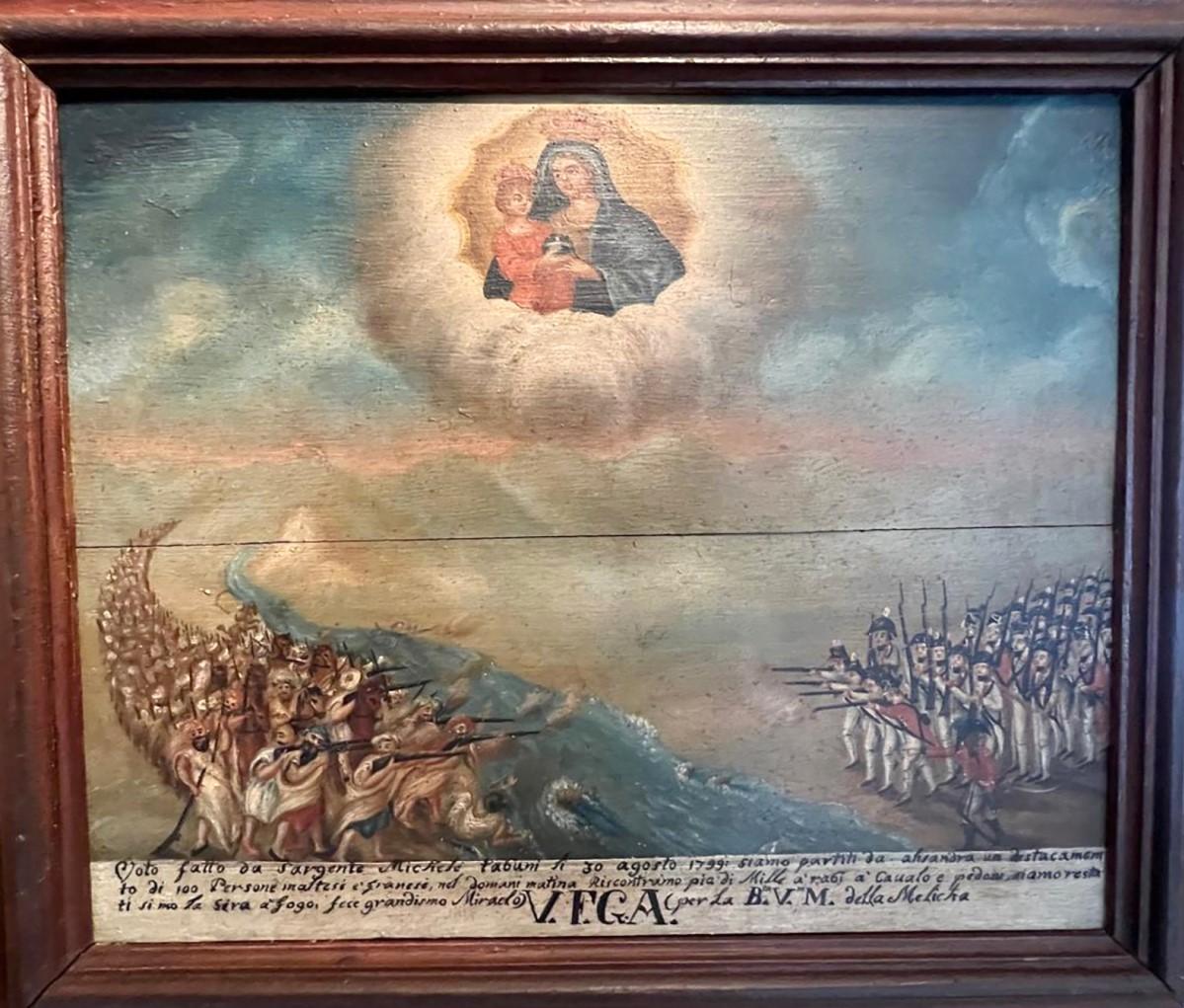 The ex-voto painting of Sergeant Michele Tabuni of the Legion Maltaise, depicting a skirmish with Arab soldiers in the desert. Photo: Author’s collection
One testament to their suffering is an ex-voto of Michele Tabuni (Tabone). The painting depicts an attack on August 30, 1799, near Alexandria, where 100 Maltese and French soldiers were ambushed by over a thousand Arab soldiers. Some Maltese soldiers are shown in red jackets, once worn by the grand master’s guards, while others are dressed in white, representing the former Reggimento di Malta. This indicates that they weren’t even given the blue jacket worn by the rest of the French army. Research by Richard Mifsud shows that the blue uniforms were only issued to the Maltese in December 1799.
Thanks to this ex-voto, we know that Michele Tabuni and his fellow soldiers survived – an event Tabuni attributed to the intercession of the ‘Beata Vergine Maria della Melicha’.
The Maltese soldiers were forced to join the French army and board the ships bound for Egypt
Mellieħa during the French Occupation and Maltese uprising
During the French occupation, Malta and Gozo were divided into 12 municipalities, resembling today’s districts. Notably, Mellieħa, Mġarr and St Paul’s Bay were excluded, suggesting these areas were largely abandoned.
In the Hospitaller period, Mellieħa boasted several coastal fortifications. Though they failed to prevent the French invasion, these defences proved valuable during the Maltese uprising. Research by Charles Debono indicates that in September 1799, Maltese battalions manned the Aħrax entrenchments, although delayed payments led them to threaten desertion.
Some fortifications also served another purpose – the cannibalisation of their armaments. To keep the French forces confined within the harbour fortifications, the Maltese constructed batteries, inspired by the Knights’ coastal fortifications. They repurposed cannons from old Hospitaller coastal fortifications to arm these batteries. For instance, Stephen C. Spiteri notes that cannons from Mistra Battery were transported ‘con gran stento’ (laboriously) to fortify Għargħar Battery in San Ġwann.
Napoleon’s reforms sought to lift Malta out of the shadow of the Ancien Régime of the Order of St John and usher it into a modern era. Yet, for the Maltese people, these supposed well-intentioned French ideas were quickly eclipsed by hardship and unrest.
From the initial invasion to the final days of occupation, Mellieħa’s story, and that of Malta itself, unfolds as a turbulent chapter marked by three different rulers within just two years.
Acknowledgements
The author thanks Jeffrey Sammut and Rev. Joseph Caruana for their assistance. During the research process reference was also made to Maż-Żewg Naħat tas-Swar by Carmelo Testa, Bonaparti f’Malta by Frans Sammut and By Order of Napoleon: The Taking of Malta by Joe Scicluna.