The landing of two spies in Malta during World War II
The missions of Giuseppe Guglielmo (Operazione 110) and Carmelo Borg Pisani (Operazione 111) both ended in failure
During the evening May 17, 1942, two motoscafo da turismo silurante modificato (MTSM) left Porto Palo, Sicily. The MTSM motorboats, which were armed with a torpedo and capable of travelling at a speed of 32 knots, were met at sea by their escort, the torpedo boat Giuseppe Cesare Abba, and motoscafo armato silurante (MAS) 574 and MAS 576.
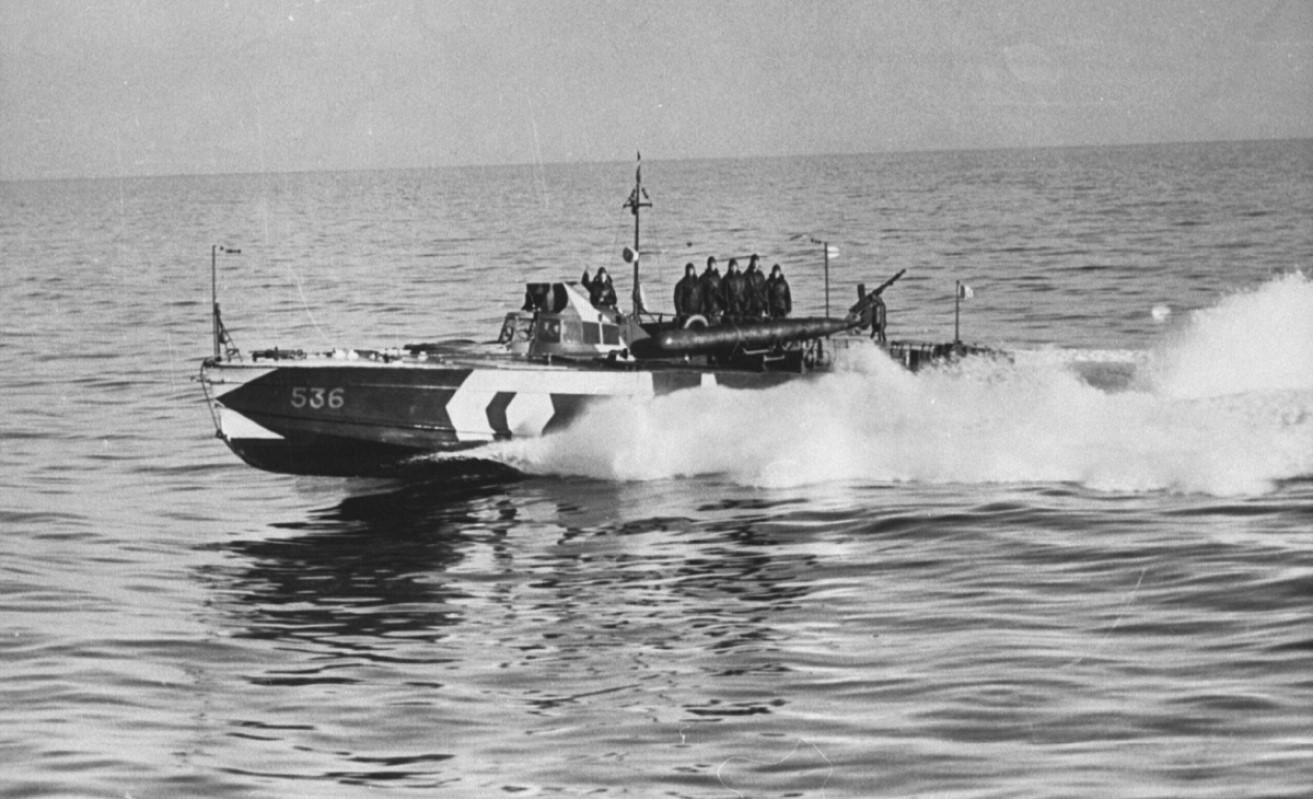 Motoscafo armato silurante (MAS) 536 travelling at speed in the Mediterranean. Photo: Reddit.com
The small flotilla turned towards Malta, intent on two espionage missions, code-named Operazione 110 and Operazione 111. The Italians were trying to obtain more information on Malta’s defences and morale before the planned invasion of the island.
Having left their escort behind, the two MTSM crept towards Malta’s shoreline. MTSM 218, crewed by Tenente Giuseppe Cosulich and Sottocapo Aldo Pia, headed towards the southeast of the island.
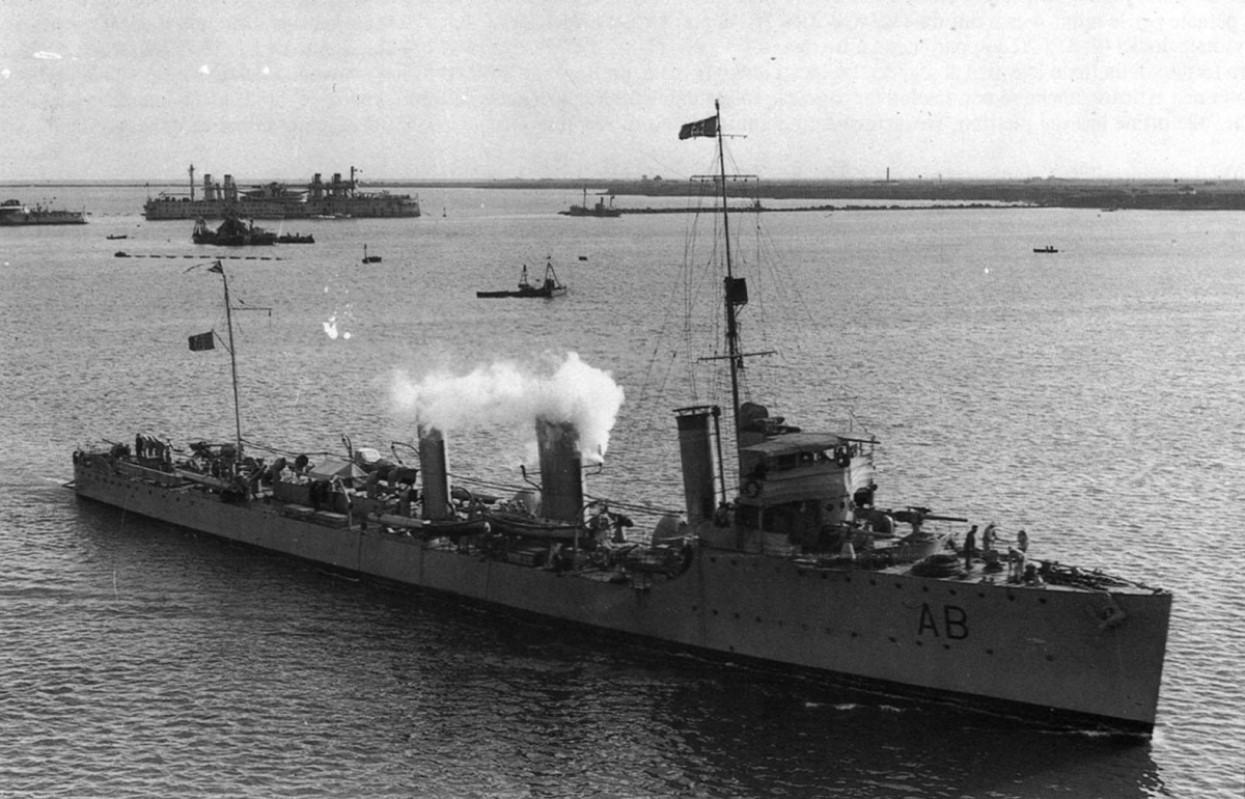 Giuseppe Cesare Abba was launched as a destroyer in 1915 but was reclassified as a torpedo boat in 1929. Photo: Reddit.com
At 12.50am on May 18, when well within sight of shore, Palombaro (diver) Giuseppe Guglielmo jumped overboard. Guglielmo, wearing a diving suit, grabbed hold of his flotation device and paddled towards the entrance of St Thomas Bay.
The area was guarded by the 1st Battalion, The Dorsetshire Regiment, but none of the sentries saw Guglielmo as he clambered ashore, navigated through the rows of barbed wire and took note of the beach defences and anything of interest.
The rendezvous with the MTSM was scheduled for 4am but the diver took longer than expected in his reconnaissance. When Guglielmo did not appear at the appointed time, Cosulich decided to wait an additional 10 minutes. Then, with dawn approaching and no sign of the diver, the MTSM had to depart while it was still dark. It could not risk being caught during daylight by Malta’s marauding fighters on its return to Sicily.
Having completed his task, Guglielmo paddled out to sea but was unable to locate the Italian motorboat. Consequently, he swam back to shore and sought a place to hide. Close to the beach, there were some derelict trams.
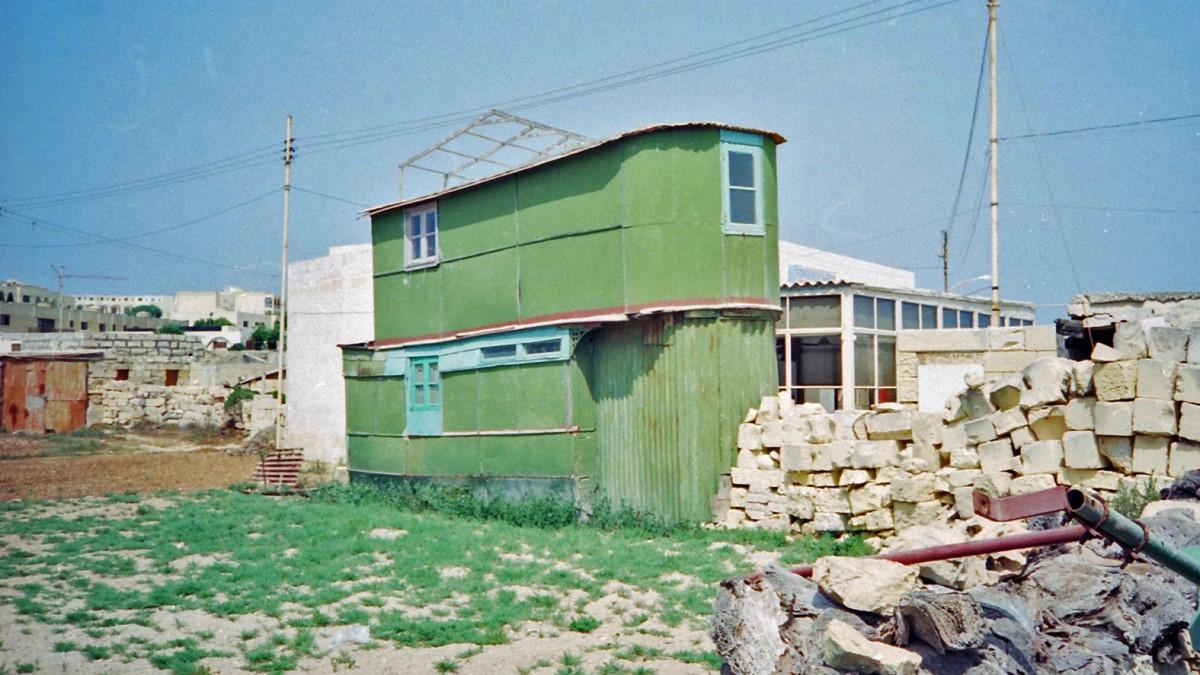 Two derelict trams photographed at St Thomas’ Bay in 1993. Photo: Robert Hodges in ‘Trams Around The World’ Facebook page
Malta’s tram service had ceased operating in 1929, and some enterprising individuals had modified the tram cabins for use as rooms by the sea. It was under one of these that Guglielmo took cover.
Enter Toni Debono, a fisherman from Żejtun. He had been waiting patiently for the curfew to end. Finally, when dawn broke, gaps in the barbed wire along the shore were opened by the soldiers to allow civilians through.
Debono boarded his boat and, with a glass and a hand-held spear, began searching for octopus. At around 8.40am, he returned to shore and noticed a strangely dressed man hiding beneath a tram. He immediately challenged him and took him to a military post, where some Dorset soldiers promptly arrested the Italian. They made no mention of Debono in their war diary; instead, they simply reported: “0845 – Italian lands at T.4. from ‘E’ boat.”
Guglielmo was wearing a Belloni diving suit, named after its inventor, Angelo Belloni. As a result, his British captors immediately suspected that he was on an espionage mission and began probing to see what information they could extract. The Italian diver quickly fabricated a tale as to why he was found ashore.
The Italians were trying to obtain more information on Malta’s defences and morale before the planned invasion of the island
Here is a summary of the story he told the intelligence officers, adapted from his interrogation report. It is important to note that the date he provided was incorrect, and this played a significant role in convincing the British that he was telling the truth.
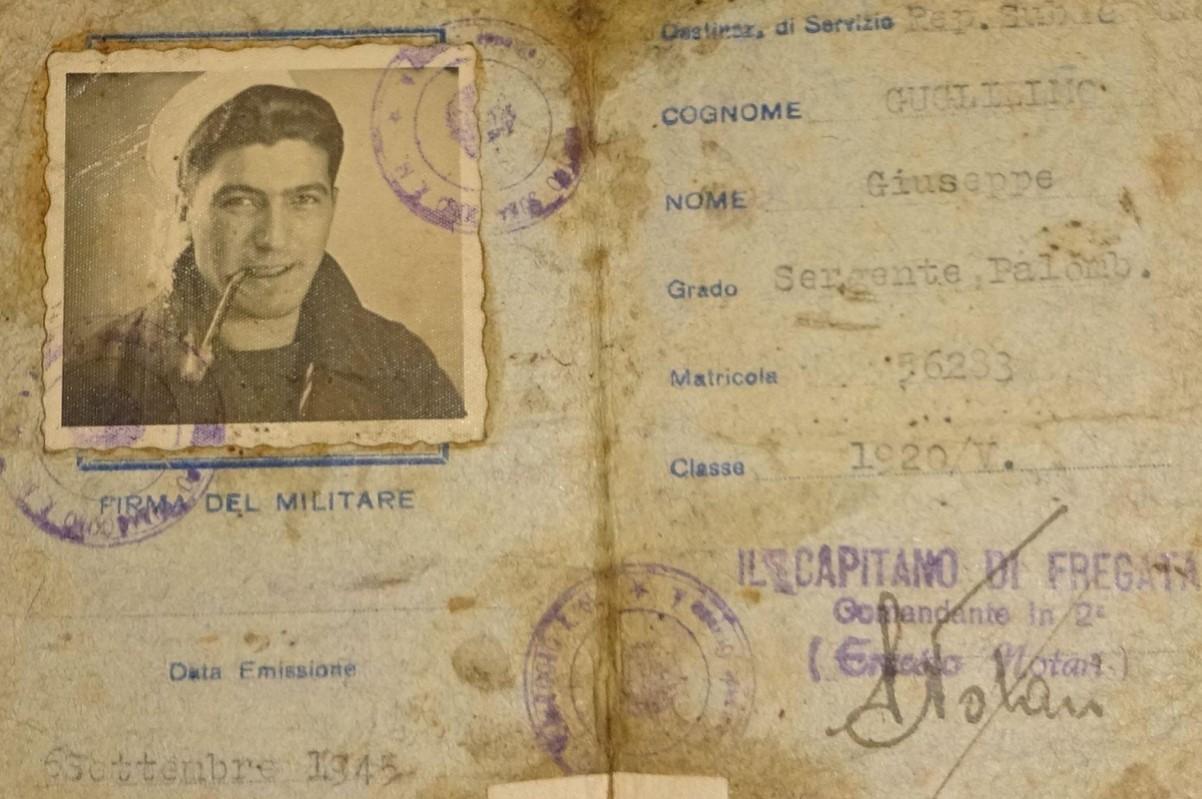 Palombaro (diver) Giuseppe Guglielmo, who landed at St Thomas Bay, Marsascala. Photo: Radiopiu.net
His story was this: On the night of May 16-17, five German e-boats approached the Maltese coastline. Guglielmo was aboard one of them, along with Tenente Cosulich. They were the only Italians on the German craft.
Once close to shore, Cosulich and Guglielmo boarded a small dinghy and rowed until they arrived off Żonqor Point, Marsascala. From there, they headed two miles towards Grand Harbour. They had no intention of landing, but only to probe the defences and assess their vigilance.
However, their task was cut short when searchlights suddenly illuminated the area and scanned the sea, forcing them to abort the mission. This effectively demonstrated that the defences were alert.
After returning to the e-boat, they began their journey back to Sicily at full speed, but the craft struck a mine and exploded.
Guglielmo, still in his diving suit, was thrown into the sea and found himself swimming with two Germans. The three men attempted to swim towards Malta, but they were approximately 30 miles (48 kilometres) off the coast.
After two hours, one of the Germans drowned. Guglielmo and his companion continued swimming throughout the day but were still at sea when the sun set.
During the night, the second German also disappeared. Exhausted, the Italian finally reached land on the night of the 17th/18th and fell asleep under the tram, where he was discovered by Debono the following morning.
Guglielmo’s story appeared plausible to his interrogators. On the night of May 16-17, four e-boats from the 3.Schnellboot Flotilla attempted to lay mines off the east coast of Malta. They were caught in the beams of searchlights, and the coastal batteries opened fire. S 34, one of the e-boats, received a direct hit and was immobilised.
The other boats immediately laid down a smoke screen to cover it, rescued the survivors, and then unsuccessfully attempted to destroy the disabled craft. The e-boat remained afloat until morning, when it was sunk by two German Bf 109 fighters, which strafed it with cannon and machine-gun fire.
Both the date and the details of the incident aligned with Guglielmo’s story, except for one key discrepancy: Guglielmo claimed that the craft had been sunk by a mine, while the British insisted it had been destroyed by gunfire. When his interrogators pressed him on this point, Guglielmo explained that the e-boat had been travelling at high speed at the time, so he might not have heard the gunfire from the shore.
The British were also puzzled as to why the Italians had not used their own MAS motorboats for the mission.
Guglielmo calmly explained that the German e-boats handled the sea conditions better than the MAS and the Germans were familiar with the safe passages through the minefields laid off the shores of Malta, whereas the Italians were not.
Maltese fascist stranded
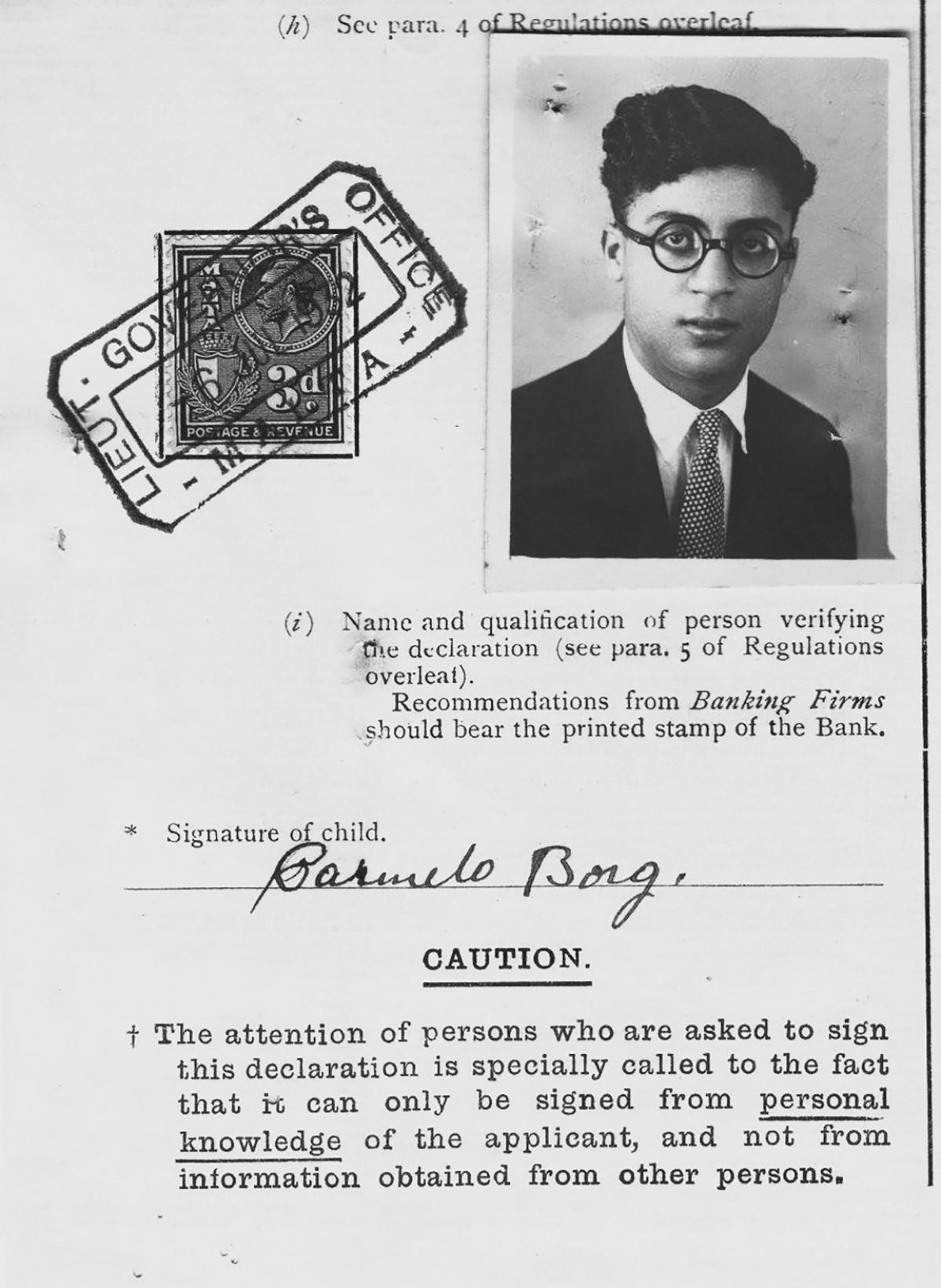 Part of Carmelo Borg Pisani’s passport application from 1932. Photo: National Archives of Malta
As for the other mission, Operazione 111, it started at around 1.30am when MTSM 214 approached the shore near Dingli.
Carmelo Borg Pisani, a Maltese fascist who had volunteered for service in the Italian Army, was disembarked in a dinghy. His mission was to report on Malta’s defences, assess the food situation, check for a radio-location station on Filfla, and investigate the operations of a blockade runner.
However, Borg Pisani became stranded on a rocky ledge beneath the sheer cliffs at Ras id-Dawwara. Unable to climb the precipice, he sought shelter in a cave, where he remained for two-and-a-half days until his cries for help were heard.
A rescue launch eventually picked him up and took him to Mtarfa Hospital. There, he was recognised by Maltese doctor Captain Thomas Warrington, who, like Borg Pisani, was from Senglea. Borg Pisani was ultimately found guilty of espionage, taking up arms and conspiring against the government, leading to his execution by hanging.
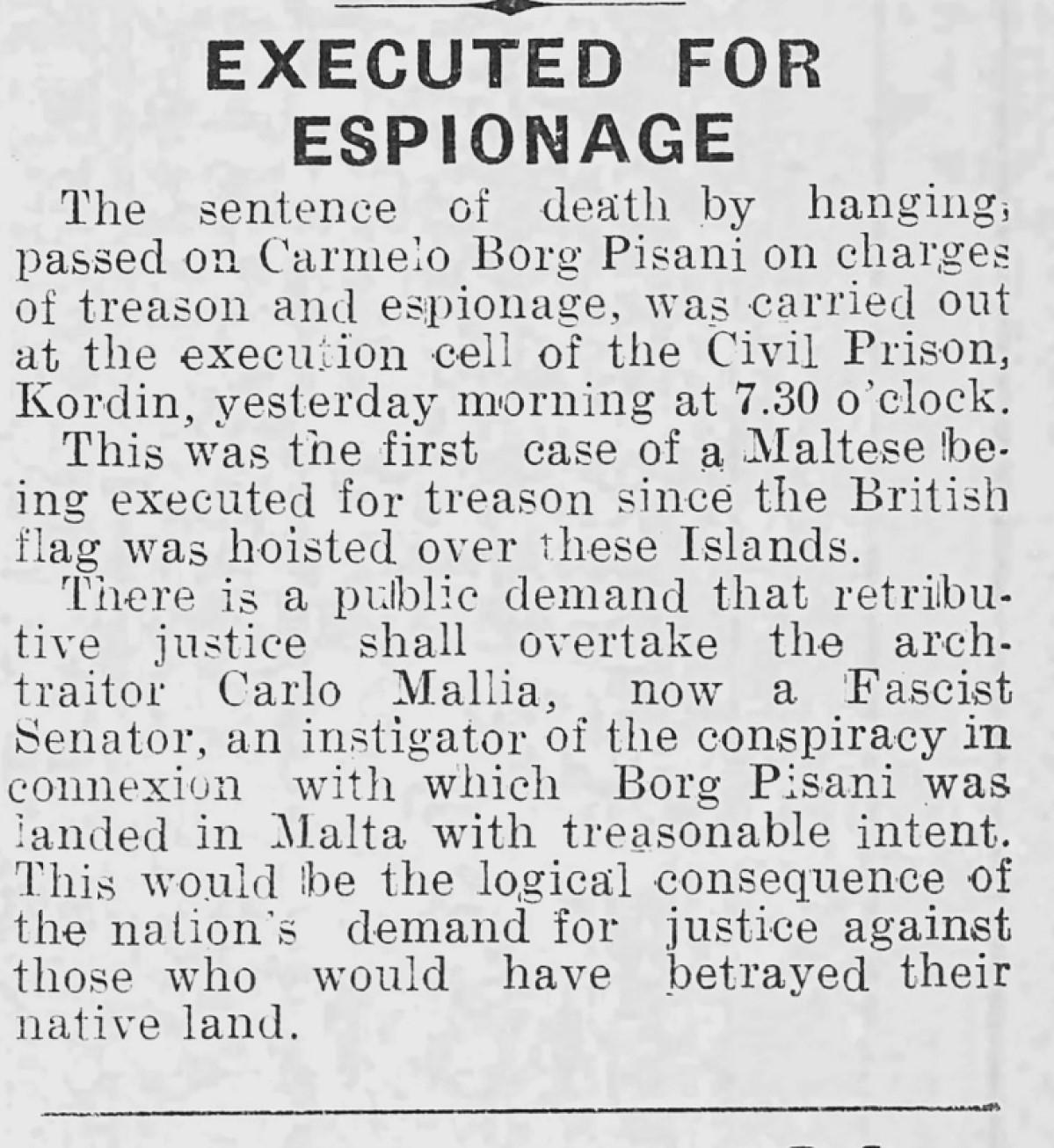 The Times of Malta reported Carmelo Borg Pisani’s execution on November 29, 1942. Photo: National Archives of Malta
The day after Borg Pisani was captured, naval diver Alex McCandish was transported by Seaplane Tender ST338 to the site where the spy had been apprehended.
On the seabed next to the cave, at a depth of seven metres, McCandish discovered a pistol, a dagger and a box full of hand grenades. Further out, he found a valise containing clothes and a wallet with £200. But the dinghy that Borg Pisani had used to come ashore was never found, nor was his wireless transmitter.
Other clandestine landings
There may have been other clandestine landings on Malta’s shores.
Captain J. M. Wismayer, in his book The History of The King’s Own Malta Regiment, declared that soldiers of the 1st Battalion, The King’s Own Malta Regiment (1/KOMR), discovered a diver’s mask on the rocks at Mellieħa Bay.
Additionally, during a television programme on RAI, Comandante Pietro Zamboni claimed that after the failed espionage operations of May 18, a small group of Germans and Italians landed on Filfla. This group, ferried by submarine, spent two days on the islet. Their mission was to definitively determine if there was a radio-location station or lookout post on the island while simultaneously observing the defences on the mainland.
There was also the mysterious disappearance of Private Assuero Cassar from the 3rd Battalion, The King’s Own Malta Regiment (3/KOMR). A German officer later claimed in an interview that he had participated in a mission to kidnap a soldier from the Malta garrison in order to gather information about the defences.
The mission involved knocking a Maltese sentry unconscious and carrying him back to a waiting submarine, but it ultimately failed. Cassar, the abducted soldier, had no knowledge of the defences, rendering the mission futile.
Author’s note
This article has been adapted from the book Malta POWs: The Interrogations of Italian Prisoners of War, by Jeffrey Sammut, published by Midsea Books. More information can be found in The Battle of Grand Harbour by Joseph Caruana, Battle of Malta by Anthony Rogers, Għall-Ħolma ta’ Ħajtu by Laurence Mizzi and Malta at War by John A. Mizzi and Mark A. Vella.
Acknowledgements
The author thanks Battlefront Malta, Anthony Rogers, Ruben Vella and the staff at the National Archives, without whose assistance this article would not have been possible.