The origin and development of the Gozo Public Library and archives
From a humble reading room set up almost two centuries ago it evolved into a fully-fledged public library, a lending library and an important archive
In the first three decades of the 19th century, the dire intellectual scene in the Maltese islands prompted the editor of Il-Mediterraneo to comment, in 1838, on the lack of intellectual communication in the islands, a comment echoed in 1839 by another two newspapers – The Phosphorus and Il Filologo.
One must here note that matters were not helped by the absence of press liberty, which was only granted in March 1839 and heralded a change in the intellectual climate of the Maltese islands.
However, in August 1834, an enterprising but relatively unknown man, Luigi Tonna, had set up a gabinetto di lettura (a reading room) in Merchants Street, Valletta. The public was invited to subscribe to the gabinetto at an annual rate, giving the subscribers the facility to enter the gabinetto to read any of the reading material there, which included books as well as foreign and local newspapers.
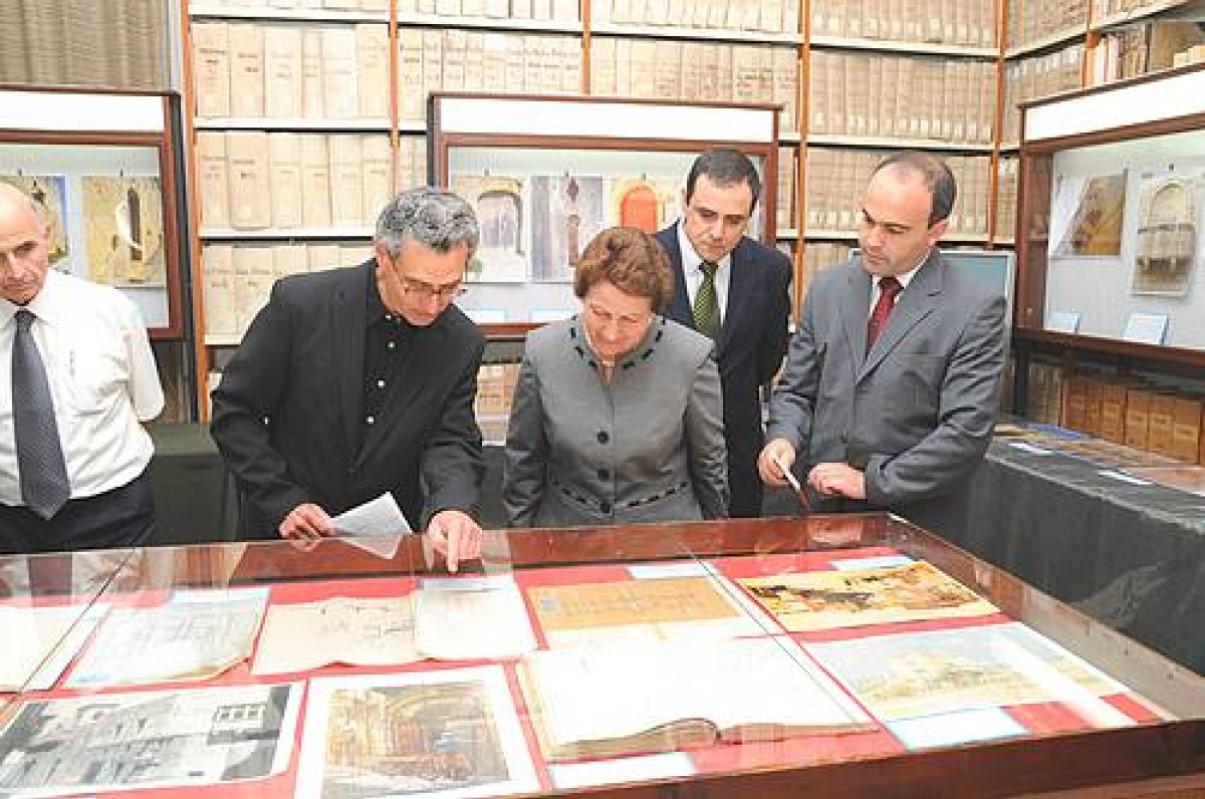 One of the exhibitions of manuscripts organised over the years at the National Archives Gozo Section.
Within a few months, the gabinetto’s stock had risen considerably and, in 1839, it contained about 1,500 books and 22 journals and newspapers in Italian, French and English. The public’s response was favourable, and other similar reading rooms followed suit, including one at Rabat (now Victoria), Gozo, in Strada Nuova, now Agius de Soldanis Street.
On March 7, 1839, a group of 38 eminent Gozitan persons, hailing mainly from the professions and the priesthood, resolved to set up a gabinetto di lettura which they renamed Libreria di Società (Library of Society) 16 days later. March 7, 1839 was generally accepted to have been the date of origin of what was to become the Gozo Public Library but, actually, the constitution of the Committee of Management, together with the compilation and printing of the first catalogue had occurred earlier, in July 1838, which, I believe, is the more exact date of the origin of the library.
 The logo of the Gozo Section of the National Archives.
The Gozitan gabinetto was run on the same lines of the Maltese reading rooms, with members paying an annual subscription to be allowed to make use of the books and foreign and local newspapers and journals held by the gabinetto.
However, although the Maltese gabinetti continued on their way independently until they were eventually wound up or changed into casinos incorporating libraries or reading rooms many years later by the end of the 19th century, this was happily not to be the fate of the Gozitan gabinetto.
The new public library continued to grow, and the premises became too small to house the growing number of volumes in its collection
In 1852, the founder members came to an important decision: it was decided to share the holdings of the gabinetto with the public and offered the collection to the government, for the formation of a public library. They stipulated one main condition: that an annual sum of 40 pounds sterling (£40) would henceforth be allocated for the purchase of books to be added to the collection.
 Governor Major-General Sir William Reid. He accepted the holdings of the Gozitan Gabinetto di Lettura and the conditions imposed on the bequest to establish the Gozo Public Library in 1852. Photo: National Archives, Rabat, Malta
The Scottish governor of Malta, Major-General Sir William Reid (1851-58), was keen to promote cultural, economic and agricultural pursuits in Malta, and, indeed, he was to initiate The Malta Society of Arts, Manufactures and Commerce in 1852, as well as the Agricultural Society in 1854. Reid acceded to the Gozitan offer and the public library in Gozo opened its doors to the public on November 21, 1853.
One may perhaps wonder why the same ‘procedure’ was not carried out on Malta’s main island. The reason is very simple: Malta already had its public library which had been set up in the 1760s through the efforts of the Bailiff Fra Jean Louis Guerin de Tencin (1702-66). It also had its own specially-built premises since the last decade of the Order of St John’s rule, something that was lacking in Gozo. It is to the credit of the Gozitan gabinetto’s members that steps were taken to remedy the lack of a public library in Gozo.
 An old photo of the premises in Vajrinġa Street, Victoria, that houses the Gozo Public Library on the first floor above the primary school.
The new public library continued to grow, and the premises became too small to house the growing number of volumes in its collection which, in March 1896, numbered no less than 3,642 works in 6,693 volumes.
A transfer to better premises had become imperative, so at the end of March 1896, the Gozo Public Library was transferred to new premises: the top floor of the government primary school in Vajrinġa Street, Victoria.
A new development then occurred in 1925 when the Gozo Public Library, together with the Malta Public Library, became the depository for all locally-printed works, which meant that henceforth, a copy of all local publications had to be forwarded to the two libraries in Malta and Gozo.
On August 16, 1948, the Gozo Public Library (and the district circulating libraries) were all placed under the direction of the librarian of the Royal Malta Library (now the National Library of Malta).
A further development occurred as from February 10, 1983, when the Gozo Public Library no longer continued to function as a lending library, and its ‘lending’ collection of works was transferred to a newly-established lending library in St Francis Square, Victoria.
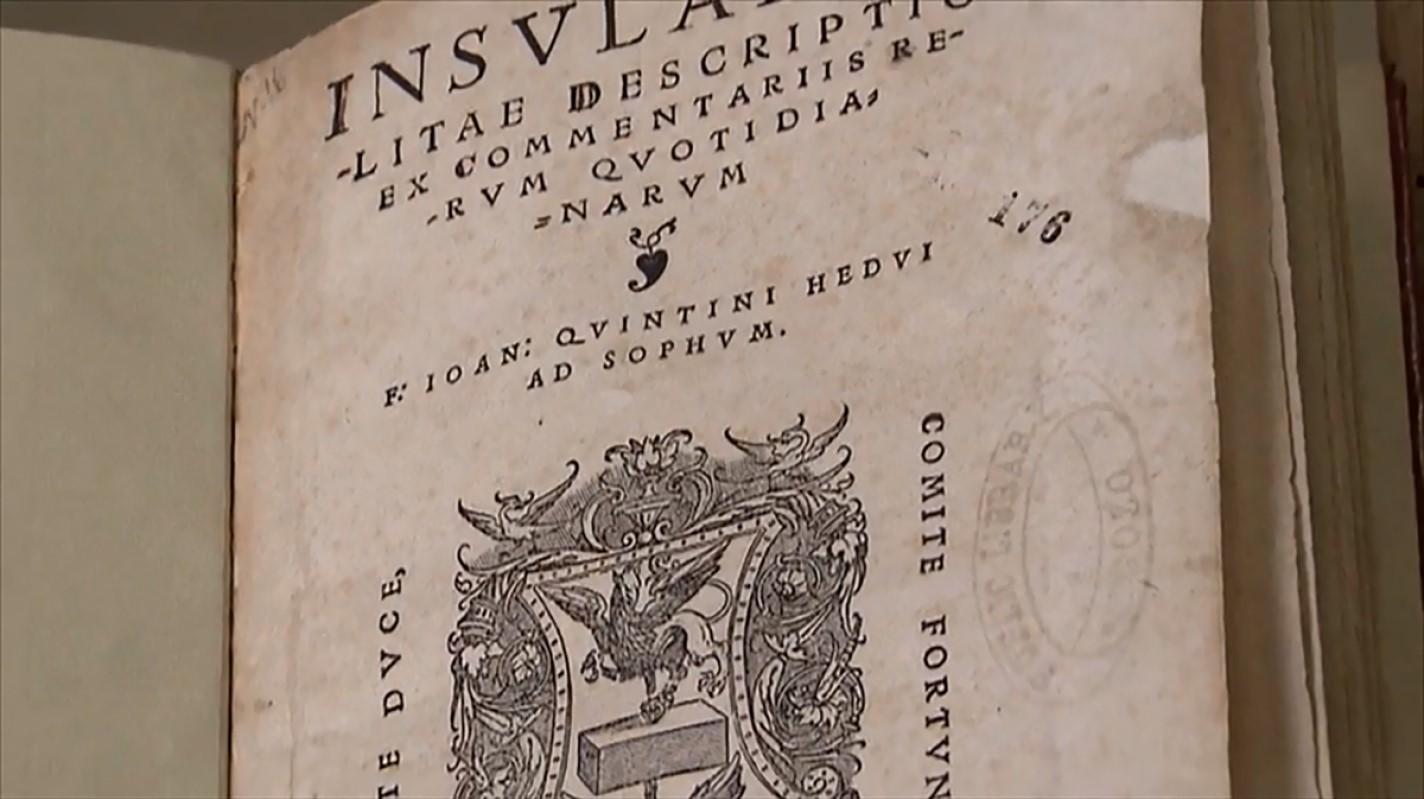 The title page of Johannes Quintinus’s 1536 description of Malta, which is housed at the Gozo Public Library. Photo: Gozo Public Library
Therefore, the public library’s role was henceforth to preserve the national collection of printed works and to provide academic material for research purposes. Its Melitensia collection became a depository of all government publications, newspapers and periodicals published locally and dissertations by Gozitan students. It also includes a substantial collection of books, published locally or abroad, about the Maltese islands, including a rare copy, dated 1536, of the original Insulae Melitae Descriptio by Johannes Quintinus. Naturally, the purpose of the lending library and its branches is to provide books for home reading.
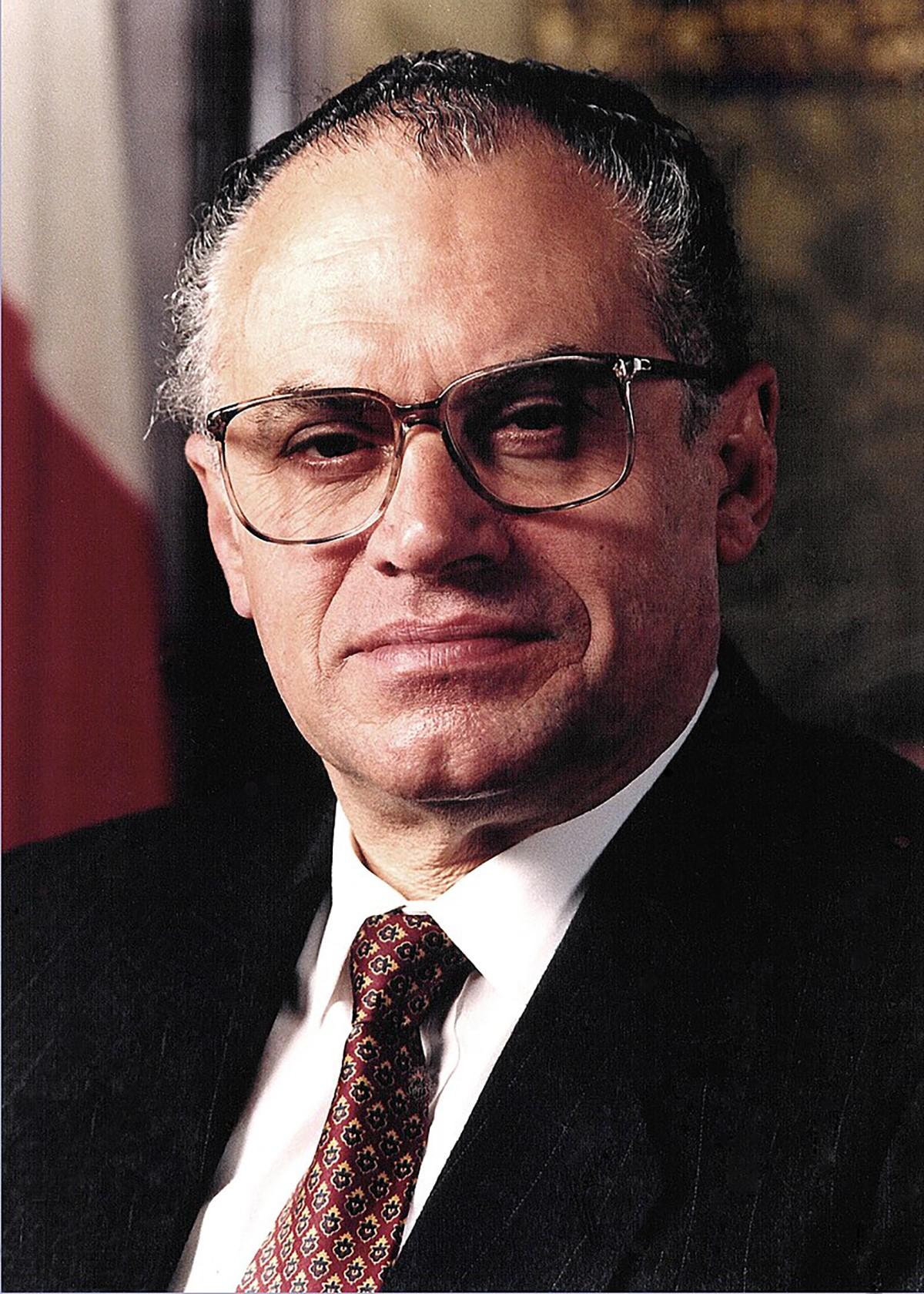 President Ugo Mifsud Bonnici inaugurated the Gozo section of the National Archives on November 24, 1989.
A new development occurred on November 24, 1989, when a new annex at the Gozo Public Library opened its doors for the National Archives/Gozo Section inaugurated by former president Ugo Mifsud Bonnici. An exhibition was organised for the occasion, showcasing 40 important documents dating from 1560 till 1812. Rev. Mgr Dr Joseph Bezzina became the archivist for Gozo, and he organised the archives into sections in accordance with the provenance of the respective documentation.
The oldest documents hark back to c. 1560 and concern the administration of Gozo in the times of the Universitas Gaudisii. The documentation includes a list of officials of the Gozitan Universitas, including the jurats and the treasurer. They are divided into 22 sections, and include data up till the present times, especially documents pertaining to the law courts.
The administrative documentation of the British period is preserved in Malta because the system then in use was a centralised one. It was only after 1987, after the establishment of the Ministry for Gozo, that Gozitan documents began to be forwarded directly to the Gozo Section of the National Archives.
 Some of the 88 volumes comprising the Ġuljana Masini donated by Franco and Manola Masini to the Gozo Section of the National Archives in 2011. Photo: National Archives Gozo Section
Libraries and archives are always evolving and expanding with new acquisitions and bequests. A case in point, with regard to the Gozo Section of the National Archives, was the donation, in 2011, of the Ġuljana Masini, consisting of 88 manuscript volumes of various sizes listing all the births, marriages and deaths that took place in Gozo between 1554 and 1934. It starts in 1554 because that was the year when the Gozo Cathedral started compiling its parish registers in accordance with the decrees of the Council of Trent.
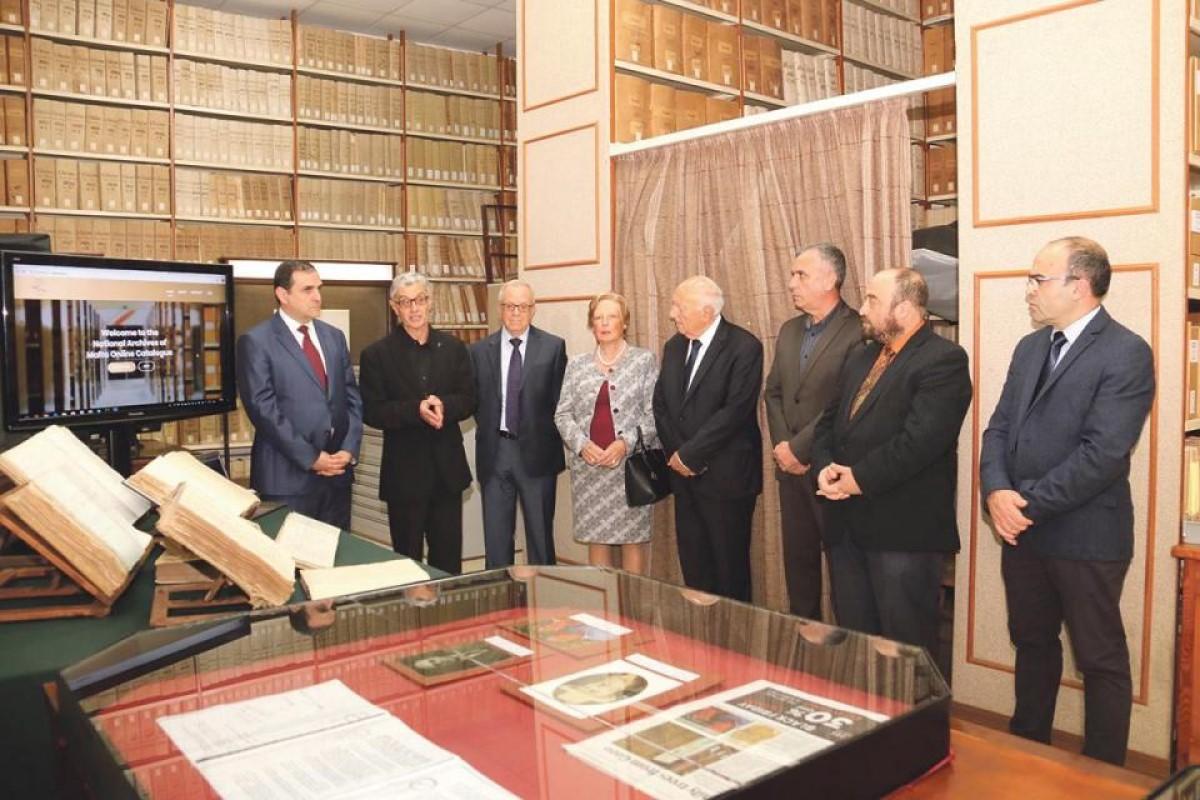 The inauguration online of the Ġuljana Masini. The donors, Franco and his (now late) wife Manola are third and fourth on the left. Photo: National Archives Gozo Section
The term Ġuljana is commonly applied to a collection of data of the so-called acts of civil status, that is, births, marriages and deaths. It is compiled by collecting this information in alphabetical order by surname from parish registers. In keeping with the times, this Ġuljana is also now available online.
 An old manuscript at the National Archives Gozo Section.
Thus, the humble beginnings of a gabinetto di lettura in Gozo has, over almost two centuries, evolved and blossomed into a fully-fledged public library, a lending library and an important archive that, together, have proved to be an important factor in the educational development of Gozo.