Three more lessons on happiness
Why engaging in religious activities can boost life satisfaction and counter loneliness
Just over a year ago, ‘Happiness Economics’ blew out the candles for its 50th birthday, marking five decades since its inception in 1974 by professor Richard Easterlin.
After writing an article on this in December 2024, I e-mailed the professor to thank him for his academic contributions and the impact his work had on me.
I was saddened to receive a reply from his wife, informing me that the 98-old-economist had passed away earlier that same week, on December 14. She also told me that she had read the article and was moved by it, something that brought me much consolation.
In the article I elicited three important findings on happiness, namely:
Lesson number one: Money will only affect your happiness up until it is considered sufficient.
Lesson number two: Personality and relationships are the biggest determinants of happiness.
Lesson number three: Seeking happiness for its own sake is self-defeating.
This time I will be laying out three more lessons that I hope readers will find both interesting and useful.
Lesson number four: If you had to work for it, it would make you happier
Perhaps it comes as no surprise that losing your job would taint your peace of mind. Economically, it takes away your source of income and makes you relatively poorer. That said, one should not attribute the impact that unemployment has on happiness solely to income.
Studies show that even after accounting for the monetary aspect, losing your job makes you feel worse about yourself, affecting your self-confidence and making you feel excluded from society.
Taking it one step further, jobless people with a given level of income are much less happy than people who had to work to earn the same level of income. In other words, money is more likely to make you happier if you had to work for it. Obviously, this begs the question: what kind of work are we talking about exactly?
Generally, the more autonomy and meaning you find in your work, the more satisfaction it will yield. Work can help you find meaning in life.
Echoing several philosophers and psychologists, one might even dare to say that it is better to have a life with meaningful suffering rather than one with meaningless pleasure.
Lesson number five: Voluntary work is a positive-sum game
In classical economics, we typically pit work effort against the leisure that can be obtained through remuneration. A rational person is assumed to be only willing to work if the benefits earned exceed the sacrifice required to earn them.
However, voluntary work flies in the face of all this, as people are willing to give their time and energy without expecting any monetary compensation. Moreover, voluntary work itself generates satisfaction for the volunteer.
Economically, this makes the activity a positive-sum game, as both the giver and the receiver are better off.
Let me pause for a moment. In no way am I suggesting that we should all work overtime and not get paid for it. Voluntary work must be viewed through a different lens than ordinary gainful employment.
First of all, for voluntary work to exist, it must be voluntary, as the name suggests. Secondly, for people to make a voluntary sacrifice, they need to find meaning in it. Notice how meaning features here again, as it enables people to derive satisfaction from both paid and unpaid forms of work.
It should not be too difficult for policymakers to provide opportunities for volunteering. With an ageing population, the need to take care of the elderly is going to be an ever-increasing concern.
All we need to do is make sure that supply meets demand, by nudging people to take the first step and get involved in voluntary work. This would relieve some of the burden on the state and would benefit the dependent population through authentic care, while also contributing to the well-being of those providing it.
Meaning enables people to derive satisfaction from both paid and unpaid forms of work
Lesson number six: Go to church
Finding meaning in life’s suffering is fundamental to preserving happiness, especially if it is grounded in belief and trust in a Higher Being.
Studies show that religious people suffer less psychologically after traumatic events, making religious belief one of the strongest determinants of life satisfaction. This aligns not only with logotherapy, which is a psychotherapy developed by Viktor Frankl that focuses on meaning, but is also confirmed by econometric analysis.
External religiosity, which includes Church attendance, also increases happiness, especially marital happiness. Engagement in religious communities cultivates deeper human relationships that counter loneliness.
A society plagued by increasing loneliness has much to gain. Attending church at least once a week significantly improves your well-being.
Interestingly, this practice also has a spill-over effect on non-religious people: life satisfaction is higher in more religious regions for both religious and non-religious individuals alike.
Now this may give rise to what we in economics call the “free rider problem”, where individuals exploit the benefits from others who are paying the price.
The issue with this kind of reasoning is that, knowing about this, everyone may rely on others to commit and do the work; and if everyone thinks this way, then no one will do anything, waiting for someone else to make the first move.
And yet, deep down, we know we ought to be the ones to make that move and light the spark.
It has been a year since the professor passed away, and his flame was blown out forever. For most people, the name Richard Easterlin likely does not ring a bell. Nonetheless, it is somewhat miraculous how such a small spark has managed to set a whole forest ablaze.
Perhaps the leaves had long been dry. As the year turns and dry leaves fall, it is up to us to trim the branches so that happiness can grow.
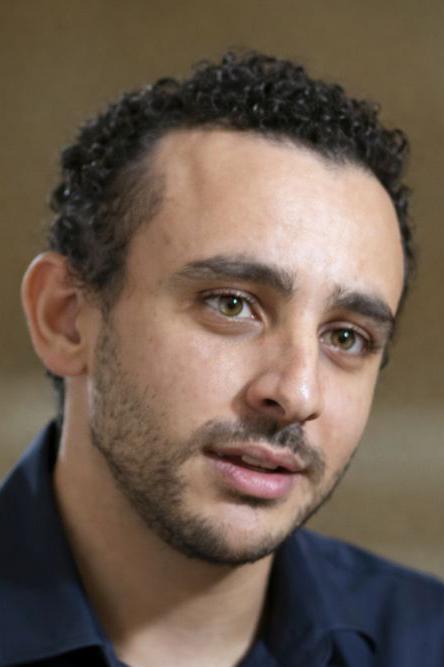
Mark Caruana holds a master’s degree in Economics with a specialisation in ‘Happiness Economics’. He is a full-time economics lecturer at the University of Malta Junior College.