Times Talk: 'I was relieved when people appealed my judgments' - Toni Abela
The former politician and now-retired judge offers a rare glimpse into life as a judge
For decades, Toni Abela was a key figure in local politics. That changed in 2016, when he was appointed a judge and subsequently vanished from the political limelight.
But that new life came with challenges of its own.
Less than 24 hours after delivering his final judgment and stepping down from the bench, retired judge Toni Abela, who turned 68 on Wednesday, sat down with Times Talk for his first interview and offered a rare glimpse into his life and career.
Maltese law dictates that judges must retire upon reaching this age, marking the end of a significant chapter for Abela, a figure known for his candidness and unique trajectory from politics to the judiciary.
The interview took place in what Abela affectionately calls his "sanctuary" – a secluded room nestled amidst fields, surrounded by nature.
This tranquil retreat, he explains, has been his haven for reading, research, and, most critically, the arduous task of writing judgments, some of which consumed weeks of his time.
"You don't see time passing here, it's beautiful to work surrounded by nature," he muses.
The room itself is a testament to his eclectic interests and connections, featuring a bozzetto of the Dom Mintoff monument of Bormla, another of the Paul Boffa monument, a basso relief of Mintoff as deputy leader, and a signed portrait of a young George Borg Olivier, whom Abela says he admires.
'I had doubts, but I'm serene'
Reflecting on his departure from the bench, Abela expressed a sense of peace.
"I feel serene with myself, because I feel I did a lot of good to the people. I worked hard and played hard," he said.
"The beauty of being a judge is that you give rights concretely to people. It's not simply praying or advocating for someone's rights. You give them their rights."
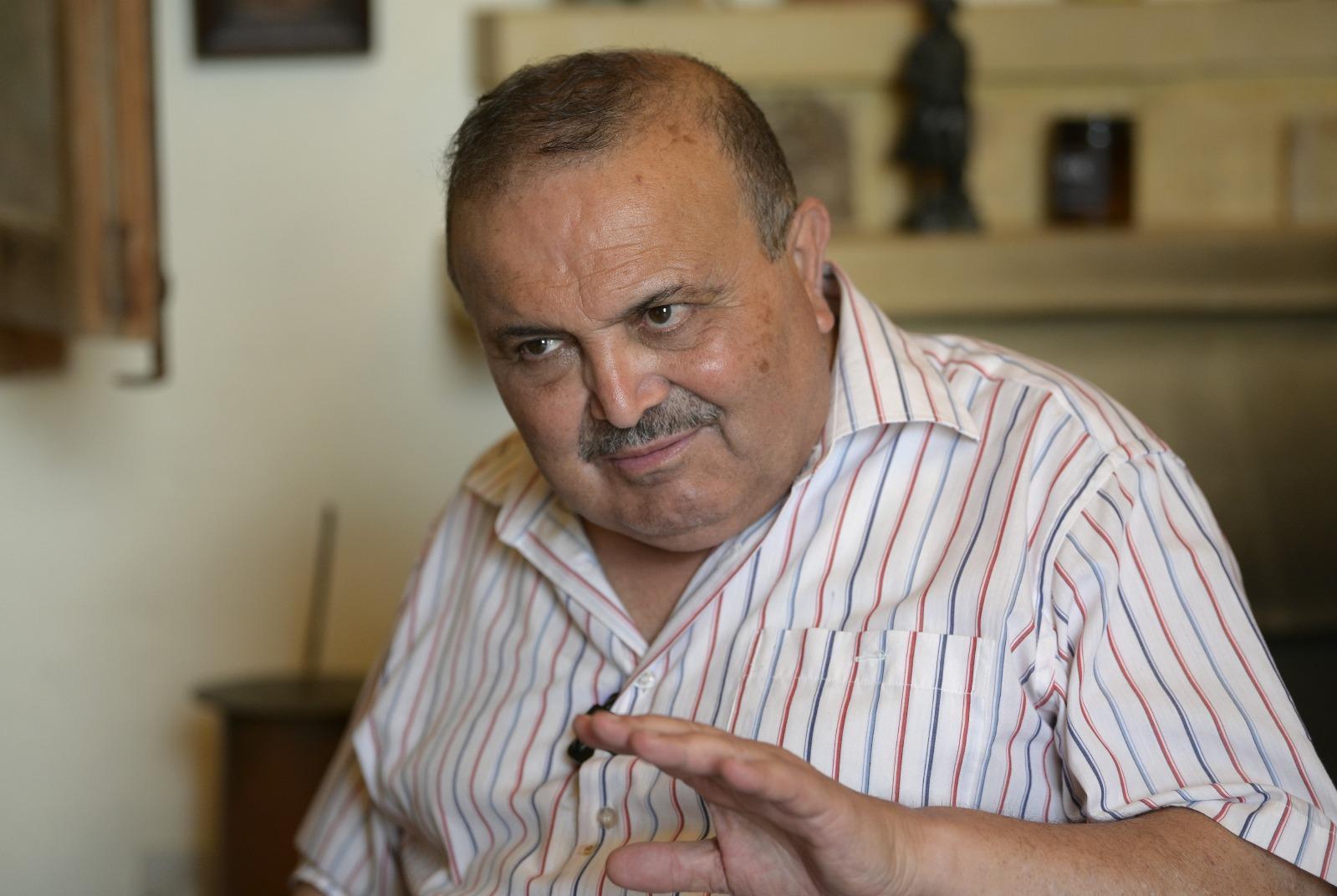 Photo: Matthew Mirabelli
He acknowledges the often thankless nature of the judiciary, where the court rarely receives credit for justice delivered. Those who lose often accuse judges of corruption, while winners attribute their success solely to their inherent rightness.
Yet, despite this, Abela observes, "people still respect magistrates and judges a lot".
As he sat in that room writing judgments, he would have doubts on whether he is making the right decisions, he admitted. Doubts are an inherent part of the decision-making process, he said. But as a judge, one must decide based on the facts presented.
He even found relief when his judgments were appealed, saying it meant he would not have the final say on the case.
"I would be relieved when people appealed my judgments, because that meant I didn't get the final say. Many appeals were upheld, but some were revoked or varied as well, and that’s not bad, because that means someone else who had the right to something, got it."
"It's terrible to have this power. You're so powerful, you must be so cautious how to use it."
He stresses that judges are not above the law; in fact, they are "subject – more than everybody else – to the law. Judges must humbly use that power."
Is it right to go from politics to the bench?
Abela's transition from an active political role to the judiciary has often been a subject of public discussion. He was Labour deputy leader from 2008 to 2016, when he resigned and paved the way for former minister Konrad Mizzi to take his role.
"I'm not the first one to make that transition, and a politician is not necessarily unable to do a good job as a judge.
"What do you prefer? A judge whose biases are clear to everyone? Or a judge who has biases nonetheless but are much less clear?"
'I'm not neutral, but I'm impartial'
He drew a crucial distinction between neutrality and impartiality.
"I'm not neutral and no judge is. Everyone has their sympathies and antipathies. What we must do is be impartial, despite our biases. Neutrality and impartiality are not interchangeable. They are two different things."
He firmly believes that Maltese judges successfully rise above their personal biases to deliver impartial justice.
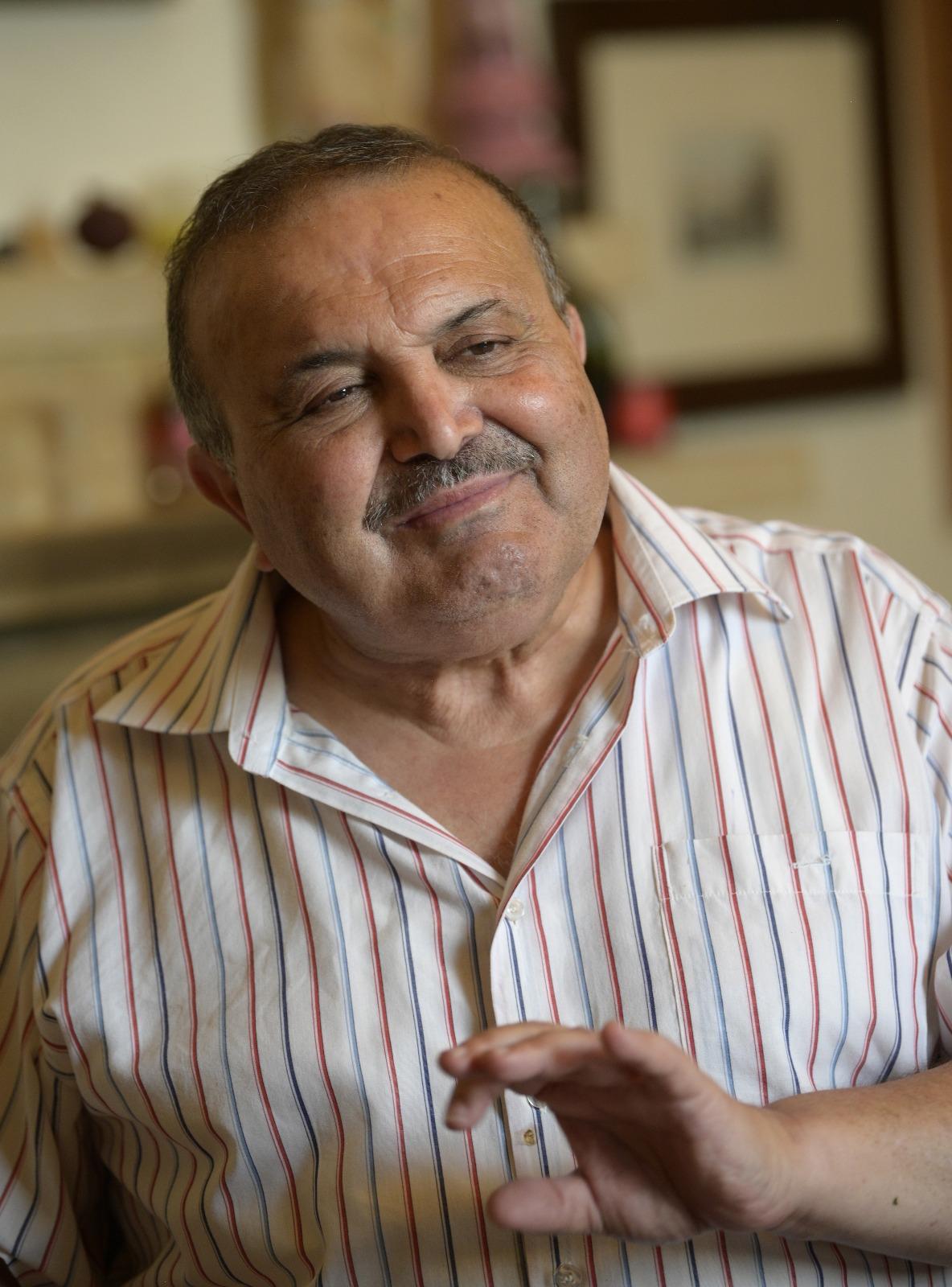 Photo: Matthew Mirabelli
'Judges suffer, they are living graves'
The life of a judge, Abela says, is far from glamorous.
"Judges suffer as they write and hand down judgments. You know what these poor people are? They are living graves. Because they are buried in their lives."
The constraints are immense: they cannot freely socialise, write, or speak their minds, and when publicly criticised, they are unable to defend themselves.
Furthermore, he laments, "the salary does not match the great responsibility they must shoulder when they hand down judgments."
Abela also insisted that cases are being decided quicker nowadays. Despite the increasing complexity of cases, particularly those involving intricate company structures and international jurisdictions, court cases are being decided more quickly.
While still not fast enough for the public, most cases now conclude within three to five years, with appeals also seeing quicker resolutions, he said.
On the rule of law
Abela remained tight-lipped about specific individuals when discussing his statement on the "rule of law should not be a la carte" and the need to protect members of the judiciary from attack.
He clarified that his comment on the rule of law was directed at "nobody and everybody" – those who praise the court when it rules in their favour but criticise it when the same principles lead to an adverse judgment.
Similarly, when asked if his defence of the judiciary was specifically for Vitals inquiring magistrate Gabriella Vella, he said: "Not just Gabriella. There were other members of the judiciary who were demonised, and it's not right."
He also reiterated his plea for magistrates to be elevated to the status and pay of judges, asserting their equal competence and the dignity they deserve.
He also highlighted a critical issue plaguing the courts: a "bread-and-butter issue." Many young, talented individuals are opting for higher-paying jobs in the private sector, leading to a shortage of new blood in court.
'I don't want to talk about that'
His political past, particularly the controversial "blokka l-bajda" incident when Abela was alleged to have not reported to the police indications of cocaine trafficking inside a Labour club, remains a sensitive topic.
When confronted with the suggestion that his judicial appointment was a "consolation prize" after that incident and after being rejected for a seat on the EU Court of Auditors, Abela strongly refuted it.
"It's not true. I know people were saying it at the time I was appointed judge. But I have the honour to say that I appeared in front of a commission made up of people who do not share my political views and they still felt I deserved to be appointed judge.
"Irrespective of whether it was a consolation prize or not, I've never been happier in my life as I've been these last seven years."
He clarifies that the initial two years were a difficult adjustment, a stark transition, from being a "mejda tal-qubbajd" to living like he was in a monastery.
He experienced moments of crisis but eventually grew to love the role.
"I would have done two more years. I would wake up in the morning with a smile – I liked going to work."
The "blokka l-bajda" incident, which he once stated led to his father's death, remains deeply personal.
At the time, an audio recording emerged of Abela saying he had caught the president of a Labour Party club cutting up a "white block" inside the kitchen of a party club.
The implication was that the "white block" was cocaine and that the president, who Abela sacked, should have been reported to the police.
"I don't want to talk about that. I have nothing to hide but I want to forget about that part of my life. My father took it so badly that he couldn't take it. That's true. My family went through a martyrdom, and that's also true. But I have nothing more to add on that."
He confirms that the matter was even raised during his judicial appointment commission interview, where he provided an explanation.
On the topic of Konrad Mizzi succeeding him after his resignation from the Labour Party, Abela offered a brief, almost dismissive, comment.
"I don't want to go back to the future. Ultimately, only they know what they did. I know absolutely nothing and I can't say more than that. I wish things had been easier, but that's it."
As for advice for the Nationalist Party, Abela declines to offer any.
"I don't have advice for the PN. They are a group of very experienced lawyers and I'm convinced that if they put their heads together they can find a solution."
He also said he will not rejoin the Labour Party, citing new personal goals that "do not align with that lifestyle".
"I'm no an athlete anymore, but I believe I can still contribute to society. I may retire, but I will not expire."
Will he ever shave his moustache?
Abela describes his trademark moustache as part of his identity and says he would not be Toni Abela if he shaved it.
He recalls being advised to shave it as politicians with moustaches were unpopular.
His reply then, and now, remains consistent: "I doubt if I was born without it, because I always remember myself having it. It is a characteristic that defines me. It's become my identity and I won't shave it. I will keep it, and God forbid someone shaves it off my face in my sleep, because that story won't end well," he said jokingly.