‘I know English because I was made to wear a sign in school’: Peppi Azzopardi
Times Talk discusses controversial calls for English-first schooling
Broadcaster Peppi Azzopardi said he learned English as a young boy because the school he went to forced students to wear a sign around their neck that read: ‘I must speak in English’.
And while he admitted the sign was demeaning, he insisted that it propelled him to learn English, as his parents did not know how to speak the language.
“In primary school they would force us to speak in English. We would have a sign that we would wear around our neck that read: ‘I must speak in English’. And if one of my peers came up to me and spoke to me in Maltese, I was instructed to take it off me and put it around their neck, as a sort of punishment for breaking the rule, and they were forced to wear it around, even on the bus, until they get home,” he said.
“It was quite demeaning, but it was beneficial for me, because thanks to it I learned how to speak English. But it also angered me enough to make me love the Maltese language even more.”
That is when he pulled out a sign like the one he was made to wear at school.
Azzopardi was defending his controversial Popolin proposals during a heated exchange on the latest Times Talk episode. Poet and writer professor Immanuel Mifsud and pedagogy expert Jacqueline Zammit were also on the panel, and they dismissed his suggestions as illogical, arguing they would do little to bridge the success gap for working-class children.
Azzopardi insisted many children coming from families who cannot teach them good English will be forever disadvantaged in life.
“My parents didn’t know how to speak in English. Imagine this – we bought our first encyclopaedia at home according to the colour of our curtains. We went to the bookshop with a drape sample of the curtains, and we bought the book that had a cover that matched the curtains. That’s the culture I come from,” he said.
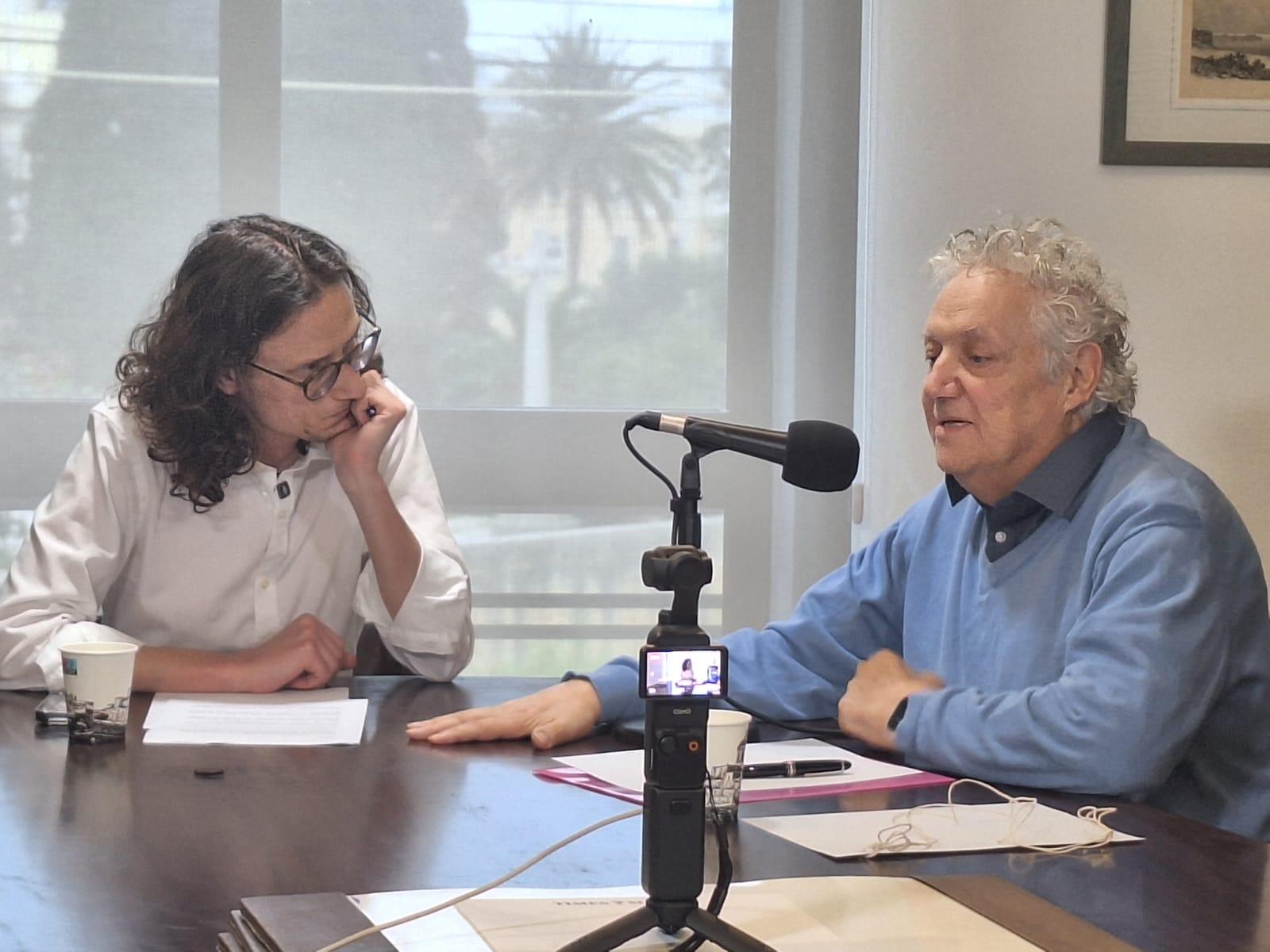 Peppi Azzopardi with Times Talk host Mark Laurence Zammit. Photo: Emma Borg
“Of course, I’m not suggesting we should re-introduce signs like these in schools, but the fact that I was forced to speak in English helped me learn it. I’m suggesting that all subjects except Maltese should be taught in English in schools, so that all children, no matter their socio-economic background, have the same chance at succeeding in life.”
Children who grow up with an insufficient grasp of the language are disadvantaged in every aspect in life, he added. Even if they are smart, they cannot do as well during an exam or an interview, because they are asked the questions in English.
While they acknowledged the need to help working-class children, Mifsud and Zammit resisted the idea. Mifsud said the sign was nothing short of “symbolic violence” on children and Zammit said it reeked of a colonial past that threatens the Maltese heritage and identity.
Symbolic violence vs social mobility
Mifsud said he also comes from a working-class home in which the only books were the telephone directory and the New Testament, and argued that forcing a language on children is a form of "symbolic violence".
"The real injustice would be to tell the working class that their own language won’t get them far enough. I believe I was even worse than you," Mifsud told Azzopardi.
“In my school they wouldn’t speak to us in English and in secondary school we would speak in Maltese. Now, four of my school peers lecture at university, another lectures at a university in the UK, one of us is a former MP, others became accountants and engineers, and other people went into several high-skilled trades. We did fine.”
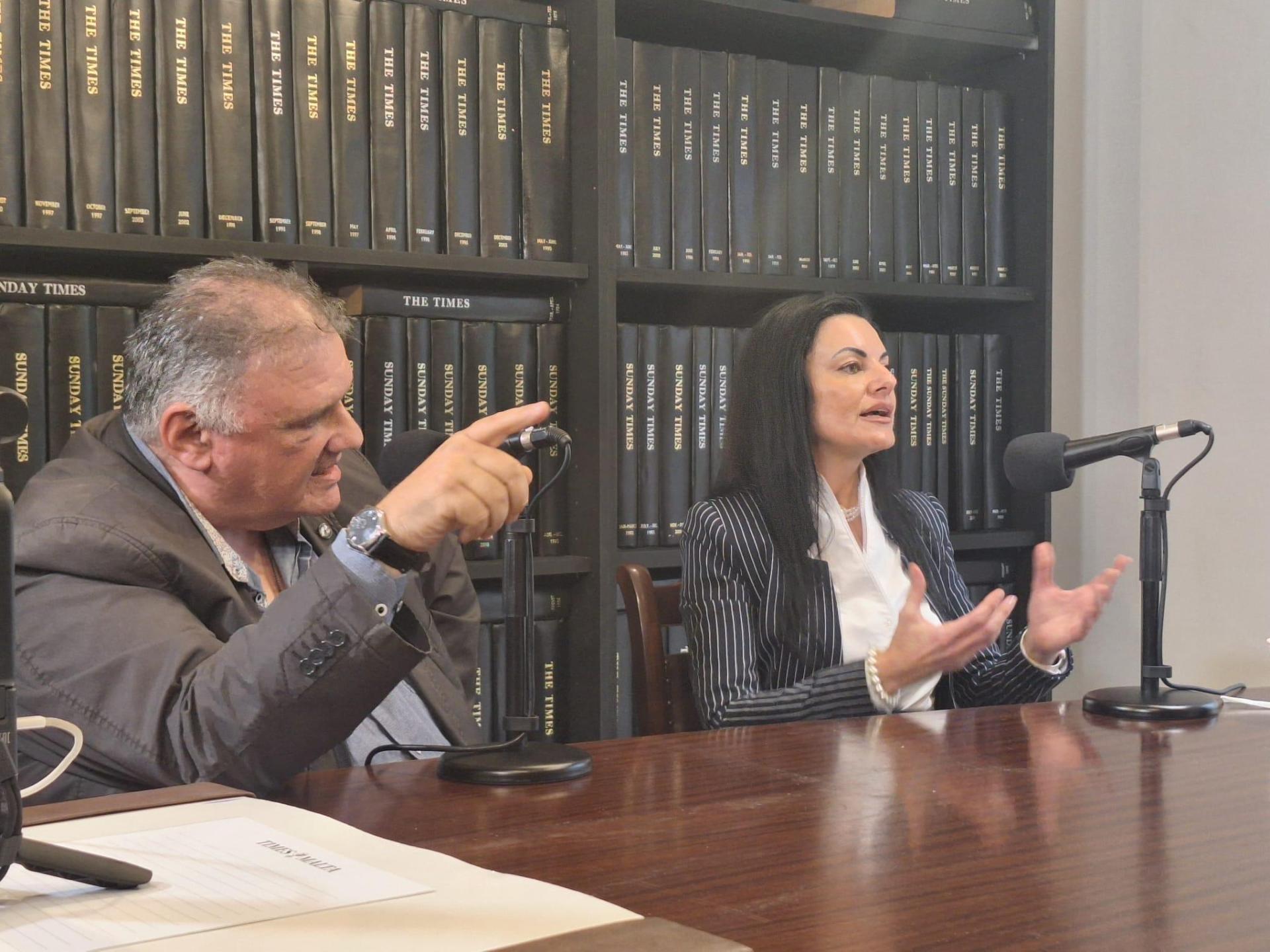 Jaqueline Zammit and Immanuel Mifsud on Times Talk. Photo: Emma Borg
He argued fluency should come from high-quality tuition rather than total imposition. And Zammit agreed.
“Children are remarkably capable of learning up to four languages before they turn 5,” she said.
“I know a boy, who’s my neighbour, who speaks to his mother in Serbian, to his father in Italian, to me in Maltese and he learned English from childcare. We need to aim to help children learn more languages, not fewer.”
On removing the “għ” and ‘h’
The debate took a further turn when Azzopardi suggested that Maltese spelling should be simplified – removing "unnecessary letters" to make it more accessible.
“We must let people write it as it sounds – we should remove the unnecessary letters,” he said.
“We waste so much time forcing children to learn how to write when they should be learning how to protest and use their language to fight for justice and to call out the wrongdoings in the country.”
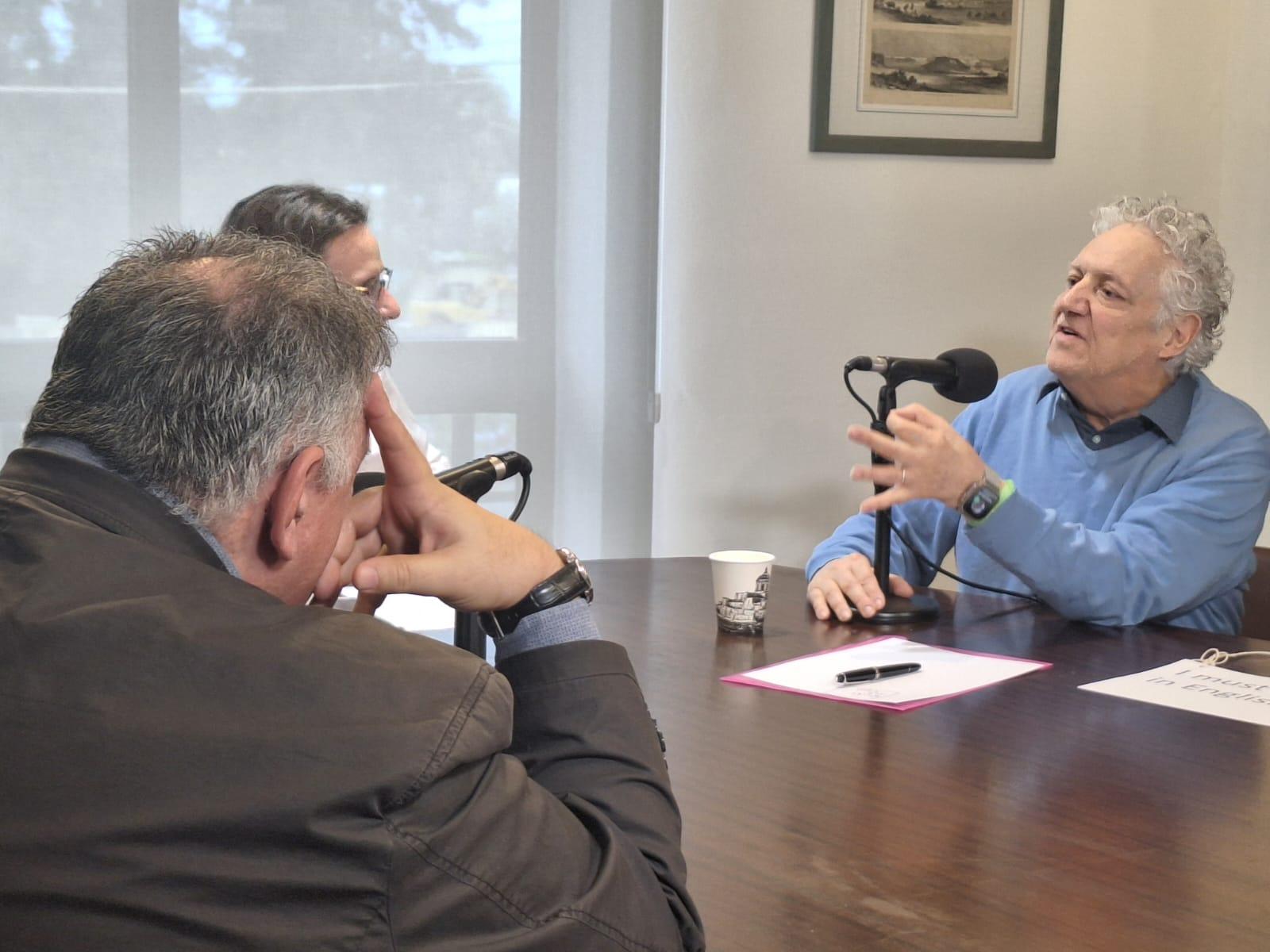 Working-class children are disadvantaged when they do not know English well, Azzopardi insisted. Photo: Emma Borg
Mifsud likened this “utilitarian approach” to stripping a room of its decor until nothing is left.
“What if we were to look around this room and start removing everything that’s not absolutely necessary?” he asked.
"When we start watering down, we continue to reduce the brain’s power.”
Zammit added that in a world dominated by English-language digital media, children are actually lacking exposure to Maltese.
"It’s the Maltese they need to hear more, not the other way around," she said.
Catch the full episode online on Times of Malta, on Spotify or YouTube.