Our traffic-free future
To break free from congestion, Malta must think beyond the metro, says Wallace Wadge
Another morning, another sea of red tail lights. If you live in Malta, you know the feeling: the slow, creeping frustration of a journey that should take 15 minutes stretching into an hour. We are a nation stuck in traffic and we are told that a multi-billion-euro metro, decades from now, is a possible salvation.
I believe that’s a short-sighted vision. And I say this not as a planner or a politician but as someone who has sat in a car with no driver and watched it navigate a chaotic city with calm, caution and intelligence. I’ve seen the future of transport and it doesn’t run on fixed rails.
The first time I sat in a self-driving car, an autonomous vehicle (AV), and the steering wheel started turning on its own it was unnerving, like something out of science fiction. That feeling quickly gave way to something else: on rides in the US, I have personally witnessed an AV correctly interpret a police officer’s hand signals to override a traffic light.
I watched as it performed an emergency stop to avoid a human driver who ran a red light, reacting with a speed no human could match, and then calmly navigated around an illegally double-parked van. It never broke the speed limit, never got distracted.
By the end of the ride, the feeling wasn’t caution but a profound sense of calm. The data backs this up: Waymo, one of these services, has already driven nearly 100 million miles with an incident rate 91% lower than human drivers.
For those thinking this is some vision from the future, let me describe how it worked for me. The process was familiar, starting with a ride-hailing app on my phone. I set my destination and confirmed the trip, and, a few minutes later, the driverless car pulled up. A tap on the app unlocked the doors. Once inside, the car was my own private, quiet space; there was no small talk, just a smooth journey where I could take a call or simply watch the city go by.
Upon arrival, I just stepped out. Payment was handled automatically through my account. The entire experience was seamless, stress-free and a world away from the daily frustration of driving in Malta.
Now, contrast this adaptable, intelligent technology with a fixed-rail metro. Its success hinges on solving the ‘first-mile, last-mile’ problem. If getting to and from the station is a hassle, people will stick to their cars. A fleet of shared AVs, however, offers a door-to-door service that studies indicate can replace up to 10 private vehicles for everyone on the road, meaning our streets would simply be emptier, free from the endless circling of cars hunting for parking.
Instead of sinking billions into a tunnel, let’s invest in an agile future
The politics of this are also telling. Finance Minister Clyde Caruana admitted that forcing people out of their cars with harsh policies would be “politically suicidal”. He’s right.
Forcing change is difficult but this misses the point. You don’t need to force what you can attract. An on-demand service that is cheaper, safer and more convenient than owning a car wouldn’t need coercion. It would just win.
Of course, a metro has its merits but its greatest weakness is its rigidity. It is a massive bet that the Malta of 2045 will have the same economic and social hubs as today.
Antoine Zammit, a senior lecturer in spatial planning and urban design, rightly points to Mrieħel’s evolution from an industrial estate to a vibrant catering and recreation hub; it’s clear how quickly our island changes: a metro line is a permanent solution to a temporary map.
I don’t see AVs and metros as rivals but, right now, Malta’s scale and density make AVs a more logical first move and one that requires far less investment and disruption than a metro.
Instead of sinking billions into a tunnel, let’s invest in an agile future. Let’s strengthen our 5G network, create smart traffic systems and write the regulations to become a European testbed for this technology. Let’s solve our traffic problem with brains, not just brute force.
We can lead not just in deploying the technology but in setting the safety and privacy standards that make people trust it.
We are at a crossroads. One path leads down a long, expensive tunnel towards a 20th-century solution. The other embraces the smarter, safer and more adaptable technology that, having experienced it myself, I know is already here. The choice is astonishingly clear.
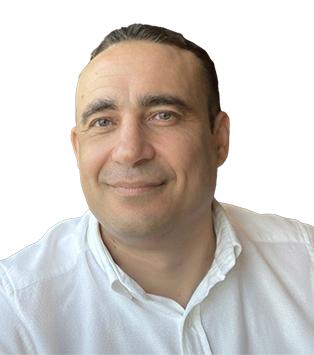
Wallace Wadge is a software architect with expertise in the embedded software, iGaming and FinTech sectors. He is currently working in the embedded automotive industry.